Following the American Civil War Sesquicentennial with day by day writings of the time, currently 1863.

Thursday, June 9, 2011

June 9th.—A thunder-storm, which lasted all the morning and afternoon till three o’clock. When it cleared I drove, in company with Mr. Burnside and his friends, to dinner with Mr. Duncan Kenner, who lives some ten or twelve miles above Houmas. He is one of the sporting men of the South, well known on the Charleston race-course, and keeps a large stable of racehorses and brood mares, under the management of an Englishman. The jocks were negro lads; and when we arrived, about half a dozen of them were giving the colts a run in the paddock. The calveless legs and hollow thighs of the negro adapts him admirably for the pigskin; and these little fellows sat their horses so well, one might have thought, till the turn in the course displayed their black faces and grinning mouths, he was looking at a set of John Scott’s young gentlemen out training.

The Carolinians are true sportsmen, and in the South the Charleston races create almost as much sensation as our Derby at home. One of the guests at Mr. Kenner’s knew all about the winners of Epsom Oaks, and Ascot, and took delight in showing his knowledge of the “Racing Calendar.”

It is observable, however, that the creoles do not exhibit any great enthusiasm for horse-racing, but that they apply themselves rather to cultivate their plantations and to domestic duties; and it is even remarkable that they do not stand prominently forward in the State Legislature, or aspire to high political influence and position, although their numbers and wealth would fairly entitle them to both. The population of small settlers, scarcely removed from pauperism, along the river banks, is courted by men who obtain larger political influence than the great landowners, as the latter consider it beneath them to have recourse to the arts of the demagogue.

Rienzi, Tishomingo Co., Miss., June 9, 1862.
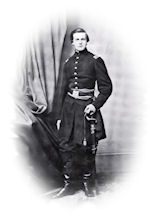
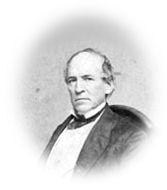
Saturday morning the 5th inst. the colonel and myself started for a little pleasure ride as a relaxation from the many cares and troubles people in this profession are incident to. We started for Corinth, as neither of us had yet visited the place, and plodded along through dust in air and heat—words can’t tell how oppressive. We stopped at General Rosecrans about 1 p.m. and stayed and dined with him. The general was in his most pleasant mood and I thought him very engaging and winning in his manner. He told a number of amusing stories and ’twas all very pleasant, until somebody happened to mention General Fremont’s name. General Granger was also at the table and the two generals commenced and each tried to outdo the other in—yes, reviling the “bumble-bee catcher.”

They changed the subject over the wine and General Rosecrans became quite enthusiastic and prophetic in his conviction in regard to the war question, settlement thereof, etc. But I couldn’t see any remarkable difference between him and the rest of mankind, and the same remark will apply to all that I know of the other generals here. I remember he said that he considered “slavery a vile blot on the face of the earth,” and that unadulterated abolitionism alone was its equal; but I don’t claim that the speech showed any remarkable talent. We left him swearing at his A. Q. M. and journeyed on. We luckily met an old acquaintance of the colonel’s, a captain in the 1st Regular Infantry, and went with him to his quarters for the night. All the regimental officers quartered together in a very fine house that belongs to a secesh colonel. They were a jolly set of men, and the empty bottles lying around loose when we retired testified strongly thereto. I remember seeing one of them at Point Pleasant, Mo., have a couple of little fights (he commanded a two-gun battery of siege pieces) with a Rebel battery on the opposite shore.

We left Corinth early next morning for Farmington, and as we passed I saw where Major Applington fell. It was as I supposed about one-half mile from Corinth (hardly that) and what I did not know, was within 400 yards of the strongest part of the Rebel fortifications. We lunched at 10 a.m. and paid an old lady the modest sum of 50 cents for a piece of cornbread and a glass of buttermilk. She complained bitterly of some of Buell’s soldiers killing three of her chickens without paying for them, and just the day before her husband had been to Corinth and received meat, flour, etc., free from the aid society. She had three sons in the Southern Army. At 12 m. we drew rein 25 miles from Corinth at Iuka.

There are a couple of splendid springs in Iuka. One chalybeate, and the other sulphur water, and the town is the neatest I have seen in the country. Snuff-dipping is an universal custom here, and there are only two women in all Iuka that do not practice it. At tea parties, after they have supped, the sticks and snuff are passed round and the dipping commences. Sometimes girls ask their beaux to take a dip with them during a spark. I asked one if it didn’t interfere with the old-fashioned habit of kissing. She assured me that it did not in the least, and I marveled. There was only one regiment at Iuka, and they were expecting an attack from the hordes of guerrillas that infest the country all along our front from Memphis to Florence. I stayed at the hotel in town and had just retired (about 11) when crack, crack, two guns went, only about 60 rods from the house. There was a general shaking of the whole building, caused by the sleepers rising en masse and bouncing out on the floors. I thought if there was no fight I wouldn’t be fooled, and if there was I couldn’t do any good, so I kept cool. ‘Twas only a little bushwhacking. A soldier policeman having been shot at from the brush, and he returned the favor by guess. This infantry always thinks the enemy is just out of gunshot of them, and they are three-fourths scared to death all the time. At noon of Monday we left Iuka, rode to Burnsville, a place that I have spoken of in my letters before, as we scouted through it while lying before Corinth. None of our soldiers have camped there yet, and we were the only ones there while we stayed. The colonel took a nap to recover from the heat and fatigue of riding, and I strolled down town to look up some acquaintances I made while scouting. They treated me pretty well, and made me a letter carrier, as many of them had letters to send to their friends who are prisoners. At dark we started for Jacinto, ten miles south, but for so many hills had a splendid ride. ‘Twas through the woods, all the way, and over real young mountains. We got to Jacinto at 10 p.m. and concluded to stay all night. I laid down an hour or two, but the fleas were so bad that I got up and stayed up the rest of the night. I walked around the town and stopped at headquarters of the guard and talked with the boys. (They were of Jeff C. Davis’s division, of Pea Ridge, Ark., and Siegel.) They all think that Siegel is the only man and hate Davis like the devil. I waked the colonel at 4 p.m. and we started for home. The road from Jacinto, home, was lined with infantry, the whole left wing of our corps being on it. They had no tents but seemed to be preparing the ground for a camp. We got home in time for a little nap before breakfast, both of which I enjoyed very much. We found the garrison much excited about an attack that was expected every hour. The 2d Brigade of Cavalry had been about eight miles in front doing outpost duty, and having been alarmed by rumors had abandoned their camp and retreated to this place. Their sutler gave up his goods to the boys, preferring they should have them free, rather than the enemy. The next day (yesterday morning) a scout was sent out and found their camp just as they had left it. All of which was considered quite a joke on the 2d Brigade. The enemy may come up here and may whip us out, we are scattered so much, but they will have a riotous time of it. All told we had a very pleasant ride, but if we are gobbled up some of these times when riding around without an escort you must not be surprised. I don’t think it just the straight way of doing such business, but Charles can go where the colonel dares to, and my preference is for riding as far from a column as possible on several accounts. The colonel is a very interesting companion on such a trip, full of talk, and he has had six years experience on the frontier. I induced a very young lady with a well cracked piano to favor me with some music at Iuka. She sang “The Bonny Blue Flag That Bears a Single Star.” It was as near the music we used to hear in the old Presbyterian church at home as you could think, and that’s all that kept me from laughing in her face. We celebrated the capture of Richmond on the 4th, but are now trying to forget that we made such fools of ourselves. Damn the telegraphs. We have awful news from Richmond to-day. It would make me sick to write it. I would rather have the army whipped than McClellan.

Post image for “Some whole companies say that they will not go.”–Army letters of Oliver Willcox Norton.

Camp Wright, Hulton, Penn.,
Sunday, June 9, 1861.

Dear Sister L.:—

I wish you could just step in and see us here, say on a dress parade. We are in just as beautiful a place as I ever saw. The lovely Alleghany rolls along at the foot of the hill, and the little country seats nestled in quiet nooks, the new buildings in camp, the groves and orchards, the lane that leads to the river, and the beautiful mountain rising up on the other side of the river, make a picture I never saw equalled.

I wrote to H. yesterday that we were accepted and were to be mustered in immediately. The Colonel received a telegram last night from the Secretary of War, saying that we would be taken for three years, unless sooner discharged, or we would be sent home. That you see materially alters the case. I don’t know how it will work. Some whole companies say that they will not go. We shall know in a day or two. I hardly know what to do. It seems a long time to live such a life, but if I am needed, I must go. If our company goes as a company, I shall go too. If not, you may look for me home soon.

I just wish I could have seen you last night instead of reading your letter. I thought perhaps you were having a good time about the time I was reading that letter. I sincerely hope the choice you have made is a good one. Give my respects to C and tell him, I think, as matters stand, the sooner he and I become acquainted the better. I would like to have him write to me.

I think from what you write, that vegetation must be more advanced here than there. Potatoes and corn are six inches high, and clover in bloom. I saw strawberries and cherries in market yesterday.

H. B. wrote the other day that his folks had adopted a daughter about fifteen years old, and that L. C. was a secessionist. He had a big fuss with the boys who put up a Union flag near his house, threatened the life of some, sued others, and was bound over himself to appear at court to answer for his rabid conduct.

Well, I must stop. I hope you will not wait so long before writing again. I am so anxious to hear from you often. If there is anything you expected to see, that is omitted, you may hear it in the future. My address is Camp Wright, Pittsburgh.

SUNDAY, JUNE 9, 1861.

Went down this morning to Franklin Square with my friends from the North to witness the weekly Inspection parade of the 12th Regt. Went from there to church. Doct Smith preached a Funeral Sermon upon Judge Douglass, a very fine effort. Went again in the afternoon with E.P. Introduced him to Doct Smith who is his Father’s friend. In the evening attended the Dress Parade of the 12th, a great concourse of people there. A movement seems to be on foot to move troops forward over the River.

______

The three diary manuscript volumes, Washington during the Civil War: The Diary of Horatio Nelson Taft, 1861-1865, are available online at The Library of  Congress.

Post image for under orders.—Rutherford B. Hayes

CINCINNATI, June 10 [9], 1861.

DEAR UNCLE:—I shall go to Columbus in the morning under orders. I do not know what is intended, but by telegraph, Judge Matthews and myself are informed that we are to be in a regiment with Colonel Rosecrans—a West Pointer and intimate friend of Billy Rogers, and a capital officer,—Matthews as lieutenant-colonel and I as major. This is all we know about it. Buckland perhaps told you that I had got a dispatch asking if I would accept, and that I replied accepting the place. We have since been telegraphed that we were under orders accordingly, and must report at Columbus forthwith. This seems certain enough, but as red-tape is in the ascendant, we don’t count positively on anything.

I shall try to visit you before definitely leaving home. Mother will return to Columbus soon. I hope this matter is as it appears. It is precisely what we wish, if we understand it.

Sincerely,

R. B. HAYES.

S. BIRCHARD.

Post image for “…report to the adjutant-general at Columbus, Monday morning.”—Diary of Rutherford B. Hayes

June 7, 1861, I received a dispatch from Governor Dennison asking me if I would accept the majority in a regiment of which William S. Rosecrans was to be colonel and Judge Matthews lieutenant-colonel. I read it to Lucy, consulted with my old law partner [Ralph P. Buckland], who happened to be visiting Cincinnati, and thereupon replied that I would accept as proposed. Late in the afternoon of the next day I received a dispatch from the governor, addressed to Judge Matthews and myself, directing us to report to the adjutant-general at Columbus, Monday morning. Not being able to find Judge Matthews in the city, on the next day (Sunday, P. M.), I rode out to Judge Matthews’ residence at Glendale, took tea with him and his family and friends (Mrs. Matthews and mother, and Mr. and Mrs. Todd), and rode into the city arriving a few minutes before 9 P. M. I bid good-bye to my family (my mother, mother-in-law, Mrs. Webb, Lucy, and the boys), and at 9:30 P. M. we took the cars by way of Dayton for Columbus.

John Beauchamp Jones avatar.  No image of Jones has been found online.

JUNE 9TH.—Today the Secretary refused to sign the colonel’s letters, telling him to sign them himself—”by order of the Secretary of War.”

Post image for A Diary of American Events – June 9, 1861

—A detachment of the Rhode Island Regiment finished building a floating bridge on the Potomac, near Georgetown, by which thousands of men could be transported across in a few hours. Capt. Medlar, Provost-marshal of Alexandria, seized army supplies consisting of uniforms and cavalry swords, to the value of fifteen hundred dollars.—N. Y. World, June 10.

—Two prisoners were captured yesterday by four privates of Company B, Michigan Regiment, one mile this side of Berke Station, and thirteen miles from Alexandria, Va., on the Orange and Alexandria Railroad. One of the prisoners is a corporal in a cavalry company, and the other a private in the Governor’s Guards of Richmond, which is also a cavalry company. The Michigan men while scouting approached near Berks Station, when they saw a number of stacks of muskets. They put back and were pursued by the two cavalry, but sought refuge in ambush, and succeeded in capturing their prisoners and brought them to Alexandria, where they are treated with exceeding kindness. They appear to be quite contented, and one of them, who is a physician, is writing a statement of his experience. The names of the prisoners are Dr. Thomas M. Flemming and Samuel Green.

Seven thousand yards of cassinet and other military goods were seized at the Adams Express office to-day, consigned to Point of Rocks, via Alexandria and London Railroad, valued at about $10,000.

Expedition, the first number of the soldiers’ newspaper, printed by the Pennsylvania Fifth Regiment, appeared this evening. It is printed in fine style on the old Alexandria Sentinel press, and is full of interesting information regarding the condition of the soldiers, &c. It is edited by Lieutenant Ely, of Lebanon county. Several columns are devoted to German literature.—N. Y. Courier & Enquirer, June 10.

—In the last number of the Danville (Ky.) Review, Rev. Dr. Breckinridge discusses the southern rebellion in temperate but forcible language. He traces the origin and progress of the insurrection, and demonstrates not only that the rebel leaders are bent upon the accomplishment of selfish ends, but that the latent loyalty of the masses of the southern people needs but the protection of the Federal Government to be able to assert itself, to the utter discomfiture of Jeff Davis and his fellows. Dr. Breckinridge is the uncle of the late Vice-President of the United States.—N. Y. Evening Post, June 22.

—All day the Naval Brigade, under the direction of a company of United States marines, were engaged off Fortress Monroe, Va., practising the management of eight or ten scows, each carrying twenty-four oars, and capable of transporting 180 men each, besides the rowers. When this marine drill was concluded every oar was carefully muffled, and the scows, manned each by a coxswain and twenty-six rowers from the Naval Brigade, glided out from the fort, and rowed in the harbor to the mouth of Hampton River, and up the stream. At about midnight they were moored on the hither shore in Hampton, and just below the remains of the bridge destroyed in the rebel retreat two weeks previously. The stream at that point is from sixty to one hundred yards in width. In the afternoon orders were given for a concerted movement of forces from Newport News, and from the camps at Fortress Monroe, against a position that the rebels had taken up at or near Great Bethel, in York county, a place about 12 miles northwest of Fortress Monroe. In accordance with the terms of the order three companies of Duryea’s regiment, under Capt. Kilpatrick, went forward from Hampton on the Bethel road at 10 P. M., and soon after the remainder of Duryea’s regiment, and the New York Third, Col. Townsend, followed, and were ferried over Hampton Creek by the boats of the Naval Brigade previously taken round from Fortress Monroe. Meantime, 5 companies, each from the Vermont First Regiment, and the Massachusetts Fourth, under Lieut.-Col. Washburne; six companies of the N. Y. Seventh, Col. Bendix, and a squad of regulars with 2 howitzers, under Lieut. Greble, moved forward from the position at Newport News, to form a junction on the road with the men from Fortress Monroe.