Following the American Civil War Sesquicentennial with day by day writings of the time, currently 1863.

Sunday, June 12, 2011

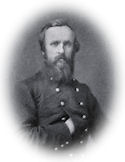
Post image for “The camp is yet higgledy-piggledy…”—Rutherford B. Hayes

COLUMBUS, June 12, 1861.

DEAR FORCE:—You can’t regret more than I do the issue of this business, so far as you are concerned. I have tried to get two companies (so as to include you and Company A of G.G. [Guthrie Greys]) admitted. Failing in that, I tried one, but the thing is all settled, and the governor fears to disturb the elements again.

Our regiment promises to be an exceedingly pleasant one. We are the first regimental officers on the ground. Our colonel will command in this camp until a brigadier-general arrives. We are the best known persons, and the struggle is to get into our regiment from all quarters. The camp is yet higgledy-piggledy and will require some labor to bring it up. But all goes on rapidly. We have been busy as bees a large part of the time in the scorching sun; but so far, it [is] great fun. I enjoy it as much as a boy does a Fourth of July.

Sincerely,

R.B. HAYES

M. F. FORCE, ESQ.

WEDNESDAY, JUNE 12, 1861.

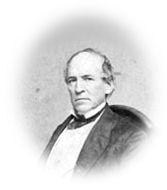
Bad news today from Fort Monroe, a fight and a repulse with considerable loss of life. It is feared that the loss is much greater than reported, rumor says so. Our Friends E.P. & Capt Welling left on the 21/2 train for Home. I went with them this morning to the Genl P.O. and to McGuires Private Gallery of paintings. Was at the Parade of the 12th again this evening. It is realy an interesting show and costing nothing. Some of the soldiers are sick. My wife sends them tea & toast.

______

The three diary manuscript volumes, Washington during the Civil War: The Diary of Horatio Nelson Taft, 1861-1865, are available online at The Library of  Congress.

Post image for “Her house has been searched, furniture broken, and many depredations committed since she left home; books thrown out of the windows during a rain: nothing escaped their fury.”—Diary of a Southern Refugee.

The Briars, June 12.—We are now in the beautiful Valley of Virginia, having left Chantilly on the 8th. The ride through the Piedmont country was delightful; it looked so peaceful and calm that we almost forgot the din of war we had left behind us. The road through Loudoun and Fauquier was picturesque and beautiful. We passed through the villages of Aldie, Middleburg, and Upperville. At Middleburg we stopped for an hour, and regaled ourselves on strawberries and cream at the house of our excellent brother, the Rev. Mr. K. At Upperville we spent the night. Early next morning we went on through the village of Paris, and then began to ascend the Blue Ridge, wound around on the fine turnpike, paused a moment at the top to “view the landscape o’er,” and then descended into the “Valley.” The wheat, which is almost ready for the reaper, is rich and luxuriant, foreshadowing an abundant commissariat for our army. After driving some miles over the delightful turnpike, we found ourselves at this door, receiving the warm-hearted welcome of the kindest of relatives and the most pleasant of hosts. Our daughters were here before us, all well, and full of questions about “home.” This is all very delightful when we fancy ourselves making a voluntary visit to this family, as in days gone by, to return home when the visit is over, hoping soon to see our friends by our own fireside; but when the reality is before ns that we were forced from home, and can only return when it pleases our enemy to open the way for us, or when our men have forced them away at the point of the bayonet, then does our future seem shadowy, doubtful, and dreary, and then we feel that our situation is indeed sorrowful. But these feelings must not be indulged; many are already in our situation, and how many more are there who may have to follow our example! Having no houses to provide for, we must be up and doing for our country; idleness does not become us now—there is too much to be done; we must work on, work ever, and let our country’s weal be our being’s end and aim.

Yesterday we went to Winchester to see my dear S., and found her house full of refugees: my sister Mrs. C., and her daughter Mrs. L., from Berkeley County. Mrs. C.’s sons are in the army; her eldest, having been educated at the Virginia Military Institute, drilled a company of his own county men during the John Brown raid; he has now taken it to the field, and is its commander; and Mr. L. is in the army, with the rank of major. Of course the ladies of the family were active in fitting out the soldiers, and when an encampment was near them, they did every thing in their power to contribute to the comfort of the soldiers; for which sins the Union people around them have thought proper to persecute them, until they were obliged to leave home—Mrs. L. with two sick children. Her house has been searched, furniture broken, and many depredations committed since she left home; books thrown out of the windows during a rain: nothing escaped their fury.

Winchester is filled with hospitals, and the ladies are devoting their energies to nursing the soldiers. The sick from the camp at Harper’s Ferry are brought there. Our climate seems not to suit the men from the far South. I hope they will soon become acclimated. It rejoices my heart to see how much everybody is willing to do for the poor fellows. The ladies there think no effort, however self-sacrificing, is too great to be made for the soldiers. Nice food for the sick is constantly being prepared by old and young. Those who are very sick are taken to the private houses, and the best chambers in town are occupied by them. The poorest private and the officer of high degree meet with the same treatment. The truth is, the elite of the land is in the ranks. I heard a young soldier say, a few nights ago, that his captain was perhaps the plainest man, socially, in the company, but that he was an admirable officer. We heard a good story about a wealthy young private whose captain was his intimate friend, but not being rich, he could not afford to take a servant to camp; it therefore fell to the lot of the privates to clean the captain’s shoes. When the turn of the wealthy friend came, he walked up, cap in hand, with an air of due humility, gave the military salute, and said, with great gravity, ” Captain, your shoes, if you please, sir.” The ludicrousness of the scene was more than either could stand, and they laughed heartily. But the wealthy private cleaned the captain’s shoes.

Our mustering was completed June 11 and 12. We were guests of Colonel King (for rations) at the log headquarters and slept at Platt’s. Both good arrangements. Wednesday evening, 12th, we got up a large marquee, fine but not tight, and that night I had my first sleep under canvas—cool but refreshing.

COLUMBUS, June 12, 1861.

DEAR UNCLE:—We are in Camp Jackson—hot, busy, and jolly. Colonel Rosecrans is an energetic, educated West Pointer, very cheerful and sensible. Judge Matthews you know. We are on good terms with our captains, and the whole thing pleases me vastly; but I see no chance of getting out to see you; so you must come here one of these days. We are in the suds yet; still I would enjoy a visit even now. I cannot say more now. Good-bye.

Sincerely,

R.B. HAYES.

P.S.—We were sworn in to-day; our commissions are from the 7th.

S. BIRCHARD.

Post image for “From all I can see and infer, we shall make no attempt this year to invade the enemy’s country.”—John B. Jones’ diary at the rebel war office.

JUNE 12TH.—Gen. Lee has been or is to be created a full general in the Confederate army, and will be assigned to duty here. He is third on the list, Sydney Johnston being second. From all I can see and infer, we shall make no attempt this year to invade the enemy’s country. Our policy is to be defensive, and it will be severely criticised, for a vast majority of our people are for “carrying the war into Africa” without a moment’s delay. The sequel will show which is right, the government or the people. At all events, the government will rule.

Post image for “The war is making us all tenderly sentimental. No casualties yet, no real mourning, nobody hurt. So it is all parade, fife, and fine feathers.”— Mary Chesnut’s diary.

June 12th.—Have been looking at Mrs. O’Dowd as she burnished the “Meejor’s arrms” before Waterloo. And I have been busy, too. My husband has gone to join Beauregard, somewhere beyond Richmond. I feel blue-black with melancholy. But I hope to be in Richmond before long myself. That is some comfort.

The war is making us all tenderly sentimental. No casualties yet, no real mourning, nobody hurt. So it is all parade, fife, and fine feathers. Posing we are en grande tenue. There is no imagination here to forestall woe, and only the excitement and wild awakening from every-day stagnant life are felt. That is, when one gets away from the two or three sensible men who are still left in the world.

When Beauregard’s report of the capture of Fort Sumter was printed, Willie Ancrum said: ” How is this? Tom Ancrum and Ham Boykin’s names are not here. We thought from what they told us that they did most of the fighting.”

Colonel Magruder¹ has done something splendid on the peninsula. Bethel is the name of the battle. Three hundred of the enemy killed, they say.

Our people, Southerners, I mean, continue to drop in from the outside world. And what a contempt those who seceded a few days sooner feel for those who have just come out! A Camden notable, called Jim Velipigue, said in the street to-day: “At heart Robert E. Lee is against us; that I know.” What will not people say in war times! Also, he said that Colonel Kershaw wanted General Beauregard to change the name of the stream near Manassas Station. Bull’s Run is so unrefined. Beauregard answered : “Let us try and make it as great a name as your South Carolina Cowpens.”²

Mrs. Chesnut, born in Philadelphia, can not see what right we have to take Mt. Vernon from our Northern sisters. She thinks that ought to be common to both parties. We think they will get their share of this world’s goods, do what we may, and we will keep Mt. Vernon if we can. No comfort in Mr. Chesnut’s letter from Richmond. Unutterable confusion prevails, and discord already.

In Charleston a butcher has been clandestinely supplying the Yankee fleet outside the bar with beef. They say he gave the information which led to the capture of the Savannah. They will hang him.

Mr. Petigru alone in South Carolina has not seceded. When they pray for our President, he gets up from his knees. He might risk a prayer for Mr. Davis. I doubt if it would seriously do Mr. Davis any good. Mr. Petigru is too clever to think himself one of the righteous whose prayers avail so overly much. Mr. Petigru’s disciple, Mr. Bryan, followed his example. Mr. Petigru has such a keen sense of the ridiculous he must be laughing in his sleeve at the hubbub this untimely trait of independence has raised.

Looking out for a battle at Manassas Station. I am always ill. The name of my disease is a longing to get away from here and to go to Richmond.

______

¹ John Bankhead Magruder was a graduate of West Point, who had served in the Mexican War, and afterward while stationed at Newport, R. I., had become famous for his entertainments. When Virginia seceded, he resigned his commission in the United States Army. After the war he settled in Houston, Texas.

The battle of Big Bethel was fought on June 10, 1861. The Federals lost in killed and wounded about 100, among them Theodore Winthrop, of New York, author of Cecil Dreeme. The Confederate losses were very slight.

² The battle of the Cowpens in South Carolina was fought on January 17, 1781; the British, under Colonel Tarleton, being defeated by General Morgan, with a loss to the British of 300 killed and wounded and 500 prisoners.

Post image for A Diary of American Events – June 12, 1861

—The Second Regiment Missouri Volunteers, Col. Siegel, went up the Pacific Railroad from St. Louis, and occupied the line as far as the Gasconade River in order to prevent further damage by the rebels. They met with no opposition from the traitors in that section.—N. Y. Herald, June 20.

—The steamer City of Alton, with two companies of Col. Oglesby’s Regiment and a squad of artillery-men, with two field-pieces, made an excursion from Cairo, Ill., down the Mississippi, five miles below Columbus, Kentucky, to-day. On returning, when near Columbus, some machinery of the boat broke, and the boat drifted ashore. While the machinery was repairing, the captain of the boat, with three of his crew, went ashore and cut down a secession flag which was flying on the shore, and brought it to Cairo. No attempt was made to prevent their taking the flag. Passengers, who have arrived from Columbus since the City of Alton left, say, that great excitement prevailed among the citizens, and that locomotives and cars were immediately despatched to Union city to convey rebel troops to Columbus. No rebel troops were seen by the excursionists between Cairo and Columbus.— Louisville Courier, June 15.

—Governor Jackson of Missouri issued proclamation rehearsing the so-called grievances inflicted by the Federal Government, which, he said, were designed to reduce Missouri to the same condition as Maryland. He accused the Federal authorities of fostering the inauguration of revolution and civil war for the overthrow of the State Government, and called 50,000 State militia into active service for the protection of the lives, liberty, and property of the citizens.—(Doc. 247)

—A man was discovered in an attempt to poison some of the soldiers of the Second Michigan Regiment at Washington by offering them water to drink, in which strychnine was deposited. He was immediately arrested.—N. Y. World, June 13.

—The state-room of William Trappman, a passenger on board the steamer America, which left Boston for Liverpool to-day, was visited and searched on the suspicion that he was a bearer of despatches from the Confederate Government. He produced papers showing that he was Prussian Consul at Charleston, and also a bearer of despatches from Lord Lyons to the British Government. Nothing of an objectionable character was found in his possession, and he was released. Subsequently a despatch was received from the War Department authorizing his arrest on the charge of treason, but the steamer had in the meantime sailed.—Boston Post, June 13.

—The Western Virginia Convention met yesterday at Wheeling, and after effecting a temporary organization adjourned till ten o’clock this morning. About forty counties were represented on the basis of their representation in the Legislature. Arthur J. Boreman, of Wood county, was chosen permanent chairman, and delivered a patriotic address on taking his seat. He reviewed the ordinance of secession passed by the Richmond convention, and exhorted the delegates to firm, decided, and thorough action. The delegates were then sworn in. The programme of the convention seems to be the formation of a provisional government for the whole State; the deposition of the present State authorities, and the entire reorganization of the municipal Government.

Mr. Carlile offered a resolution, which was unanimously adopted, thanking Gen. McClelland for sending troops to Western Virginia; commending the gallant troops at Philippa, and complimenting the bravery of Col. Kelly of the First Virginia Regiment.—N. Y. Commercial Advertiser, June 12.

—The Louisville Journal of to-day contains the following: “A facetious account has been given of Gov. Rector’s response to President Lincoln’s demand for troops, (‘Nary one—see you d—d first.’) We find the genuine dispatch embodied in his message to the Legislature, as follows:

“Executive Office,…….
Little Rock. Ark., April 22, 1861.

“Hon. Simon Cameron, Secretary of War,
………………..Washington City, D. C.:

“In answer to your requisition for troops from Arkansas, to subjugate the Southern States, I have to say that none will be furnished. The demand is only adding insult to injury.

“The people of this Commonwealth are free men, not slaves, and will defend to the last extremity their honor, lives, and property against northern mendacity and usurpation.

“Henry M. Rector,…………………
Governor of Arkansas.”