Following the American Civil War Sesquicentennial with day by day writings of the time, currently 1863.

Thursday, June 16, 2011

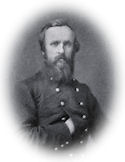
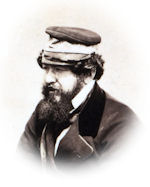
Post image for William Howard Russell’s Diary: On dueling in Mississippi.—Train to Memphis.—Soldiers or volunteers heading to Corinth.

June 16th.—I was compelled to send my excuses to Governor Pettus, and remained quietly within the house of my host, entreating him to protect me from visitors and especially my own confrères, that I might secure a few hours even in that ardent heat to write letters to home. Now, there is some self-denial required, if one be at all solicitous of the popularis aura, to offend the susceptibilities of the irritable genus in America. It may make all the difference between millions of people hearing and believing you are a high-toned, whole-souled gentleman or a wretched ignorant and prejudiced John Bull; but, nevertheless, the solid pudding of self-content and the satisfaction of doing one’s work are preferable to the praise even of a New York newspaper editor.

When my work was over I walked out and sat in the shade with a gentleman whose talk turned upon the practises of the Mississippi duello. Without the smallest animus, and in the most natural way in the world, he told us tale after tale of blood, and recounted terrible tragedies enacted outside bars of hotels and in the public streets close beside us. The very air seemed to become purple as he spoke, the land around a veritable “Aceldama.” There may, indeed, be security for property, but there is none for the life of its owner in difficulties, who may be shot by a stray bullet from a pistol as he walks up the street.

I learned many valuable facts. I was warned, for example, against the impolicy of trusting to small-bored pistols or to pocket six-shooters in case of a close fight, because suppose you hit your man mortally he may still run in upon you and rip you up with a bowie knife before he falls dead; whereas if you drive a good heavy bullet into him, or make a hole in him with a “Derringer” ball, he gets faintish and drops at once.

Many illustrations, too, were given of the value of practical lessons of this sort. One particularly struck me. If a gentleman with whom you are engaged in altercation moves his hand towards his breeches pocket, or behind his back, you must smash him or shoot him at once, for he is either going to draw his six-shooter, to pull out a bowie knife, or to shoot you through the lining of his pocket. The latter practice is considered rather ungentlemanly, but it has somewhat been more honoured lately in the observance than in the breach. In fact, the savage practice of walking about with pistols, knifes, and poniards, in bar-rooms and gambling-saloons, with passions ungoverned, because there is no law to punish the deeds to which they lead, affords facilities for crime which an uncivilised condition of society leaves too often without punishment, but which must be put down or the country in which it is tolerated will become as barbarous as a jungle inhabited by wild beasts.

Our host gave me an early dinner, at which I met some of the citizens of Jackson, and at six o’clock I proceeded by the train for Memphis. The carriages were of course, full of soldiers or volunteers, bound for a large camp at a place called Corinth, who made night hideous by their song and cries, stimulated by enormous draughts of whiskey and a proportionate consumption of tobacco, by teeth and by fire. The heat in the carriages added to the discomforts arising from these causes, and from great quantities of biting insects in the sleeping places. The people have all the air and manners of settlers. Altogether the impression produced on my mind was by no means agreeable, and I felt as if I was indeed in the land of Lynch law and bowie knives, where the passions of men have not yet been subordinated to the influence of the tribunals of justice. Much of this feeling has no doubt been produced by the tales to which I have been listening around me—most of which have a smack of manslaughter about them.
MONDAY 17

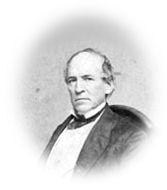
A cool fine day. Nothing particularly new has occured, but matters over the River seem to be coming to a point. Went after up to the camp at Meridian Hill about a mile north. Three Maine Regts are there; [also] the NY 5th (German) and the NY 9th. About 4000 [men?] were on parade while we were there. It was quite a military show. Another Mass Regt came tonight. I did not go down to the Ave tonight. Retired early.

______

The three diary manuscript volumes, Washington during the Civil War: The Diary of Horatio Nelson Taft, 1861-1865, are available online at The Library of  Congress.

SUNDAY 16

It has been a fine comfortable day with a good breeze. Attended the service at the 12th Regt quarters, the Chaplin (Mathew Hale Smith) officiating. Large numbers of citizens attend every Sunday morning. The Regt is expecting orders every hour to move over the River into Virginia. The Dress Parade was attended by thousands of spectators. Walked down to Willards to hear the news but found not much afloat today, but plenty of reports flying about.

______

The three diary manuscript volumes, Washington during the Civil War: The Diary of Horatio Nelson Taft, 1861-1865, are available online at The Library of  Congress.

CAMP JACKSON, Sunday, June 16, 1861.

DEAREST L—:—Morning work done and waiting till Dr. Hoge begins, I write to my darling wife and boys. Would you like to know our daily routine. (Mem.:—Colonel King commanding State troops and my superiors, Colonels Rosecrans and Matthews, all having gone home, I am now in command of all at this post, eighteen companies United States troops and sixteen companies State troops, in all three thousand men and upwards. A sudden responsibility for a civilian, but the duties are chiefly such as a civilian can easily do, so it is strange rather in appearance than reality). First, at 5 A. M., gun fired and reveille sounded, calling all men to roll-call. I was up and dressing. Owing to bright light in a tent, sound sleeping in the cool air, etc., etc., this I did not find difficult. In a few minutes all the captains call at my tent to report themselves and the condition of their men.

I sit at a table looking towards the front entrance of the tent; an orderly on my right to go errands; a clerk at a table on the left to write; an adjutant ditto to give orders and help me guess what ought to be done in each case, and a sentinel slowly pacing back and forth in front of the entrance whose main employment is telling men to take off their hats before entering on the surroundings. The first business is looking over the orders of the day, and telling the adjutant to see them carried out. These are as to guards and such, which are stereotyped with slight alterations to suit circumstances—such as guarding wells, fixing new sentinels where men are suspected of getting out, etc., etc. Next comes issuing permits to go out of camp to town and to parties to go bathing in the Scioto one and one-half miles distant. Then comes in, for an hour or more, the morning reports of roll-call, showing the sick, absent, etc., etc., all to be looked over and corrected; and mistakes abound that are curious enough. Once we got all the officers returned as “under arrest.” One captain lost a lieutenant, although he was present as plainly as Hateful W. Perkins was in Pease’s anecdote. Then rations are returned short; on that point I am strong, and as the commissary is clever, we soon correct mistakes. Then we have difficulties between soldiers, very slight and easily disposed of; but troubles between soldiers and the carpenters whose tools disappear mysteriously, and farmers in the neighborhood who go to bed with roosts of barnyard fowl and wake up chickenless and fowlless, are more troublesome. The accused defenders of their country can always prove an alibi by their comrades, and that the thing is impossible by the sentinels whose beat they must have passed.

Since writing the above, I have waited under a tree, with a flag raised, three quarters of an hour for Dr. Hoge’s congregation, but for some reason he did not come, and an audience of one thousand were disappointed, possibly(?), however, not all disagreeably. I have sent five men and a sergeant to arrest two deserters in Columbus (not of our regiment) belonging to Captain Sturgess’ company of Zanesville; one sergeant and two men to see safely out of camp two men who were about to have their heads shaved for refusing to take the oath of allegiance; a lieutenant and ten men to patrol the woods back of the camp, to prevent threatened depredations on a farmer. This all since I began writing. The wind is rising and the dust floats in on my paper, as you see. As yet, we eat our meals at Colonel King’s quarters—plain good living. Guard-mounting is a ceremonious affair at 9 A. M. At 12 M., drum-beat and roll-call for dinner; at 6 P. M., ditto for supper; at 7 P. M., our band calls out the regiment for a parade; not yet a “dress parade,” but a decidedly imposing affair, notwithstanding. The finale is at 10 P.M.

The evenings and night are capital. The music and hum, the cool air in the tent, and open-air exercise during the day, make the sleeping superb. We have cots about like our lounge, only slighter and smaller, bought in Dayton. Our men are fully equal to the famous Massachusetts men in a mechanical way. They build quarters, ditches, roads, traps; dig wells, catch fish, kill squirrels, etc., etc., and it is really a new sensation, the affection and pride one feels respecting such a body of men in the aggregate.

We are now feeling a good deal of anxiety about Colonel Rosecrans. He is said to be appointed a brigadier. If it were to take effect six weeks or three months hence, we would like it if he should be promoted; but now we fear some new man over us who may not be agreeable, and we do not like the difficulties attendant upon promotion. The governor says we shall not lose Colonel Rosecrans, and we hope he is right.

I enclose a letter in the Cleveland Herald written by some one in one of our Cleveland companies. With Colonel Rosecrans in command, we should have no trouble with our men. We have reconciled them as, I think, perfectly, or as nearly so as men ever are with their officers. But if Colonel Rosecrans goes, we are between Scylla and Charbydis you know—officers at our head whom we may not like, or men under us who do not like us; but it will all come right. I am glad I am here, and only wish you were here.

I was in at Platt’s last evening an hour or so. Laura was expecting Platt by the late train, but as he has not yet come out here, I suspect he did not arrive. Love to all. Kiss the boys. I enjoyed reading your talk about them and their sayings.

Affectionately,

R. B. HAYES.

MRS. HAYES.

Post image for “I do not believe there is a woman among us who would not give up every thing but the bare necessaries of life for the good of our cause.”—Diary of a Southern Refugee.

16th.—Rumours are abundant to-day of a Federal force approaching Strasburg. We are not at all credulous of the flying reports with which our ears are daily pained, and yet they make us restless and uneasy. We thank God and take courage from the little successes we have already had at Pigs Point, Acquia Creek, Fairfax Court-House, and Philippi. These are mere trifles, they say; well, so they are, but they are encouraging to our men, and show that we can hold our own.

A most decided revolution is going on in our social system throughout our old State: economy rules the day. In this neighbourhood, which has been not a little remarkable for indulging in the elegancies of life, they are giving up desserts, rich cake, etc. The wants of the soldiers are supplied with a lavish hand, but personal indulgences are considered unpatriotic. How I do admire their self-denying spirit! I do not believe there is a woman among us who would not give up every thing but the bare necessaries of life for the good of our cause.

16th, Night.—I can scarcely control myself to sit quietly down and write of the good news brought by the mail of to-day; I mean the victory—on our side almost bloodless victory—at Bethel. It took place on the 10th. Strange that such brilliant news was so long delayed! The enemy lost 200 men, and we but one. He, poor fellow, belonged to a North Carolina regiment, and his bereaved mother received his body. She lives in Richmond. It seems to me that Colonel Magruder must have displayed consummate skill in the arrangement of his little squad of men. His ” blind battery ” succeeded admirably. The enemy had approached in two parties from Fortress Monroe, and, by mistake, fired into each other, causing great slaughter. They then united and rushed into the jaws of death, or, in other words, into the range of the guns of the blind battery. I feel sorry, very sorry, for the individual sufferers among the Yankees, particularly for those who did not come voluntarily; but they have no business here, and the more unsuccessful they are the sooner their government will recall them. I do believe that the hand of God was in this fight, we were so strangely successful. How we all gathered around M. M. as she read the account given in the paper; and how we exulted and talked, and how Mr. P. walked backwards and forwards, rubbing his hands with delight!

The camp at Harper’s Ferry is broken up. General Johnston knows why; I am sure that I do not. He is sending out parties of troops to drive off the Yankees, who are marauding about the neighbouring counties, but who are very careful to keep clear of the “Ferry.” The Second Regiment, containing some of our dear boys, has been lately very actively engaged in pursuit of these marauders, and we are kept constantly anxious about them.

Sunday [June] 16.—Colonel Rosecrans and Matthews, having gone to Cincinnati, and Colonel King to Dayton, I am left in command of camp, some twenty-five hundred to three thousand men—an odd position for a novice, so ignorant of all military things. All matters of discretion, of common judgment, I get along with easily, but I was for an instant puzzled when a captain in the Twenty-fourth, of West Point education, asked me formally, as I sat in tent, for his orders for the day, he being officer of the day. Acting on my motto, “When you don’t know what to say, say nothing,” I merely remarked that I thought of nothing requiring special attention; that if anything was wanted out of the usual routine I would let him know.

Post image for A Rebel War Clerk’s Diary at the Confederate States Capital, By John Beauchamp Jones

JUNE 16TH.—To-day, receiving dispatches from General Floyd, in Western Virginia, that ten thousand Yankees were advancing through Fayette County, and might intercept railroad communication between Richmond and Chattanooga—the Secretary got me to send a telegraphic dispatch to his family to repair hither without delay, for military reasons. About this time the Secretary’s health gave way again, and Major Tyler had another fit of indisposition totally disqualifying him for business. Hence I have nearly all the correspondence of the department on my hands, since Col. Bledsoe has ceased to write.

Post image for A Diary of American Events – June 16, 1861

—This afternoon J. G. Morrison, Jr., and several of his friends, unfurled the Star-Spangled Banner on the Maryland abutment of the bridge lately destroyed at Harper’s Ferry. The cherished symbol of the Union was hailed with delight by the people of Harper’s Ferry, and particularly by the women, who flocked to the opposite bank and saluted it by the waving of handkerchiefs and other manifestations of joy.—Baltimore American, June 20.

—General Joseph H. Lane, of Kansas, was appointed a Brigadier-General in the army of the United States.—N. Y. Tribune, June 20.

—A recconoissance of the Loudon and Hampshire Railroad, in Va., was made under Col. Powers, accompanied by the First Regiment of Connecticut troops. All the bridges were found safe, and the train returned. When two miles east of Vienna, a man in ambush fired on the train, wounding George Busbee, of the Connecticut Life Guards. Gen. Tyler was standing beside the wounded man, on an open car. The shot was evidently intended for him. The train was stopped as soon as possible, and the companies were divided to scour the woods, and search the neighboring farm-houses, etc., to make a circuit of a mile. Two men were arrested, named Walker and McMills, in the home of the latter. All the evidence that could be obtained, tended towards criminating Walker, who, with the other prisoner and a negro witness, was brought to Alexandria. The train was within three miles of 900 rebel troops, and six miles of Fairfax Court House, where, it is understood, there are 2,500 troops, besides recent arrivals.—N. Y. Times, June 17