June 21st. Verily I would be sooner in the Coptic Cairo, narrow streeted, dark bazaared, many flied, much vexed by donkeys and by overland route passengers, than the horrid tongue of land which licks the muddy margin of the Ohio and the Mississippi. The thermometer at 100° in the shade before noon indicates nowhere else such an amount of heat and suffering, and yet prostrate as I was, it was my fate to argue that England was justified in conceding belligerent rights to the South, and that the attitude of neutrality we had assumed in this terrible quarrel is not in effect an aggression on the United States; and here is a difference to be perceived between the North and the South.
The people of the seceding States, aware in their consciences that they have been most active in their hostility to Great Britain, and whilst they were in power were mainly responsible for the defiant, irritating, and insulting tone commonly used to us by American statesmen, are anxious at the present moment, when so much depends on the action of foreign countries, to remove all unfavourable impressions from our minds by declarations of good will, respect, and admiration, not quite compatible with the language of their leaders in times not long gone by. The North, as yet unconscious of the loss of power, and reared in a school of menace and violent assertion of their rights regarding themselves as the whole of the United States, and animated by their own feeling of commercial and political opposition to Great Britain, maintain the high tone of a people who have never known let or hindrance in their passions, and consider it an outrage that the whole world does not join in active sympathy for a government which in its brief career has contrived to affront every nation in Europe with which it had any dealings.
If the United States have astonished France by their ingratitude, they have certainly accustomed England to their petulance, and one can fancy the satisfaction with which the Austrian Statesmen who remember Mr. Webster’s despatch to Mr. Hulsemann, contemplate the present condition of the United States in the face of an insurrection of these sovereign and independent States which the Cabinet at Washington stigmatises as an outbreak of rebels and traitors to the royalty of the Union.
During my short sojourn in this country I have never yet met any person who could show me where the sovereignty of the Union resides. General Prentiss, however, and his Illinois volunteers, are quite ready to fight for it.
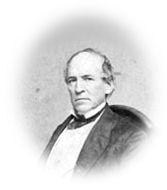
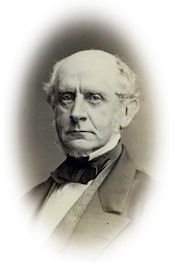
In the afternoon the General drove me round the camps in company with Mr. Washburne, Member of Congress, from Illinois, his staff and a party of officers, among whom was Mr. Oglesby, colonel of a regiment of State Volunteers, who struck me by his shrewdness, simple honesty, and zeal. (Since died of wounds received in action.) He told me that he had begun life in the utmost obscurity, but that somehow or other he got into a lawyer’s office, and there, by hard drudgery, by mother wit, and industry, notwithstanding a defective education, he had raised himself not only to independence but to such a position that 1000 men had gathered at his call and selected one who had never led a company in his life to be their colonel; in fact, he is an excellent orator of the western school, and made good homely, telling speeches to his men.
“I’m not as good as your Frenchmen of the schools of Paris, nor am I equal to the Russian colonels I met at St. Petersburg, who sketched me out how they had beaten you Britishers at Sebastopol,” said he; “but I know I can do good straight fighting with my boys when I get a chance. There is a good deal in training, to be sure, but nature tells too. Why I believe I would make a good artillery officer if I was put to it. General, you heard how I laid one of them guns the other day and touched her off with my own hand and sent the ball right into a tree half-a-mile away.” The Colonel evidently thought he had by that feat proved his fitness for the command of a field battery. One of the German officers who was listening to the lively old man’s talk, whispered to me, “Dere is a good many of tese colonels in dis camp.”
At each station the officers came out of their tents, shook hands all round, and gave an unfailing invitation to get down and take a drink, and the guns on the General’s approach fired salutes, as though it was a time of profoundest peace. Powder was certainly more plentiful than in the Confederate camps, where salutes are not permitted unless by special order on great occasions.
The General remained for some time in the camp of the Chicago light artillery, which was commanded by a fine young Scotchman of the Saxon genus Smith, who told me that the privates of his company represented a million and a half of dollars in property. Their guns, horses, carriages, and accoutrements were all in the most creditable order, and there was an air about the men and about their camp which showed they did not belong to the same class as the better disciplined Hungarians of Milotzky close at hand.
Whilst we were seated in Captain Smith’s tent, a number of the privates came forward, and sang the “Star-spangled banner” and a patriotic song, to the air of “God save the Queen,” and the rest of the artillerymen, and a number of stragglers from the other camps, assembled and then formed line behind the singers. When the chorus was over there arose a great shout for Washburne, and the honourable Congress man was fain to come forward and make a speech, in which he assured his hearers of a very speedy victory and the advent of liberty all over the land. Then “General Prentiss” was called for; and as citizen soldiers command their Generals on such occasions, he too was obliged to speak, and to tell his audience “the world had never seen any men more devoted, gallant, or patriotic than themselves.” “Oglesby” was next summoned, and the tall, portly, good-humoured old man stepped to the front, and with excellent tact and good sense, dished up in the Buncombe style, told them the time for making speeches had passed, indeed it had lasted too long; and although it was said there was very little fighting when there was much talking, he believed too much talking was likely to lead to a great deal more fighting than any one desired to see between citizens of the United States of America, except their enemies, who, no doubt, were much better pleased to see Americans fighting each other than to find them engaged in any other employment. Great as the mischief of too much talking had been, too much writing had far more of the mischief to answer for. The pen was keener than the tongue, hit harder, and left a more incurable wound; but the pen was better than the tongue, because it was able to cure the mischief it had inflicted.” And so by a series of sentences the Colonel got round to me, and to my consternation, remembering how I had fared with my speech at the little private dinner on St. Patrick’s Day in New York, I was called upon by stentorian lungs, and hustled to the stump by a friendly circle, till I escaped by uttering a few sentences as to “mighty struggle,” “Europe gazing,” “the world anxious,” “the virtues of discipline,” “the admirable lessons of a soldier’s life,” and the “aspiration that in a quarrel wherein a British subject was ordered, by an authority he was bound to respect, to remain neutral, God might preserve the right.”
Colonel, General, and all addressed the soldiers as “gentlemen,” and their auditory did not on their part refrain from expressing their sentiments in the most unmistakeable manner. “Bully for you, General!” “Bravo, Washburne!” “That’s so, Colonel!” and the like, interrupted the harangues and when the oratorical exercises were over the men crowded round the staff, cheered and hurrahed, and tossed up their caps in the greatest delight.
With the exception of the foreign officers, and some of the Staff, there are very few of the colonels, majors, captains, or lieutenants who know anything of their business. The men do not care for them, and never think of saluting them. A regiment of Germans was sent across from Bird’s Point this evening for plundering and robbing the houses in the district in which they were quartered.
It may be readily imagined that the scoundrels who had to fly from every city in Europe before the face of the police will not stay their hands when they find themselves masters of the situation in the so-called country of an enemy. In such matters the officers have little or no control, and discipline is exceedingly lax, and punishments but sparingly inflicted, the use of the lash being forbidden altogether. Fine as the men are, incomparably better armed, clad— and doubtless better fed—than the Southern troops, they will scarcely meet them man to man in the field with any chance of success. Among the officers are bar-room keepers, persons little above the position of potmen in England, grocers’ apprentices, and such like—often inferior socially, and in every other respect, to the men whom they are supposed to command. General Prentiss has seen service, I believe, in Mexico; but he appears to me to be rather an ardent politician, embittered against slaveholders and the South, than a judicious or skilful military leader.
The principles on which these isolated commanders carry on the war are eminently defective. They apply their whole minds to petty expeditions, which go out from the camps, attack some Secessionist gathering, and then return, plundering as they go and come, exasperating enemies, converting neutrals into opponents, disgusting friends, and leaving it to the Secessionists to boast that they have repulsed them. Instead of encouraging the men and improving their discipline these ill-conducted expeditions have an opposite result.