Following the American Civil War Sesquicentennial with day by day writings of the time, currently 1863.

Tuesday, June 7, 2011

Post image for William Harold Russell’s Diary: War-rumors, and military movements.—Governor Manning’s slave plantations.—Fortunes made by slave-labor.—Frogs for the table. —The forest.—Cotton and sugar.—A thunderstorm.

June 7th.—The Confederate issue of ten millions sterling, in bonds payable in twenty years, is not sufficient to meet the demands of Government; and the four millions of small Treasury notes, without interest, issued by Congress, are being rapidly absorbed. Whilst the Richmond papers demand an immediate movement on Washington, the journals of New York are clamoring for an advance upon Richmond. The planters are called upon to accept the Confederate bonds in payment of the cotton to be contributed by the States.

Extraordinary delusions prevail on both sides. The North believe that battalions of scalping Indian savages are actually stationed at Harper’s Ferry. One of the most important movements has been made by Major-General McClellan, who has marched a force into Western Virginia from Cincinnati, has occupied a portion of the line of the Baltimore and Ohio railway, which was threatened with destruction by the Secessionists; and has already advanced as far as Grafton. Gen. McDowell has been appointed to the command of the Federal forces in Virginia. Every day regiments are pouring down from the North to Washington. General Butler, who is in command at Fortress Monroe, has determined to employ negro fugitives, whom he has called “Contrabands,” in the works about the fort, feeding them, and charging the cost of their keep against the worth of their services; and Mr. Cameron, the Secretary of War, has ordered him to refrain from surrendering such slaves to their masters, whilst he is to permit no interference by his soldiers with the relations of persons held to service under the laws of the States in which they are in.

Mr. Jefferson Davis has arrived at Richmond. At sea the Federal steamers have captured a number of Southern vessels; and some small retaliations have been made by the Confederate privateers. The largest mass of the Confederate troops have assembled at a place called Manassas Junction, on the railway from Western Virginia to Alexandria.

The Northern papers are filled with an account of a battle at Philippi, and a great victory, in which no less than two of their men were wounded and two were reported missing as the whole casualties; but Napoleon scarcely expended so much ink over Austerlitz as is absorbed on this glory in the sensation headings of the New York papers.

After breakfast I accompanied a party of Mr. Burnside’s friends to visit the plantations of Governor Manning, close at hand. One plantation is as like another as two peas. We had the same paths through tasselling corn, high above our heads, or through wastes of rising sugar-cane; but the slave quarters on Governor Manning’s were larger, better built, and more comfortable-looking than any I have seen.

Mr. Bateman, the overseer, a dour strong man, with spectacles on nose, and a quid in his cheek, led us over the ground. As he saw my eye resting on a large knife in a leather case stuck in his belt, he thought it necessary to say, “I keep this to cut my way through the cane brakes about; they are so plaguey thick.”

All the surface water upon the estate is carried into a large open drain, with a reservoir in which the fans of a large wheel, driven by steam-power, are worked so as to throw the water over to a cut below the level of the plantation, which carries it into a bayou connected with the lower Mississippi.

In this drain one of my companions saw a prodigious frog, about the size of a tortoise, on which he pounced with alacrity; and on carrying his prize to land he was much congratulated by his friend. “What on earth will you do with the horrid reptile?” “Do with it! why, eat it to be sure.” And it is actually true, that on our return the monster ‘crapaud’ was handed over to the old cook, and presently appeared on the breakfast-table, looking very like an uncommonly fine spatch-cock, and was partaken of with enthusiasm by all the company.

From the draining-wheel we proceeded to visit the forest, where negroes were engaged in clearing the trees, turning up the soil between the stumps, which marked where the mighty sycamore, live oak, gumtrees, and pines had lately shaded the rich earth. In some places the Indian corn was already waving its head and tassels above the black gnarled roots; in other spots the trees, girdled by the axe, but not yet down, rose up from thick crops of maize; and still deeper in the wood negroes were guiding the ploughs, dragged with pain and difficulty by mules, three abreast, through the tangled roots and rigid earth, which will next year be fit for sowing. There were one hundred and twenty negroes at work; and these, with an adequate number of mules, will clear four hundred and fifty acres of land this year. “But it’s death on niggers and mules,” said Mr. Bateman. “We generally do it with Irish, as well as the hedging and ditching; but we can’t get them now, as they are all off to the wars.”

Although the profits of sugar are large, the cost of erecting the machinery, the consumption of wood in the boiler, and the scientific apparatus demand a far larger capital than is required by the cotton planter, who, when he has got land, may procure negroes on credit, and only requires food and clothing till he can realize the proceeds of their labor, and make a certain fortune. Cotton will keep where sugar spoils. The prices are far more variable in the latter, although it has a protective tariff of 20 per cent.

The whole of the half million of hogsheads of the sugar grown in the South is consumed in the United States, whereas most of the cotton is sent abroad; but in the event of a blockade the South can use its sugar ad nauseam, whilst the cotton is all but useless in consequence of the want of manufacturers in the South.

When I got back, Mr. Burnside was seated in his verandah, gazing with anxiety, but not with apprehension, on the marching columns of black clouds, which were lighted up from time to time by heavy flashes, and shaken by rolls of thunder. Day after day the planters have been looking for rain, tapping glasses, scrutinizing aneroids, consulting negro weather prophets, and now and then their expectations were excited by clouds moving down the river, only to be disappointed by their departure into space, or, worse than all, their favoring more distant plantations with a shower that brought gold to many a coffer. “Did you ever see such luck? Kenner has got it again! That’s the third shower Bringier has had in the last two days.”

But it was now the turn of all our friends to envy us a tremendous thunder-storm, with a heavy, even downfall of rain, which was sucked up by the thirsty earth almost as fast as it fell, and filled the lusty young corn with growing pains, imparting such vigor to the cane that we literally saw it sprouting up, and could mark the increase in height of the stems from hour to hour.

My good host is rather uneasy about his prospects this year, owing to the war; and no wonder. He reckoned on an income of £100,000 for his sugar alone; but if he cannot send it North it is impossible to estimate the diminution of his profits. I fancy, indeed, he more and more regrets that he embarked his capital in these great sugar-swamps, and that he would gladly now invest it at a loss in the old country, of which he is yet a subject; for he has never been naturalized in the United States. Nevertheless, he rejoices in the finest clarets, and in wines of fabulous price, which are tended by an old white-headed negro, who takes as much care of the fluid as if he was accustomed to drink it every day.
FRIDAY 7

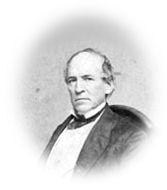
Offices all closed today in respect to the Memory of Judge Douglas. Took the occasion to visit Alexandria with my son H N Jr, and Mr Vansantvoord. We visited the “Marshall House” first where Col Ellsworth was killed. Got a pass there to go to the Camps of the Mich Regt and the Zuaves on [“Shooters Hill”?] about a mile back of the City. It is a very commanding position and the “works” well advanced, Ditch & Breastwork. Got home about 4 o’clock, found my nephew E.P. and Capt Welling from Lyons. Saml Androus also paid paid [sic] us a visit from the Camp. He returned.

______

The three diary manuscript volumes, Washington during the Civil War: The Diary of Horatio Nelson Taft, 1861-1865, are available online at The Library of  Congress.

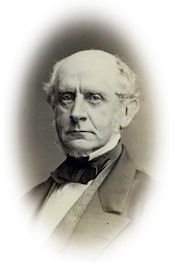
Post image for “You may be more interested to know a little about the House of Commons. My diplomatic privilege gives me the entree there, and I have used it twice.”–Adams Family Letters…Charles Francis Adams To His Son .

London, June 7, 1861

For after all that may be said, there is not and cannot be any assimilation of manners and social habits between Americans and English people. All intercourse with the aristocratic class is necessarily but formal. We are invited everywhere, and dine out almost every day, but this brings us no nearer. Everybody is civil, but each one has his interests in England, so that a stranger is but an outsider at best. . . .

You may be more interested to know a little about the House of Commons. My diplomatic privilege gives me the entree there, and I have used it twice. The last time was at the close of the debate on the budget, when it was generally understood that the fate of Mr. Gladstone, if not of the whole Cabinet hung on the decision. More than six hundred members were present, and the array showed great equality on the two sides of the House. I had attended on the Monday before and had made up my mind that if the division should follow, the opposition would prevail by a decided vote. The ministry however had influence enough to command an adjournment, and on Thursday the case stood differently. The attack was neither so vigorous nor so confident, whilst the defence was bolder and more strenuous. The first effective stroke came from Lord John Russell, which I did not get in time to hear. The next was from Mr. Cobden, which was plain, direct and evidently telling on the House. The decisive blow came, however, from Mr. Gladstone, who stood like a bull in the arena surrounded by dogs. He began by tossing the very last one who had attacked him, and he went on with every one in turn, until he had them all sprawling on the ground. He is by all odds the best speaker I have heard, and though I cannot think him a very great man, I must award him the palm as a skilful debater. Lord Palmerston is evidently powerful more from his character, talents and position, than from any oratorical qualities. The ministry triumphed by fifteen majority only.

The characteristic of the House is that it is in essence a real deliberative body, whilst our House has ceased to be one. We speak to the people and not to the audience. Hence we make orations and not speeches. I know not how this can be remedied in America. Some members of Parliament tell me that this is perceptibly growing even here. So it must be, in proportion to the control which the people exercise over their representatives. . . .

John Beauchamp Jones avatar.  No image of Jones has been found online.

JUNE 7TH.—We have a Chief of the Bureau of War, a special favorite, it is said, of Mr. Davis. I went into the Secretary’s room (I now occupy one adjoining), and found a portly gentleman in a white vest sitting alone. The Secretary was out, and had not instructed the new officer what to do. He introduced himself to me, and admitted that the Secretary had not assigned him to duty. I saw at a glance how the land lay. It was Col. A. T. Bledsoe, lately of the University of Virginia; and he had been appointed by the President, not upon the recommendation of the Secretary. Here was a muss not larger than a mustard-seed; but it might grow, for I knew well how sensitive was the nature of the Secretary; and he had not been consulted. And so I took it upon myself to be cicerone to the stranger. He was very grateful,—for a long time. Col. B. had graduated at West Point in the same class with the President and Bishop Polk, and subsequently, after following various pursuits, being once, I believe, a preacher, became settled as a teacher of mathematics at the University of Virginia. The colonel stayed near me, aiding in the work of answering letters; but after sitting an hour, and groaning repeatedly when gazing at the mass of papers constantly accumulating before us, he said he believed he would take a number of them to his lodging and answer them there. I saw nothing more of him during the day. And once or twice, when the Secretary came in, he looked around for him, but said nothing. Finally I informed him what I had done; and, without signifying an assent, he merely remarked that there was no room in his office for him.

Post image for A Diary of American Events – June 7, 1861

—The Engineer Corps of the Sixty-ninth Regiment of New York, with Company B, of the Second Cavalry, took five prisoners and a drove of cattle, fifty in number, which were on their way to the secession forces.—N. Y, World, June. 10.

—An express messenger arrived at New Orleans from Mr. Adolphe Ducros’s plantation, at the mouth of Bayou Bienvenu, which empties into Lake Borgne, with information to Maj.-Gen. Twiggs, that two fishermen had reported the arrival of two small war steamers in Lake Borgne, one carrying three guns, and the other a long pivot gun forward. The fishermen stated that the steamers lay off in the lake, and that night before last they sent two boats towards the mouth of the bayou, as was supposed, for taking soundings. Gen. Twiggs ordered Major Taylor, in command of the barracks, to proceed immediately to Martello Tower, at the mouth of Bayou Bienvenu, with a company of infantry, to garrison the tower, which contains several heavy mounted guns, for the protection of this avenue to the city. This point is but ten miles from New Orleans in a direct line, and a little over fifteen by the Mexican Gulf Railroad. It is celebrated for being the point at which the British landed their troops in the war of 1813-’14.—New Orleans Picayune, June 8.

—The Tenth Regiment, of New York, arrived at Fortress Monroe.—N. Y. Times, June 9.

—The tents at Camp McClure, Chambersburg, Pa., were struck at six o’clock A. M., and the line of march taken up soon afterwards for Brown’s Mill, near Green Castle, and eight miles distant from Camp McClure. The force in motion was Brig.-Gen. Thomas’ command, was headed by him, and included the U. S. Cavalry, (recently from Texas,) 4 companies, the Philadelphia City Troop, and the 2 companies of artillerists, commanded by Captains Doubleday and Seymour, McMullin’s Independent Rangers, the Twenty-third Regiment, Col. Dare, the Twenty-first Regiment, Col. Ballier, and the Sixth Regiment, Col. Nagle. The line was nearly 2 miles in length. The men all had their knapsacks closely slung to prevent jolting, and had evidently prepared themselves, so far as their knowledge taught them, for a long march.—Idem.

—The Indiana Regiment of Zouaves, Col. Wallace, fully armed and equipped, passed through Cincinnati, Ohio, en route for Cumberland, Md. They made a splendid appearance, and were enthusiastically received.—Ohio State Journal, June 8.

—Colonel Corcoran, of the Sixty-ninth N. Y. Regiment, with a detachment of one hundred men, proceeded to Ball’s Corner, 5 miles beyond the lines in Virginia, where he arrested a party of five secessionists, one wearing the uniform of a secession sergeant; one, named Richard Meitch, an employé at the capital as watchman, and one named Ball, a rich farmer, on whom was found a muster roll of a rebel company, and in whose house were found arms, bedding, and cooking utensils for a company of at least fifty men. Nine hundred dollars in gold were also found, but returned by the mistaken generosity of the sergeant, to Ball’s wife, without the Colonel’s knowledge until after their return to the camp—N. Y. Times, June 8.

—The New York Nineteenth Regiment, from Elmira, commanded by Col. Clark, and the Third Maine Regiment Volunteers, Col. Howard, arrived at Washington.—(Doc. 238.)

—A crew of 402 seamen, ordinary seamen, and landsmen, left the receiving-ship North Carolina at Brooklyn, for Portsmouth, N. H., where they will constitute a ship’s company for the United States frigate Santee, which, after lying in various positions at the Navy Yard for half a century, has been put in commission for blockade service. The Advance Brigade of Federal troops, under Col. Thomas, reached Greencastle, thirteen miles south of Chambersburg, Pa.—N. Y. World, and N. Y. Times, June 8.