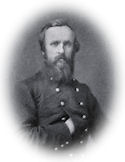
June—, 1861.—Early in the second week of our camping out in service, Colonel Rosecrans returned and set vigorously to work organizing the regiment. The evening of the day he returned we were closing up matters in our tent preparatory to going to bed, when two gentlemen rode up with a dispatch which announced the appointment of Colonel Rosecrans to the post of brigadier-general, and ordering him to repair to western Virginia to take command of Ohio troops moving in that direction. We rode into Columbus and saw the colonel now general, off about midnight. Good-bye to our good colonel. A sorry thing for us. May it prove all he hopes to him. I shall never forget how his face shone with delight as he read the dispatch.
Sunday, June 19, 2011
WEDNESDAY 19
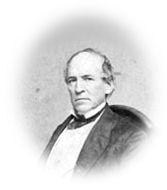
Fine weather yet. Every one on tiptoe to hear news. Troops are passing over the River and an advance to Fairfax C.H. is expected. Exciting news expected from Old Point from the West as well as from the opposite side of the River. Attended the “Parade” this evening and went down to Willards for an hour or so. Everybody excited and enquiring for news. Came home with the NY papers and retired 1/2 past 10.

______
The three diary manuscript volumes, Washington during the Civil War: The Diary of Horatio Nelson Taft, 1861-1865, are available online at The Library of Congress.
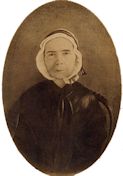
June 19.—Yesterday evening we heard rumours of the Federal troops having crossed the Potomac, and marching to Martinsburg and Shepherdstown in large force. General Johnston immediately drew up his army at a place called “Carter’s,” on the Charlestown road, about four miles beyond Winchester. Messrs. B. and R. M. called this morning, and report that the location of the Federals is very uncertain; it is supposed that they have retreated from Martinsburg. Oh, that our Almighty Father, who rules all things, would interpose and give us peace, even now when all seem ready for war! He alone can do it.
The middle of June, 1861, J. H.’s regiment, the Sixteenth New York, suddenly received orders to be ready to march, and after some little further delay it left Albany for Washington and the front. The family were now fairly in the war.
Rev. G. L. Prentiss to Joseph Howland
New York, June 19, 1861.
Abby has just told my wife that you are ordered South. Is it so? If I were not strong in faith about you, I don’t know what I should say. But the path of duty is the path of safety and of honor, and if you were my own brother (you seem to me more like a younger brother than anything else) I could not lift a finger against your going — assuming always that your health and strength hold out. God bless you and have you ever, dearest friend, in His holy keeping.
Most affectionately yours,
George L. Prentiss.
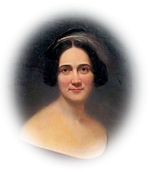
June 19th.—In England Mr. Gregory and Mr. Lyndsey rise to say a good word for us. Heaven reward them; shower down its choicest blessings on their devoted heads, as the fiction folks say.
Barnwell Heyward telegraphed me to meet him at Kingsville, but I was at Cool Spring, Johnny’s plantation, and all my clothes were at Sandy Hill, our home in the Sand Hills; so I lost that good opportunity of the very nicest escort to Richmond. Tried to rise above the agonies of every-day life. Read Emerson; too restless—Manassas on the brain.
Russell’s letters are filled with rubbish about our wanting an English prince to reign over us. He actually intimates that the noisy arming, drumming, marching, proclaiming at the North, scares us. Yes, as the making of faces and turning of somersaults by the Chinese scared the English.
Mr. Binney¹ has written a letter. It is in the Intelligencer of Philadelphia. He offers Lincoln his life and fortune; all that he has put at Lincoln’s disposal to conquer us. Queer; we only want to separate from them, and they put such an inordinate value on us. They are willing to risk all, life and limb, and all their money to keep us, they love us so.
Mr. Chesnut is accused of firing the first shot, and his cousin, an ex-West Pointer, writes in a martial fury. They confounded the best shot made on the Island the day of the picnic with the first shot at Fort Sumter. This last is claimed by Captain James. Others say it was one of the Gibbeses who first fired. But it was Anderson who fired the train which blew up the Union. He slipped into Fort Sumter that night, when we expected to talk it all over. A letter from my husband dated, “Headquarters, Manassas Junction, June 16, 1861:”

My Dear Mary: I wrote you a short letter from Richmond last Wednesday, and came here next day. Found the camp all busy and preparing for a vigorous defense. We have here at this camp seven regiments, and in the same command, at posts in the neighborhood, six others—say, ten thousand good men. The General and the men feel confident that they can whip twice that number of the enemy, at least.
I have been in the saddle for two days, all day, with the General, to become familiar with the topography of the country, and the posts he intends to assume, and the communications between them.
We learned General Johnston has evacuated Harper’s Ferry, and taken up his position at Winchester, to meet the advancing column of McClellan, and to avoid being cut off by the three columns which were advancing upon him. Neither Johnston nor Beauregard considers Harper’s Ferry as very important in a strategic point of view.
I think it most probable that the next battle you will hear of will be between the forces of Johnston and McClellan.
I think what we particularly need is a head in the field—a Major-General to combine and conduct all the forces as well as plan a general and energetic campaign. Still, we have all confidence that we will defeat the enemy whenever and wherever we meet in general engagement. Although the majority of the peopie just around here are with us, still there are many who are against us.
God bless you. Yours,
James Chesnut, Jr.
Mary Hammy and myself are off for Richmond. Rev. Mr. Meynardie, of the Methodist persuasion, goes with us. We are to be under his care. War-cloud lowering.
Isaac Hayne, the man who fought a duel with Ben Alston across the dinner-table and yet lives, is the bravest of the brave. He attacks Russell in the Mercury—in the public prints—for saying we wanted an English prince to the fore. Not we, indeed! Every man wants to be at the head of affairs himself. If he can not be king himself, then a republic, of course. It was hardly necessary to do more than laugh at Russell’s absurd idea. There was a great deal of the wildest kind of talk at the Mills House. Russell writes candidly enough of the British in India. We can hardly expect him to suppress what is to our detriment.
______
¹ Horace Binney, one of the foremost lawyers of Philadelphia, who was closely associated with the literary, scientific, and philanthropic interests of his time. His wife was a sister of Mrs. Chesnut, the author’s mother-in-law.
JUNE 19TH. —Yesterday I saw Colonel Bartow, still accompanied by young Lamar, his aid. I wish all our officers were inspired by the same zeal and determination that they are. And are they not?
—The probabilities are, that the nest few days will witness the most momentous developments in the history of the continent. The aspect of affairs in Virginia, Maryland, Kentucky, Tennessee, and Missouri betokens the proximity of a crisis—of collisions upon the result of which depends much of the future. The preparations on the border, on both sides, indicate movements which may determine, and will be certain largely to influence, the result of the controversy between the hostile sections. The points towards which public interest will be generally directed are: Fort Pickens, before which the Confederates have the best appointed and applied army ever organized in this country, and commanded by an officer whose high renown attaches to his name the prestige of success. The signs of the times are, that public expectations in this quarter will soon be relieved. On the northeastern line, we infer, from the proclamation of General Beauregard, issued from Manassas Junction, that an early offensive movement is contemplated, which the South desires, and will support. Fortress Monroe will be invested, and the marauding bands that have been plundering the immediate vicinity confined to their lines, or defeated in detail, as at Bethel. The Harper’s Ferry force are now engaged in a movement, the result of which will, we have no doubt, astonish the country. Missouri, too, has become the theatre upon which startling events will soon be enacted, if the people of that State sustain the action of their patriotic Governor in his determination to drive the abolition marauders from her border. If the people respond, important moves upon the chess-board of war west of the Mississippi are certain to occur. Governor Jackson and his brave Missourians, supported, as they undoubtedly will be, by McCulloch and his forces, will soon drive back the miscreants who have been deputized to crush popular sentiment as it has been done in Maryland. And here on the eastern banks of the Mississippi there are thousands of brave men congregated eager for the fray, whose impetuosity will not bear restraint much longer. As a contemporary remarks, “the result of these various military movements may not all be satisfactory to the South.” Our forces may even suffer defeats and disasters. Military operations are frequently controlled by accident. But whatever may be the conclusion of any or all of the movements mentioned above, of one result we feel assured, and that is, of the final success of our great and glorious cause, and of the eventual defeat and humiliation of our vaunting enemies. Our people are not discouraged—our troops are brave, anxious, and hopeful, and the God of battles will defend the right and carry our standard to victory. We may prepare ourselves for the development of the future at an early day.—Memphis (Tenn.) Appeal, June 19.
—John Ross, principal Chief of the Cherokee’ Indians, in a proclamation to his people, reminds them of the obligations arising under their treaties with the United States, and urging them to their faithful observance; earnestly impressing upon all the propriety of attending to their ordinary avocations, and abstaining from unprofitable discussion of events transpiring in the States; cultivating harmony among themselves, and the observance of good faith and strict neutrality between them and the States threatening civil war, by which means alone can the Cherokee people hope to maintain their rights and be spared the effect of devastating war, hoping there may yet be a compromise or peaceful separation. He admonishes the Cherokees to be prudent and avoid any act or policy calculated to destroy or endanger their rights. By honestly adhering to this course no just cause for aggression will be given, and in the final adjustment between the States the nation will be in a situation to claim and retain their rights. He earnestly impresses upon the Cherokee people the importance of non-interference, and trusts that God will keep from their borders the desolation of war and stay the ravages among the brotherhood of States.—(Doc. 15.)
—A battle took place at sunrise, yesterday morning, between 800 Union Home Guards, under Captain Cook, near the town of Cole Camp, Mo., and a large party of secessionists from Warsaw and the surrounding country, in which 15 Guards were killed, 20 wounded, many of them severely, and 30 prisoners were taken. Most of the Guards were in a large barn when the firing began, but they immediately sprung to arms, and killed forty of the attacking party before being overpowered by superior numbers, but nearly all of them finally escaped and are ready to join the forces to dispute the passage of the State troops.—Baltimore American, June 22.
—To-day six pickets from Grafton, Va., who had been sent out into the country back of Philippi, ran into a camp of secessionists most unexpectedly, and were immediately surrounded. They fought their way out without a man being hurt, although two of them had their horses shot under them. They returned to Philippi and reported to the camp, and shortly after a large force was sent out. They came across the camp and dispersed the rebels, who fled in every direction. They were pursued, and several stragglers picked up. Among them was no less a personage than ex-Governor Joseph Johnson, who was captured in full regimentals. He was brought into Grafton this evening.— Wheeling ( Va.) Intelligencer, June 20.
—The Second Wisconsin Regiment passed through Cleveland, O., for Washington. They were welcomed by a large and enthusiastic crowd of citizens. Before leaving they partook of refreshments, which had been abundantly provided in the park.
—Yesterday the Convention of North Carolina elected the following delegates to the Confederate Congress:—For the State at large, W. W. Avery and George Davis; First District, W. N. H. Smith; Second, Thomas Ruffin; Third, T. D. McDowell; Fourth, A. W. Venable; Fifth, John M. Morehead; Sixth, R. C. Puryear; Seventh, Burton Craige; Eighth, A. D. Davidson. It also authorized the First Regiment of North Carolina Volunteers, who took so active a part in the affair at Bethel, to inscribe on their colors the word “Bethel.”—Philadelphia Press, June 24.
—The Twenty-sixth Pennsylvania Regiment, Col. Small, numbering about one thousand hardy-looking and well-drilled men, arrived at Washington. They are fully equipped and armed with the regulation musket. They are quartered in the new Colonization Society building, corner of Four-and-a-half street and Pennsylvania avenue.—(Doc. 16.)
—A detachment of regulars from Kansas City captured thirty-five secessionists and a small quantity of arms and ammunition at Liberty, Mo., to-day.—N. Y. World, June 25.
—The Fourth Regiment of Maine Volunteers passed through New York on its way to the seat of war in Virginia. The regiment landed at pier No. 3, on the North River, and took up the line of march through Battery Place into Broadway, and thence to the City Hall. All along the route the greatest enthusiasm prevailed, and the appearance of the volunteers was the subject of universal praise. Their solid ranks, their excellent marching, and above all their full preparation in every respect for the work of the campaign—all went to show that what they claim—namely, that they arc equal if not superior to any corps which has entered into the service—has some foundation in fact. In front of the City Hall they were drawn up in close lines, and were presented with two flags —one on behalf of the sons, and the other on behalf of the daughters of Maine, resident in New York. Rev. I. S. Kalloch, formerly of Boston, offered a prayer. Rev. Dr. Hitchcock presented the flag in behalf of the sons. He said to the regiment in substance that their brothers bid them welcome to the commercial metropolis of the Union, to this temporary camping ground of the loyal troops of the Union. (Three cheers for the volunteers of Maine.) They went to join thousands of troops now engaged in the defence of the Union. The serpent’s egg, (secession,) he said, was hatched thirty years ago. The old hero, Jackson, put his foot on it, but only on its tail. They (the regiment) would put their feet on its head and kill it! (Cheers.) The year 1861 would stand side by side with 1776. We began to exist in 1776, to-day we were in our manhood. The disasters of which we bear are only the gentle discipline of our Father, for our good, to teach us how to snatch victory on greater fields. (Cheers.) The Confederates have put themselves where our leading General wished to put them—flanked by the mountains and the sea. The sons of Maine are willing to see the flag he presented to the regiment returned soiled with blood, but not soiled with the soil of Virginia.—Col. Berry took the flag and waved it. It was saluted with thousands of cheers. He then tendered his sincere thanks. He could not wait to make a speech, but he would say (mounting the stand)—Men of the Fourth Regiment, shall this flag ever trail in the dust? (“No, no!”) Will you defend it as long as you have a right arm? (“We will,” and enthusiastic cheers.)—A splendid regimental flag, on behalf of the daughters of Maine, was presented by Mr. J. W. Brookman, and received with appropriate remarks by Colonel Berry. —(Doc. 17.)
—The Thirty-eighth Regiment New York Volunteers, Second Scott Life Guard, commanded by Colonel J. Hobart Ward, left New York city for the seat of war.—(Doc. 18.)
—The Secession forces from Romney, Va., burnt the railroad bridge over New Creek, twenty-three miles west of Cumberland, Md., early this morning, and marched to Piedmont, five miles further west, which place they now hold. The telegraph wires east of Piedmont were cut by them. Notice was given of their approach to the town, and the citizens prepared to leave. All the engines belonging to the Baltimore and Ohio Railroad Company were fired up and sent west to Grafton. The greatest excitement prevailed. A company of citizen soldiers who were guarding the bridges are reported to have been fired upon and killed. On the approach of the secessionists the Piedmont operator closed the telegraph office and fled. Communication by railroad between Grafton and Cumberland is now cut off.—National Intelligencer, June 21.
—T. B. Bueke, a rabid secessionist, was hung by the citizens of Lane, (Ogle Co., Illinois,) from a two-story window of the Court-house building. He was charged with causing the destructive fires there on the 7th of this month, and in December last. His guilt was fully established, and it was also proved that he had planned the burning of the business part of the town.—N. Y. Express, June 20.
—Two letters from John Adams, second President of the United States, to Gen. Benjamin Lincoln, of Massachusetts, on the subject of “State Sovereignty,” and the heresy of “confederated republic,” were first published at Boston.—(Doc. 19.)
—The Twenty-first New York Regiment, Colonel Rogers, from Buffalo, arrived this afternoon at Washington. They are a hardy-looking set of men, and number about eight hundred. The uniform is of gray cloth, and they are well armed and equipped. Many of the regiment served in Mexico, and Col. Rogers was a captain in that war, and distinguished as an efficient officer.—(Doc. 20.)
—Andrew Johnson, of Tennessee, arrived at Cincinnati, en route to Washington. He was escorted across the Ohio, by the Newport and Covington Military, and a large concourse of citizens. At 8 o’clock he was formally waited upon by the Chamber of Commerce, and made a speech from the balcony of the Burnett House to a large gathering of citizens. —(Doc. 21.)
—The 8th and 10th Indiana Regiments, Colonels Benton and Mansen, passed through Cincinnati, Ohio, for Virginia.—Albany, (N. Y.) Journal, June 21.
—The War Department accepted for three years, or the war, a Chicago battalion, raised by Capt. J. W. Wilson, consisting of 212 men, rank and file, called “The Illinois Bridge, Breastwork, and Fortification Fusileers.” It is composed of 120 carpenters, 70 railroad-track men, 7 railroad and bridge blacksmiths, 6 boatbuilders, 2 engineers, and 9 locomotive builders. Boston Transcript, June 20.
—The Eleventh Anniversary of the Hudson River Baptist Association South, was held with the Mount Olivet Baptist Church, Yonkers. The anniversary sermon was preached by Rev. W. S. Mikels, of New York. Rev. John Dowling, D. D., was elected Moderator, Rev. C. C. Norton was reelected Clerk, James L. Hastie, Assistant-Clerk, and J. M. Bruce, Jr., Treasurer. A Committee was appointed to prepare a series of resolutions on the state of the country, which, with the report, were offered through the chairman, Rev. Wm. Hague, D. D. of New York, and unanimously adopted.— (Doc. 22.)
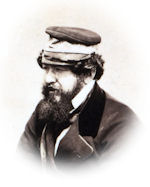
June 19th. It is probable the landlord of the Gayoso House was a strong Secessionist, and resolved, therefore, to make the most out of a neutral customer like myself—certainly Herodotus would have been astonished if he were called upon to pay the little bill which was presented to me in the modern Memphis; and had the old Egyptian hostelries been conducted on the same principles as those of the Tennessean Memphis, the “Father of History ” would have had to sell off a good many editions in order to pay his way. I had to rise at three o’clock A.m., to reach the train, which started before five. The omnibus which took us to the station was literally nave deep in the dust; and of all the bad roads and dusty streets I have yet seen in the New World, where both prevail, North and South, those of Memphis are the worst. Indeed, as the citizen, of Hibernian birth, who presided over the luggage of the passengers on the roof, declared, “The streets are paved with waves of mud, only the mud is all dust when it’s fine weather.”
By the time I had arrived at the station my clothes were covered with a fine alluvial deposit in a state of powder; the platform was crowded with volunteers moving off for the wars, and I was obliged to take my place in a carriage full of Confederate officers and soldiers who had a large supply of whisky, which at that early hour they were consuming as a prophylactic against the influence of the morning dews, which hereabouts are of such a deadly character that, to be quite safe from their influence, it appears to be necessary, judging from the examples of my companions, to get as nearly drunk as possible. Whisky, by-the-by, is also a sovereign specific against the bites of rattlesnakes. All the dews of the Mississippi and the rattlesnakes of the prairie might have spent their force or venom in vain on my companions before we had got as far as Union City.
I was evidently regarded with considerable suspicion by my fellow passengers, when they heard I was going to Cairo, until the conductor obligingly informed them who I was, whereupon I was much entreated to fortify myself against the dews and rattlesnakes, and received many offers of service and kindness.
Whatever may be the normal comforts of American railway cars, they are certainly most unpleasant conveyances when the war spirit is abroad, and the heat of the day, which was excessive, did not contribute to diminish the annoyance of foul air—the odour of whisky, tobacco, and the like, combined with innumerable flies. At Humbolt, which is eighty-two miles away, there was a change of cars, and an opportunity of obtaining some refreshment,—the station was crowded by great numbers of men and women dressed in their best, who were making holiday in order to visit Union City, forty-six miles distant, where a force of Tennesseean and Mississippi regiments are encamped. The ladies boldly advanced into carriages ,which were quite full, and as they looked quite prepared to sit down on the occupants of the seats if they did not move, and to destroy them with all-absorbing articles of feminine warfare, either defensive or aggressive, and crush them with iron-bound crinolines, they soon drove us out into the broiling sun.
Whilst I was on the platform I underwent the usual process of American introduction, not, I fear, very good-humouredly. A gentleman whom you never saw before in your life, walks up to you and says, “I am happy to see you among us, sir,” and if he finds a hand wandering about, he shakes it cordially. “My name is Jones, sir, Judge Jones of Pumpkin County. Any information about this place or State that I can give is quite at your service.” This is all very civil and well meant of Jones, but before you have made up your mind what to say, or on what matter to test the worth of his proffered information, he darts off and seizes one of the group who have been watching Jones’s advance, and comes forward with a tall man, like himself, busily engaged with a piece of tobacco. “Colonel, let me introduce you to my friend, Mr. Russell. This, sir, is one of our leading citizens, Colonel Knags.” Whereupon the Colonel shakes hands, uses nearly the same formula as Judge Jones, immediately returns to his friends, and cuts in before Jones is back with other friends, whom he is hurrying up the platform, introduces General Cassius Mudd and Dr. Ordlando Bellows, who go through the same ceremony, and as each man has a circle of his own, my acquaintance becomes prodigiously extended, and my hand considerably tortured in the space of a few minutes; finally I am introduced to the driver of the engine and the stoker, but they proved to be acquaintances not at all to be despised, for they gave me a seat on the engine, which was really a boon considering that the train was crowded beyond endurance, and in a state of internal nastiness scarcely conceivable.
When I had got up on the engine a gentleman clambered after me in order to have a little conversation, and he turned out to be an intelligent and clever man well acquainted with the people and the country. I had been much impressed by the account in the Memphis papers of the lawlessness and crime which seemed to prevail in the state of Mississippi, and of the brutal shootings and stabbings which disgraced it and other Southern States. He admitted it was true, but could not see any remedy. “Why not?” “Well, sir, the rowdies have rushed in on us, and we can’t master them; they are too strong for the respectable people.” “Then you admit the law is nearly powerless?” “Well, you see, sir, these men have got hold of the people who ought to administer the law, and when they fail to do so they are so powerful by reason of their numbers, and so reckless, they have things their own way.”
“In effect, then, you are living under a reign of terror, and the rule of a ruffian mob?” “It’s not quite so bad as that, perhaps, for the respectable people are not much affected by it, and most of the crimes of which you speak are committed by these bad classes in their own section; but it is disgraceful to have such a state of things, and when this war is over, and we have started the Confederacy all fair, we’ll put the whole thing down. We are quite determined to take the law into our own hands, and the first remedy for the condition of affairs which, we all lament, will be to confine the suffrage to native-born Americans, and to get rid of the infamous, scoundrelly foreigners, who now overrule us in our country.” “But are not many regiments of Irish and Germans now fighting for you? And will these foreigners who have taken up arms in your cause be content to receive as the result of their success an inferior position, politically, to that which they now hold?” “Well, sir, they must; we are bound to go through with this thing if we would save society.” I had so often heard a similar determination expressed by men belonging to the thinking classes in the South that I am bound to believe the project is entertained by many of those engaged in this great revolt—one principle of which indeed, may be considered hostility to universal suffrage, combining with it, of course, the limitation of the immigrant vote.
The portion of Tennessee through which the rail runs is exceedingly uninteresting, and looks unhealthy, the clearings occur at long intervals in the forest, and the unwholesome population, who came out of their low shanties, situated amidst blackened stumps of trees or fields of Indian corn, did not seem prosperous or comfortable. The twists and curves of the rail, through cane brakes and swamps exceeded in that respect any line I have ever travelled on; but the vertical irregularities of the rail were still greater, and the engine bounded as if it were at sea.
The names of the stations show that a savant has been rambling about the district. Here is Corinth, which consists of a wooden grog-shop and three log shanties; the acropolis is represented by a grocery store, of which the proprietors, no doubt, have gone to the wars, as their names were suspiciously Milesian, and the doors and windows were fastened; but occasionally the names of the stations on the railway boards represented towns and villages, hidden in the wood some distance away, and Mummius might have something to ruin if he marched off the track but not otherwise.
The city of Troy was still simpler in architecture than the Grecian capitol. The Dardanian towers were represented by a timber-house, in the verandah of which the American Helen was seated, in the shape of an old woman smoking a pipe, and she certainly could have set the Palace of Priam on fire much more readily than her prototype. Four sheds, three log huts, a sawmill, about twenty negroes sitting on a wood-pile, and looking at the train, constituted the rest of the place, which was certainly too new for one to say, Trqja fuit, whilst the general “fixins” would scarcely authorise us to say with any confidence, Trojafuerit.
The train from Troy passed through a cypress swamp, over which the engine rattled, and hopped at a perilous rate along high trestle work, till forty-six miles from Humbolt we came to Union City, which was apparently formed by aggregate meetings of discontented shavings that had travelled out of the forest hard by. But a little beyond it was the Confederate camp, which so many citizens and citizenesses had come out into the wilderness to see; and a general descent was made upon the place whilst the volunteers came swarming out of their tents to meet their friends. It was interesting to observe the affectionate greetings between the young soldiers, mothers, wives, and sweethearts, and as a display of the force and earnestness of the Southern people—the camp itself containing thousands of men, many of whom were members of the first families in the State—was specially significant.
There is no appearance of military order or discipline about the camps, though they were guarded by sentries and cannon, and implements of war and soldiers’ accoutrements were abundant. Some of the sentinels carried their firelocks under their arms like umbrellas, others carried the but over the shoulder and the muzzle downwards, and one for his greater ease had stuck the bayonet of his firelock into the ground, and was leaning his elbow on the stock with his chin on his hand, whilst Sybarites less ingenious, had simply deposited their muskets against the trees, and were lying down reading newspapers. Their arms and uniforms were of different descriptions—sporting rifles, fowling pieces, flint muskets, smooth bores, long and short barrels, new Enfields, and the like; but the men, nevertheless, were undoubtedly material for excellent soldiers. There were some few boys, too young to carry arms, although the zeal and ardour of such lads cannot but have a good effect, if they behave well in action.
The great attraction of this train lay in a vast supply of stores, with which several large vans were closely packed, and for fully two hours the train was delayed, whilst hampers of wine, spirits, vegetables, fruit, meat, groceries, and all the various articles acceptable to soldiers living under canvas were disgorged on the platform, and carried away by the expectant military.
I was pleased to observe the perfect confidence that was felt in the honesty of the men. The railway servants simply deposited each article as it came out on the platform—the men came up, read the address, and carried it away, or left it, as the case might be; and only in one instance did I see a scramble, which was certainly quite justifiable, for in handing out a large basket the bottom gave way, and out tumbled onions, apples, and potatoes among the soldiery, who stuffed their pockets and haversacks with the unexpected bounty. One young fellow, who was handed a large wicker-covered jar from the van, having shaken it, and gratified his ear by the pleasant jingle inside, retired to the roadside, drew the cork, and, raising it slowly to his mouth, proceeded to take a good pull at the contents, to the envy of his comrades; but the pleasant expression upon his face rapidly vanished, and spurting out the fluid with a hideous grimace, he exclamed, “D____; why, if the old woman has not gone and sent me a gallon of syrup.” The matter was evidently considered too serious to joke about, for not a soul in the crowd even smiled; but they walked away from the man, who, putting down the jar, seemed in doubt as to whether he would take it away or not.
Numerous were the invitations to stop, which I received from the officers. “Why not stay with us, sir; what can a gentleman want to go among black Republicans and Yankees for.” It is quite obvious that my return to the Northern States is regarded with some suspicion; but I am bound to say that my explanation of the necessity of the step was always well received, and satisfied my Southern friends that I had no alternative. A special correspondent, whose letters cannot get out of the country in which he is engaged, can scarcely fulfil the purpose of his mission; and I used to point out, good-humouredly, to these gentlemen that until they had either opened the communication with the North, or had broken the blockade, and established steam communication with Europe, I must seek my base of operations elsewhere.
At last we started from Union City; and there came into the car, among other soldiers who were going out to Columbus, a fine specimen of the wild filibustering population of the South, which furnish many recruits to the ranks of the Confederate army—a tall, brawny-shouldered, brown-faced, black-bearded, hairy-handed man, with a hunter’s eye, and rather a Jewish face, full of life, energy, and daring. I easily got into conversation with him, as my companion happened to be a freemason, and he told us he had been a planter in Mississippi, and once owned 110 negroes, worth at least some 20,000£.; but, as he said himself, “I was always patrioting it about;” and so he went off, first with Lopez to Cuba, was wounded and taken prisoner by the Spaniards, but had the good fortune to be saved from the execution which was inflicted on the ringleaders of the expedition. When he came back he found his plantation all the worse, and a decrease amongst his negroes; but his love of adventure and filibustering was stronger than his prudence or desire of gain. He took up with Walker, the “the grey eyed man of destiny,” and accompanied him in his strange career till his leader received the coup de grace in the final raid upon Nicaragua.
Again he was taken prisoner, and would have been put to death by the Nicaraguans, but for the intervention of Captain Aldham. “I don’t bear any love to the Britishers,” said he, “but I’m bound to say, as so many charges have been made against Captain Aldham, that he behaved like a gentleman, and if I had been at New Orleans when them cussed cowardly blackguards ill-used him, I’d have left my mark so deep on a few of them, that their clothes would not cover them long.” He told us that at present he had only five negroes left, “but I’m not going to let the black republicans lay hold of them, and I’m just going to stand up for States’ rights as long as I can draw a trigger—so snakes and Abolitionists look out.” He was so reduced by starvation, ill-treatment, and sickness in Nicaragua, when Captain Aldham procured his release, that he weighed only 110 pounds, but at present he was over 200 pounds, a splendid bête fauve, and without wishing so fine a looking fellow any harm, I could not but help thinking that it must be a benefit to American society to get rid of a considerable number of these class of which he is a representative man. And there is every probability that they will have a full opportunity of doing so.
On the arrival of the train at Columbus, twenty-five miles from Union City, my friend got out, and a good number of men in uniform joined him, which led me to conclude that they had some more serious object than a mere pleasure trip to the very uninteresting looking city on the banks of the Mississippi, which is asserted to be neutral territory, as it belongs to the sovereign state of Kentucky. I heard, accidentally, as I came in the train, that a party of Federal soldiers from the camp at Cairo, up the river, had recently descended to Columbus and torn down a secession flag which had been hoisted on the river’s bank, to the great indignation of many of the inhabitants.
In those border states the coming war promises to produce the greatest misery; they will be the scenes of hostile operations; the population is divided in sentiment; the greatest efforts will be made by each side to gain the ascendancy in the state, and to crush the opposite faction, and it is not possible to believe that Kentucky can maintain a neutral position, or that either Federal or Confederates will pay the smallest regard to the proclamation of Governor McGoffin, and to his empty menaces.
At Columbus the steamer was waiting to convey us up to Cairo, and I congratulated myself on the good fortune of arriving in time for the last opportunity that will be afforded of proceeding northward by this route. General Pillow on the one hand, and General Prentiss on the other, have resolved to blockade the Mississippi, and as the facilities for Confederates going up to Columbus and obtaining information of what is happening in the Federal camps cannot readily be checked, the general in command of the port to which I am bound has intimated that the steamers must cease running. It was late in the day when we entered once more on the father of waters, which is here just as broad, as muddy, as deep, and as wooded as it is at Baton Rouge, or Vicksburg.
Columbus is situated on an elevated spur or elbow of land projecting into the river, and has, in commercial faith, one of those futures which have so many rallying points down the centre of the great river. The steamer which lay at the wharf, or rather the wooden piles in the bank which afforded a resting place for the gangway, carried no flag, and on board presented traces of better days, a list of refreshments no longer attainable, and of bill of fare utterly fanciful. About twenty passengers came on board, most of whom had a distracted air, as if they were doubtful of their journey. The captain was surly, the office keeper petulant, the crew morose, and, perhaps, only one man on board, a stout Englishman, who was purser or chief of the victualling department, seemed at all inclined to be communicative. At dinner he asked me whether I thought there would be a fight, but as I was oscillating between one extreme and the other, I considered it right to conceal my opinion even from the steward of the Mississippi boat; and, as it happened, the expression of it would not have been of much consequence one way or the other, for it turned out that our friend was of very stern stuff, “This war,” he said, “is all about niggers; I’ve been sixteen years in the country, and I never met one of them yet was fit to be anything but a slave; I know the two sections well, and I tell you, sir, the North can’t whip the South, let them do their best; they may ruin the country, but they’ll do no good.”
There were men on board who had expressed the strongest secession sentiments in the train, but who now sat and listened and acquiesced in the opinions of Northern men, and by the time Cairo was in sight, they, no doubt, would have taken the oath of allegiance which every doubtful person is required to utter before he is allowed to go beyond the military post.
In about two hours or so the captain pointed out to me a tall building and some sheds, which seemed to arise out of a wide reach in the river, “that’s Cairey,” said he, “where the Unionists have their camp,” and very soon the stars and stripes were visible, waving from a lofty staff, at the angle of low land formed by the junction of the Mississippi and Ohio.
For two months I had seen only the rival stars and bars, with the exception of the rival banner floating from the ships and the fort at Pickens. One of the passengers told me that the place was supposed to be described by Mr. Dickens, in “Martin Chuzzlewit,” and as the steamer approached the desolate embankment, which seemed the only barrier between the low land on which the so-called city was built, and the waters of the great river rising above it, it certainly became impossible to believe that sane men, even as speculators, could have fixed upon such a spot as the possible site of a great city, —an emporium of trade and commerce. A more desolate woe-begone looking place, now that all trade and commerce had ceased cannot be conceived; but as the southern terminus of the central Illinois railway, it displayed a very different scene before the war broke out.
With the exception of the large hotel, which rises far above the levee of the river, the public edifices are represented by a church and spire, and the rest of the town by a line of shanties and small houses, the rooms and upper stories of which are just visible above the embankment. The general impression effected by the place was decidedly like that which the Isle of Dogs produces on a despondent foreigner as he approaches London by the river on a drisly day in November. The stream, formed by the united efforts of the Mississippi and the Ohio, did not appear to gain much breadth, and each of the confluents looked as large as its product with the other. Three steamers lay alongside the wooden wharves projecting from the embankment, which was also lined by some flat-boats. Sentries paraded the gangways as the steamer made fast along the shore, but no inquiry was directed to any of the passengers, and I walked up the levee and proceeded straight to the hotel, which put me very much in mind of an effort made by speculating proprietors to create a watering-place on some lifeless beach. In the hall there were a number of officers in United States’ uniforms, and the lower part of the hotel was, apparently, occupied as a military bureau; finally, I was shoved into a small dungeon, with a window opening out on the angle formed by the two rivers, which was lined with sheds and huts and terminated by a battery.
These camps are such novelties in the country, and there is such romance in the mere fact of a man living in a tent, that people come far and wide to see their friends under such extraordinary circumstances, and the hotel at Cairo was crowded by men and women who had come from all parts of Illinois to visit their acquaintances and relations belonging to the state troops encamped at this important point. The salle à manger, a long and lofty room on the ground floor, which I visited at supper time, was almost untenable by reason of heat and flies; nor did I find that the free negroes, who acted as attendants, possessed any advantages over their enslaved brethren a few miles lower down the river; though their freedom was obvious enough in their demeanour and manners.
I was introduced to General Prentiss, an agreeable person,without anything about him to indicate the soldier. He gave me a number of newspapers, the articles in which were principally occupied with a discussion of Lord John RusselPs speech on American affairs: Much as the South found fault with the British minister for the views he had expressed, the North appears much more indignant, and denounces in the press what the journalists are pleased to call “the hostility of the Foreign Minister to the United States.” It is admitted, however, that the extreme irritation caused by admitting the Southern States to exercise limited belligerent rights was not quite justifiable. Soon after nightfall I retired to my room and battled with mosquitoes till I sank into sleep and exhaustion, and abandoned myself to their mercies; perhaps, after all, there were not more than a hundred or so, and their united efforts could not absorb as much blood as would be taken out by one leech, but then their horrible acrimony, which leaves a wreck behind in the place where they have banqueted, inspires the utmost indignation and appears to be an indefensible prolongation of the outrage of the original bite.


