Following the American Civil War Sesquicentennial with day by day writings of the time, currently 1863.

Monday, June 27, 2011

June 27th, 1861.

Dear Cousin Lou:

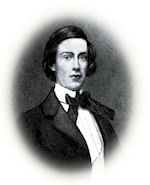
Did I not promise to write you, when the time came to say good-bye? Aye, oh best of women! And now I am fulfilling my promise hastily, for in an hour I shall be on my way to Washington. You must feel with me in my happiness! At length I am judged worthy to expose my life for my country’s sake. I go to join the 79th Regiment. Think, Cousin Lou, I am going to see real danger, real privation, real work — not as a mere Carpet-Knight, talking valorously to girls, but going forth in all humility to help to conquer in the name of God and my Country. Pray for me, Cousin Lou! Not for my life — I never prayed for that in any hour of peril — but pray that I may never falter, whether my duty shall lead me to honor or to death.

Good-bye,Cousin. Love to Mr. Grant, Cousin Laura, Cousin Henry, the children, and all friends.

Lovingly,
Willie.

Hurrah! Off in ten minutes, so Au-Revoir here or hereafter.

Post image for A Diary of American Events – June 27, 1861

—John C. Fremont arrived at Boston, Mass., this morning, in the steamer Europa, from Liverpool, bringing with him a large assortment of valuable arms for the Government. —Boston Transcript, June 28.

—At three o’clock this morning George P. Kane, marshal of police of Baltimore, Md., was arrested at his house by order of Gen. Banks, and conveyed to Fort McHenry, where he is held a prisoner.

Gen. Banks issued a proclamation, naming John R. Kenly, of the Maryland regiment, as provost marshal, and superseding the powers of the police commissioners. Kenly is to exercise supreme control over the police department until some known loyal citizen is appointed to act as marshal.

The proclamation gives as the reason for the arrest of Kane, that he is known to be aiding and abetting those in armed rebellion to the Government, and is at the head of on armed force, which he has used to conceal rather than detect acts of treason to the Government.— (Doc. 48.)

—The Board of Police of Baltimore, Md., published a protest against the arrest of Marshal Kane, declaring the act of General Banks “an arbitrary exercise of military power, not warranted by any provision of the Constitution or laws of the United States,” and Mayor Brown approved the protest. Moreover, the Board declared that, while the Board, yielding to the force of circumstances, would do nothing to increase the present excitement, or obstruct the execution of such measures as Major General Banks might deem proper to take on his own responsibility for the preservation of the peace of the city and public order, they could not, consistently with their views of official duty and of the obligations to their oaths of office, recognize the right of any of the officers and men of the police force, as such, to receive orders and directions from any other authority than from the Board; and that, in the opinion of the Board, the forcible suspension of their functions suspends at the same tune the active operations of the Police law, and puts the officers and men off of duty for the present, leaving them subject, however, to the roles and regulations of the service as to their personal conduct and deportment, and to the orders which the Board might see fit hereafter to issue, when the illegal suspension of their functions should be removed.”—Baltimore American, June 28.

—The following proclamation was received to-day at Washington:

Head-quarters Army of Potomac
Manassas Junction, June 25, 1861

On and after Sunday, the 30th instant, no person whatsoever, with or without passports, (except from the War Department,) will be permitted to enter the lines occupied by the Army of the Potomac with intention to pass thence or thereafter into the United States or the lines of the enemy.

Brig. Gen. Beauregard.

Thos. Jordan. A. A. Adj’t Gen.

—At Dover, Delaware, a meeting was held at which resolutions were adopted advocating the recognition of the Southern Confederacy, if a reconciliation by peaceable means should become impossible. The assembly was addressed by Thomas F. Bayard, William G. Whitely, and ex-Governor Temple, and others. —(Doc. 60.)

—The “Camp Record,” a folio newspaper, was issued yesterday from the camp at Hagerstown, Md., by a party of printers belonging to the Wisconsin Regiment. The object announced is to meet a want by supplying a convenient medium of communicating to friends at homo all matters pertaining to the little world of the 6th Brigade; but another reason may fairly be supposed, and that is the “irrepressible” impulse in the breasts of four editors and forty compositors, of the Wisconsin Regiment, to keep their hands and pens in practice. When they finish up the war on hand, these American soldiers will return to the desk and the case. The next number will be issued “The day after the editors get to Richmond!”—N. Y. Tribune, June 30.

—The Fifth Regiment of Maine Volunteers, commanded by Colonel Mark H. Dunnell, of Portland, passed through New York on its way to the seat of war. It was received by a committee of several hundred of the Sons of Maine resident in New York, and was escorted by them through Battery Place and Broadway to the front of the City Hall, where the presentation of a banner took place. The banner is a regimental ensign, regulation size, of blue silk, bordered with heavy, yellow fringe, and supported by a lancewood staff, surmounted by a gilt spear. The arms of the State of Maine and of the United States, combined in a shield, appear on both sides. The motto of the State of Maine, “Dirigo,” and the numerical title of the regiment, appear above the shield, and the following inscription appears below: “Freedom and Union, now and forever, one and inseparable.” The ceremonies commenced with a prayer. The presentation speech was read by J. T. Williams. The regiment contains 1,046 men, who are fully armed and equipped. Their uniform is gray throughout, with drab felt hats, regulation pattern. The officers are also uniformed in gray, with regulation hats. The arms consist of the Springfield musket and common bayonet.— (Doc. 49.)

CAMP CHASE, June 27, 1861, Thursday, A. M.

DEAREST L—:—At my leisure, I have looked over the little what-you-may-call-it and its chapter of contents. It is so nice, and has everything needful that I have thought of, and more too. Much obliged, dearest. With all my boots, I find I have no slippers; forgot, also, my pepper-and-salt vest.

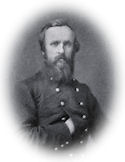
Found mother and all well and happy, and most glad that you are coming up. . . . We shall probably be here some time longer than I supposed. Matthews says Colonel Scammon turns out to be socially and individually a most agreeable person to be associated with.

We have chosen a Methodist chaplain, Amos Wilson, of Bucyrus. The governor could not appoint but one of these four surgeons from Cincinnati, and took Clendenin as first on the list, and first applied for by Colonel Fyffe. If Dr. Clendenin declines, he will appoint Dr. Joe for us, and says he shall be the next appointed from Cincinnati. He has appointed a good man for us, but will transfer him to make room for Joe if Clendenin does not accept. We can’t complain of the governor’s disposition in the matter. He wishes to know Dr. Clendenin’s intentions as soon as possible. If he declines, Dr. Joe must be ready to come up forthwith. Dr. Jim will pretty certainly be retained as assistant, in any event, but he must pass an examination, if he is in this region when the new appointment is to be made.

Love to “all the boys,” and much for Grandma and yourself, from your loving and affectionate.

R.

MRS. HAYES.

THURSDAY, JUNE 27, 1861.

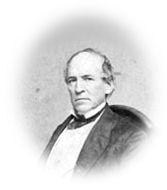
But little of moment has transpired in the City today. Some little rioting on the part of the soldiers, many having been paid off. The most important event is the arrest of Marshall Kane of Baltimore for treason. No fighting has taken place recently to speak of. But it is expected every day. There is now probably 100,000 men on each side within short call of this City. Congress meets next week. Its proceedings are looked to with much interest. But no Peace or compromise with Rebels will be the order of the day. Three officers of the 12th took tea with us this evening.

______

The three diary manuscript volumes, Washington during the Civil War: The Diary of Horatio Nelson Taft, 1861-1865, are available online at The Library of  Congress.

JUNE 27TH.—We have, I think, some 40,000 pretty well armed men in Virginia, sent hither from other States. Virginia has—I know not how many; but she should have at least 40,000 in the field. This will enable us to cope with the Federal army of 70,000 volunteers, and the regular forces they may hurl against us. But so far as this department is aware, Virginia has not yet two regiments in the service for three years, or the war. And here the war will be sure to rage till the end!

Thursday, 27th.—On arriving at Nashville, after a ride of about twenty-two miles, we took quarters at the fair grounds.

Camp Wright, Hulton, Penn.,

Thursday, June 27, 1861.

Dear Brother E.:—

We’ve had pretty spicy times in camp for a week or ten days. Marching orders are given and immediately countermanded. It’s pack up, then unpack and make fun of it. One of the boys stuck up a picture—a courier driving at the top of his speed, shouting, “Hurrah! Marching orders;” and another following hard after, calling out, “Hold on, blast ye; they’re countermanded.” They call it, “The Erie boys’ experience,” and it is a pretty good hit.

The boys resort to all sorts of expedients to kill time. A good many of them are making clam-shell rings. It requires a good deal of work to make one, but they are the prettiest rings I ever saw. Some of them look like pearl, some are blue and some like carnelian. They take a high polish.

One of the Wildcats had a mud-turtle yesterday. He made a little seccsh flag and tied it to his hind flipper and made him trabble with it, dragging it round in the dust. It made some sport.

The Armstrong Rifles had a veritable secession flag, hanging bottom side up on their quarters, yesterday. It was captured at Philippi and sent up here. It was made of muslin, three stripes and seven stars, tin ones at that, an elegant thing.

I spend a good deal of time in the river. I am improving some in swimming. Swam across the other day at the widest place in sight. Some of our company found the body of a man in the river the other day. He appeared to have been in the water a long time. He was standing erect with his feet firmly bedded in the bottom, and his head about two feet under water. One of the feet broke off in pulling him up.

Well, I must stop. I do not know as there is anything in reach worth sending you as a curiosity. If I find anything, however, I will remember you.

Don’t fail to write again soon. I think your last is the best letter I ever saw of yours. Write often and you will improve. Direct to Camp Wright, Hulton, care of Captain D. W. Hutchinson.

Camp Wright, Hulton, Penn.,
Thursday, June 27, 1861.

Dear Father:—

One of the items of interest in the editor’s visit to Colonel McLane yesterday, is found in the Gazette of this morning, viz.: that throughout the whole day (yesterday) no marching orders or countermands were received. For a week or ten days the camp has been in a feverish state of excitement. First came the orders to distribute the arms and hold in readiness to march. The arms were distributed and then came the orders to start for Harrisburg, then the countermand—”Hold on, wait for further orders.” Next day, “Grant no more furloughs, drill fast, you will be called soon.” The orders stopped here and we “drilled fast” for two or three days, anxiously waiting for the “soon.” It did not come, but, in its place, it was announced on Monday that the Governor was not dead, as before reported, only dead drunk, and that he and his aide would be here on Tuesday to dispose finally of the Erie Regiment, either order us to Harrisburg or home. Well, Tuesday came and the Governor didn’t, so he was announced to come on Wednesday. Wednesday came and the Governor didn’t, and it was then announced that the whole thing was a canard, started just to keep the boys quiet.

Some of the boys got a great demijohn and paraded round the camp with it, labeled in staring capitals, “The Governor’s Aide.”

Company F had a comic picture sent up from New York, representing a very milingtary man with a fierce mustache. When turned upside down, it was a complete jackass. That is just about our situation. No one knows what will be done with us. I think we will be kept here the rest of our time and then sent home with our clothes worn out, and no pay to buy more with. They will hardly uniform and equip us and send us into the held for three or four weeks.

Pay no heed whatever to the letters and telegrams saying we are coming home, but continue to write to us till you see us at home. A couple of wagon-loads of dead letters would be nothing compared to our uneasiness without letters from home.

RICHMOND, Va., June 27, 1861.—-Mr. Meynardie was perfect in the part of traveling companion. He had his pleasures, too. The most pious and eloquent of parsons is human, and he enjoyed the converse of the “eminent persons” who turned up on every hand and gave their views freely on all matters of state.

Mr. Lawrence Keitt joined us en route. With him came his wife and baby. We don’t think alike, but Mr. Keitt is always original and entertaining. Already he pronounces Jeff Davis a failure and his Cabinet a farce. “Prophetic,” I suggested, as he gave his opinion before the administration had fairly got under way. He was fierce in his fault-finding as to Mr. Chesnut’s vote for Jeff Davis. He says Mr. Chesnut overpersuaded the Judge, and those two turned the tide, at least with the South Carolina delegation. We wrangled, as we always do. He says Howell Cobb’s common sense might have saved us.

Two quiet, unobtrusive Yankee school-teachers were on the train. I had spoken to them, and they had told me all about themselves. So I wrote on a scrap of paper, “Do not abuse our home and house so before these Yankee strangers, going North. Those girls are schoolmistresses returning from whence they came.”

Soldiers everywhere. They seem to be in the air, and certainly to fill all space. Keitt quoted a funny Georgia man who says we try our soldiers to see if they are hot enough before we enlist them. If, when water is thrown on them they do not sizz, they won’t do; their patriotism is too cool.

To show they were wide awake and sympathizing enthusiastically, every woman from every window of every house we passed waved a handkerchief, if she had one. This fluttering of white flags from every side never ceased from Camden to Richmond. Another new symptom—parties of girls came to every station simply to look at the troops passing. They always stood (the girls, I mean) in solid phalanx, and as the sun was generally in their eyes, they made faces. Mary Hammy never tired of laughing at this peculiarity of her sister patriots.

At the depot in Richmond, Mr. Mallory, with Wigfall and Garnett, met us. We had no cause to complain of the warmth of our reception. They had a carriage for us, and our rooms were taken at the Spotswood. But then the people who were in the rooms engaged for us had not departed at the time they said they were going. They lingered among the delights of Richmond, and we knew of no law to make them keep their words and go. Mrs. Preston had gone for a few days to Manassas. So we took her room. Mrs. Davis is as kind as ever. She met us in one of the corridors accidentally, and asked us to join her party and to take our meals at her table. Mr. Preston came, and we moved into a room so small there was only space for a bed, wash-stand, and glass over it. My things were hung up out of the way on nails behind the door.

As soon as my husband heard we had arrived, he came, too. After dinner he sat smoking, the solitary chair of the apartment tilted against the door as he smoked, and my poor dresses were fumigated. I remonstrated feebly. “War times,” said he; “nobody is fussy now. When I go back to Manassas to-morrow you will be awfully sorry you snubbed me about those trumpery things up there.” So he smoked the pipe of peace, for I knew that his remarks were painfully true. As soon as he was once more under the enemy’s guns, I would repent in sackcloth and ashes.

Captain Ingraham came with Colonel Lamar.¹ The latter said he could only stay five minutes; he was obliged to go back at once to his camp. That was a little before eight. However, at twelve he was still talking to us on that sofa. We taunted him with his fine words to the the F. F. V. crowd before the Spotswood: “Virginia has no grievance. She raises her strong arm to catch the blow aimed at her weaker sisters.” He liked it well, however, that we knew his speech by heart.

This Spotswood is a miniature world. The war topic is not so much avoided, as that everybody has some personal dignity to take care of and everybody else is indifferent to it. I mean the “personal dignity of ” autrui. In this wild confusion everything likely and unlikely is told you, and then everything is as flatly contradicted. At any rate, it is safest not to talk of the war.

Trescott was telling us how they laughed at little South Carolina in Washington. People said it was almost as large as Long Island, which is hardly more than a tailfeather of New York. Always there is a child who sulks and won’t play; that was our role. And we were posing as San Marino and all model-spirited, though small, republics, pose.

He tells us that Lincoln is a humorist. Lincoln sees the fun of things; he thinks if they had left us in a corner or out in the cold a while pouting, with our fingers in our mouth, by hook or by crook he could have got us back, but Anderson spoiled all.

In Mrs. Davis’s drawing-room last night, the President took a seat by me on the sofa where I sat. He talked for nearly an hour. He laughed at our faith in our own powers. We are like the British. We think every Southerner equal to three Yankees at least. We will have to be equivalent to a dozen now. After his experience of the fighting qualities of Southerners in Mexico, he believes that we will do all that can be done by pluck and muscle, endurance, and dogged courage, dash, and red-hot patriotism. And yet his tone was not sanguine. There was a sad refrain running through it all. For one thing, either way, he thinks it will be a long war. That floored me at once. It has been too long for me already. Then he said, before the end came we would have many a bitter experience. He said only fools doubted the courage of the Yankees, or their willingness to fight when they saw fit. And now that we have stung their pride, we have roused them till they will fight like devils.

Mrs. Bradley Johnson is here, a regular heroine. She outgeneraled the Governor of North Carolina in some way and has got arms and clothes and ammunition for her husband’s regiment.² There was some joke. The regimental breeches were all wrong, but a tailor righted that—hind part before, or something odd.

Captain Hartstein came to-day with Mrs. Bartow. Colonel Bartow is Colonel of a Georgia regiment now in Virginia. He was the Mayor of Savannah who helped to wake the patriotic echoes the livelong night under my sleepless head into the small hours in Charleston in November last. His wife is a charming person, witty and wise, daughter of Judge Berrien. She had on a white muslin apron with pink bows on the pockets. It gave her a gay and girlish air, and yet she must be as old as I am.

Mr. Lamar, who does not love slavery more than Sumner does, nor than I do, laughs at the compliment New England pays us. We want to separate from them; to be rid of the Yankees forever at any price. And they hate us so, and would clasp us, or grapple us, as Polonius has it, to their bosoms “with hooks of steel.” We are an unwilling bride. I think incompatibility of temper began when it was made plain to us that we got all the opprobrium of slavery and they all the money there was in it with their tariff.

Mr. Lamar says, the young men are light-hearted because there is a fight on hand, but those few who look ahead, the clear heads, they see all the risk, the loss of land, limb, and life, home, wife, and children. As in “the brave days of old,” they take to it for their country’s sake. They are ready and willing, come what may. But not so light-hearted as the jeunesse dorée.

______

¹ Lucius Quintus Cincinnatus Lamar, a native of Georgia and of Huguenot descent, who got his classical names from his father: his father got them from an uncle who claimed the privilege of bestowing upon his nephew the full name of his favorite hero. When the war began, Mr. Lamar had lived for some years in Mississippi, where he had become successful as a lawyer and had been elected to Congress. He entered the Confederate Army as the Colonel of a Mississippi regiment. He served in Congress after the war and was elected to the United States Senate in 1877. In 1885 he became Secretary of the Interior, and in 1888, a justice of the United States Supreme Court.

2 Bradley Tyler Johnson, a native of Maryland, and graduate of Princeton, who had studied law at Harvard. At the beginning of the war he organized a company at his own expense in defense of the South. He was the author of a Life of General Joseph E. Johnston.