Following the American Civil War Sesquicentennial with day by day writings of the time, currently 1863.

Sunday, July 10, 2011

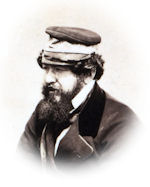
Post image for William Howard Russell’s Diary: Silencing the Press and Telegraph.—A Loan Bill.—Interview with Mr. Cameron.

July 10th.—To-day was spent in a lengthy excursion along the front of the camp in Virginia, round by the chain bridge which crosses the Potomac about four miles from Washington.

The Government have been coerced, as they say, by the safety of the Republic, to destroy the liberty of the press, which is guaranteed by the Constitution, and this is not the first instance in which the Constitution of the United States will be made nominis umbra. The telegraph, according to General Scott’s order, confirmed by the Minister of War, Simon Cameron, is to convey no despatches respecting military movements not permitted by the General; and today the newspaper correspondents have agreed to yield obedience to the order, reserving to themselves a certain freedom of detail in writing their despatches, and relying on the Government to publish the official accounts of all battles very speedily. They will break this agreement if they can, and the Government will not observe their part of the bargain. The freedom of the press, as I take it, does not include the right to publish news hostile to the cause of the country in which it is published; neither can it involve any obligation, on the part of Government to publish despatches which may be injurious to the party they represent. There is a wide distinction between the publication of news which is known to the enemy as soon as to the friends of the transmitters, and the utmost freedom of expression concerning the acts of the Government or the conduct of past events; but it will be difficult to establish any rule to limit or extend the boundaries to which discussion can go without mischief, and in effect the only solution of the difficulty in a free country seems to be to grant the press free licence, in consideration of the enormous aid it affords in warning the people of their danger, in animating them with the news of their successes, and in sustaining the Government in their efforts to conduct the war.

The most important event to-day is the passage of the Loan Bill, which authorises Mr. Chase to borrow, in the next year, a sum of £50,000,000, on coupons, with interest at 7 per cent, and irredeemable for twenty years—the interest being guaranteed on a pledge of the Customs duties. I just got into the House in time to hear Mr. Vallandigham, who is an ultra-democrat, and very nearly a secessionist, conclude a well-delivered argumentative address. He is a tall, slight man, of a bilious temperament, with light flashing eyes, dark hair and complexion, and considerable oratorical power. “Deem me ef I wouldn’t just ride that Vallandiggaim on a reay-al,” quoth a citizen to his friend, as the speaker sat down, amid a few feeble expressions of assent. Mr. Chase has also obtained the consent of the Lower House to his bill for closing the Southern ports by the decree of the President, but I hear some more substantial measures are in contemplation for that purpose. Whilst the House is finding the money the Government are preparing to spend it, and they have obtained the approval of the Senate to the enrolment of half a million of men, and the expenditure of one hundred millions of dollars to carry on the war.

I called on Mr. Cameron, the Secretary of War. The small brick house of two stories, with long passages, in which the American Mars prepares his bolts, was, no doubt, large enough for the 20,000 men who constituted the armed force on land of the great Republic, but it is not sufficient to contain a tithe of the contractors who haunt its precincts, fill all the lobbies and crowd into every room. With some risk to coattails, I squeezed through iron-masters, gun-makers, clothiers, shoemakers, inventors, bakers, and all that, genus which fattens on the desolation caused by an army in the field, and was introduced to Mr. Cameron’s room, where he was seated at a desk surrounded by people, who were also grouped round two gentlemen as clerks in the same small room. “I tell you, General Cameron, that the way in which the loyal men of Missouri have been treated is a disgrace to this Government,” shouted out a big, black, burly man—” I tell you so, sir.” “Well, General,” responded Mr. Cameron, quietly, “so you have several times. Will you, once for all, condescend to particulars?” “Yes, sir; you and the Government have disregarded our appeals. You have left us to fight our own battles. You have not sent us a cent…” “There, General, I interrupt you. You say we have sent you no money,” said Mr. Cameron, very quietly. “Mr. Jones will be good enough to ask Mr. Smith to step in here.” Before Mr. Smith came in, however, the General, possibly thinking some member of the press was present, rolled his eyes in a Nicotian frenzy, and perorated: “The people of the State of Missouri, sir, will power-out every drop of the blood which only flows to warm patriotic hearts in defence of the great Union, which offers freedom to the enslaved of mankind, and a home to persecuted progress, and a few-ture to civil-zation. We demand, General Cameron, in the neame of the great Western State …” Here Mr. Smith came in, and Mr. Cameron said, “I want you to tell me what disbursements, if any, have been sent by this department to the State of Missouri.” Mr. Smith was quick at figures, and up in his accounts, for he drew out a little memorandum book, and replied (of course, I can’t tell the exact sum), ” General, there has been sent, as by vouchers, to Missouri, since the beginning of the levies, six hundred and seventy thousand dollars and twenty-three cents.” “The General looked crestfallen, but he was equal to the occasion, “These sums may have been sent, sir, but they have not been received. I declare in the face of …” “Mr. Smith will show you the vouchers, General, and you can then take any steps needful against the parties who have misappropriated them.”

“That is only a small specimen of what we have to go through with our people,” said the Minister, as the General went off with a lofty toss of his head, and then gave me a pleasant sketch of the nature of the applications and interviews which take up the time and clog the movements of an American statesman. “These State organisations give us a great deal of trouble.” I could fully understand that they did so. The immediate business that I had with Mr. Cameron—he is rarely called General now that he is Minister of War— was to ask him to give me authority to draw rations at cost price, in case the army took the field before I could make arrangements, and he seemed very well disposed to accede; “but I must think about it, for I shall have all our papers down upon me if I grant you any facility which they do not get themselves.” After I left the War Department, I took a walk to Mr. Seward’s, who was out. In passing by President’s Square, I saw a respectably-dressed man up in one of the trees, cutting off pieces of the bark, which his friends beneath caught up eagerly. I could not help stopping to ask what was the object of the proceeding. “Why, sir, this is the tree Dan Sickles shot Mr. ____ under. I think it’s quite a remarkable spot.”
WEDNESDAY 10

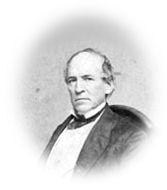
This has been a fine day but rather hot for the marching troops. Some Regts have gone over the River and some have arrived from the North. A move towards the rebels is now makeing, and a battle or a race is now impending. My impression is the Rebels will run. Myself and Julia had intended to go over to the RI Camp, but there came on another rain (a copious one) and prevented us. There has been nothing like a “dry time” yet this season. Staid in the House reading &c.

______

The three diary manuscript volumes, Washington during the Civil War: The Diary of Horatio Nelson Taft, 1861-1865, are available online at The Library of  Congress.

JULY 10TH.—There are indications of military operations on a large scale on the Potomac. We have intelligence that McDowell is making preparations to advance against our forces at Manassas. Gen. Johnston is expected to be there in time; and for that purpose is manœuvring Gen. Patterson out of the way. Our men have caps now—and will be found in readiness. They have short-commons under the Commissary Department; but even with empty stomachs, they can beat the Yankees at the ordeal of dying. Fighting is a sport our men always have an appetite for.

Post image for A Diary of American Events – July 10, 1861

—The Executive Government of the United States and correspondents arrived at a full understanding to-day, regarding the transmission of telegraphic despatches giving information as to movements of the army. So, hereafter, it will be necessary for the distant public to await the arrival of the mails before knowing what advances of troops have been made, as also what reinforcements have arrived. The Government alleges that it has been greatly embarrassed in its movements by the Washington correspondents of the New York press, and patriotically called upon them to co-operate in not publishing any movements prematurely. Should a battle occur, the Government will probably permit the official accounts to be transmitted.—N. Y. World, July 11.

—The Loan bill passed the House of Representatives to-day. It authorizes the Secretary of the Treasury to borrow on the credit of the United States, within twelve months from the passage of the act, a sum not exceeding two hundred and fifty millions of dollars, for which he is authorized to issue certificates of coupon, or registered stock, or treasury notes, the stock to bear interest not exceeding seven per centum per annum, payable semi-annually, irredeemable for twenty years, and after that period redeemable at pleasure. The United States treasury notes are to be fixed by the Secretary at not less than fifty dollars, payable three years after date, with interest at the rate of seven and three-tenths per centum per annum, payable annually on the notes of fifty dollars, and semi-annually on notes of larger denominations. The faith of the United States is solemnly pledged for the payment of the interest and the redemption of the principal of the loan; and for the full and punctual payment of the interest, the United States specially pledge the duties of import on tea, coffee, sugar, spices, wines and liquors, and also such excise and other internal duties or taxes as may be received into the treasury. In the debate on the bill, Mr. Vallandigham, of Ohio, took occasion to charge the Executive with a usurpation of power, and declared himself for a speedy, immediate, and honorable peace.—(Doc. 75.)

—The entire postal service, embracing post-offices, post-routes, and route agencies in Middle and West Tennessee, were discontinued by order of the Postmaster-General.—National Intelligencer, July 12.

—A Resolution passed the Lower House of the Virginia Legislature, at Wheeling, to-day, instructing Senators and requesting Representatives in Congress to vote for the necessary appropriations of men and money for a vigorous prosecution of the war, and to oppose all compromises until the rebellion is crushed out. The following resolution was offered by Mr. Vance, of Harrison:

Whereas, One Owen Lovejoy, a member from Illinois, has offered a resolution in the House of Representatives, having for its object the repeal of the fugitive slave law; therefore be it

Resolved, That our Senators in Congress be instructed, and our Representatives requested to vote against said resolution, or any other of like object.— N. Y. World, July 11.

—In the Senate of the United States the bill authorizing the employment of 500,000 volunteers, and making an appropriation of 600,000,000 dollars, for the purpose of suppressing the existing rebellion, was passed. Mr. Saulsbury of Delaware desired to amend, by inserting, in the place of 500,000 men, 200,000; he desired peace, he said, and had faith in compromise measures. To him it was pertinently replied that 200,000 men were too many for peace and too few for war; and the amendment was rejected—33 voting against it, and 5 (Messrs. Johnson of Missouri, Kennedy, Polk, Powell, and Saulsbury) in favor of it.

—Gen. Banks issued a proclamation, appointing Geo. R. Dodge, Esq., of Baltimore, , Marshal of Police, vice Col. Kenly, Provost Marshal, relieved.

He also directed the military occupation of Baltimore to cease, and ordered the regiments to resume their old positions in the suburbs of the city. The regiments affected by this order are the Eighteenth, Nineteenth, and Twenty, second Pennsylvania ; the Thirteenth and Twentieth New York, and Eighth Massachusetts, and the Massachusetts battery of light artillery. The soldiers will not be permitted to visit the city without permission, and then must leave their arms in camp.—Baltimore American, July 10.

—This afternoon, a gold medal, ordered by the citizens of New York, was presented by Mayor Wood to Brigadier-General Anderson, through his friend, John C. Murray, who was deputed to receive it on his behalf.—N. Y. Evening Post, July 10.

—The Thirty-third Regiment, New York Volunteers, commanded by Col. R. F. Taylor, numbering 859 men, passed through Baltimore to-day.—N. Y. Commercial Advertiser, July 11.

—Daniel S. Dickinson delivered an address at Amherst College, on the present state of affairs in the United States. It is replete with the customary vigor of its distinguished author, with that strong instinct of generous and genuine Democracy which belongs to his character, and is inspired by the largest patriotism and the wisest statesmanship. Mr. Dickinson declared himself for the maintenance of the Constitution and for the preservation of the integrity of the Republic at whatever cost. At the same time he exposed the folly of the secession theory and the wickedness of the secession practice; and, in all, he speaks like a man of the people and an American. Regarding the present crisis not without sorrow indeed, but without fear, he is for a zealous and speedy prosecution of the war, and for peace only on the basis of the entire submission of the rebels.—(Doc. 76.)

—The Twenty-seventh Regiment N. Y. S. V., commanded by Col. H. W. Slocum, 1,000 strong, left Elmira this afternoon for Washington.—N. Y. Evening Post, July 10.

—The House of Representatives passed the bill laid before Congress by Secretary Chase, empowering the President to close the ports of the seceding States. The vote on the passage of the bill wag 185 yeas to 10 nays.—N. Y. Evening Post, July 10.

—About two o’clock this morning the camp of the Federal troops, under Colonel Smith, of the Illinois Sixteenth, near Monroe station, thirty miles west of Hannibal, Mo., embracing 800 of the Iowa Third, 200 of the Illinois Sixteenth, and about 100 of the Hannibal Home Guards, was attacked by 1,600 secessionists, under Brigadier-General Harris.

Although the Federals were surprised, they repelled the attack, drove the rebels back, killed four, and wounded several, besides capturing five prisoners and seven horses. Harris retreated to Monroe, where another skirmish occurred, in which the rebels were again repulsed. Smith then took up a position and sent messengers for reenforcements from Quincy.—Baltimore American, July 12.—(Doc. 76½.)

—The Seventh Massachusetts Regiment, under command of Colonel D. N. Couch, left Taunton, Mass., this afternoon for the seat of war. —N. Y. Evening Post, July 10.

—The New Orleans True Delta of to-day has two characteristic articles, containing bold denunciations of the rebel leaders. One refers to the contemplated assembling of the Congress of the Confederate States in Richmond on the 20th inst., of the future of which no very sanguine anticipations are entertained. If the State of Louisiana, it says, is to be taken as a sample of the way things have been conducted, the result shows a treasury collapsed, a great city comparatively defenceless, a people full of chivalrous feeling discouraged, and an ardent and zealous local militia disappointed and disgusted. It suggests that the provisional government should immediately organize the local military strength, under the direction of capable and intelligent military officers, to which should be temporarily attached such scattering material as may be found unemployed in adjacent States, so as to familiarize it for any duty the future may require of it. The other article shows the absurdity of the donation reliance; states that the men who have managed to get the country into the war have proved themselves utterly incapable of carrying the rebel States safely and honorably through it, and asks why should not the people awake at once to the opportunity that will soon present, to find other men more fit to carry them with honor, glory, and success, to a triumphal termination of all their troubles? It is quite likely that the indignation of the people of the rebellious States will recoil upon the rebel leaders who have madly led them into this unfortunate war.

—Henry A. Wise of the rebel army issued a proclamation, calling upon the citizens of Western Virginia to rally to his standard, and holding out to them the promise of pardon for past oftbuces.—(Doc. 78.) ,

—A skirmish took place at Laurel Hill, Va., between the Federal troops under Gen. McClellan, and the rebels under Gen. Pegram. About 2 o’clock in the afternoon two large bodies were seen from a high hill in the neighborhood to leave the rebels’ camp. Instant preparations were made to resist. About 4 p. M., there was skirmishing in front by the Fourteenth Ohio and Ninth Indiana Regiments, which soon became very warm. The rebels advanced under cover of the woods when the Federals rushed forward, pouring in a sharp volley, killing several of the enemy. The rebel cavalry then advanced to take our skirmishers in flank. The Federal troops rapidly retreated, and the artillery dropped a couple of shells, one of which exploded among the cavalry when they instantly fell back. Again the Union troops rushed forward and pouring in another volley the rebels scattered in the woods, and the officers were seen attempting to rally them, but they could not be brought up again in a body. In the meantime the skirmishers picked off their officers, and several additional shells were thrown in. The Federal troops made a final rush, driving the rebels from their own rifle pits, and bringing back several of their blankets, canteens and guns. The rebel force engaged was a Georgia Regiment, 1,200 strong, and generally considered the crack regiment of this division of the rebel army.

The most astonishing bravery was displayed by the Federal skirmishers, and the only trouble was to keep the men from rushing into the midst of the enemy. The whole skirmish was a most spirited affair, and the Ohio and Indiana boys gave the Georgians some new idea of Yankee courage. A prisoner taken says that the Georgians refused to come into the woods again opposite to the Federal position, and they were all astonished and terrified. The rebel supply of provisions has been cut off, and they must soon come to extremities. The Union loss is one killed and three wounded. Indications have been seen of an attempt to open a new road by the rebels through which to escape or bring in provisions. Every outlet is watched, and they are trapped.

—The New Orleans Picayune of this day contains a particular account of a fight that occurred lately at the mouth of the Mississippi. —(Doc. 79.)