Following the American Civil War Sesquicentennial with day by day writings of the time, currently 1863.

Wednesday, July 13, 2011

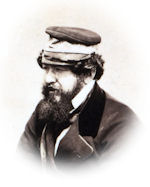
Post image for William Howard Russell’s Diary: The Northern army as reported and as it is.—General M’Clellan.

July 13th.—I have had a long day’s ride through the camps of the various regiments across the Potomac, and at this side of it, which the weather did not render very agreeable to myself or the poor hack that I had hired for the day, till my American Quartermaine gets me a decent mount. I wished to see with my own eyes what is the real condition of the army which the North have sent down to the Potomac, to undertake such a vast task as the conquest of the South. The Northern papers describe it as a magnificent force, complete in all respects, well-disciplined, well-clad, provided with fine artillery, and with every requirement to make it effective for all military operations in the field.

In one word, then, they are grossly and utterly ignorant of what an army is or should be. In the first place, there are not, I should think, 30,000 men of all sorts available for the campaign. The papers estimate it at any number from 50,000 to 100,000, giving the preference to 75,000. In the next place, their artillery is miserably deficient; they have not, I should think, more than five complete batteries, or six batteries, including scratch guns, and these are of different calibres, badly horsed, miserably equipped, and provided with the worst set of gunners and drivers which I, who have seen the Turkish field-guns, ever beheld. They have no cavalry, only a few scarecrow-men, who would dissolve partnership with their steeds at the first serious combined movement, mounted in high saddles, on wretched mouthless screws, and some few regulars from the frontiers, who may be good for Indians, but who would go over like ninepins at a charge from Punjaubee irregulars. Their transport is tolerably good, but inadequate; they have no carriage for reserve ammunition; the commissariat drivers are civilians, under little or no control; the officers are unsoldierly-looking men; the camps are dirty to excess; the men are dressed in all sorts of uniforms; and from what I hear, I doubt if any of these regiments have ever performed a brigade evolution together, or if any of the officers know what it is to deploy a brigade from column into line. They are mostly three months’ men, whose time is nearly up. They were rejoicing to-day over the fact that it was so, and that they had kept the enemy from Washington “without a fight.” And it is with this rabblement that the North propose not only to subdue the South, but according to some of their papers, to humiliate Great Britain, and conquer Canada afterwards.

I am opposed to national boasting, but I do firmly believe that 10,000 British regulars, or 12,000 French, with a proper establishment of artillery and cavalry, would not only entirely repulse this army with the greatest ease, under competent commanders, but that they could attack them and march into Washington over them or with them whenever they pleased. Not that Frenchman or Englishman is perfection, but that the American of this army knows nothing of discipline, and what is more, cares less for it.

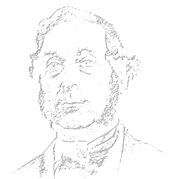
Major-General M’Clellan—I beg his pardon for styling him Brigadier—has really been successful. By a very well-conducted and rather rapid march, he was enabled to bring superior forces to bear on some raw levies under General Garnett (who came over with me in the steamer), which fled after a few shots, and were utterly routed, when their gallant commander fell, in an abortive attempt to rally them by the banks of the Cheat river. In this great battle” M’Clellan’s loss is less than 30 killed and wounded, and the Confederates loss is less than 100. But the dispersion of such guerilla bands has the most useful effect among the people of the district; and M’Clellan has done good service, especially as his little victory will lead to the discomfiture of all the Secessionists in the valley of the Keanawha, and in the valley of Western Virginia. I left Washington this afternoon, with the Sanitary Commissioners, for Baltimore, in order to visit the Federal camps at Fortress Monroe, to which we proceeded down the Chesapeake the same night.
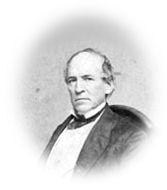
SATURDAY 13

A cool rainy day, woolen clothes comfortable. In the office all day as usual, a crowd of soldiers in the office every day. Troops are pushing over the River now rapidly, and a crisis appears to be approaching. We have just been looking at the signal lights at the camps over the river and answered at the Camps back of the City. It is the Calcium light apparently, and very brilliant. Saw the Dress parade of the 27th. Capt Adams came home and took tea with us. I sent the “Lyons boys” a basket of onions this evening to eat with their bacon, they were much pleased with the present. The “boys” are all well.

______

The three diary manuscript volumes, Washington during the Civil War: The Diary of Horatio Nelson Taft, 1861-1865, are available online at The Library of  Congress.

JULY 13TH.—The Secretary made peace yesterday between the general and the colonel, or a duel might have transpired.

To-day the colonel carried into the Secretary a number of applications for commissions as surgeons. Among the applicants were some of the colonel’s friends. He returned soon after in a rage, slamming the door after him, and then throwing down the papers violently on the floor. He picked them up the next moment, however, and sitting down beside me, became instantaneously as gentle as a dove. He said the men of science were thrust aside to give way to quacks; but, laughing, he remarked that the quacks would do well enough for the wounded——. Our men would have too much sense to submit to their malpractice.

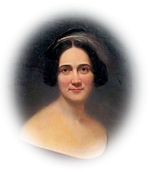
Post image for “Yesterday, as we left the cars, we had a glimpse of war. It was the saddest sight: the memory of it is hard to shake off—sick soldiers, not wounded ones.”— Mary Chesnut’s Diary.”

RICHMOND, Va., July 13, 1861.—Now we feel safe and comfortable. We can not be flanked. Mr. Preston met us at Warrenton. Mr. Chesnut doubtless had too many spies to receive from Washington, galloping in with the exact numbers of the enemy done up in their back hair.

Wade Hampton is here; Doctor Nott also—Nott and Glyddon known to fame. Everybody is here, en route for the army, or staying for the meeting of Congress.

Lamar is out on crutches. His father-in-law, once known only as the humorist Longstreet,¹ author of Georgia Scenes, now a staid Methodist, who has outgrown the follies of his youth, bore him off to-day. They say Judge Longstreet has lost the keen sense of fun that illuminated his life in days of yore. Mrs. Lamar and her daughter were here.

The President met us cordially, but he laughed at our sudden retreat, with baggage lost, etc. He tried to keep us from going; said it was a dangerous experiment. Dare say he knows more about the situation of things than he chooses to tell us.

To-day in the drawing-room, saw a vivandière in the flesh. She was in the uniform of her regiment, but wore Turkish pantaloons. She frisked about in her hat and feathers; did not uncover her head as a man would have done; played the piano; and sang war-songs. She had no drum, but she gave us rataplan. She was followed at every step by a mob of admiring soldiers and boys.

Yesterday, as we left the cars, we had a glimpse of war. It was the saddest sight: the memory of it is hard to shake off—sick soldiers, not wounded ones. There were quite two hundred (they said) lying about as best they might on the platform. Robert Barnwell² was there doing all he could. Their pale, ghastly faces! So here is one of the horrors of war we had not reckoned on. There were many good men and women with Robert Barnwell, rendering all the service possible in the circumstances.

Just now I happened to look up and saw Mr. Chesnut with a smile on his face watching me from the passageway. I flew across the room, and as I got half-way saw Mrs. Davis touch him on the shoulder. She said he was to go at once into Mr. Davis’s room, where General Lee and General Cooper were. After he left us, Mrs. Davis told me General Beauregard had sent Mr. Chesnut here on some army business.

______

¹ Augustus Baldwin Longstreet had great distinction in the South as a lawyer, clergyman, teacher, journalist, and author, and was successively president of five different colleges. His Georgia Scenes, a series of humorous papers, enjoyed great popularity for many years.

² Rev. Robert Barnwell, nephew of Hon. Robert Barnwell, established in Richmond a hospital for South Carolinians.

—John B. Clark, member of the House of Representatives from Missouri, was expelled from that body, having been found in arms against the United States Government, and in active part with the rebels under Governor Jackson, in the late battle of Booneville, Missouri.

—Joseph Holt addressed the citizens of Louisville, Ky., this day. His speech was a triumph for the Government of the Union. He called forth in expressive outbursts the popular consciousness that the Government of the United States, which has so long protected and blessed all its citizens, is now itself in need of protection and blessing from them; and in this hour of its peril calls for, and has the right to call for, the earnest and absolute support of all who still profess allegiance to it. An eminently distinguished Kentuckian, an old and highly honored resident of Louisville, an illustrious patriot, faithful to his country and to his oath amidst untold embarrassments, Joseph Holt was listened to by the vast gathering of his Kentucky friends with the profoundest respect and the most rapturous approval; and the more emphatic and unqualified the orator’s declarations of devotion to the Union and the Government, and the stronger his appeals for Kentucky to do her whole duty and contribute her whole strength to the Administration in its heroic struggle to save the Government and restore the Union, the louder and longer was the universal applause.—National Intelligencer, July 20.—(Doc. 90.)

—General Polk issued a general order from his head-quarters, at Memphis, Tenn., to-day on the occasion of assuming the command of the Mississippi division of the rebel army. He says that “justice will triumph, and an earnest of this triumph is already beheld in the mighty uprising of the whole Southern heart.”— (Doc. 95.)