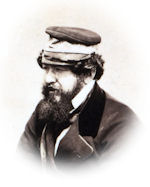
July 26th.—Whether it is from curiosity to hear what I have to say or not, the number of my visitors is augmenting. Among them was a man in soldier’s uniform, who sauntered into my room to borrow “five or ten dollars,” on the ground that he was a waiter at the Clarendon Hotel when I was stopping there, and wanted to go North, as his time was up. His anecdotes were stupendous. General Meigs and Captain Macomb, of the United States Engineers, paid me a visit, and talked of the disaster very sensibly. The former is an able officer, and an accomplished man—the latter, son, I believe, of the American general of that name, distinguished in the war with Great Britain. I had a long conversation with General M’Dowell, who bears his supercession with admirable fortitude, and complains of nothing, except the failure of his officers to obey orders, and the hard fate which condemned him to lead an army of volunteers—Captain Wright, aide de camp to General Scott, Lieutenant Wise, of the Navy, and many others. The communications received from the Northern States have restored the spirits of all Union men, and not a few declare they are glad of the reverse, as the North will now be obliged to put forth all its strength.
Tuesday, July 26, 2011
FRIDAY 26
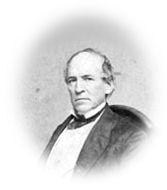
Was required to go before the Committee at the Capitol today at 10 o’clock (John F Porter Chairman). The Committee is investigating the cases of Clerks and others in the different departments who are said to be secessionists, or disloyal to the Govt. Went with Julia after dinner up to the camps on Meridian hill. Saw the Meridian Stone or pillar from which Longitude is computed. We took a long walk. I was very tired. Eddy Foster and McIntire of [Woolcut?] staid with us.

______
The three diary manuscript volumes, Washington during the Civil War: The Diary of Horatio Nelson Taft, 1861-1865, are available online at The Library of Congress.
BELLAIRE, July 26, 1861,
Friday morning, 7:30 A. M.
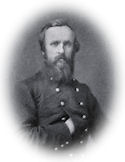
DEAR BROTHER WILLIAM:—I write for you and Lucy. Please send this note to her. We were ordered at Zanesville to change our destination to this point and Grafton. Whether we are to go from Grafton to the Kanawha country or to Oakland, Maryland, is uncertain; we think Oakland is our point; we hope so. It is to hold in check a rising secession feeling and to sustain Union men. We reached here at midnight and slept in the cars until morning. All in good spirits. I will advise you as to the ultimate determination of our course.
If my pistols come to the express office, send them to me by express when you ascertain where we are. You can probably learn at the governor’s office, if not direct from me. The express to the armies is very safe usually. Love to all.
Yours,
R. B. HAYES.
W. A. PLATT.
London, July 26, 1861
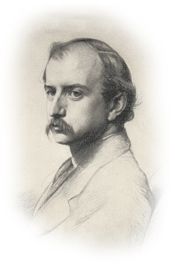
You say that you wanted to go off with Gordon’s regiment. I tell you I would give my cocked hat and knee-breeches to be with them at this moment. I don’t understand being sorry for them. I have no doubt that barring a few lives and legs and arms lost, they’ll all like it and be the better for it. And as for the lives and legs, if they estimate theirs as low as I do mine, the loss won’t amount to much. Pain is the only thing I should fear, but after all, one’s health is just as likely to be benefitted as to be hurt by a campaign, bullets and all, so that this does n’t count. My own task however lies elsewhere and I should be after all hardly the material for a soldier; so that I do my own work and resign the hope of becoming a hero.
My good old Nick Anderson is a Lieut. Colonel, I see. How I’d like to see him. I suppose Rooney Lee has some command also, so it’s as likely as not that he and Nick may come in contact. There never was any friendship between them. Indeed they always hated each other, so that the collision would not be so painful to either of them as it might be. There are so many of our friends in the army now and under fire, that I watch with curiosity the lists of casualties. It won’t be long before something happens, I suppose. . . .
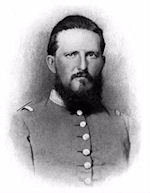
Manassas, July 26, 1861.
I wrote a short note to you on Tuesday, advising you of my escape from the battle of Sunday in safety. Matters are now quiet, and no prospect, I think, of another engagement very soon. When I think of the past, and the peril through which it has been my fortune to pass in safety, I am free to admit that I have no desire to participate in another such scene until the cause of my country requires it. Then the danger must be met, cost what it may. How I wish, Love, that I could see you and our little ones again! But for the present I must not think of it. Just as soon as the public service will permit I will be with you. The result of the battle has cast a shade of gloom over many who mourn husband, brother and child left dead on the field. Of those of our company who went into the thickest of the fight, at least one-half were killed or wounded. Some others escaped danger by sneaking away like cowards. The other companies from our county suffered as severely as ours. It seems, Love, an age since I have heard from you. You must write oftener. Why is it that you have not sent the daguerreotype of yourself and the children? Send me, by the first opportunity, another shirt just like that which you last sent me.
I will lay that by—as it has a hole through it made by a ball in the battle—as a memento of the glorious day. Do not send me any more clothing until I write for it, as I do not wish more than absolute necessity requires, having no means of carrying it with me.
I wish you would call upon Mrs. J. D. Davidson for me, and say to her she has reason to be proud of her brave boy. It was by the heroic services of men like him who have sacrificed their lives that the battle was won. He fell just as he and his comrades were taking possession of a splendid battery of the enemy’s cannon, and those who defended it were flying from the field. And now, Love, good-bye. I think you need have no apprehension about my safety for some weeks at least. It is not probable that we shall have another battle very soon; and if we do, as our brigade was in the thickest of the fight before, we will not be so much exposed again. Give my love to Pa, Rachel, Annie, and all my friends. Kiss our dear little ones for their absent papa, and for yourself accept a husband’s best love.

—The Eighth and Seventy-first Regiments N. Y. S. M., returned to New York this afternoon, and met with an enthusiastic reception. Broadway was thronged, and vociferous cheers greeted them at every crossing.—N. Y. Times, July 27.
—In the Mississippi Legislature Mr. Harrison presented a series of resolutions, expressing the gratitude of the Senate of that State in the late brilliant achievement by the Confederate arms on the battle-field at Bull Run, which being amended by Mr. Drane, were adopted.— (Doc. 126.)
—A fight occurred at Lane’s Prairie, fifteen miles from Rolla, Mo., between a party of sixty-five rebels, and fifteen Home Guards from Rolla. The Guards were surrounded, but they made a determined stand, and after a few volleys dispersed the rebels, killing their first lieutenant and mortally wounding three others. One lieutenant and two privates on the National side were slightly wounded.—N. Y. Times, July 30.
—The Fourth Regiment of New Jersey Militia, and the First Regiment of Rhode Island, left Washington on their return from service.— Phila. Press, July 27.
—Since the disaster to the national arms on Sunday last at Bull Run, the State of Pennsylvania has thrown forward, to meet the requirements of the National Government, ten full regiments of infantry. On Sunday night, July 21st, the Governor was urgently requested to push on his forces, and his response within the ensuing four days was a magnificent army of nearly 11,000 picked men, thoroughly uniformed and furnished, and having most of them been regularly drilled in camps of instruction for two months.
Great pains have been bestowed by the State authorities upon this fine army. It has been organized under the supervision of George A. McCall, long an officer in the regular army, through all the grades of which he has passed with distinction to the rank he now holds in it of Brigadier-general. The State has also an artillery regiment and a regiment of twelve hundred cavalry nearly ready for service, both of which have been accepted by the Secretary of War. To the foresight and wise energy of Governor Curtin is chiefly owing the ability of the State to contribute so promptly and efficiently to the national safety in the present emergency.—Philadelphia Pres, July 27.
—To-day, in Virginia, Col. McLeod Murphy captured three rebels in uniform, while out scouting on his own account. He saw three of them getting water, while their arms were leaning against a tree but a few feet off. Col. Murphy rode up, and, without firing his revolver, collared the crowd and brought them into camp.—N. Y. World, July 27.
—The Second Regiment of Georgia volunteers from Savannah, passed through Charleston, S. C., on their way to Virginia.—Charleston Mercury, July 27.
—Brevet Second Lieut. Clarence Derrick, of the Engineer Corps, Brevet Second Lieut. Jas. P. Parker, Fourth Infantry, and Brevet Second Lieut. Frank A. Reynolds, having resigned just after graduating from West Point a few weeks since, were dismissed from the service of the United States.—Philadelphia Inquirer, July 27.
James H. Otey, Bishop of Tennessee, issued a pastoral letter to the clergy of the Protestant Episcopal Church in his diocese, promulgating a prayer and service to be used on the Sunday preceding the day of thanksgiving fixed by the “Confederate Congress,” and suggesting to the clergy that in the prayer for the President of the United States, and in the prayer for Congress also, the words “United States” be omitted, and the words “Confederate States” be substituted in both places.—(Doc. 127.)
—A Correspondent at Fortress Monroe, Va., in a letter of this date, says: It became apparent, early last evening, that the rebels meditated an attack on Hampton. Gen. Butler determined to abandon the town in case of a formidable advance, and at seven o’clock the order was given for families and goods to be removed. Within one hour, orders were also issued to burn the town rather than have it fall into the hands of the enemy. The General well understands that the possession of Hampton by the rebels will be of no particular importance.
A stampede of the colored population took place all night, and to-day the road has been lined with refugees to the fortress, and army wagons, and carts bringing in goods from Hampton. The road has presented a most remarkable appearance; nearly 1,000 contraband men, women, and children must have come in during the last twenty-four hours.—N. Y. Times, Aug. 1.


