Following the American Civil War Sesquicentennial with day by day writings of the time, currently 1863.

Friday, July 29, 2011

MONDAY 29

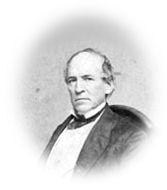
Saml Androus and his Regt (Mich 1st) went home today. I am quite well today after my attack of yesterday. I went down town and staid part of the day. Nothing of importance occured today but the City is very full of strangers, besides soldiers. I went down to the Camp with wife & Julia. The Surgeon, A L Barnes, came home with us to tea. He was on the Battle field at “Bull run.” Quite a number of the Regt, 27th, are on the Sick list, but generaly doing well.

______

The three diary manuscript volumes, Washington during the Civil War: The Diary of Horatio Nelson Taft, 1861-1865, are available online at The Library of  Congress.

Having established our own position and made it clear that we had no intention of being bluffed off, we were accepted by the surgeons and Miss Dix at our own valuation (purposely made high!) and from that moment our path was as a shining light. All hospitals were open to us, and our relations with Miss Dix became most cordial and friendly, as the following notes, among many received from her (nearly all undated), show.

My dear Miss Woolsey: I am thankful you are going to the hospital. Express to the good nurses my kind regards and purpose of seeing them so soon as I am able. Thanks for the lovely flowers, with cordial regards to Mrs. H. I have very little strength; excuse brevity and abruptness. I must have some consultation with you so soon as I am better, concerning the position of the nurses. I fear they are over-tasked.

Very cordially yours,

D. L. Dix.

–  –  –  –  –

My dear Miss Woolsey: Will you give a little attention to the hospitals at Alexandria through next week for me if convenient? Any requisition on my stores will always be promptly met.

I still feel that all the nurses who are really conscientious are very heavily tasked.

Yours most cordially,

D. L. Dix.

July 29. Monday.—A bright, warm day. Marched yesterday fourteen miles; today, nine miles to Weston, which we reached soon after noon. A pretty county town of one thousand people or so, surrounded by hills, picturesque and lovely. Encamped on a hill looking towards the town, my tent where I now sit opening upon a sweet scene of high hills, green smooth sward, or forests. The west fork of the Monongahela flows at the bottom of the hill, just below the rear of the field officers’ tents.

“Mountain View,” July 29.—Mr. _____ and myself came over here on Friday, to spend a few days with the Bishop and his family. He delivered a delightful address yesterday in the church, on the thankfulness and praise due to Almighty God, for (considering the circumstances) our unprecedented victory at Manassas. Our President and Congress requested that thanks should be returned in all of our churches. All rejoice for the country, though there are many bleeding hearts in our land. Among our acquaintances, Mr. Charles Powell, of Winchester, Col. Edmund Fontaine, of Hanover, and Mr. W. N. Page, of Lexington, each lost a son; and our friend, Mr. Clay Ward, of Alexandria, also fell. The gallant Generals Bee and Bartow were not of our State, but of our cause, and we all mourn their loss. Each mail adds to the list of casualties. The enemy admit their terrible disaster, and are busy inquiring into causes.

This house has been a kind of hospital for the last month. Several sick soldiers are here now, men of whom they know nothing except that they are soldiers of the Confederacy. They have had measles, and are now recruiting for service. One who left here two weeks ago, after having been carefully nursed, was killed at Manassas. The family seem to lament him as an old friend, though they never saw him until he came here from the Winchester hospital. Two sons of this house were in the fight; and the Bishop had several other grandchildren engaged, one of whom, R. M., lost his right arm. His grandfather has been to Winchester to see him, and is much gratified by the fortitude with which he bears his suffering. He says, “R. is a brave boy, and has done his duty to his country, and I will try to do my duty to him, and make up the loss of his arm to him, as far as possible.” It is delightful to be with Bishop Meade. There is so much genuine hospitality and kindness in his manner of entertaining, which we perhaps appreciate more highly now than we ever did before. His simple, self-denying habits are more conspicuous at home than anywhere else. We sit a great deal in his study, where he loves to entertain his friends. Nothing can be more simple than its furniture and arrangements, but he gives you so cordial a welcome to it, and is so agreeable, that you forget that the chair on which you sit is not cushioned. He delights in walking over the grounds with his friends, and as you stop to admire a beautiful tree or shrub, he will give you the history of it. Many of them he brought with him from Europe; but whether native or foreign, each has its association. This he brought in his trunk when a mere scion, from the tide-water section of Virginia; that from the “Eastern Shore;” another from the Alleghany mountains; another still, from the Cattskill mountains. Here is the oak of old England; there the cedar of Lebanon; there the willow from St. Helena, raised from a slip which had absolutely waved over the grave of Napoleon. Here is another, and prettier willow, native of our own Virginia soil. Then he points out his eight varieties of Arbor Vitas, and the splendid yews, hemlocks, spruces, and firs of every kind, which have attained an immense size. Our own forest trees are by no means forgotten, and we find oaks, poplars, elms, etc., without number. He tells me that he has more than a hundred varieties of trees in his yard. His flowers, too, are objects of great interest to him, particularly the old-fashioned damask rose. But his grape-vines are now his pets. He understands the cultivation of them perfectly, and I never saw them so luxuriant. It has been somewhat the fashion to call him stern, but I wish that those who call him so could see him among his children, grandchildren, and servants. Here he is indeed a patriarch. All are affectionately respectful, but none of them seem at all afraid of him. The grandchildren are never so happy as when in “grand-papa’s room;” and the little coloured children frequently come to the porch, where he spends a great deal of his time, to inquire after “old master’s health,” and to receive bread and butter or fruit from his hands.

JULY 29TH.—To-day quite a number of our wounded men on crutches, and with arms in splints, made their appearance in the streets, and created a sensation. A year hence, and we shall be accustomed to such spectacles.

—An engagement took place at Aquia Creek, Va., to-day. Four vessels of the Potomac flotilla opened the attack by firing shot and shell at a new battery which had been erected by the rebels. Several of the shells fell and exploded into a camp of rebels near the battery. The rebels returned the fire with considerable vigor from rifled cannon, but caused little damage, as their range was too high. The engagement lasted three hours, during which time the flotilla was struck but by one shot, which, however, inflicted no personal injury.— N. Y, Commercial Advertiser, July 31.

—Captain Wm. P. Allen, of the Eleventh Massachusetts Regiment, E. P. Doherty, of the New York Seventy-first, and Orlando Waldorf, Second Wisconsin, arrived in Washington city, having escaped from Sudley Church, Va., where they were detained as prisoners. The sentinel fell asleep, and they leaped from a window and escaped to the woods. They reached the Potomac, which they forded, fourteen miles above Washington.—N. Y. World, July 30.

—The Memphis Appeal, in urging planters to keep their cotton at home, says: “Should the usual quantity be brought to Memphis—say 400,000 bales—and be stored in our warehouses this fall, the temptation for the enemy to essay its capture would be extremely great, particularly as cotton will be very scarce at the North next winter. It would be tantamount, indeed, to offering $20,000,000 for invasion of the Mississippi Valley, and for a successful invasion against Memphis.”—N. Y. World, July 31.

—The House of Representatives, at Washington, refused to entertain a motion of Mr. Cox (Ohio) to appoint a Committee of Conference to report on amendments to the Constitution of the United States, with a view to the reconstruction of the Union.—(Doc. 130.)

—The first regiment of the Polish Brigade, under Col. Sulakowski, left New Orleans to-day for Virginia. The second regiment of the brigade is rapidly filling up, and will be in Virginia long before Lincoln, Scott & Co. make their second attempt to dine in Richmond, where Gen. Tochman now is drawing up his share of the bill of fare which the Polish Brigade intend serving up.—N. O. Crescent, July 29.

—A large meeting was held at the Merchants Exchange, in New Orleans, to make arrangements for the relief of the soldiers wounded at Manassas. Gen. W. A. Elmore presided, and Rev. Dr. Palmer spoke. Among other things he said that he did not believe this would be a protracted war. Protracted wars did not prevail among the great civilized nations of the earth, but only among barbarians. Such a war would bankrupt any nation in one year. Even England, in the war of the Crimea, found herself pressed and worried to the extreme in furnishing her army with supplies. For what duration of time could the North hope to sustain 400,000 men? As to the issue, the enemy might as well throw their millions into the rivers as to expect to subjugate us. Our cotton gave us immense power. The millions of Europe depended on it for their bread. As for the blockade, we laughed it to scorn. This war must soon terminate, or the civilized nations of Europe must become engaged in it; and he predicted our independence would be acknowledged before the first day of next year. But we would carry on this war until that end was accomplished. He alluded to a meeting at the New York Tabernacle, at which it was declared that the war should not end until Slavery was driven from our soil! But he felt it must continue until every nation on earth should recognize our independence and our institutions. He spoke of the imbecility, usurpation, and tyranny of Lincoln—unparalleled since the days of Charles I. He would have said that the North was almost unanimously against us, if he had not heard Vallandigham’s voice. (Tremendous cheering.) But he felt there were many brave men at the North, who strongly sympathized with our cause. He felt the certain success of our cause, because right and truth were on our side. Not till the crush of worlds would our country be subjugated.

A series of resolutions were adopted, of which the following is the first:

1. That we recognize in these victories on the side of liberty, against tyranny and oppression, the hand of the same just and righteous God who guided the armies of the country when lead by Washington in defence of its liberty ; that our hearts are filled with gratitude to the most high and mighty Ruler of the Universe for that signal interposition on our behalf, manifested in the strength and courage given to our soldiers and the terror which seized upon our enemies..N. Y. Times, August 6.

—Brigadier General Cox in a message to Governor Pierpont dated this day at Gauley, Va., says: “The Kanawha Valley is now free from the rebel troops. Most of the forces raised by Wise in this valley left him between Charleston and this place. I had sent them assurances that if they laid down their arms they might go quietly to their homes, and many have done so, asserting that they were cheated into the rebel service. I regret to have to say that Wise in his retreat has burned a number of valuable bridges, and carried off most of the wagons and teams belonging to the people of the valley. All parties denounce him for his vandalism. I congratulate you on the success of this expedition.”—Baltimore American, Aug. 2