July 23rd.—The morning was far advanced when I awoke, and hearing the roll of waggons in the street, I at first imagined the Federals were actually about to abandon Washington itself; but on going to the window, I perceived it arose from an irregular train of commissariat carts, country waggons, ambulances, and sutlers’ vans, in the centre of the street, the paths being crowded as before with soldiers, or rather with men in uniform, many of whom seemed as if they had been rolling in the mud. Poor General Mansfield was running back and forwards between his quarters and the War Department, and in the afternoon some efforts were made to restore order, by appointing rendezvous to which the fragment of regiments should repair, and by organising mounted patrols to clear the streets. In the middle of the day I went out through the streets, and walked down to the long bridge with the intention of crossing, but it was literally blocked up from end to end with a mass of waggons and ambulances full of wounded men, whose cries of pain echoed above the shouts of the drivers, so that I abandoned the attempt to get across, which, indeed, would not have been easy with any comfort, owing to the depth of mud in- the roads. To-day the aspect of Washington is more unseemly and disgraceful, if that were possible, than yesterday afternoon.
As I returned towards my lodgings a scene of greater disorder and violence than usual attracted my attention. A body of Confederate prisoners, marching two and two, were with difficulty saved by their guard from the murderous assaults of a hooting rabble, composed of civilians and men dressed like soldiers, who hurled all kinds of missiles they could lay their hands upon over the heads of the guard at their victims, spattering them with mud and filthy language. It was very gratifying to see the way in which the dastardly mob dispersed at the appearance of a squad of mounted men, who charged them boldly, and escorted the prisoners to General Mansfield. They consisted of a picket or grand guard, which, unaware of the retreat of their regiment from Fairfax, marched into the Federal lines before the battle. Their just indignation was audible enough. One of them, afterwards, told General M’Dowell, who hurried over as soon as he was made aware of the disgraceful outrages to which they had been exposed, “I would have died a hundred deaths before I fell into these wretches’ hands, if I had known this. Set me free for five minutes, and let any two, or four, of them insult me when my hands are loose.”
Soon afterwards a report flew about that a crowd of soldiers were hanging a Secesssionist. A senator rushed to General M’Dowell, and told him that he had seen the man swinging with his own eyes. Off went the General, ventre à terre, and was considerably relieved by finding that they were hanging merely a dummy or effigy of Jeff. Davis, not having succeeded in getting at the original yesterday.
Poor M’Dowell has been swiftly punished for his defeat, or rather for the unhappy termination to his advance. As soon as the disaster was ascertained beyond doubt, the President telegraphed to General M’Clellan to come and take command of his army. It is a commentary full of instruction on the military system of the Americans, that they have not a soldier who has ever handled a brigade in the field fit for service in the North.
The new commander-in-chief is a brevet-major who has been in civil employ on a railway for several years. He went once, with two other West Point officers, commissioned by Mr. Jefferson Davis, then Secretary-of-War, to examine and report on the operations in the Crimea, who were judiciously despatched when the war was over, and I used to see him and his companions poking about the ruins of the deserted trenches and batteries, mounted on horses furnished by the courtesy of British officers, just as they lived in English quarters, when they were snubbed and refused an audience by the Duke of Malakhoff in the French camp. Major M’Clellan forgot the affront, did not even mention it, and showed his Christian spirit by praising the allies, and damning John Bull with very faint applause, seasoned with lofty censure. He was very young, however, at the time, and is so well spoken of that his appointment will be popular; but all that he has done to gain such reputation and to earn the confidence of the government, is to have had some skirmishes with bands of Confederates in Western Virginia, in which the leader, Garnett, was killed, his “forces” routed, and finally, to the number of a thousand, obliged to surrender as prisoners of war. That success, however, at such a time is quite enough to elevate any man to the highest command. M’Clellan is about thirty-six years of age, was educated at West Point, where he was junior to M’Dowell, and a class-fellow of Beauregard.
I dined with M. Mercier, the French minister, who has a prettily situated house on the heights of Georgetown, about a mile and a-half from the city. Lord Lyons, Mr. Monson, his private secretary, M. Baroche, son of the French minister, who has been exploiting the Southern states, were the only additions to the family circle. The minister is a man in the prime of life, of more than moderate ability, with a rapid manner and quickness of apprehension. Ever since I first met M. Mercier he has expressed his conviction that the North never can succeed in conquering the South, or even restoring the Union, and that an attempt to do either by armed force must end in disaster. He is the more confirmed in his opinions by the result of Sunday’s battle, but the inactivity of the Confederates gives rise to the belief that they suffered seriously in the affair. M. Baroche has arrived at the conviction, without reference to the fate of the Federals in their march to Richmond, that the Union is utterly gone— as dead as the Achaian league.
Whilst Madame Mercier and her friends are conversing on much more agreeable subjects, the men hold a tobacco council under the shade of the magnificent trees, and France, Russia, and minor powers talk politics, Lord Lyons alone not joining in the nicotian controversy. Beneath us flowed the Potomac, and on the wooded heights at the other side, the Federal flag rose over Fort Corcoran and Arlington House, from which the grand army had set forth a few days ago to crush rebellion and destroy its chiefs. There, sad, anxious, and despairing, Mr. Lincoln and Mr. Seward were at that very moment passing through the wreck of the army, which, silent as ruin itself, took no notice of their presence.
It had been rumoured that the Confederates were advancing, and the President and the Foreign Minister set out in a carriage to see with their own eyes the state of the troops. What they beheld filled them with despair. The plateau was covered with the men of different regiments, driven by the patrols out of the city, or arrested in their flight at the bridges. In Fort Corcoran the men were in utter disorder, threatening to murder the officer of regulars who was essaying to get them into some state of efficiency to meet the advancing enemy. He had menaced one of the officers of the 69th with death for flat disobedience to orders; the men had taken the part of their captain; and the President drove into the work just in time to witness the confusion. The soldiers with loud cries demanded that the officer should be punished, and the President asked him why he had used such violent language towards his subordinate. “I told him, Mr. President, that if he refused to obey my orders I would shoot him on the spot; and I here repeat it, sir, that if I remain in command here, and he or any other man refuses to obey my orders, I’ll shoot him on the spot.”
The firmness of Sherman’s language and demeanour in presence of the chief of the State overawed the mutineers, and they proceeded to put the work in some kind of order to resist the enemy.
Mr. Seward was deeply impressed by the scene, and retired with the President to consult as to the best course to pursue, in some dejection, but they were rather comforted by the telegrams from all parts of the North, which proved that, though disappointed and surprised, the people were not disheartened or ready to relinquish the contest.
The accounts of the battle in the principal journals are curiously inaccurate and absurd. The writers have now recovered themselves. At first they yielded to the pressure of facts and to the accounts of their correspondents. They admitted the repulse, the losses, the disastrous retreat, the loss of guns, in strange contrast to their prophecies and wondrous hyperboles about the hyperbolic grand army. Now they set themselves to stem the current they have made. Let any one read the New York journals for the last week, if he wishes to frame an indictment against such journalism as the people delight to honour in America.

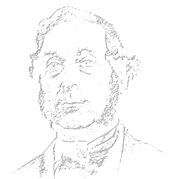
 Susan Bradford Eppes – A telegram this afternoon tells of the deaths of Generals Bee and Bartow, both Georgians and both relatives of the Whitehead family. (read more:
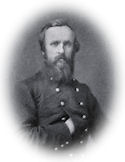
  Rutherford B. Hayes (diary entry) – We had heard the first rumor of a great defeat, but this gave us the details. A routed army, heavy loss, demoralization, on our side; a great victory, confidence, and enthusiasm, on the other, were the natural results to be expected. Washington in danger, its capture probable, if the enemy had genius. (read more:
  Mary Boykin Chesnut – Witnessed for the first time a military funeral. As that march came wailing up, they say Mrs. Bartow fainted. The empty saddle and the led war-horse —we saw and heard it all, and now it seems we are never out of the sound of the Dead March in Saul. It comes and it comes, until I feel inclined to close my ears and scream. (read more:
  Jane Eliza Woolsey – God be praised for that telegram! What a day was yesterday to us; and what a day must it have been to you, my dear Eliza! The terrible news, the conflicting reports, the almost unendurable suspense we were in, the distance from you at such a time! Altogether it was a time to be remembered! (read more:
  Judith White McQuire – Our loss, when compared with that of the enemy, was small, very small; but such men as have fallen! How can I record the death of our young friends, the Conrads of Martinsburg, the only sons of their father, and such sons! (read more: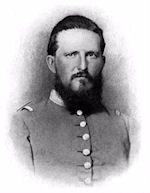
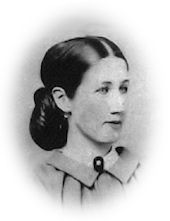
 Georgeanna Woolsey – Everything was in our hands and success seemed certain at Bull Run, when from some cause or other a panic was created, our men fell back, the rebels seized the moment for a bold rush and we were entirely routed. Joe says there never was a more complete defeat. All last night the soldiers were arriving in all sorts of conveyances, and on horses cut from ambulances and baggage wagons. An officer from Bull Run told us he saw four soldiers on one horse; and so they came flying back to Washington in all directions. (read more:
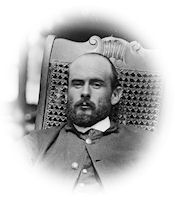
  Josiah Marshall Favill – Dodd and I dressed up in our best clothes, and walked to the city, first going to the telegraph office, where we had to wait a long time for our turn, to notify our families at home that we were not killed, wounded, or missing. (read more:
  Robert Shaw Howland – Of course the first thought of us civilians is to take care of the wounded. I send enclosed a cheque from Cousin Edward and one from myself. If you find you cannot use these amounts satisfactorily at Washington let us know and we will send materials as they may be wanted. (read more:
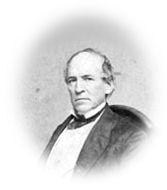
  Horatio Nelson Taft – Yesterday was a rainy day and the poor Soldiers were coming in all day wet and cold. We had our house full of members of our Lyons Co. to tea, and made them as comfortable as we could. Today I have taken down to the camp for them two pairs of pantaloons, bot tobacco for the Zuaves and helped them “out” all I could. The City is full of returning soldiers, many in a bad condition, wounded & tired out. (
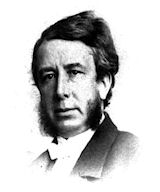
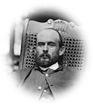 Charles Francis Adams, Jr. – I don’t see any good in my saying anything of the disgraceful and disastrous battle of yesterday. The impression here is very general that Scott’s policy was interfered with by the President in obedience to what he calls the popular will and at the instigation of Sumner, Greeley and others, and the advance was ordered by Scott only after a written protest. The result was a tremendous and unaccountable panic, such as raw troops are necessarily liable to on a field of battle in a strange country, and it all closed in the loss of guns, colors, equipage, and even honor. (read more:
  Rutherford Birchard Hayes (letter). – The Washington affair is greatly to be regretted; unless speedily repaired, it will lengthen the war materially. The panic of the troops does not strike me as remarkable. You recollect the French army in the neighborhood of the Austrians were seized with a panic, followed by a flight of many miles, caused merely by a runaway mule and cart and “nobody hurt.” (read more:
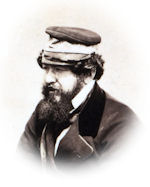
  William Howard Russell. – The morning was far advanced when I awoke, and hearing the roll of waggons in the street, I at first imagined the Federals were actually about to abandon Washington itself; but on going to the window, I perceived it arose from an irregular train of commissariat carts, country waggons, ambulances, and sutlers’ vans, in the centre of the street, the paths being crowded as before with soldiers, or rather with men in uniform, many of whom seemed as if they had been rolling in the mud. Poor General Mansfield was running back and forwards between his quarters and the War Department, and in the afternoon some efforts were made to restore order, by appointing rendezvous to which the fragment of regiments should repair, and by organising mounted patrols to clear the streets. (read more: