Tuesday, July 30th.—Having received our clothing, saddles, and one month’s pay, we were busy making the necessary preparations for our anticipated march.
Saturday, July 30, 2011
Receiving the nurses, and seeing that they were safely started on their way to various hospitals, and reporting to the New York committees on their services therein were among our occupations in the first year of the war.

New York, July 30th.
 My dear Miss Woolsey: I was extremely glad to receive your excellent letter yesterday. Had I known that you were residing in Washington, I should have requested you some time before to collect information for our society. We had become extremely anxious about these women; we could not learn who had safely arrived, where they were, what they were doing, nor how they fared in any respect; and a check of considerable amount, sent to one of them, was unacknowledged. As we had pledged ourselves to protect these women, pay their expenses, their wages, etc., you may imagine that we felt extremely uneasy about them. . . .
I will ask you now, to find out for us where Miss E. H. and Mrs. M. S. are placed. They were sent from New York by the night train, July 25th, direct to Miss Dix, and should have reached Washington last Friday morning.
Will you also visit the Georgetown Hospital and report on two nurses whom we sent on last Saturday. We should like some unprejudiced account of the management of this Hospital. . .
I will see that any nurse going to Alexandria in future is furnished with a certificate signed by some proper authority here. We feel much obliged to you for all the trouble you have taken in this matter. . . .
As the government payment commences Aug. 5th, from that time our society hands the nurses over to the government.
I remain very truly yours,
E. Blackwell.
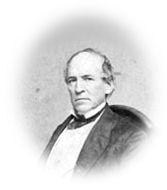
TUESDAY, JULY 30, 1861.
Another day has passed away and no particular thing has occured of note. Little Holly had his face pretty badly burned this morning. Chas dressed it and it seems to be doing well. Wrote to C R. Taft & Col Paine. Came home before 3 o’clock. My right great toe is very lame and sore from some cause, have not hurt it. It troubles me to walk. Doct [Vanslyck?] of Lyons, Surgeon of the NY 35th called today & left his trunk. Almeron Field also called, he is a “Regular” stationed at Arlington Heights. He stays with us tonight.
______
The three diary manuscript volumes, Washington during the Civil War: The Diary of Horatio Nelson Taft, 1861-1865, are available online at The Library of Congress.
WESTON, VIRGINIA,
Tuesday Morning, July 30, 1861.
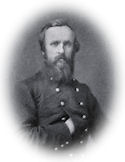
DEAR UNCLE:—If you look on the map you can find this town about twenty-five miles south of Clarksburg, which is about one hundred miles east of Parkersburg on the Northwest Virginia Railroad. So much for the general location; and if you were here, you would see on a pretty sidehill facing towards and overlooking a fine large village, surrounded by lovely hills, almost mountains, covered with forest or rich greensward, a picturesque encampment, and on the summit of the hill overlooking all, the line of field officers’ tents. Sitting in one of them, as [Henry] Ward Beecher sat in the barn at Lenox, I am writing you this letter.
I have seen Conger, acting assistant quartermaster of [the] Tenth Regiment. He wishes a place. I ventured to suggest that he could perhaps raise a company in your region by getting an appointment from the governor. All here praise him both as a business man and as a soldier. He must, I think, get some place. His reputation is so good with those he is associated with.
Dr. Rice also called to see me; he looks well and is no doubt an efficient man. Dr. Joe has had a consultation with him and thinks him a good officer.
We enjoy this life very much. So healthy and so pretty a country is rarely seen. After a month’s campaign here the Tenth has lost no man by sickness and has but seven sick. General Rosecrans takes immediate command of us and will have us with him in his operations against Wise. We shall have mountain marches enough no doubt. So far I stand it as well as the best. . . .
This is the land of blackberries. We are a great grown-up armed blackberry party and we gather untold quantities.
Here there are nearly as many Secessionists as Union men; the women avow it openly because they are safe in doing so, but the men are merely sour and suspicious and silent…
Men are at work ditching around my tent preparatory to a thunder-shower which is hanging over the mountain west of us. One of them I hear saying to his comrade: “This is the first time I ever used a spade and I don’t like it too well.”
But you have had enough of this incoherent talk. Colonel Scammon and Matthews have both been absent and left me in command, so that I have been exposed to numberless interruptions.
Good-bye. Direct to me by my title “Twenty-third Regiment, Ohio troops, Clarksburg, Virginia,” and it will be sent me.
R. B. HAYES.
Send this to Lucy.
S. BIRCHARD.
July 30. Tuesday.—Warm, bright morning. Damp in the tent with the fogs of the night. Hang out my duds to dry. Have met here divers Cincinnati acquaintances and Lieutenant Conger and Dr. Rice, of Fremont. Just now a fine young first lieutenant (Jewett of Zanesville) was accidentally shot by a gun falling on the ground out of a stack. A great hole was torn through his foot. The ball passed through three tents, barely missing several men, passed through a knapsack and bruised the leg of one of Captain McIlrath’s men.
Social formalities were entirely abandoned in Washington in war time. The Ebbitt House public parlors were on a level with F street and the windows were always open. Any friends in passing would catch a glimpse of us and happen in for comradeship, giving bits of news, and offering kindly services. One group of four Philadelphia officers were especially friendly and helpful. The lack of conventionality now and then, though, had its drawbacks, as Georgeanna’s note shows—addressed to “Mrs. Howland—Parlor” and sent down from the bedroom one evening to Eliza, who, not fortunate in escaping, was captured by the enemy:—
“Find out incidentally before Dr. E. goes, where Mr. Charming is to preach. Mind, I don’t want to accept an invitation to go with him. I saw him, when I was shutting the blinds up here, pass the windows of the parlor, and stop and look in, and go on, and stop, and turn back and come in—! and then I banged the blinds with glee, and am just popping into bed. Shall expect you up about midnight.”
CAMP ON WEST FORK OF MONONGAHELA
RIVER, WESTON, VIRGINIA, Tuesday, P. M.,
July 30, 1861.
DEAREST:—We are in the loveliest spot for a camp you ever saw—no, lovelier than that; nothing in Ohio can equal it. It needs a mountainous region for these beauties. We do not know how long we shall stay, but we suppose it will be three or four days. We have had two days of marching—not severe marching at all; but I saw enough to show me how easily raw troops are used up by an injudicious march. Luckily we are not likely to suffer in that way. We are probably aiming for Gauley Bridge on the Kanawha where Wise is said to be fortified. General Rosecrans is engaged in putting troops so as to hold the principal routes leading to the point.
The people here are divided. Many of the leading ladies are Secessionists. We meet many good Union men; the other men are prudently quiet. Our troops behave well.
We have had one of those distressing accidents which occur so frequently in volunteer regiments. You may remember that a son of H. J. Jewett, of Zanesville, President of [the] Central Ohio Railroad, was on the request of his father appointed a first-lieutenant in Captain Canby’s company. He joined us at Grafton in company with his father. He had served in Colonel ——’s regiment of three-months men in all the affairs in western Virginia and is very promising. A loaded gun was thrown down from a stack by a careless sentinel discharging a Minie ball through young Jewett’s foot. I was with him in a moment. It is a painful and severe wound, perhaps dangerous. There is a hope he may not be crippled. He bears it well. One of his exclamations was, “Oh, if it had only been a secession ball I wouldn’t have cared. Do you think you can save my leg,” etc., etc. The ball after passing through his foot passed through three of McIlrath’s tents, one full of men lying down. It cut the vest of one over his breast as he lay on his back and stirred the hair of another; finally passed clean through a knapsack and struck a man on the leg barely making a slight bruise and dropping down. Dr. Joe has the flattened bullet now to give to Jewett.
My horse came over the hills in good style.— Pshaw! I wish you were here; this is a camp. The field officers’ tents are on a high greensward hill, the other tents spreading below it in the sweetest way. As I write I can turn my head and from the entrance of the tent see the loveliest scene you can imagine. . . .
Affectionately,
R. B. HAYES.
MRS. HAYES.

July 30th.—I have just been conversing with some young soldiers, who joined in the dangers and glories of the battle-field. They corroborate what I had before heard of the presence of Northern females. I would not mention it before in my diary, because I did not wish to record any thing which I did not know to be true. But when I receive the account from eye-witnesses whose veracity cannot be doubted, I can only say, that I feel mortified that such was the case. They came, not as Florence Nightingales to alleviate human suffering, but to witness and exult over it. With the full assurance of the success of their army they meant to pass over the mutilated limbs and mangled corpses of ours, and to go on their way rejoicing to scenes of festivity in the halls of the vanquished, and to revel over the blood of the slain, the groans of the dying, the wails of the widow and the fatherless. But “Linden saw another sight,” and these very delicate, gentle, womanly ladies, where were they? Flying back to Washington, in confusion and terror, pell-mell, in the wildest excitement. And where were their brave and honourable escorts? Flying, too; not as protectors to their fair friends, but with self-preservation alone in view. All went helter-skelter—coaches, cabriolets, barouches, buggies, flying over the roads, as though all Fairfax were mad.

“Ah, Fear! ah, frantic Fear!
I see—I see thee near.
I know thy hurried step, thy haggard eye!
Like thee, I start; like thee, disordered fly!

Each bush to their disordered imaginations contained a savage Confederate. Cannon seemed thundering in the summer breeze, and in each spark of the lightning-bug, glinted and gleamed the sword and Bowie-knife of the blood-thirsty Southerner. Among the captured articles were ladies’ dresses, jewels, and other gew-gaws, on their way to Richmond to the grand ball promised to them on their safe arrival. There were also fine wines, West India fruits, and almost everything else rich, or sweet, or intoxicating, brought by the gay party, for a right royal pic-nic on the field of blood. The wines and brandies came in well for our wounded that night, and we thank God for the superfluities of the wicked.
July 30.—News from home. Mr. McD., of the Theological Seminary, an Irish student, who was allowed to remain there in peace, being a subject of Great Britain, has just arrived at this house as a candidate for ordination. He says that our house has been taken for a hospital, except two or three rooms which are used as headquarters by an officer. Bishop Johns’ house is used as headquarters; and the whole neighbourhood is one great barracks. The families who remained, Mrs. B., the Misses H., and others, have been sent to Alexandria, and their houses taken. Mr. J’s and Mr. C’s sweet residences have been taken down to the ground to give place to fortifications, which have been thrown up in every direction. Vaucluse, too, the seat of such elegant hospitality, the refined and dearly-loved home of the F. family, has been levelled to the earth, fortifications thrown up across the lawn, the fine old trees felled, and the whole grounds, once so embowered and shut out from public gaze, now laid bare and open—Vaucluse no more! There seems no probability of our getting home, and if we cannot go, what then? What will become of our furniture, and all our comforts, books, pictures, etc.! But these things are too sad to dwell on.
Mr. McD. gives an amusing account of the return of the Northern troops on the night of the 21st, and during the whole of the 22d. Such a wild, alarmed, dispirited set he had never an idea of. He had seen them pass by thousands and thousands, first on one road and then on the other, well armed, well mounted, in every respect splendidly equipped, only a few days before. As a Southern sympathizer, he had trembled for us, and prayed for us, that we might not be entirely destroyed. He and one or two others of similar sentiments had prayed and talked together of our danger. Then what was their surprise to see the hasty, disordered return!

JULY 30TH.—Nothing of importance to-day.
Washington, D. C.
London, July 30, 1861.
My Dear Sir,—I arrived here the day before yesterday, and through the kindness of a mutual friend had an interview of an hour’s duration, last evening, with Lord Palmerstbn, in one of the private galleries of the House of Commons. The length to which his lordship allowed our interview to be prolonged, and the many interrogatories which he put to me, are a striking evidence of the deep interest with which the government watches the progress of events in our country.
Lord Palmerston, after asking me a number of questions about our army and navy, the feeling at the North, etc., wanted also to know whether the feeling of anger and irritation manifested by our people against England for her position of neutrality was still as violent as ever when I left.
I told him that there was no feeling of hostility in the United States against England, but that throughout all classes of people at the North we felt deeply mortified and disappointed when the proclamation of the Queen revealed to us the fact that the people of the United States had not to expect any sympathy on the part of the British government in their struggle for national existence against a rebellious slave oligarchy; I dwelt upon the criminality, unjustifiability, and lawlessness of that rebellion, and compared the tone of the English government and press with the expression of heartfelt sympathy which came across the Atlantic, from the whole American people, at the time of the rebellion in India.
His Lordship listened with earnest attention to my remarks, and said that the British government, by its strict neutrality, did not do any more than what we had done when we would not permit them to enlist a few men in the States during the Crimean war. In the course of the conversation he used this phrase, ” We do not like slavery, but we want cotton, and we dislike very much your Morrill tariff.”
I think this phrase comprises the whole policy of this government in the present war, and from what I have seen and heard since mv arrival, I am more than ever convinced that we have nothing to hope from the sympathy of the English government and people in our struggle. Because this war is not carried on for the abolition of slavery in the Southern States, they try to maintain that the war has nothing to do with slavery: wilfully shutting their eyes to the fact that the attitude of the North with regard to introducing slavery into the Territories is the main ground upon which the Secessionists justify their action. As a distinguished lady, wife of a prominent liberal in Parliament, told me last evening: “I am sorry to say, we have been found wanting in the present emergency, and principles have to vield to interest.”
The news of the patriotic action of Congress, by voting large supplies of men and money, and the successes of General McClellan, have evidently startled people a good deal. Lord Palmerston was very minute in his inquiries on all these points. He also asked what it meant that Congress had passed a law closing the Southern ports, and whether this act of Congress was to stand in lieu of the blockade, which was thus to be given up.
I gave him my individual views on this question, stating that I thought this action was only taken in order to give additional force and Constitutionality to the blockade, and to meet objections which might be raised against the government blockading its own ports, and as such the United States considered every port in the seceded States.
He then asked me what was the meaning of the law just passed by Congress, authorizing the appointment of collectors in the Southern ports for receiving custom-duties on board of vessels of war, to be stationed at the entrance of the respective ports—that he could not understand how, on one hand, a port could be blockaded, and on the other hand, ships be allowed to enter upon paying customs, maintaining that this was virtually doing away with the blockade.
I replied that I thought the passage of this act was only intended to be authoritative, but not mandatory, upon the executive, and that Congress wanted to give to the President every possible Constitutional power, in order to be prepared for every emergency. That so far from intending to relinquish the blockade of the seceded ports, no efforts would be spared in order to make it respected and effective.
I mention all these remarks and objections in order to show you how every excuse will be seized by this government in order to break through our blockade, and I know that under the influence of Mr. Mercier’s dispatches to his government, we have nothing better to hope from France. I understand that both governments have written to their ministers at Washington, more than a week ago, that they will not allow French and English vessels to be overhauled on the high seas by our blockading squadron, on account of being suspected of having run the blockade, or carried contraband of war.
Lord Palmerston asked me what our manufacturers and spinners in New England would do for their supply of cotton, and how they were situated at present. I told him that by working short time I thought they would have cotton enough to last them until next spring, and that they were all for a strong, vigorous prosecution of the war, convinced that this was the only way in order to get the required supply by next spring.
He asked me, also, where our government intended to raise the large amounts voted by Congress for the prosecution of the war. I told him that I had no knowledge of the intentions of the Secretary of the Treasury, but I supposed he would negotiate his loans wherever he could make the most advantageous terms, that undoubtedly a large portion, if not the whole, would be taken by our people at home, the stagnation of trade having thrown a good deal of idle capital upon the market. I purposely conveyed the idea that we did not look for the probability of negotiating any large loan in England at present, because, since my arrival, the English papers have talked a good deal about my having come over for the purpose of raising money here.
I shall also shorten my visit here for the present, and intend to leave this evening for Paris and Germany. If I have a chance in Paris to see any of the Emperor’s cabinet, I shall do so, and shall not fail to write to you should any thing of interest come to my knowledge. I hope that by the time this reaches you our troops have been victorious in Virginia—one or two battles now will very soon change the tone and feeling of our English cousins.


