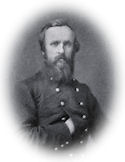
July 28. Sunday.—Busy from 4 A.M. packing baggage, striking tents, and preparing to move. Baggage enormous and extra; great delays; great stew. Our new Irish quartermaster— a failure so far. Got off about 11 A. M., in a great shower. I rode backwards and forwards; got wet; weather hot after the showers; face and nose, softened by the rain, begin to scorch; a peeling time in prospect. Still it was novel, scenery fine. Blackberries beyond all experience line the road; road good. Camped at night in a meadow by the road. Rain-storm soon followed. Many put up no tents; wearied with the day’s march, they threw themselves on the ground and slept through. I got wet through trying to get them sheltered. In the enemy’s country, although all we meet are Union men. Many fancied threatening dangers in all novel sights. A broken limb in a tree top was thought to be a spy looking down into the camp; fires were seen; men riding by were scouts of the enemy, etc., etc.
July 2011

Norwich, July 28th, 1861.
Dear Cousin Louisa:
I will not commence with prefatory remarks but hasten to reply to your questions about my boy. Mr. Abbott returned from Washington to-day. He found Will well, and well cared for at the house of Lt.-Col. Elliott, whose family are bestowing upon him every imaginable kindness. Oh! dear Louisa, God’s promise has not failed, and the widow’s son is not only safe, but he has added joy to his mother’s heart by his noble conduct. Col. Elliott told Mr. Abbott he should be promoted, that his courage and prudence were rare, and eminently qualified him to be an officer. Mr. A. wept as he spoke of his appearance on the battlefield, his courage and resolution never failing though surrounded by his dead and dying comrades. The Colonel said, “that boy is not known, but he must be now.” I do not hesitate to write you this, dear friend. God knows I rejoice tremblingly, but I share him now with the country to whom he is devoting all the energies of his earnest spirit. If you or any friend feel like writing him, direct to Washington, Lieut. William T. Lusk, 10th Co. 79th Highland Regiment; he has not written even me, for he has no time, but as soon as he can be spared he hopes to come to me for a day or two. I notice by the papers he was in the hottest of the fight and that the regiment was covered “with immortal honor.” Tell Laura, as he is connected with the Highlanders, I would like to know something of his Scotch ancestry we have so often laughed about. Pray for him, my friend. God never seemed so near as in this dark hour. I know that He pities his sorrowing children, remembering “we are but dust.” With much love to all our dear Enfield friends,
I remain
Affectionately yours,
E. F. Lusk.
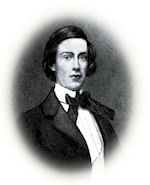
July 28th, 1861.
Dear Mother:
A week has passed since our misfortunes at Bull’s Run, and in all the intervening time I’ve had only opportunity to let you know that I was safe. But I must tell you something of that unlucky day, for I know you had rather have the story from my own lips. As I promised Henry Goddard to write once in a while for the Bulletin, I will put my story in a form to suit that sheet, if you think proper to communicate it: —
We too have breathed into our nostrils the smoke of battle, we too have listened to the voice of the cannon, we too have seen the finest of pagents, the most splendid of dramatic spectacles — the death struggle between armed arrays of men. We, who only yesterday were numbered among the “Sons of the Muses,” find ourselves today counted among the full-fledged “Sons of Mars.” We have fought, suffered, and survived to tell our tale. “To-morrow morning at 2 o’clock be ready for an advance, provided with a couple of day’s provisions,” is the command we receive on Saturday evening, and at the chilly hour appointed, without the sounding of the Reveillé, we are noiselessly summoned to our Arms. We stand in silence at our posts until the red glare of the rising sun had followed the dark hour before dawn. Then we marched on, gay of heart, and full of confidence. We cross Bull’s Run, and see men cutting trees by the bridge. We ask their reason. “It is to cover a retreat,” they tell us. “Ho! Ho!” How we laughed at the thought of our retreating! What innocent woodmen those were that could talk of us defeated! It was a bonnie sight to see us then, eager for battle, dreaming of victory. Some three miles we marched on, and then were drawn in the woods in line of battle. In line we advanced till we came to the edge of the forest, where we were told to lie down to avoid the range of the enemy’s cannon. About 6 o’clock a couple of pieces of our artillery to the left of us opened a fire upon such of an unseen foe as our skirmishers were able to discover. Long our pieces were unanswered. How glorious, we thought, this firing on the foe, and ourselves in seeming safety! How we laughed when afar we could see an exploding shell scattering the enemy in confusion, who for a short moment were thus forced to show themselves on open ground. The fields before us were occupied by our officers reconnoitring. Away off on the line of wood-covered hills two or three miles away, we could see the glitter of bayonets. Seen from a tree, they were found to belong to fine troops, well equipped, and marching in order — troops not to be scattered by threats, but worthy of being combatted. Upon an elevated open space of ground before us to the right, we could see more troops moving — horsemen riding — above all one on a white horse who seemed to be everywhere. The sun grew warm and we became listless. The artillery continued to discharge its Death messengers, the sharp rattle of musketry was heard to our right, volley after volley following in quick succession, yet many of us slept, quietly awaiting our turn to be summoned to action. About 11 o’clock two horses came galloping riderless toward us. While surmising whence they came, we were called to rise and march to battle. We sprung from the earth like the armed men of Cadmus. On we rushed by the flank, over fields, through woods, down into ravines, plunging into streams, up again onto rising meadows, eager, excited, thrilled with hot desire to bear our share in routing the enemy. We cheered, and yelled, pressing onward, regardless of shells now and then falling among us, thinking only of a sharp fight and a certain victory. At last we reached the lines of the brave boys of the 69th. Here the American banner was planted, so we shouted lustily, for the spot had not long since been wrung from the foe.
From many a point not long since covered by secession forces, the American banner now floated. What wonder we felt our hearts swelling with pride, and saw, hardly noticing, horse and rider lying stiff, cold and bloody together! What, though we stepped unthinking over the pale body of many a brave fellow still grasping convulsively his gun, with the shadows of Death closing around him! We were following the foe, I have said, and were dreaming only of victory. So we were marched to the edge of a slope which sheltered us partially from the aim of the enemy’s artillery. Here lying prostrate, shell after shell flew over our heads, or tore up the ground around. Now we could feel the hot breath of a cannon ball fan our cheeks; now we could see one fairly aimed, falling among our horses, and rolling them prostrate; and now again one of these messengers would come swift into the ranks of one of our columns, and without a thought or a groan, a soul was hurried into eternity.
After about an hour in this trying position, we were called up and turned into the road, where Death began to make sad havoc in our ranks. Surely aimed, the shot of the enemy fell among us. We could not see the foe, and then it was terrible to see our own boys, whose faces we knew, and whose hands we had pressed, falling in Death agony. We heard, while marching stealthily, a great shout, and looking we saw a hill before us, covered with the Ellsworth Zouaves. A moment more, and from the top of the hill, from unseen hands blazed a terrible discharge of arms. It was one of those masked batteries, which have so often brought us misfortune. Bravely fought the Zouaves, but they had to fall back from that hellish fire. Other Regiments made the charge, but only to be repulsed with ranks thinned and broken. At length our turn came. Up we rushed — our brave Colonel with us.
The first fire swept our ranks like a quick darting pestilence. “Rally, boys—Rally!” shouted the officers, and a brave rally was made. Our men stood firmly firing, answering volley by volley. Here we felt the worthlessness of our old Harper’s Ferry muskets, when matched against the rifles of the enemy. Tall men were mowed down about me. Wounded men begged their comrades to press on, and not to risk anything by lingering near them. We were only some twenty yards from a battery, belching forth a thick heavy hail of grape and canister, shell and fire of musketry. With unerring accuracy the enemy’s riflemen singled out our officers and mighty men. Suddenly we saw the American flag waving over the battery. “Cease firing” was the order given, and for a short moment we believed the battery was ours. It was the enemy though that had raised the flag to deceive us. As we lowered our arms, and were about to rally where the banner floated, we were met by a terrible raking fire, against which we could only stagger.
“By the Lord, but I believe them coons’s too cunning for us!” cried an old soldier near me. We halted, fell back, and the hillside was left to such only as lingered to bear away their wounded comrades.
As we passed down we saw our Colonel lying still, in the hands of Death. He had fallen bravely, breast to the foe, not wishing to cherish his own life, while the lives of his men were imperilled. Over the sad disheartening retreat let us not linger — let it be covered by the darkness of the night which followed. We took with us 750 brave men into the battle, but our roll call shows that 199 are numbered among the dead, the wounded, and the missing. Six captains of ours are silent now when their names are called. They died with many of their men, careless of Death, willing to give up all things, even life in its sweetness, for the good of the Republic. “Dulce et decorum est pro patria mori.”
L. of the 79th.
I have received only three letters from you, the rest probably having been intercepted by the enemy while I was in Virginia.
Very affec’y.,
Will Lusk.

—At Savannah, Ga., the funeral obsequies of Gen. Francis S. Bartow, who was killed at the battle of Bull Run, were celebrated to-day in most imposing style. There was an immense military and civic procession, comprising all the companies in the city, with detachments from the several garrisons of the neighboring forts and batteries. The cortége started from Christ Church, where an eloquent funeral sermon was preached by Bishop Elliott. The entire population of the city was present, and manifested the deepest sorrow. The bells were tolled and minute guns were fired during the march of the column. A salute of three rounds was fired by the infantry and artillery over the grave.—Charleston Mercury, July 29.
—Last night the steamer W. I. Maclay, Capt. Conway, bound from Cincinnati for St. Louis, M . was fired into at Cape Girardeau. The Maclay had landed at Cape Girardeau to discharge freight and passengers, and had no trouble whatever with any person or persons at that place. It was late at night, and very few people were seen. The officers discovered a number of tents, presenting the appearance of a camp, above the town. Soon after the boat had left the wharf to continue her trip to St. Louis, between two and three hundred shots were fired at her from shore. The shots took effect in the texas, pilot-house, and hurricane roof, some of them entering a lot of empty barrels on the roof. Two or three shots passed through the bulkheading of the texas, and one of them took effect in the head of the cook, who was asleep in his berth. It struck him on the left temple and passed around the skull, making a severe flesh wound. Another passed through the leg of a cabin boy, in the same apartment. No other damage was done to either the crew or passengers. Among the latter were about fifty soldiers, belonging to one of the Illinois regiments at Cairo, on their way home.—St. Louis Republican, July 30.
—The privateer Gordon, of Charleston, S. C., captured and carried into Hatteras Inlet the brig McGillery, of Bangor, Me., and the schooner Protector, from Cuba for Philadelphia. The privateer Mariner also captured a schooner, and the York captured the brig D. S. Martin, of Boston, Mass., with a cargo of machinery.—N. O. Delta, Aug. 1.
—A Detachment of two companies of Col. Mulligan’s regiment and three companies of the Home Guards sent to Hickory Hill, near Mount Pleasant, in Cole County, Mo., were fired on from an ambush near that place, but no one was hit. Col. Mulligan’s men captured twenty-eight rebels, among them two captains of Jackson’s forces; also, forty horses and two teams. —National Intelligencer, July 31.
—A Flag of truce came into Newport News, Va., this morning, with a proposition giving the national troops twenty-four hours to leave, and announcing that in case the place was not vacated they would force them out. The gunboat Dale, of twenty guns, at once went up from Old Point. The Albatross and Penguin were also stationed there, while the Minnesota and seven gunboats at Old Point are ready to assist should Newport News really be attacked. —Baltimore American, July 29.
—Thanksgiving Day was celebrated in the “Confederate” States, “for the success of our arms and the deliverance of our homes from the menacing hordes that have hung upon our borders like wolves upon the outskirts of the forest. We are pleased to be able to state that the day was generally observed in Memphis in accordance with the spirit of the resolution, and we believe that every pulpit echoed the thankfulness that fills the public heart”—Memphis (Tenn.) Appeal, July 30.
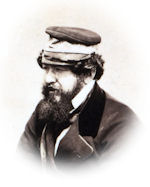
July 27th.—So ill to-day from heat, bad smells in the house, and fatigue, that I sent for Dr. Miller, a great, fine Virginian practitioner, who ordered me powders to be taken in “mint juleps.” Now mint juleps are made of whiskey, sugar, ice, very little water, and sprigs of fresh mint, to be sucked up after the manner of sherry cobblers, if so it be pleased, with a straw.
“A powder every two hours, with a mint julep. Why, that’s six a day, Doctor. Won’t that be—eh ?—won’t that be rather intoxicating?”
“Well, sir, that depends on the constitution. You’ll find they will do you no harm, even if the worst takes place.”
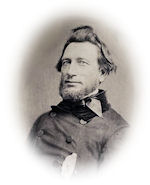
27th.—On my arrival here, I found our tents pitched on ploughed ground, in a swale. The bottoms of the tents were very damp, and the mud in the streets over shoe-top. I at once set to work to correct this. I had the streets all ditched on either side, the dirt thrown into the middle, and already, instead of the mud and water streets and tents, we have them so firm, smooth and dry that they are swept every day. I hope by this, and by constant care in ventilating the tents, to arrest the rapidly increasing sickness.
Having finished the above note for the day, I have, on the point of retiring, just received an order from Gen. King to be ready to move at a minute’s notice. The enemy is probably again threatening Washington. I must prepare.
The regiments called out for three months were now about disbanding, though a large number of the men at once re-enlisted for the war.

– – – – – – –
July 27, 10 a. m.
My dear Eliza: I have just been up to the corner to see a sorry sight, the return of the 69th Regiment—oh, so shabby, so worn and weary—all sorts of hats and shirts and some with hardly any clothes at all, staggering along under their knapsacks which they should never have been allowed to carry up Broadway. The surging mass of men and women locking arms and walking with the soldiers, was wonderful. It was a wild, tumultuous, promiscuous rush—not a march. Yesterday afternoon the 8th came through. I could see from the balcony how brown they looked and sturdy, and trimmer than the 69th. The girls and Mother saw them from Brady’s window. The cheers and applause they got down town, I suppose. There was not much of it up here—there was too much crying. Even policemen were in tears. What a dreadful collapse the “Grand Army” of the Potomac suffered. I don’t think the North needed such a lesson! Perhaps they did—perhaps the people have felt as if they could march down to Richmond whenever they chose. . . . Scott sent an inefficient general (known as a perfect windbag among brother officers) without commissariat, without organization, without proper regimental officers, against what he knew to be a fortified camp of a hundred thousand men. The one great blunder was that the battle was fought at all. All other minor blunders—and how many there were! are included in this. . . .
Jefferson Davis is free now to do what he pleases—flushed with success. Everyone says this battle has been as good to him as an increase of a hundred thousand fighting men. . . . He will perhaps attack Washington itself. The papers speak of the danger of this—and we all feel that the city is in greater peril than it was in those April days. Under such circumstances we do not quite relish your idea of going to Alexandria. You would be cut off at once, in that town, from communication or escape. One thought that checked Mother’s desire to go immediately to Washington last Monday was the idea that on reaching there she might find that women and children had been ordered to leave—for fear of an attack from Beauregard. That order may come yet. My dear sisters, I do not want to write anything depressing, but you must make up your minds after this disaster for a long war, an impoverished country, many reverses. So far, you have had but one thought —that of immediate success. General Scott’s plan of closing in on the rebels in Virginia and crushing them as in his fingers, is blown to the winds. We are to have a protracted and somewhat equal struggle, but the North is in earnest; its fault has been over-eagerness. Men there always have been enough of,—let them have proper officers; and as to money, Congress ought to be ashamed to haggle about direct taxation but pass the bill at once and provide ways and means. . . . I am very glad the boxes had all arrived safely. Next day you would get Aunt Emily’s two barrels, and Uncle Edward’s $250 in money. Buy whatever you see is needed or the surgeons and nurses want. Don’t wait for red tape. If it is mattresses, cots, pillows, spirit lamps, food, sheeting, flannel, etc. to wrap wounded men in, or what not. You can have plenty of money, and it could not be better spent than in fitting up a hospital even if that is government work. Carry wanted me to send you some money for her, but I told her I would wait and see whether you could buy the things you needed in Washington, or whether it had better be spent here. Please let me know. We shall have enough more things to fill a barrel early next week. Shall we put in the bandage roller, or are the hospital surgeons provided? I am sorry that Mrs. Leavitt did not send you a list of the contents of her boxes. . . .
Don’t save up things if you see them needed. It is easy to buy more slippers and mosquito net here, and it does not cost us any time or a stitch of effort to send more clothing. The Society has plenty on hand. Mrs. Parker jumped up with pleasure when we sent round the other day to see if she could let us have a few things for the trunk, and granted enough, as you saw, to fill two boxes and over. She was delighted at the idea of their being distributed where she could hear about it, and I must manage to put some scraps of your accounts together and tell her what you say. There is a fresh lot of handkerchiefs under way. Maria Gilman hemmed them on her machine.
SATURDAY, JULY 27, 1861.
The day has passed off without any thing very remarkable taking place. I was at the office part of the day but at home most of the time. Lieuts Swan and White, Lieut Gould of Rochester, and Sergeant Major Chas Gaul dined with us today. I was at Willards this evening. Genl McDowell (the great defeated) was there. Genl McClellan is also there, having arrived this morning. He is supposed to be a man for the place.
______
The three diary manuscript volumes, Washington during the Civil War: The Diary of Horatio Nelson Taft, 1861-1865, are available online at The Library of Congress.
CLARKSBURG, VIRGINIA, July 27, 1861 (?) (I
believe) Saturday (I know).
DEAR WIFE:—Our second day, from Bellaire to this place, was an exceedingly happy one. We travelled about one hundred and thirty miles in Virginia, and with the exception of one deserted village of Secessionists (Farmington), we were received everywhere with an enthusiasm I never saw anywhere before. No such great crowds turned out to meet us as we saw from Indianapolis to Cincinnati assembled to see Lincoln, but everywhere, in the corn and hay fields, in the houses, in the roads, on the hills, wherever a human being saw us, we saw such honest spontaneous demonstrations of joy as we never beheld elsewhere. Old men and women, boys and children—some fervently prayed for us, some laughed and some cried; all did something which told the story. The secret of it is, the defeat at Washington and the departure of some thousands of three-months men of Ohio and Indiana led them to fear they were left to the Rebels of eastern Virginia. We were the first three-years men filling the places of those who left. It was pleasant to see we were not invading an enemy’s country but defending the people among whom we came. Our men enjoyed it beyond measure. Many had never seen a mountain; none had ever seen such a reception. They stood on top of the cars and danced and shouted with delight.
We got here in the night. General Rosecrans is with us. No other full regiment here. We march tomorrow up the mountains. All around me is confusion—sixteen hundred horses, several hundred wagons,—all the preparations for a large army. Our own men in a crowded camp putting up tents. No time for further description.
Captain McMullen will go to Columbus to return. He will get my pistols of Mr. Platt, if they come to Columbus in time. You would enjoy such a ride as that of yesterday as much as I did. It was perfect. Now comes the hard work. Good-bye; love to all.
Affectionately,
R. B. HAYES.
P.S.—Colonel Matthews showed me a letter from his mother received at the moment of his leaving. She said she rejoiced she was the mother of seven sons all loyal and true, and that four of them were able to go to the war for the national rights.
The view from where I sit is most beautiful—long ranges of hills, a pleasant village, an extensive sweep of cultivated country, the fortified hill where an Indiana regiment prepared to defend itself against overwhelming odds, etc., etc.
Direct all letters and express matters to Clarksburg, Virginia, with my title and regiment until further directions. This is the great depot for operating in western Virginia, and all letters, etc., will be sent from here forward to me.
MRS. HAYES.
JULY 27, 1861.—From Bellaire to Clarksburg in Virginia. All the way, one hundred and thirty miles, in Virginia, greeted by shouts and demonstrations of joy. The people had seen many three-months men going, leaving western Virginia for home. This, with the defeat at Washington perhaps, led the people to fear that the Union men were left to the Rebels of the eastern part of the State. Our coming relieved them and was hailed with every demonstration of joy. [Today], Saturday, at 2 P.M. [A.M.] reached Clarksburg. Worked like a Turk in the rain all the morning laying out a camp and getting it up, on a fine hill with a pretty scene before us. Clearing off towards the close of the day. Tried to dry clothes. A busy day but a jolly.
In the evening General Rosecrans came over here and ordered Lieutenant-Colonel Matthews to march at 2 A. M. with the right wing in seventy-five waggons, leaving us with left wing and baggage to move at 7 A. M. to Weston. Order of march for our column, ten pioneers, three hundred or four hundred yards in advance of main body; advance guard of thirty, one hundred yards in advance of main body; next, main body; waggon train with baggage, twenty-eight wagons; rear guard of thirty, one hundred and eighty yards in rear of wagons.


