—The Richmond (Va.) Whig of today contains the following:—” The Devoted Band.”—The shortest path to peace is that which carries havoc and desolation to our invaders. It is believed that there are five or ten thousand men in the South ready and willing to share the fate of Curtius and devote themselves to the salvation of their country. It is proposed that all who are willing to make this sacrifice, shall arm themselves with a sword, two five shooters, and a carbine each, and meet on horseback at some place to be designated, convenient for the great work in hand. Fire and sword must be carried to the houses of those who are visiting those blessings upon their neighbors. Philadelphia, and even New York, is not beyond the reach of a long and brave arm. The moral people of these cities cannot be better taught the virtues of invasion than by the blazing light of their own dwellings.
None need apply for admission to “the Devoted Band ” but those who are prepared to take their life in their hand, and who would indulge not the least expectation of ever returning. They dedicate their lives to the destruction of their enemies!
A. S. B. D. B., Richmond.
All southern papers are requested to give this notice a few insertions.
—The Seventh Regiment of Pennsylvania Volunteers, commanded by Colonel E. B. Harvey, arrived at Washington, D. C. The Regiment numbers 1,046 young and intelligent members.—Philadelphia Press, July 25.
—An expedition of 300 men under Lieut. Crosby, U. S. A., left Fortress Monroe to reconnoitre in Back River, Va., where it burned nine sloops and schooners, and made prize one schooner laden with bacon and corn.—N. Y. Times, July 27.
—This day the loyal citizens of Baltimore, Md., presented an American flag to the Massachusetts Eighth Regiment. The flag, which is of the richest banner silk, was presented in an eloquent and apropriate speech by Perley Lovejoy, Esq., which was responded to by Colonel Hinks, who alluded to the many kind friends the regiment had made in the city of Baltimore.—Baltimore American, July 25.
—Heavy offers of men were made to the Government by telegraph from all parts of the North. From Illinois, 17, and from Indiana, 10 regiments were offered. By noon of this day 80,000 men had been accepted.—An order was issued by General Mansfield directing all straggling soldiers to join their respective regiments without delay, and warning that all stragglers found in the streets six hours after the promulgation of the order, would be deemed guilty of disobedience of orders, and would be arrested. —N. Y. Herald, July 25.
—The Third Regiment of Vermont Volunteers, commanded by Colonel W. N. Smith, left St. Johnsbury, Vt., for the seat of war.—N. Y. Commercial, July 25.
—John Bradley, a young man studying for the ministry, son of a wealthy citizen, and Columbus Bradley were arrested this evening, at Alexandria, Va., by the Provost Marshal, as spies taking information to Manassas.—Louisville Journal, July 26.
—First Lieutenant Luigi Vizia, an Italian officer of the engineer department who has been many years in the military service, and who served with credit in the glorious campaign of Italian liberation of Italy, arrived at New York, to offer his services to the American Government. On his way to America he fell in with an agent of the rebel Government who attempted to persuade him to take service under that Government, and offered to pay his passage.— N. Y. Evening Post, July 26.
—The ladies of Harper’s Ferry, Va., presented a Union flag to the Second Regiment of Massachusetts Volunteers to-day, with appropriate ceremonies.—Boston Advertiser, July 31.
——-
Late addition to Volume 3:
July 24.—The Presbytery of South Alabama met at Selma, Alabama, and severed its ecclesiastical connection with the General Assembly of the United States, and recommended a meeting of a Confederate States Assembly at Memphis, Tennessee, on the 4th of December next. Though not in favor of a preliminary convention, yet the Presbytery, in view that such might be the general wish, appointed delegates to one and recommend Atlanta as that place, and the 15th August as the time for holding it.—N. Y. Evening Post, August 12.
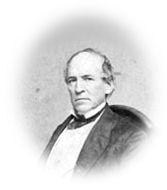


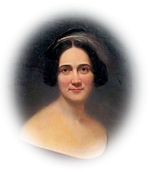

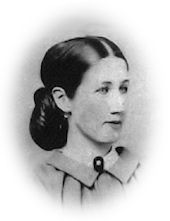
 Susan Bradford Eppes – A telegram this afternoon tells of the deaths of Generals Bee and Bartow, both Georgians and both relatives of the Whitehead family. (read more:
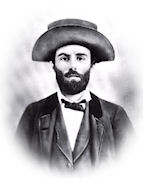
  Rutherford B. Hayes (diary entry) – We had heard the first rumor of a great defeat, but this gave us the details. A routed army, heavy loss, demoralization, on our side; a great victory, confidence, and enthusiasm, on the other, were the natural results to be expected. Washington in danger, its capture probable, if the enemy had genius. (read more:
  Mary Boykin Chesnut – Witnessed for the first time a military funeral. As that march came wailing up, they say Mrs. Bartow fainted. The empty saddle and the led war-horse —we saw and heard it all, and now it seems we are never out of the sound of the Dead March in Saul. It comes and it comes, until I feel inclined to close my ears and scream. (read more:
  Jane Eliza Woolsey – God be praised for that telegram! What a day was yesterday to us; and what a day must it have been to you, my dear Eliza! The terrible news, the conflicting reports, the almost unendurable suspense we were in, the distance from you at such a time! Altogether it was a time to be remembered! (read more:
  Judith White McQuire – Our loss, when compared with that of the enemy, was small, very small; but such men as have fallen! How can I record the death of our young friends, the Conrads of Martinsburg, the only sons of their father, and such sons! (read more: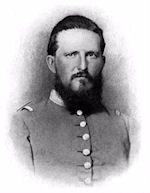
 Georgeanna Woolsey – Everything was in our hands and success seemed certain at Bull Run, when from some cause or other a panic was created, our men fell back, the rebels seized the moment for a bold rush and we were entirely routed. Joe says there never was a more complete defeat. All last night the soldiers were arriving in all sorts of conveyances, and on horses cut from ambulances and baggage wagons. An officer from Bull Run told us he saw four soldiers on one horse; and so they came flying back to Washington in all directions. (read more:
  Josiah Marshall Favill – Dodd and I dressed up in our best clothes, and walked to the city, first going to the telegraph office, where we had to wait a long time for our turn, to notify our families at home that we were not killed, wounded, or missing. (read more:
  Robert Shaw Howland – Of course the first thought of us civilians is to take care of the wounded. I send enclosed a cheque from Cousin Edward and one from myself. If you find you cannot use these amounts satisfactorily at Washington let us know and we will send materials as they may be wanted. (read more:
  Horatio Nelson Taft – Yesterday was a rainy day and the poor Soldiers were coming in all day wet and cold. We had our house full of members of our Lyons Co. to tea, and made them as comfortable as we could. Today I have taken down to the camp for them two pairs of pantaloons, bot tobacco for the Zuaves and helped them “out” all I could. The City is full of returning soldiers, many in a bad condition, wounded & tired out. (
 Charles Francis Adams, Jr. – I don’t see any good in my saying anything of the disgraceful and disastrous battle of yesterday. The impression here is very general that Scott’s policy was interfered with by the President in obedience to what he calls the popular will and at the instigation of Sumner, Greeley and others, and the advance was ordered by Scott only after a written protest. The result was a tremendous and unaccountable panic, such as raw troops are necessarily liable to on a field of battle in a strange country, and it all closed in the loss of guns, colors, equipage, and even honor. (read more:
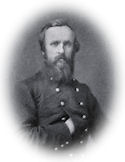
  Rutherford Birchard Hayes (letter). – The Washington affair is greatly to be regretted; unless speedily repaired, it will lengthen the war materially. The panic of the troops does not strike me as remarkable. You recollect the French army in the neighborhood of the Austrians were seized with a panic, followed by a flight of many miles, caused merely by a runaway mule and cart and “nobody hurt.” (read more:
  William Howard Russell. – The morning was far advanced when I awoke, and hearing the roll of waggons in the street, I at first imagined the Federals were actually about to abandon Washington itself; but on going to the window, I perceived it arose from an irregular train of commissariat carts, country waggons, ambulances, and sutlers’ vans, in the centre of the street, the paths being crowded as before with soldiers, or rather with men in uniform, many of whom seemed as if they had been rolling in the mud. Poor General Mansfield was running back and forwards between his quarters and the War Department, and in the afternoon some efforts were made to restore order, by appointing rendezvous to which the fragment of regiments should repair, and by organising mounted patrols to clear the streets. (read more:


