Following the American Civil War Sesquicentennial with day by day writings of the time, currently 1863.

July 2012

July 18.—Great excitement and terror existed among the citizens of Cincinnati, in consequence of the vicinity of the force of rebel guerrillas under John Morgan. Colonel Burbank, Thirteenth United States infantry, assumed military command of the city, and issued orders directing all officers in the volunteer service to report to him. The Governor of the State also issued an order calling for volunteers to serve for thirty days. The excitement of Cincinnati pervaded the adjoining towns in Kentucky.

—At Kingston, North-Carolina, two negroes were executed, by order of Colonel Sol Williams, C.S.A., having been found guilty of drumming up recruits for Burnside’s army.—Richmond Examiner, July 24.

—Col. Salomon, of the Ninth Wisconsin volunteers, at his encampment on Grand River, Ark., arrested Col. Weer, commander of the Indian expedition, and assumed command.

—A desperate fight took place near Memphis, Mo., between a detachment of Union troops, numbering about four hundred, under the command of Major John Y. Clopper, and a force of rebel guerrillas six hundred strong, resulting in a complete rout of the rebels, who left a large number of their dead and wounded.—(Doc. 153.)

—The Richmond (Va.) Despatch of this date, speaking of the proposition of employing negroes on the Union fortifications, said: “It appears from statements in the Northern newspapers that McClellan proposes to employ negroes to perform the hard labor on his fortifications, with a view to save his troops from the perils of sunstroke. This is the sort of freedom the deluded slaves enjoy when they get into the clutches of the abolitionists. They are worked to death, in order to save the lives of a proportionate number of miserable Yankees, not one half of whom can lay as much claim to respectability as the blackest cornfield negro in Virginia. We hope our authorities, in negotiating for an exchange of prisoners, will make the invaders account for at least a portion of the ‘contrabands’ they have stolen, though in making up their relative value it should appear that one nigger was equal to two Yankees.”

—The town of Newburg, Ind., was this day entered by a band of rebel guerrillas, under Capt. Johnson, and robbed of a large amount of property.—Evansville Journal, July 21.

—Large and enthusiastic meetings were held in Memphis, Tenn., Milwaukee, Wis., Danbury, Ct, and Troy, N. Y., for the purpose of promoting enlistments into the army, under the call of President Lincoln.

—In the British House of Commons a debate took place on the following motion submitted by Mr. Lindsay:

“That, in the opinion of this House, the States which have seceded from the Union of the republic of the United States have so long maintained themselves under a separate and established government, and have given such proof of their determination and ability to support their independence, that the propriety of offering mediation with the view of terminating hostilities between the contending parties, is worthy of the serious and immediate attention of her Majesty’s government”

In making this motion Mr. Lindsay said he felt assured that an expression of opinion on the part of the House on the subject would have an effect contrary to that which some persons seemed to apprehend. He thought the confederate States had shown their determination and ability to support their independence. There could be no difference of opinion on that point: but there might be a difference of opinion as to the propriety of British mediation. He then addressed the House on the origin and causes of the war; next he spoke of its effects; then he showed that, as he conceived, the end of the war must be separation; and, lastly, he endeavored to show that humanity and British interests demanded that a stop should be put to the war. It appeared strange and unaccountable to him that her Majesty’s government had taken no steps in that direction. It was clear that the South could not be conquered, and it was still more clear it could never be brought back again into the Union. He therefore submitted that the time had arrived when the Southern States ought to be received into the family of nations, and begged to make the above motion.

Mr. Taylor, who had given notice of an amendment to Mr. Lindsay’s motion, to leave out all the words after the words “House,” in order to insert the words, “it is desirable that this country should continue to maintain the strictest neutrality in the civil war unhappily existing in the republic of the United States,” said he thought Mr. Lindsay had not acted prudently in disregarding the suggestion of an honorable member, to forbear to move his resolution. It meant the recognition of the Southern States and intervention by force, which was another word for war with America. He had never heard, he said, such tremendous issues so raised; he, therefore, implored the House not to adopt the resolution.

Lord A. V. Tempest, who had given notice of a resolution, “that it is the duty of her Majesty’s government to endeavor, either by itself or in combination with other European Powers, by mediation or otherwise, to bring to a termination the existing contest in America,” said he thought the House should not separate without expressing an opinion on the subject of the war. He justified the interference of Great Britain on the grounds of humanity and of its responsibilities and duties. Mediation, however, he thought would be worthless unless backed by ulterior measures.

Mr. W. Foster said that, in his opinion, the motion was not calculated to put an end to the war, but was more likely to prolong it, and even to drag Great Britain into it. Was the object of the resolution, he asked, mediation or forcible interference? If the former, the less that was publicly said about it the better, and the mediator should be considered a friend to both parties; whereas Mr. Lindsay had avowed his partiality for the South. Then, if the offer of mediation was to be accompanied by a threat, it would be justly regarded as an insult, and would aggravate the evil. If the North were let alone it was not improbable it would find out that the subjugation of the South was too hard a task. He insisted that the civil strife was a great revolution, that tariffs had nothing to do with it, that slavery was the real cause of the war, and that it would put an end to slavery. He, therefore, advocated the principle and policy of non-intervention.

Mr. Whiteside observed, that although this question was difficult and delicate, that was no reason why the House of Commons should not express an opinion upon it; to shrink from doing it would be a cowardly proceeding on their part, and he thought Mr. Lindsay deserved well of the country in giving the government an opportunity of making known their sentiments on the subject. In his opinion the time had come when, upon the principles of international law, the Southern States, which had so long maintained their independence, might be recognized, without giving just ground of war or umbrage to the North. Mr. Gregory contended that though the war was for independence on one side, it was not for empire but for revenge on the other, in pursuit of which object every other consideration had been lost sight of by the North, and he insisted that Great Britain had a perfect right to endeavor to put a stop to such a state of things.

Mr. S. Fitzgerald moved the adjournment of the debate, when—

Lord Palmerston rose and said he hoped, after the length to which the debate had gone, that the House would be disposed to come to a decision to-night on the motion of the honorable member for Sunderland. The subject they had been debating was one of the highest importance, and one also of the most delicate character—and he could not think that the postponement of the conclusion of the debate could be attended with any beneficial result, either one way or the other. There could be but one wish on the part of every man in the country with respect to the war in America, and that was that it should end. He might doubt whether any end which could be satisfactory, or which could lead to an amicable settlement between the two parties was likely to be accelerated by angry debates in that House. He confessed, therefore, that he regretted that the discussion had been brought on, and he should earnestly hope that the House would not agree to the motion of his honorable friend, but would leave it in the hands of the government to deal with the future, content as he believed the country was with the manner in which the past had been conducted by them.

Mr. Hopwood said a few words concerning the distress of the operatives of Lancashire and Cheshire, which, he said, was entirely caused by the war in America, and implored the government to take some steps to put an end to the misery which the struggle was creating not only in America but in Europe.

Mr. Lindsay then asked the permission of the House to withdraw his motion, observing that he would rest satisfied with the statement of the noble lord at the head of the government, and the hope which it held out that he would take the earliest opportunity to bring about a termination of the war.

The motion was then withdrawn.

JULY 17TH.—The people are too jubilant, I fear, over our recent successes near the city. A great many skulkers from the army are seen daily in the streets, and it is said there are 3000 men here subject to conscript duty, who have not been enrolled. The business of purchasing substitutes is prevailing alarmingly.
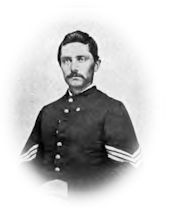
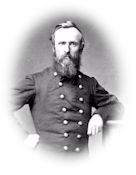
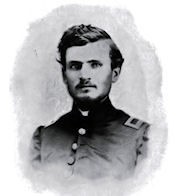
Thursday, 17th—It rained all last night and everybody is thankful, as it has become so dry and dusty. There are a few cases of sickness in our regiment, due to the extremely hot weather—a few cases of typhoid fever and some are suffering from chronic diarrhea.

Camp Green Meadows, Mercer County, Virginia,

July 17, 1862.

Dear Uncle : — . . . I am not satisfied that so good men as two-thirds of this army should be kept idle. New troops could hold the strong defensive positions which are the keys of the Kanawha Valley, while General Cox’s eight or ten good regiments could be sent where work is to be done.

Barring this idea of duty, no position could be pleasanter than the present. I have the Twenty-third Regiment, half a battery, and a company of cavalry under my command stationed on the edge of Dixie — part of us here, fourteen miles, and part at Packs Ferry, nineteen miles from Flat Top, and Colonel Scammon’s and General Cox’s headquarters. This is pleasant. Then, we have a lovely camp, copious cold-water springs, and the lower camp is on the banks of New River, a finer river than the Connecticut at Northampton, with plenty of canoes, flat-boats, and good fishing and swimming. The other side of the river is enemy’s country. We cross foraging parties daily to their side. They do not cross to ours, but are constantly threatening it. We moved here last Sunday, the 13th. On the map you will see our positions in the northeast corner of Mercer County on New River, near the mouth of and north of Bluestone River. Our camps five miles apart — Major Comly commands at the river, I making my headquarters here on the hill. We have pickets and patrols connecting us. I took the six companies to the river, with music, etc., etc., to fish and swim Tuesday.

It is now a year since we entered Virginia. What a difference it makes! Our camp is now a pleasanter place with its bowers and contrivances for comfort than even Spiegel Grove. And it takes no ordering or scolding to get things done. A year ago if a little such work was called for, you would hear grumblers say: “I didn’t come to dig and chop, I could do that at home. I came to fight,” etc., etc. Now springs are opened, bathing places built, bowers, etc., etc., got up as naturally as corn grows. No sickness either — about eight hundred and fifteen to eight hundred and twenty men — none seriously sick and only eight or ten excused from duty. All this is very jolly.

We have been lucky with our little raids in getting horses, cattle, and prisoners. Nothing important enough to blow about, although a more literary regiment would fill the newspapers out of less material. We have lost but one man killed and one taken prisoner during this month. There has been some splendid running by small parties occasionally. Nothing but the enemy’s fear of being ambushed saved four of our officers last Saturday. So far as our adversaries over the river goes, they treat our men taken prisoners very well. The Forty-fifth, Twenty-second, Thirty-sixth, and Fifty-first Virginia are the enemy’s regiments opposed to us. They know us and we know them perfectly well. Prisoners say their scouts hear our roll-calls and that all of them enjoy our music.

There are many discouraging things in the present aspect of affairs, and until frost in October, I expect to hear of disasters in the Southwest. It is impossible to maintain our conquests in that quarter while the low stage of water and the sickness compel us to act on the defensive, but if there is no powerful intervention by foreign powers, we shall be in a condition next December to push them to the Gulf and the Atlantic before winter closes. Any earlier termination, I do not look for.

Two years is an important part of a man’s life in these fast days, but I shall be content if I am mustered out of service at the end of two years from enlistment. — Regards to all.

Sincerely,

R. B. Hayes.

S. BIRCHARD.

17th. Played a little chess. Wrote to Aunt Luna. Slept on the prairie. All the horses of the regiment were out.

Written from the Sea islands of South Carolina.

St. Helena Island, July 17, 1862.

I do want to let you know the little particulars you speak of very much, but there are always so many great things to tell of here that I have no time. Just now we are going through “history” in the removal from Edisto of all the negroes there, consequent upon the evacuation of the island by our troops. The story is this — General McClellan wanting more soldiers, General Stevens and his regiment went North, and we had not enough soldiers left to guard Edisto, which lies near Charleston. So General Hunter ordered the evacuation of the island, first removing all the negroes who wished our protection, and that was all who were there. They embarked in one or two vessels, sixteen hundred in all, with their household effects, pigs, chickens, and babies “promiscuous.” Last night Captain Hooper went to see that they were comfortably established on this island. They have the fashionable watering-place given up to them, with all their old masters’ houses at their disposal. The superintendents laugh about it. They say the negroes go to St. Helenaville for their healths, and the white folks stay on the plantations. I suppose some of the places will be unhealthy, but ours is fortunately situated, as we have a cool wind from the sea every day. These negroes will be rationed and cared for. They say they will get in the cotton here that had to be abandoned when the black regiment was formed. They are quiet and good, anxious to do all they can for the people who are protecting them. They have not the least desire, apparently, to welcome back their old masters, nor to cling to the soil. They want only what Yankees can give them.

We are going to have another change in this household. Mr. Soule,[1] Mrs. Philbrick’s uncle, is coming to preside. He is just made General Superintendent of these two islands, and this will be his headquarters.

Mr. Pierce’s short visit on his return was very pleasant. He came at midnight, in his usual energetic fashion, and stayed some days. General Saxton, his successor, seems a very fine fellow, and most truly anti-slavery. He is quite interested in Nelly Winsor’s movements and plans, she having taken Eustis’ plantation to oversee, as well as this one. She is paid for this by Government fifty dollars per month. Her salary as teacher from the commission will probably soon cease. Ellen has a fine afternoon school and is doing remarkably well with it. She has two Sunday-School classes, one at church, one here. I help in the Sunday-School here and have a class of thirty-six or so at the church.

I will go over one day — an average day — to let you know how I spend my time. If Captain Hooper has to go to Beaufort by the early ferry, we have to get up by six; but if he does not, we lie till after eight, and we about equally divide the days between early and late rising. After breakfast, I feed my three mocking-birds, — how thankful I should be for a decent cage for them! — and then go to the Boston store or the cotton-house and pack boxes to go off to plantations, or clear up the store, or sell — the latter chiefly on Saturdays, when there is a crowd around the door laughing, joking, scolding, crowding. Ellen always goes to the stores when I do, and will stay, as she says she was commissioned expressly to take care of me and work with me. She makes this an excuse or a reason for insisting upon sharing every bit of work I do. About eleven or twelve I come in, wash, sleep, and lunch whenever my nap is out. In the afternoons I expect to write while Ellen has her school, for I do not help her in it, but so many folks come for clothing, or on business, or to be doctored, that I rarely have an hour. Then comes supper and dinner together at any time between six and ten that Captain Hooper gets here. About sundown, I, with Ellen, walk down the little negro street, or “the hill,” as they call it, — though it is as flat as a pond, — to attend my patients. I am sorry to say that Aunt Bess, whose ulcer I had nearly cured, has another on the same leg, and so my skill seems of less avail than I could hope. We had the prettiest little baby born here the other day that I ever saw, and good as gold. It is a great pet with us all. Indeed, it is almost laughable to see what pets all the people are and how they enjoy it. At church, at home, and in the field their own convenience is the first cared for, and compared to them the poor superintendents are “nowhar.” It is too funny to hear them ordering me around in the store — with real good-natured liking for mischief in it, too.

After dinner we sit awhile and talk in the parlor, but the mosquitoes give us no peace. To-night Ellen and I have taken our writing-desks and candle under our mosquito net. I am glad to have good fare. We have nice melons and figs, pretty good corn, tomatoes now and then, bread rarely; hominy, cornbread, and rice waffles being our principal breadstuffs. We have fish every day nearly, but fresh meat never — now and then turtle soup, though. Living on the “fat of the lamb ” is nothing to ours on the fat of the turtle. Our household servants are four in number, besides my Rina, who washes for me and does my chamber-work, besides waiting at table. She is the best old thing in the world and I hope I can take her North with me. … It is grand to run to my private store for nails and tacks, etc., and the sewing-things are invaluable. The pulverized sugar lasts well. Captain Hooper had a letter from Mr. P., in which he speaks of the pleasant times he had here. He will never have so pleasant again, I believe, because he was doing a good work for no pay, and that is a satisfaction not often to be had. The cotton crop here will be a success, I think, and the corn will be plentiful, unless we have some great storms. I wish you could see the wild flowers, the hedges of Adam’s-needle, with heads of white bells a foot or two through and four feet high; the purple pease with blossoms that look like dogtooth violets — just the size — climbing up the cotton-plant with its yellow flower, and making whole fields purple and gold; the passion flowers in the grass; the swinging palmetto sprays.

I send the music. It is not right, but will give you some idea. “Roll, Jordan, Roll” is the finest song.


[1] Richard Soule, Jr.

Fort Barnard, Va., July 17, 1862.

Dear Mother, Sister and Brothers:

It is quite a long time since I last wrote. Have had a spell of sickness. I had a fever, then the shakes, which are very comfortable(!) to have on one. I had to take Quinine for the first time and the taste of it was in my mouth two days after; it loosened every tooth in my head. War news not very exciting. A string of over two hundred teams passed up by here day before yesterday; they are going to help move Pope’s army, but it will take some time to find it.

It has been hot; sweat runs off in streams. George Frye is well. Here I will close and give the Capt. room to write.

Yours,

L. B., Jr.

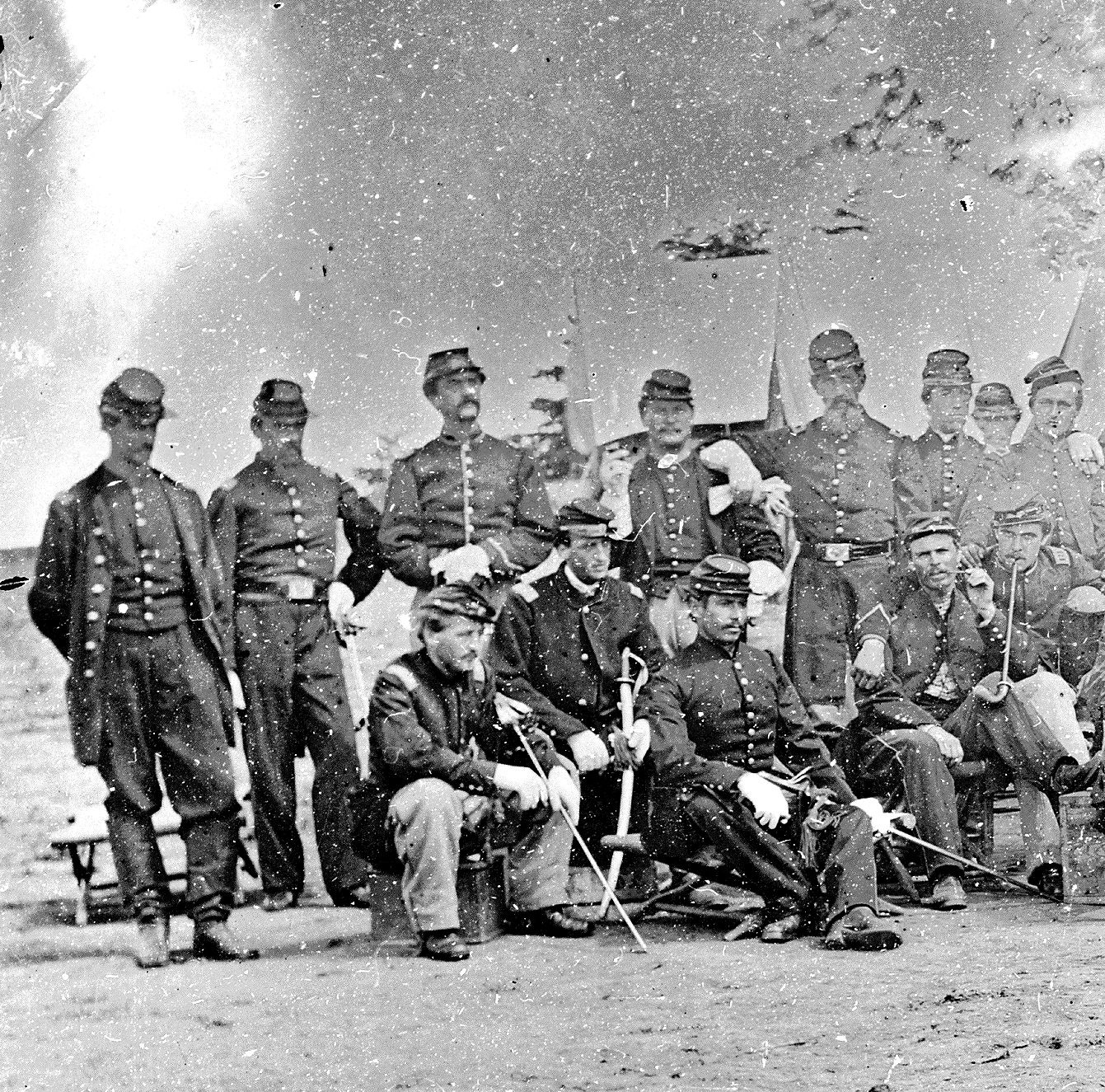
Group of officers 1st Rhode Island Light Artillery


Title: Group of officers. 1st Rhode Island Light Artillery

July 1862; photo by Timothy H O’Sullivan. (cropped from badly aged image and digitally enhanced.)

Library of Congress Prints and Photographs Division

Record page for image: http://www.loc.gov/pictures/item/cwp2003005955/PP/

July 17th, Thursday.

It is decided that I am to go to New Orleans next week. I hardly know which I dislike most, going or staying. I know I shall be dreadfully homesick; but —

Remember — and keep quiet, Sarah, I beg of you. Everything points to an early attack here. Some say this week. The Federals are cutting down all our beautiful woods near the Penitentiary, to throw up breastworks, some say. Cannon are to be planted on the foundation of Mr. Pike’s new house; everybody is in a state of expectation. Honestly, if Baton Rouge has to be shelled, I shall hate to miss the fun. It will be worth seeing, and I would like to be present, even at the risk of losing my big toe by a shell. But then, by going, I can save many of my clothes, and then Miriam and I can divide when everything is burned — that is one advantage, besides being beneficial by the change of air. They say the town is to be attacked to-night. I don’t believe a word of it.

Oh, I was so distressed this evening! They tell me Mr. Biddle was killed at Vicksburg. I hope it is not true. Suppose it was a shot from Will’s battery?

Thursday, July 17, 1862. (On a raft in Steele’s Bayou.)—Yesterday we went on nicely awhile and at afternoon came to a strange region of rafts, extending about three miles, on which persons were living. Many saluted us, saying they had run away from Vicksburg at the first attempt of the fleet to shell it. On one of these rafts, about twelve feet square, (more likely 12 yards – G.W.C) bagging had been hung up to form three sides of a tent. A bed was in one corner, and on a low chair, with her provisions in jars and boxes grouped round her, sat an old woman feeding a lot of chickens. They were strutting about oblivious to the inconveniences of war, and she looked serenely at ease.

Having moonlight, we had intended to travel till late. But about ten o’clock, the boat beginning to go with great speed, H., who was steering; called to Max:

“Don’t row so fast; we may run against something.”

“I’m hardly pulling at all.”

“Then we’re in what she called the rapids!”

The stream seemed indeed to slope downward, and in a minute a dark line was visible ahead. Max tried to turn, but could not, and in a second more we dashed against this immense raft, only saved from breaking up by the men’s quickness. We got out upon it and ate supper. Then, as the boat was leaking and the current swinging it against the raft, H. and Max thought it safer to watch all night, but told us to go to sleep. It was a strange spot to sleep in—a raft in the middle of a boiling stream, with a wilderness stretching on either side. The moon made ghostly shadows and showed H., sitting still as a ghost, in the stern of the boat, while mingled with the gurgle of the water round the raft beneath was the boom of cannon in the air, solemnly breaking the silence of night. It drizzled now and then, and the mosquitoes swarmed over us. My fan and umbrella had been knocked overboard, so I had no weapon against them. Fatigue, however, overcomes everything, and I contrived to sleep.

H. roused us at dawn. Reeney found light-wood enough on the raft to make a good fire for coffee, which never tasted better. Then all hands assisted in unloading; a rope was fastened to the boat, Max got in, H. held the rope on the raft, and, by much pulling and pushing, it was forced through a narrow passage to the farther side. Here it had to be calked, and while that was being done we improvised a dressing-room in the shadow of our big trunks. (During the trip I had to keep the time, therefore properly to secure belt and watch was always an anxious part of my toilet.) The boat is now repacked, and while Annie and Reeney are washing cups I have scribbled, wishing much that mine were the hand of an artist.

______

Note: To protect Mrs. Miller’s job as a teacher in New Orleans, the diary was published anonymously, edited by G. W. Cable, names were changed and initials were often used instead of full names — and even the initials differed from the real person’s initials.