Following the American Civil War Sesquicentennial with day by day writings of the time, currently 1863.

July 2012

July 17.—A detachment of the Union army, under Gen. Pope, this day entered the town of Gordonsville, Va., unopposed, and destroyed the railroad at that place, being the junction of the Orange and Alexandria and Virginia Central Railroads, together with a great quantity of rebel army supplies gathered at that point

—Cynthiana, Ky., was captured by a party of rebel troops, under Col. John H. Morgan, after a severe engagement with the National forces occupying the town, under the command of Lieut. Col. Landrum.—(Doc. 89.)

—The British schooner William, captured off the coast of Texas by the National steamer De Soto, arrived at Key West, Fla.—Major-General Halleck, having relinquished the command of the department of the Mississippi, left Corinth for Washington, D. C, accompanied by General Cullum, Col. Kelton, and an aid-de-camp.—The bill authorizing the issue of postage and other government stamps as currency, and prohibiting banks and other corporations or individuals from issuing notes below the denomination of one dollar for circulation, was passed by the House of Representatives and signed by the President.

—President Lincoln sent a special message to Congress, informing it that as he had considered the bill for an act to suppress insurrection, to punish treason and rebellion, to seize and confiscate the property of rebels, and the joint resolution explanatory of the act, as being substantially one, he had approved and signed both. Before the President was informed of the passage of the resolution, he had prepared the draft of a message stating objections to the bill becoming a law, a copy of which draft he transmitted to Congress with the special message.

—The Congress of the United States adjourned sine die.—At Louisville, Ky., both branches of the Common Council of that city adopted an ordinance compelling the Board of School Trustees to require all professors and teachers of the public schools, before entering on their duties, to appear before the Mayor and take oath to support the Constitutions of the United States and Kentucky, and to be true and loyal citizens thereof.—Gen. Nelson arrived at Nashville, Tenn., with large reenforcements, and assumed command there.

—A scouting-party of ten men, under Lieut. Roberts, of the First Kentucky (Wolford’s) cavalry, when about fifteen miles from Columbia, Tenn., were attacked by a body of sixty rebels. The Union party retired to a house in the neighborhood, from which they fought the rebels six hours, when they finally retreated. Several of the rebels fell. The Union party lost none.

—Enthusiastic meetings were this day held at Bangor, Me., Bridgeport, Ct, and Auburn, N. Y., for the purpose of promoting enlistments into the army, under the call of the President for more troops.
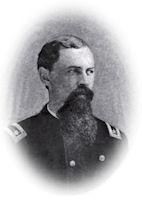
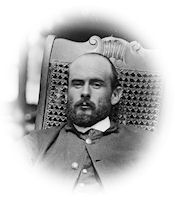
Camp at Rienzi, July 17, 1862.

I think there is more point and policy in that General Order 92 than in any one that has yet been issued in the West, or East either for that matter; but still I do not think it remarkable for perspicuity, and it is neither as strong nor as definite as the army demands. If I know anything of the “laws of war and humanity,” the soldiers will bless “92” for one thing, its relieving them from guarding the property of secessionists, and if they don’t make sundry potato patches, cabbage gardens and fields of roasting ears that I know of, “hop” ’twill surprise me much. There will be some wondrous sudden conversions to Unionism when these butternuts get the drift of that order. An old pup in this town that drank “Southern Independence or the World in Flames” the other evening, in the presence of several United States officers has Union soldiers guarding his property, to preserve it from the Northern vandals, and he has used language equally insulting, times without number, yet the guard is kept up. I suppose, to conciliate him. General Ashboth visits all the secesh and rides around town with the daughter of the man I’ve been speaking of, who is more intensely secesh than her father, if that is possible. Maybe I’m jealous of him, for the girl is very handsome, but I don’t think a United States general at all excusable in such conduct, though it may be overlooked in a lieutenant. Did you see Beauregard’s answer to Halleck? I honestly think there is more truth in that document, than in any other military paper of the kind I have seen. Suppose you have seen Granger’s review thereof. You notice he don’t touch any of the principal points and shows his whole object in publishing the article, in these four words, “I led the pursuit.” I’ll swear we haven’t taken, in deserters, prisoners and sick, since the evacuation of Corinth, 500 men (although hundreds have doubtless deserted who did not enter our lines.) I know this because we have had the advance all the time, and on the only roads there have been fighting and prisoners, and all the deserters have passed through our hands. There were about 18 cars burned, but the ruins show there was nothing of much value on them. ‘Twas not intentional, of course, but Elliott did burn several men in the depot, or else the people of Boonville are liars, to a man. That fight the other day at Boonville amounted to nothing. The enemy’s official report of their loss is four killed and ten wounded. There is an awful sight of bombast and lying about army reports. Beat politicians all hollow. We have had very heavy rains for the last 36 hours, and as water can now be procured on the hitherto dry ground between the armies, I expect some cavalry skirmishing, at least, and if the enemy is yet in force at Tupelo, now is the time for them to attack us, for our army is scattered for 300 miles, almost along the Tennessee line, and cannot be concentrated in time to resist a large force. Many of the officers expect a big fight, but your brother don’t.

Hilton Head, S.C., July 16, 1862

McClellan’s reverses fell on us with sufficient weight here and 10,000 of our troops are being hurried to the north, destroying all chance of operations here and leaving only artillery to hold these points. For artillery and cavalry they say they do not need, so our poor regiment seems likely to go into garrison duty in the midst of active war, and that too when all the operations of the war in Virginia indicate the vital necessity of good cavalry and this regiment is here considered the best in our volunteer service. However personal considerations don’t amount to much and I want to discuss the news and its effects. How do you look at this terrible fighting in Virginia? Not, I mean, in a military or even immediate point of view, but in its remote bearing on our country’s future? For myself I must confess I begin to be frightened. The questions of the future seem to me too great for us to grapple with successfully and I have really begun to fear anarchy and disorganisation for years to come. If we succeed in our attempt at subjugation, I see only an immense territory and a savage and ignorant populace to be held down by force, the enigma of slavery to be settled by us somehow, right or wrong, and, most dangerous of all, a spirit of blind, revengeful fanaticism in the North, of which Sumner has come in my mind to be typical, which, utterly deficient in practical wisdom, will, if it can, force our country into any position — be it bankrupt, despotic, anarchical, or what not — in its blind efforts to destroy slavery and the South. These men, and they will always in troublous times obtain temporary supreme control, will bankrupt the nation, jeopard all liberty by immense standing armies, debauch the morality of the nation by war, and undermine all our republican foundations to effect the immediate destruction of the one institution of slavery. Do you not think that this is so? . . .

Wednesday, 16th—Our regiment went out on picket. I went on camp guard.

Camp Green Meadows, July 16, 1862. Wednesday. — A warm, beautiful day. The men busy building shades (bowers or arbors) over their streets and tents, cleaning out the springs, and arranging troughs for watering horses, washing, and bathing. The water is excellent and abundant.

I read “Waverley,” finishing it. The affection of Flora McIvor for her brother and its return is touching; they were orphans. And oh, this is the anniversary of the death of my dear sister Fanny — six years ago! I have thought of her today as I read Scott’s fine description, but till now it did not occur to me that this was the sad day. Time has softened the pain. How she would have suffered during this agonizing war! Perhaps it was best — but what a loss!

16th. Wednesday. Boys returned from Fort Gibson, no enemy there. Enemy four miles below on the south side of the Arkansas, at Fort Davis. Expecting artillery. Boys rested.

JULY 16TH.—Gen. Lee is hurrying up reinforcements from the South, old regiments and conscripts, and pays very little attention to McClellan on the Peninsula, knowing no further enterprises will be attempted by the enemy in that quarter for some time to come.

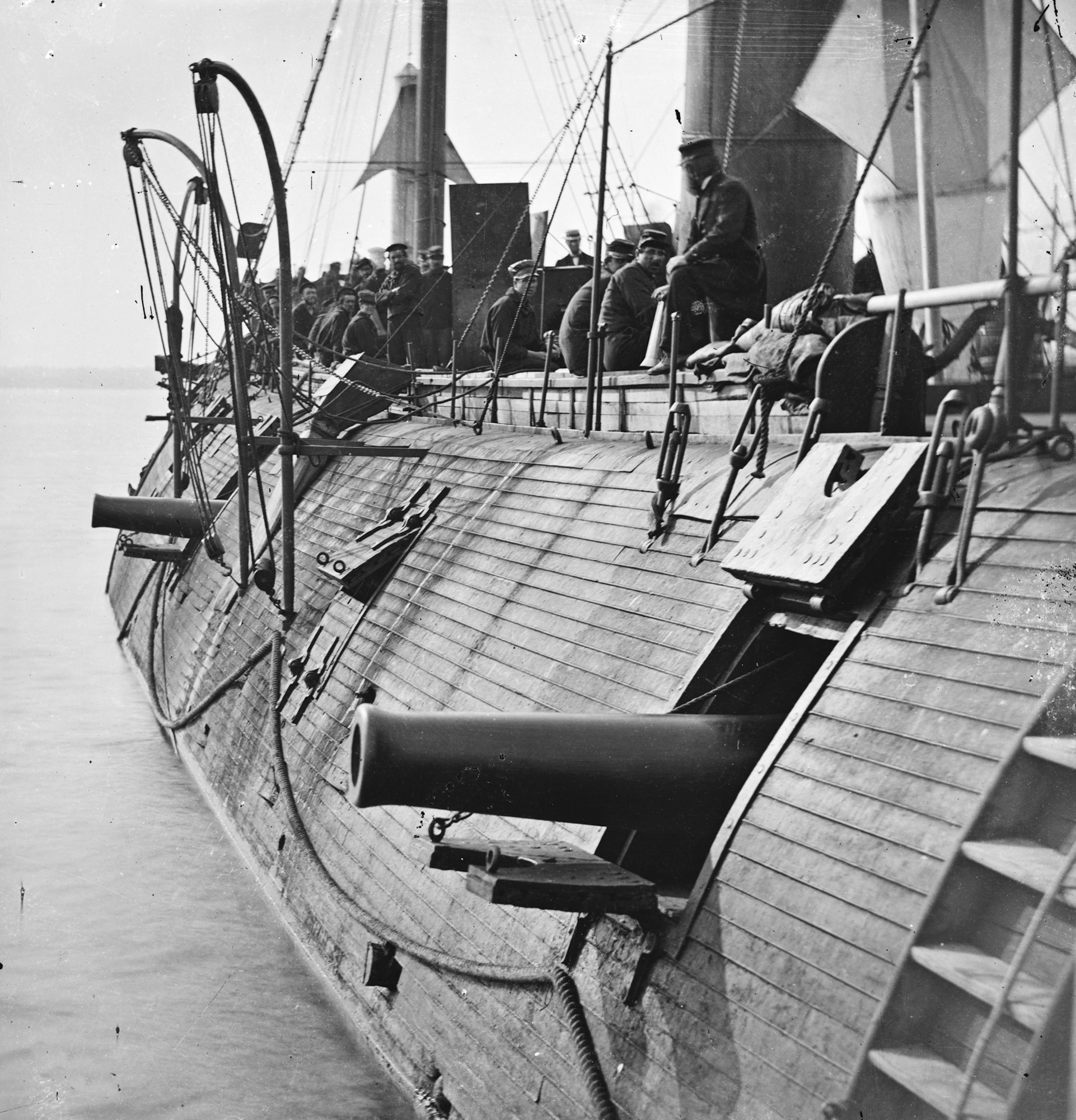
USS Galena, James River, 1862

From Wikipedia:

USS Galena — an ironclad screw steamer — was one of the first three ironclads, each of a different design, built by the Union Navy during the American Civil War.

She had an unconventional armor plating arrangement which proved ineffective. Designed by famed naval architect Samuel Hartt Pook, her keel was laid down by H. L. and C. S. Bushnell of Mystic, Connecticut. She was launched on 14 February 1862, and commissioned on 21 April 1862, Commander Alfred Taylor in command.

On 6 July, Commodore Charles Wilkes was ordered to command the James River Flotilla — Galena included — as an independent division of the North Atlantic Blockading Squadron. With gunboats of the flotilla, Galena afforded protection to the daily movement of army transports and supply ships along the James River from Harrison’s Bay to the mouth of the Chickahominy River, giving the indispensable protection that left the Confederate troops without ability to move effectively against McClellan’s Army of the Potomac along the James River.

Galena was detached from the James River Flotilla in September 1862 and assigned picket duty at Hampton Roads and Newport News, Virginia until 21 May 1863, when she arrived at Philadelphia, Pennsylvania, and was decommissioned for repairs. Her ineffective iron plating — which had been badly damaged in the action at Drewry’s Bluff — was stripped off, and she was overhauled to operate as a wooden-hulled ship.


From Library of Congress:

Photographed by James F. Gibson.

Photographs of the Federal Navy, and seaborne expeditions against the Atlantic Coast of the Confederacy

Library of Congress Prints and Photographs Division Washington, D.C. 20540 USA

Record page for image: http://www.loc.gov/pictures/collection/cwp/item/cwp2003001323/PP/

Wednesday, July 16, 1862. (Under a tree on the bank of Steele’s Bayou.)—Early this morning our boat was taken out of the Mississippi and put on Mr. Fetler’s ox-cart. After breakfast we followed on foot. The walk in the woods was so delightful that all were disappointed when a silvery gleam through the trees showed the bayou sweeping along, full to the banks, with dense forest trees almost meeting over it. The boat was launched, calked, and reloaded, and we were off again. Towards noon the sound of distant cannon began to echo around, probably from Vicksburg again. About the same time we began to encounter rafts. To get around them required us to push through brush so thick that we had to lie down in the boat. The banks were steep and the land on each side a bog. About 1 o’clock we reached this clear space with dry shelving banks and disembarked to eat lunch. To our surprise a neatly dressed woman came tripping down the declivity bringing a basket. She said she lived above and had seen our boat. Her husband was in the army, and we were the first white people she had talked to for a long while. She offered some corn-meal pound-cake and beer, and as she climbed back told us to “look out for the rapids.” H. is putting the boat in order for our start and says she is waving good-bye from the bluff above.

______

Note: To protect Mrs. Miller’s job as a teacher in New Orleans, the diary was published anonymously, edited by G. W. Cable, names were changed and initials were often used instead of full names — and even the initials differed from the real person’s initials.

July 16. [Mobile] —We have just received news of the death of Milton Boullmett, eldest son of a particular friend. He was wounded at the battle of Malvern Hill, and died soon after.

The late battles around Richmond have caused Alabama to sit down in sackcloth and ashes, to mourn, like King David, for the loss of many a gallant son. She had at least seven regiments in the field—Third, Fourth, Sixth, Eighth, Ninth, Eleventh, and Twelfth. The men of the Third, Eighth, and Twelfth were nearly all from Mobile. I have mentioned the Eighth at the battle of Seven Pines, and how severely it suffered there. It has lost nearly all its remnant in their recent engagement.

The Third was in both, and I see, from a letter in this morning’s paper, from Colonel Battle, that at Seven Pines General Longstreet ordered the name of that battle to be inscribed on its colors, for the bravery which the regiment exhibited there. Colonel Lomax, who was in command at that time, was killed. Six color-bearers were shot down, one after another.

Among the fallen are the flower of the youth of Mobile. William Treat, the color-bearer, fell clasping the colors. Charles Keeler is killed; he is one of two brothers who have already died in the service. Tyler Redwood is mortally wounded; one of three in one family who have died in the service. G. T. Summersill is another of a trio of brothers who have shared the same fate. Wm. Stewart, Barklow, H. S. Lockwood, W. N. Caufield, Wm. Jones, W. I. Ledyard, T. Lenseine, O. Cuthbert, and many, many others.

This gallant regiment was composed of nearly all our volunteer companies, and many times, have we all assembled, in the happy days of yore, when camping and soldiering were looked on as a grand frolic, and danced, and partaken of their generous hospitality. The fathers of many of the young men who now compose these companies had been members of them for years. I believe they were the first Alabamians who tendered their services to the Confederate government.

Milton Boullmett, but a few years ago, was an officer, along with my brother, in a boy’s company, the “Mobile Blues.” I think I see his handsome face yet, at a party we gave them on a Fourth of July. All of the volunteer military companies had left the city on excursions. A young lady tried to quiz them; she told them the ladies of Mobile tendered them their heartfelt thanks for remaining to protect them in case of the city being attacked by an enemy. One of them answered her, that he thought if the ladies depended on them for protection, they would fare badly. She told him he did not compliment his company. He answered, that “truth was before compliment.” We little thought then that the life of nearly every boy in that company would be offered up in our defense.

Nearly every state in the Confederacy has to mourn, as Alabama does, over the loss of their bravest and best. The banks of the Chickahominy are now sacred, washed by the blood of martyrs. May their blood prove a talisman to keep back the foe from ever desecrating it with their unhallowed tread!


       "O, thy soft-rolling flood, Chickahominy River,

            In thy flowing disturbeth my inmost soul;

      All unlike is thy gliding, so calm, to the horrors

            Of carnage and bloodshed that round thee did roll.


      If thy tale could be told, Chickahominy River;

            Of the heart-rending pangs of the young and the brave;

      Of the husband and father, whose soul, in departing,

            Wrung with agony, prayed for a home in the grave.


      And yet this is not all, Chickahominy River;

            The sad hearts that are breaking are far from thy shore;

      But their slain they have left thee, in trust, to thy keeping—

            Chickahominy River, take care of thy store.


      Let thy banks guard them well, Chickahominy River;

            Let the dust of the hero lie calmly at rest,

      Till the trump of the dead shall awake them to glory,

            Immortal to live in the realms of the blest."


Mrs. Judge Hopkins of this place is attending to the wounded. We hear much about the good she is doing; for which she has the blessings of all.

The state of Alabama has appropriated thirty thousand dollars for the benefit of her wounded; out of it ten thousand dollars have been given to Mrs. H. Mr. Titcomb and others have gone from here with supplies of all kinds, and we are told that the people in dear old Virginia are doing all in their power to benefit the sufferers.

It is rumored that Bragg’s army is leaving Mississippi and going to East Tennessee. There is also a report that General Hindman has gained a victory in Arkansas, and has captured Curtis’s whole army.