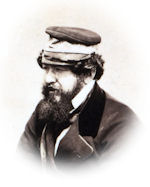
April 3rd.—I had an interview with the Southern Commissioners to-day, at their hotel. For more than an hour I heard, from men of position and of different sections in the South, expressions which satisfied me the Union could never be restored, if they truly represented the feelings and opinions of their fellow-citizens. They have the idea they are ministers of a foreign power treating with Yankeedom, and their indignation is moved by the refusal of Government to negotiate with them, armed as they are with full authority to arrange all questions arising out of an amicable separation—such as the adjustment of Federal claims for property, forts, stores, public works, debts, land purchases, and the like. One of the Judges of the Supreme Court of the United States, Mr. Campbell, is their intermediary, and of course it is not known what hopes Mr. Seward has held out to him; but there is some imputation of Punic faith against the Government on account of recent acts, and there is no doubt the Commissioners hear, as I do, that there are preparations at the Navy Yard and at New York to relieve Sumter, at any rate, with provisions, and that Pickens has actually been reinforced by sea. In the evening I dined at the British Legation, and went over to the house of the Russian Minister, M. de Stoeckl, in the evening. The diplomatic body in Washington constitute a small and very agreeable society of their own, in which few Americans mingle except at the receptions and large evening assemblies. As the people now in power are novi homines, the wives and daughters of ministers and attaches are deprived of their friends who belonged to the old society in Washington, and who have either gone off to Secession, or sympathize so deeply with the Southern States that it is scarcely becoming to hold very intimate relations with them in the face of Government. From the house of M. de Stoeckl I went to a party at the residence of M. Tassara, the Spanish Minister, where there was a crowd of diplomats, young and old. Diplomatists seldom or never talk politics, and so Pickens and Sumter were unheard of; but it is stated nevertheless that Virginia is on the eve of secession, and will certainly go if the President attempts to use force in relieving and strengthening the Federal forts.
Sunday, April 3, 2011
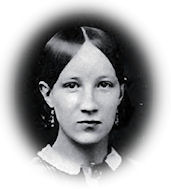
April.—We seem to have come to a sad, sad time. The Bible says, “A man’s worst foes are those of his own household.” The whole United States has been like one great household for many years. “United we stand, divided we fall! ” has been our watchword, but some who should have been its best friends have proven false and broken the bond. Men are taking sides, some for the North, some for the South. Hot words and fierce looks have followed, and there has been a storm in the air for a long time.
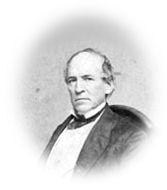
WEDNESDAY 3
Another pleasant cool day, fire in office during the forenoon. The work is pretty well “up” in our room altho we have no 2nd assistant yet. I am now performing the clerical duties in addition to my usual routine of work. Walked with Juliet this evening, got her pr Boots on 7th Street, and then we went through the upper part of the City. I did not go to the Ave and of course did not get the NY papers. Read “Williams on Heat” till 11, and am off to bed.

______
The three diary manuscript volumes, Washington during the Civil War: The Diary of Horatio Nelson Taft, 1861-1865, are available online at The Library of Congress.
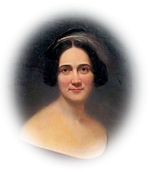
April 3d,—Met the lovely Lucy Holcombe, now Mrs. Governor Pickens, last night at Isaac Hayne’s. I saw Miles now begging in dumb show for three violets she had in her breastpin. She is a consummate actress and he well up in the part of male flirt. So it was well done.
“And you, who are laughing in your sleeves at the scene, where did you get that huge bunch?” “Oh, there is no sentiment when there is a pile like that of anything!” “Oh, oh!”
To-day at the breakfast table there was a tragic bestowal of heartsease on the well-known inquirer who, once more says in austere tones: “Who is the flirt now?” And so we fool on into the black cloud ahead of us. And after heartsease cometh rue.

FORT SUMTER, April 3, 1861.
Maj. ROBERT ANDERSON, First Artillery, U. S. Army,
Commanding Fort Sumter, Charleston Harbor:
MAJOR: In obedience to your directions, we visited Cummings Point and the schooner, bearing the United States flag, which was fired into by the batteries on Morris Island, and respectfully present the following statement concerning the affair:
The commanding officer on Morris Island, Lieut. Col. W. G. De Saussure, stated that a schooner with the United States flag at her peak endeavored to enter the harbor this afternoon about 3 o’clock; that in accordance with his orders to prevent any vessel under that flag from entering the harbor, he had fired three shots across her bows, and this not causing her to heave to, he had fired at her, and had driven her out of the harbor; that he thought one or two shots had taken effect, and that if he had a boat that could live to get out to her he would send and see if she were disabled, and inform Major Anderson at once, but that he had no proper boat, as the schooner was at anchor in a very rough place; that the revenue cutter had gone out to examine her condition. We ascertained the schooner to be the Rhoda H. Shannon, Joseph Marts, master, of Dorchester, N.J., bound from Boston to Savannah with a cargo of ice, having left the former place on March 26. On account of unfavorable weather, the master had obtained but one observation, and that was an imperfect one on yesterday. On his arrival off Charleston Bar, supposing himself to be off Tybee and seeing a pilot-boat, he directed one of his men to hold the United States flag in the fore rigging as a signal for a pilot. As none came, the flag was taken down in a few minutes, and the master undertook to bring his vessel into the harbor without a pilot. He did not discover that he was not in Savannah Harbor until he had crossed the bar and had advanced some distance in the harbor. As he was passing Morris Island, displaying no flag, a shot was fired from a battery on shore across the bows of the schooner. The master states that he thought they wished him to show his colors, and that he displayed the United States flag at his peak. One or two shots were then fired across the schooner’s bows, but he did not know what to do or what the people on shore wished him to do; that he kept the vessel on her course until they fired at her, and one shot had gone through the mainsail, about two feet above the boom, when he put her about and stood out to sea, anchoring his vessel in the Swash Channel, just inside of the bar; that the batteries kept on firing at his vessel for some time after he had turned to go out to sea.
The master of the schooner stated that before leaving Boston, he had learned how affairs stood in Charleston Harbor, and that Fort Sumter was to be given up in a few days; that they had established a new confederacy down South.
After satisfying ourselves that the vessel was uninjured, and as she was lying in a very rough place, we advised the master to move his vessel–either to stand out to sea and go on to Savannah, or to come into the harbor and anchor.
On our return we stopped at Cummings Point, and stated the facts to Lieutenant-Colonel De Saussure. He said that the vessel would not be molested if she came into the harbor.
The schooner weighed anchor a short time after we left, and stood in towards Morris Island for some distance, but finally turned about and went to sea.
Respectfully submitted.
T. SEYMOUR,
Captain, First Artillery.
G. W. SNYDER,
Lieutenant of Engineers.
WASHINGTON, April 3, 1861.
Hon. ROBERT TOOMBS, &c., Montgomery, Ala.:
Much activity to-day in the War and Navy Departments. It is said the Minnesota, at Boston, has been ordered to the mouth of the Mississippi. Powhatan suddenly put in commission to sail next week. Four companies now here–three artillery, one sappers and miners–ordered to New York. Report says these movements have reference to the San Domingo question. Pawnee will not be ready for sea until Saturday.
Our intermediary says they dare not deceive him, as they know we do not rely upon them but upon HIM.
CRAWFORD.
ROMAN.
FORSYTH.
—Despatches were received in Washington to-day, confirming the reported reinforcement of Fort Pickens; and the Cabinet held a long session, without coming to any definite conclusion in regard to the long-mooted evacuation of Fort Sumter. One company of artillery left Washington for Fort Hamilton, and two more are to follow to-morrow. Unwonted activity also prevails in the navy, several vessels being rapidly fitted for service.—World, April 4.
—The mortar batteries on Morris’ Island, Charleston harbor, fired into an unknown schooner. She displayed the stars and stripes, and put to sea. A boat from Sumter with a white flag went out to her; nobody hurt. A shot had gone through her.—(Doc. 49.)
—All officers of the Southern Confederate army, on leave of absence, were ordered to their respective commands.—Times, April 5.
—The South Carolina Convention ratified the Constitution of the Confederate States, by a vote of 114 to 16.—Tribune, April 6.
—The Charleston correspondent writes: “By the by, let us never surrender to the North the noble song, the ‘Star-Spangled Banner.’ It is southern in its origin; in sentiments, poetry and song; in its association with chivalrous deeds, it is ours; and the time, I trust, is not remote, when the broad stripes and brilliant stars of the confederate flag of the South will wave triumphantly over our capitol, Fortress Monroe, and every fort within our borders.”—Richmond Examiner.
MONTGOMERY, ALA., April 3, 1861—10 p.m.
General BEAUREGARD:
Minnesota ordered to sea, supposed to be for mouth of Mississippi; Powhatan to sail next week; Pawnee ordered to sea on Saturday. Three companies artillery (one of sappers and miners) ordered to New York; probably for the South. Be on lookout.
L. P. WALKER.


