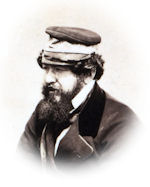
April 7th.—Raining all day, cold and wet. I am tired and weary of this perpetual jabber about Fort Sumter. Men here who know nothing at all of what is passing send letters to the New York papers, which are eagerly read by the people in Washington as soon as the journals reach the city, and then all these vague surmises are taken as gospel, and argued upon as if they were facts. The “Herald” keeps up the courage and spirit of its Southern friends by giving the most florid accounts of their prospects, and making continual attacks on Mr. Lincoln and his Government; but the majority of the New York papers are inclined to resist Secession and aid the Government. I dined with Lord Lyons in the evening, and met Mr. Sumner, Mr. Blackwell, the manager of the Grand Trunk Railway of Canada, his wife, and the members of the Legation. After dinner I visited M. de Stoeckl, the Russian Minister, and M. Tassara, the Minister of Spain, who had small receptions. There were few Americans present. As a rule, the diplomatic circle, which has, by-the-by, no particular centre, radii, or circumference, keeps its members pretty much within itself. The great people here are mostly the representatives of the South American powers, who are on more intimate relations with the native families in Washington than are the transatlantic ministers.
Thursday, April 7, 2011

HEADQUARTERS OF THE
PROVISIONAL ARMY, C.S.,
Charleston, S.C., April 7, 1861.
Maj. Robert ANDERSON,
Commanding at Fort Sumter, Charleston Harbor, S.C.:
SIR: In compliance with orders from the Confederate Government at Montgomery, I have the honor to inform you that, in consequence of the delays and apparent vacillations of the United States Government at Washington relative to the evacuation of Fort Sumter, no further communications for the purposes of supply with this city from the fort and with the fort from this city will be permitted from and after this day. The mails, however, will continue to be transmitted as heretofore, until further instructions from the Confederate Government.
I remain, sir, very respectfully, your obedient servant,
G. T. BEAUREGARD.
Brigadier-General, Commanding.
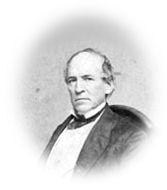
“When we know where the troops have gone from NY, the anxiety will be lessened.”—Horatio Nelson Taft
SUNDAY, APRIL 7, 1861.
It has been a wet drizzly day, but I went to church with the boys in the morning. Chas was up to dinner. The papers are full of war news and there is now much excitement in the country, as much as there has been any time. When we know where the troops have gone from NY, the anxiety will be lessened. It is past 9. Wife is at the table reading. The boys have gone to bed. Julia is playing on the Piano. Larney (the black chattel) is crouched behind the stove keeping comfortable, a basket of young chickens is in the corner by her.

______
The three diary manuscript volumes, Washington during the Civil War: The Diary of Horatio Nelson Taft, 1861-1865, are available online at The Library of Congress.
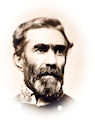
PENSACOLA, April 7, 1861.
Hon. L. P. WALKER:
Your dispatch of 5th answered by telegraph and letter. I shall fire upon any re-enforcements to Pickens unless ordered not. Need supplies called for in my ordnance requisition. Have but few cartridge bags and no flannel. I shall send to Mobile for some to-day, but have no money to pay. Not a cent has been received since I arrived. Dispatches for Fort Pickens and the fleet can be received from Washington through the post-office here. The blow is over, and the vessels stood it out. Twelve hundred men expected on to-day from Mississippi and Georgia.
BRAXTON BRAGG,
Brigadier-General.
—General Beauregard issued an order, and sent a special messenger to Major Anderson, to give him an official notification that no further intercourse between Fort Sumter and the city would be permitted. — Times, April 9.
—The steam transport Atlantic sailed under sealed orders from New York, laden with troops and provisions. Among the troops is Captain Barry’s celebrated company of United States Flying Artillery. — Commercial Advertiser, April 8.


