
8 o’clock P.M.—My wife and children have been busy packing my trunk, and making other preparations for my departure. They are cheerful. They deem the rupture of the States a fait accompli, but reck not of the horrors of war. They have contrived to pack up, with other things, my fine old portrait of Calhoun, by Jarvis. But I must leave my papers, the accumulation of twenty five years, comprising thousands of letters from predestined rebels. My wife opposes my suggestion that they be burned. Among them are some of the veto messages of President Tyler, and many letters from him, Governor Wise, etc. With the latter I had a correspondence in 1856, showing that this blow would probably have been struck then, if Fremont had been elected.
Friday, April 8, 2011
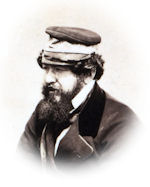
April 8th.—How it does rain! Last night there were torrents of water in the streets literally a foot deep. It still runs in muddy whirling streams through the channels, and the rain is falling incessantly from a dull leaden sky. The air is warm and clammy. There are all kind of rumors abroad, and the barbers’ shops shook with “shaves” this morning. Sumter, of course, was the main topic. Some reported that the President had promised the Southern Commissioners, through their friend Mr. Campbell, Judge of the Supreme Court, not to use force in respect to Pickens or Sumter. I wrote to Mr. Seward, to ask him if he could enable me to make any definite statement on these important matters. The Southerners are alarmed at the accounts they have received of great activity and preparations in the Brooklyn and Boston navy yards, and declare that “treachery” is meant. I find myself quite incapable of comprehending their position. How can the United States Government be guilty of “treachery” towards subjects of States which are preparing to assert their independence, unless that Government has been guilty of falsehood or admitted the justice of the decision to which the States had arrived?
As soon as I had finished my letters, I drove over to the Smithsonian Institute, and was most kindly received by Professor Henry, who took me through the library and museum, and introduced me to Professor Baird, who is great in natural history, and more particularly in ornithology. I promised the professors some skins of Himalayan pheasants, as an addition to the collection. In the library we were presented to two very fine and lively rock snakes, or pythons, I believe, some six feet long or more, which moved about with much grace and agility, putting out their forked. tongues and hissing sharply when seized by the hand or menaced with a stick. I was told that some persons doubted if serpents hissed; I can answer for it that rock snakes do most audibly. They are not venomous, but their teeth are sharp and needle like. The eye is bright and glistening; the red forked tongue, when protruded, has a rapid vibratory motion, as if it were moved by the muscles which produce the quivering hissing noise. I was much interested by Professor Henry’s remarks on the large map of the continent of North America in his study: he pointed out the climatic conditions which determined the use, profits, and necessity of slave labor, and argued that the vast increase of population anticipated in the valley of the Mississippi, and the prophecies of imperial greatness attached to it, were fallacious. He seems to be of opinion that most of the good land of America is already cultivated, and that the crops which it produces tend to exhaust it, so as to compel the cultivators eventually to let it go fallow or to use manure. The fact is, that the influence of the great mountain-chain in the west, which intercepts all the rain on the Pacific side, causes an immense extent of country between the eastern slope of the chain and the Mississippi, as well as the district west of Minnesota, to be perfectly dry and uninhabitable; and, as far as we know, it is as worthless as a moor, except for the pasturage of wild cattle and the like.
On returning to my hotel, I found a note from Mr. Seward, asking me to visit him at nine o’clock. On going to his house, I was shown to the drawing-room, and found there only the Secretary of State, his son, and Mrs. Seward. I made a parti carré for a friendly rubber of whist, and Mr. Seward, who was my partner, talked as he played, so that the score of the game was not favorable. But his talk was very interesting. “All the preparations of which you hear mean this only. The Government, finding the property of the State and Federal forts neglected and left without protection, are determined to take steps to relieve them from that neglect, and to protect them. But we are determined in doing so to make no aggression. The President’s inaugural clearly shadows out our policy. We will not go beyond it— we have no intention of doing so—nor will we withdraw from it.” After a time Mr. Seward put down his cards, and told his son to go for a portfolio which he would find in a drawer of his table. Mrs. Seward lighted the drop light of the gas, and on her husband’s return with the paper left the room. The Secretary then lit his cigar, gave one to me, and proceeded to read slowly and with marked emphasis, a very long, strong, and able dispatch, which he told me was to be read by Mr. Adams, the American Minister in London, to Lord John Russell. It struck me that the tone of the paper was hostile, that there was an undercurrent of menace through it, and that it contained insinuations that Great Britain would interfere to split up the Republic, if she could, and was pleased at the prospect of the dangers which threatened it.
At all the stronger passages Mr. Seward raised his voice, and made a pause at their conclusion as if to challenge remark or approval. At length I could not help saying, that the despatch would, no doubt, have an excellent effect when it came to light in Congress, and that the Americans would think highly of the writer; but I ventured to express an opinion that it would not be quite so acceptable to the Government and people of Great Britain. This Mr. Seward, as an American statesman, had a right to make but a secondary consideration. By affecting to regard Secession as a mere political heresy which can be easily confuted, and by forbidding foreign countries alluding to it, Mr. Seward thinks he can establish the supremacy of his own Government, and at the same time gratify the vanity of the people. Even war with us may not be out of the list of those means which would be available for re-fusing the broken union into a mass once more. However, the Secretary is quite confident in what he calls “reaction.” “When the Southern States,” he says, “see that we mean them no wrong—that we intend no violence to persons, rights, or things—that the Federal Government seeks only to fulfil obligations imposed on it in respect to the national property, they will see their mistake, and one after another they will come back into the union.” Mr. Seward anticipates this process will at once begin, and that Secession will all be done and over in three months—at least, so he says. It was after midnight ere our conversation was over, much of which of course I cannot mention in these pages.
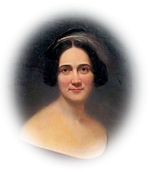
April 8th.—Yesterday Mrs. Wigfall and I made a few visits. At the first house they wanted Mrs. Wigfall to settle a dispute. “Was she, indeed, fifty-five?” Fancy her face, more than ten years bestowed upon her so freely. Then Mrs. Gibbes asked me if I had ever been in Charleston before. Says Charlotte Wigfall (to pay me for my snigger when that false fifty was flung in her teeth), “and she thinks this is her native heath and her name is McGregor.” She said it all came upon us for breaking the Sabbath, for indeed it was Sunday.
Allen Green came up to speak to me at dinner, in all his soldier’s toggery. It sent a shiver through me. Tried to read Margaret Fuller Ossoli, but could not. The air is too full of war news, and we are all so restless.
Went to see Miss Pinckney, one of the last of the oldworld Pinckneys. She inquired particularly about a portrait of her father, Charles Cotesworth Pinckney,¹ which she said had been sent by him to my husband’s grandfather. I gave a good account of it. It hangs in the place of honor in the drawing-room at Mulberry. She wanted to see my husband, for “his grandfather, my father’s friend, was one of the handsomest men of his day.” We came home, and soon Mr. Robert Gourdin and Mr. Miles called. Governor Manning walked in, bowed gravely, and seated himself by me. Again he bowed low in mock heroic style, and with a grand wave of his hand, said: “Madame, your country is invaded.” When I had breath to speak, I asked, “What does he mean?” He meant this: there are six men-of-war outside the bar. Talbot and Chew have come to say that hostilities are to begin. Governor Pickens and Beauregard are holding a council of war. Mr. Chesnut then came in and confirmed the story. Wigfall next entered in boisterous spirits, and said: “There was a sound of revelry by night.” In any stir or confusion my heart is apt to beat so painfully. Now the agony was so stifling I could hardly see or hear. The men went off almost immediately. And I crept silently to my room, where I sat down to a good cry.
Mrs. Wigfall came in and we had it out on the subject of civil war. We solaced ourselves with dwelling on all its known horrors, and then we added what we had a right to expect with Yankees in front and negroes in the rear. “The slave-owners must expect a servile insurrection, of course,” said Mrs. Wigfall, to make sure that we were unhappy enough.
Suddenly loud shouting was heard. We ran out. Cannon after cannon roared. We met Mrs. Allen Green in the passageway with blanched cheeks and streaming eyes. Governor Means rushed out of his room in his dressinggown and begged us to be calm. “Governor Pickens,” said he, “has ordered in the plenitude of his wisdom, seven cannon to be fired as a signal to the Seventh Regiment. Anderson will hear as well as the Seventh Regiment. Now you go back and be quiet; fighting in the streets has not begun yet.”
So we retired. Dr. Gibbes calls Mrs. Allen Green Dame Placid. There was no placidity to-day, with cannon bursting and Allen on the Island. No sleep for anybody last night. The streets were alive with soldiers, men shouting, marching, singing. Wigfall, the “stormy petrel,” is in his glory, the only thoroughly happy person I see. To-day things seem to have settled down a little. One can but hope still. Lincoln, or Seward, has made such silly advances and then far sillier drawings back. There may be a chance for peace after all. Things are happening so fast. My husband has been made an aide-de-camp to General Beauregard.
Three hours ago we were quickly packing to go home. The Convention has adjourned. Now he tells me the attack on Fort Sumter may begin to-night; depends upon Anderson and the fleet outside. The Herald says that this show of war outside of the bar is intended for Texas. John Manning came in with his sword and red sash, pleased as a boy to be on Beauregard’s staff, while the row goes on. He has gone with Wigfall to Captain Hartstein with instructions. Mr. Chesnut is finishing a report he had to make to the Convention.
Mrs. Hayne called. She had, she said, but one feeling; pity for those who are not here. Jack Preston, Willie Alston, “the take-life-easys,” as they are called, with John Green, “the big brave,” have gone down to the islands— volunteered as privates. Seven hundred men were sent over. Ammunition wagons were rumbling along the streets all night. Anderson is burning blue lights, signs, and signals for the fleet outside, I suppose.
To-day at dinner there was no allusion to things as they stand in Charleston Harbor. There was an undercurrent of intense excitement. There could not have been a more brilliant circle. In addition to our usual quartette (Judge Withers, Langdon Cheves, and Trescott), our two ex-Governors dined with us, Means and Manning. These men all talked so delightfully. For once in my life I listened. That over, business began in earnest. Governor Means had rummaged a sword and red sash from somewhere and brought it for Colonel Chesnut, who had gone to demand the surrender of Fort Sumter. And now patience—we must wait.
Why did that green goose Anderson go into Fort Sumter? Then everything began to go wrong. Now they have intercepted a letter from him urging them to let him surrender. He paints the horrors likely to ensue if they will not. He ought to have thought of all that before he put his head in the hole.

____
¹ Charles Cotesworth Pinckney was a brigadier-general in the Revolution and a member of the Convention that framed the Constitution of the United States. He was an ardent Federalist and twice declined to enter a National Cabinet, but in 1796 accepted the office of United States Minister to France. He was the Federalist candidate for VicePresident in 1800 and for President in 1804 and 1808. Other distinguished men in this family were Thomas, Charles, Henry Laurens, and Charles Cotesworth Pinckney, the second.
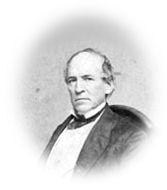
MONDAY 8
Rained all day or rather drizzled all day. No new excitement today. No removals from the Pat office today. Got letter from Bro C.R. Went over to the Post office and got his “papers” taken up. His appointment as Post Master at Wmstown Mass will be made out in a day or two. Wrote to him tonight at home, most of my private letters I write in the office. Handed Green my revolver to draw the charges, it has been loaded two months. Have spent the entire evening at home with one girl & three boys round the table with me writing.

______
The three diary manuscript volumes, Washington during the Civil War: The Diary of Horatio Nelson Taft, 1861-1865, are available online at The Library of Congress.
—Information having been given by the United States authorities to the authorities at Charleston that they desired to send supplies to Fort Sumter by an unarmed vessel, they were informed that the vessel would be fired upon and not permitted to enter the port. Official notification was then given by the United States Government that supplies would be sent to Major Anderson, peaceably if possible, otherwise by force. Lieutenant Talbot, attached to the garrison of Fort Sumter, and who accompanied the bearer of this despatch, was not permitted to proceed to his post.
—Orders were issued to the entire military force of Charleston, held in reserve, to proceed to their stations without delay. Four regiments of a thousand men each were telegraphed for from the country.
Dr. Gibbs, surgeon-general, was ordered to prepare ambulances, and make every provision for the wounded.
—At midnight Charleston was thrown into great excitement by the discharge of seven guns from Citadel square, the signal for all the reserves to assemble ten minutes afterwards.
Hundreds of men left their beds, hurrying to and fro towards their respective destinations.
In the absence of sufficient armories, at the corners of the streets, publics squares, and other convenient points, meetings were formed, and all night the long roll of the drum and the steady tramp of the military, and the gallop of the cavalry resounding through the city, betokened the close proximity of the long-anticipated hostilities. The Home Guard corps of old gentlemen, who occupy the position of military exempts, rode through the city, arousing the soldiers, and doing other duty required by the moment.
United States vessels were reported off the bar. Major Anderson displayed signal lights during the night from the walls of Fort Sumter.—Times, April 10.
—The State Department at Washington replied to-day to the Confederate State Commissioners, declining to receive them in their official capacity, but expressing deference for them as gentlemen. The Secretary expressed a peaceful policy on the part of the Government, declaring a purpose to defend only when assailed. Tribune, April 9.

HEADQUARTERS OF THE ARMY,
New York, April 8, 1861.
First Lieut. EDWARD McK. HUDSON,
Fourth Artillery, Comdg. U. S. troops on the steamer Baltic:
SIR: I am instructed by the General-in-Chief to say to you that the destination of the two hundred recruits embarked on the steamer Baltic is Fort Sumter, and that “Capt. G. V. Fox, ex-officer of the Navy, and a gentleman of high standing, as well as possessed of extraordinary nautical ability, has been charged by high authority in Washington with the command of the expedition, under cover of certain ships of war.”
You will accordingly be governed by the instructions of Captain Fox.
I am, sir, very respectfully, your obedient servant,
H. L. SCOTT,
Lieutenant-Colonel and A.D.C., Act. Adjt. Gen.
April 8th, 1861. Burlington, New Jersey.—The expedition sails to-day from New York. Its purpose is to reduce Fort Moultrie, Charleston harbor, and relieve Fort Sumter, invested by the Confederate forces. Southern born, and editor of the Southern Monitor, there seems to be no alternative but to depart immediately. For years the Southern Monitor, Philadelphia, whose motto was “The Union as it was, the Constitution as it is,” has foreseen and foretold the resistance of the Southern States, in the event of the success of a sectional party inimical to the institution of African slavery, upon which the welfare and existence of the Southern people seem to depend. And I must depart immediately; for I well know that the first gun fired at Fort Sumter will be the signal for an outburst of ungovernable fury, and I should be seized and thrown into prison.
I must leave my family—my property—everything. My family cannot go with me—but they may follow. The storm will not break in its fury for a month or so. Only the most obnoxious persons, deemed dangerous, will be molested immediately.

[APRIL 8, 1861.]
AN ORDINANCE to transfer to the Government of the Confederate States of America, the use and occupancy of the forts, arsenals, navy-yards, custom-houses, and other public sites within the limits of this State.
We, the people of South Carolina, in convention assembled, do ordain and declare, and it is hereby ordained and declared by the authority of the same, that the Government of the Confederate States of America is hereby authorized to occupy, use, and hold possession of all forts, navy-yards, arsenals, custom-houses, and other public sites within the limits of this State, and their appurtenances, lately in the possession of the United States of America, together with Fort Sumter, and to repair, rebuild, and control the same at its discretion, until this ordinance be repealed by a convention of the people of this State.
Done at Charleston, the 8th day of April, in the year of our Lord one thousand eight hundred and sixty-one.
D. F. JAMISON,
President.
Attest:
B. F. ARTHUR, Clerk.
WASHINGTON, April 8, 1861.
General G. T. BEAUREGARD:
Accounts are uncertain, because of the constant vacillation of this Government. We were reassured yesterday that the status of Sumter would not be changed without previous notice to Governor Pickens, but we have no faith in them. The war policy prevails in the Cabinet at this hour.
M. J. CRAWFORD.

—–
CHARLESTON, April 8, 1861.
L. P. WALKER:
Authorized messenger from Lincoln just informed Governor Pickens and myself that provisions would be sent to Sumter peaceably, otherwise by force.
G. T. BEAUREGARD.
—–
MONTGOMERY, April 8, 1861.
General BEAUREGARD, Charleston:
Under no circumstances are you to allow provisions to be sent to Fort Sumter.
L. P. WALKER.
—–
CHARLESTON, April 8, 1861.
Hon. L. P. WALKER:
Anderson’s provisions stopped yesterday. No answer from him. Am calling out balance of contingent troops.
G. T. BEAUREGARD.
—–
HEADQUARTERS, STATE OF SOUTH CAROLINA,
April 8, 1861.
[General BEAUREGARD :]
DEAR GENERAL: I inclose the within copy of Major Anderson’s note. Please say to the Secretary of War that we thought detaching an officer from the garrison was weakening its efficiency and not taking much from the consumption of food. Tell him that you as well as myself saw the foolish firing, and both regretted it, and that you immediately issued orders as to the future firing, &c., and that the captain in charge of the watch-vessel) the Petrel, was discharged for his neglect of duty, &c.
In great haste, but most sincerely,
F. W. PICKENS.
—–
HDQRS. PROVISIONAL ARMY CONFEDERATE STATES,
Charleston, S.C., April 8, 1861.
General L. P. WALKER, Secretary of War, Montgomery, Ala.:
SIR: The War Department letter of the 6th instant has been received. I send herewith a copy of the letter addressed yesterday to Major Robert Anderson, stopping his provisions from this city, in obedience to the instructions of the Department. He has not yet answered it, probably on account of the prevailing bad weather, or perhaps he wishes to await the orders of the United States Government.
Lieutenant Talbot was allowed to go to Washington in order to diminish as much as practicable the number of Major Anderson’s officers, and in the hope that he would communicate to the Government at Washington their true condition in Fort Sumter, which Governor Pickens and myself have reasons to believe is not satisfactory to them.
On account of the unfortunate publication this morning of the proceedings of the State Convention of South Carolina, containing a detailed report of the State secretary of war, giving the exact condition, strength, and number of batteries and troops collected for the defense of this harbor, I have called out the balance of the five thousand men to which I have been limited by my instructions of the 1st ultimo–a measure rendered still more necessary on account of the warlike preparations at present being made by the United States Government with so much mystery.
I remain, sir, very respectfully, your obedient servant,
G. T. BEAUREGARD,
Brigadier-General, Commanding.
—–
WAR DEPARTMENT, C. S. A.,
Montgomery, April 8, 1861.
His Excellency F. W. PICKENS, Charleston S.C.:
SIR: The discontinuance by the United States of negotiations with the Commissioners representing this Government, of which doubtless you have before this been made aware, leaves no doubt as to the policy we should pursue.
A large force will probably, and if at all, almost immediately, be needed to resist the coercive measures of the Washington administration. To meet this condition of affairs, this Department, acting with reference to the power vested in the Executive by the act of the Congress entitled “An act to provide for the public defense,” suggests to your excellency the necessity of calling at once for three thousand volunteers, to be drilled, equipped, and held in instant readiness to meet any requisition from this Department. These troops will, of course, not be receiving pay until they shall be mustered into service, but the emergency is so pressing that your excellency will fully appreciate the great importance of thorough preparation, especially in regard to instant capacity to move. A similar request has been addressed to the Executive of each of the Confederate States. Asking an early reply to the suggestions above made,
I am, very respectfully, your obedient servant,
P. WALKER.
(Similar letters to the governor of Florida, Tallahassee; the governor of Georgia; governor of Louisiana, Baton Rouge; governor of Texas, Austin; governor of Alabama, Montgomery; governor of Mississippi.)
—–
APRIL 8, 1861.
“I am directed by the President of the United States to notify you to expect an attempt will be made to supply Fort Sumter with provisions only, and that if such attempt be not resisted no effort to throw in men, arms, or ammunition will be made without further notice, or in case of an attack upon the fort.”
The above was communicated to us on the evening of April 8 by Robert S. Chew, esq., of the State Department in Washington, and Captain Talbot stated that it was from the President of the United States, as did Mr. Chew, and was delivered to him on the 6th instant at Washington, and this was read in their presence and admitted.
F. W. PICKENS.
G. T. BEAUREGARD.


