
April 10th and 11th—These two days were mainly lost by delays, the floods having swept away many bridges, which had not yet been repaired. As we approached Richmond, it was observed that the people were more and more excited, and seemed to be pretty nearly unanimous for the immediate secession of the State. Everywhere the Convention then in session was denounced with bitterness, for its adherence to the Union; and Gov. Letcher was almost universally execrated for the chocks he had thrown under the car of secession and Southern independence. I heard very many who had voted for him, regret that they had ever supported the clique of politicians who managed to secure his nomination. And now I learned that a People’s Spontaneous Convention would assemble in Richmond on the 16th of the month, when, if the other body persisted in its opposition to the popular will, the most startling revolutionary measures would be adopted, involving, perhaps, arrests and executions. Several of the members of this body with whom I conversed bore arms upon their persons.
Monday, April 11, 2011
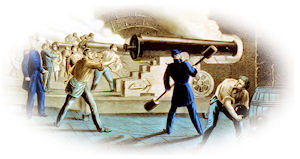
April 11.–At early dawn I detected the presence of the floating battery on the upper end of Sullivan’s Island. It is situated between the end of the jetty and the steamboat wharf, where, evidently distrusting her qualities as a floating battery intended to breach the gorge wall at short range, she has been run on shore at high water, and, being left by the receding tide, has become a fixed battery. Her position gives her the advantage of sweeping with her guns the whole of the left flank of the fort, and thus rendering it impossible for any vessel with supplies to lie anywhere along this flank, while the breakwater in front protects her from our ricochet shots.
The stone traverse at the gorge has been raised to-day high enough to protect the main gate, and the traverse on the top of the parapet has been strengthened by the addition of sand bags on the top and sides, and braced in the rear by extra gun carriages. The communications cut through the walls of the quarters are finished, and all the water pipes and faucets prepared for use in case of fire. The third splinter-proof shelter on the right flank, barbette tier, is finished. These shelters are formed of the timbers of extra gun carriages inclined against the interior slope, and covered with 2 inch embrasure irons, securely spiked down. Shot and shells have been distributed to the guns, and about 700 cartridges reported ready. The work of making cartridge bags is slow, owing to there being only six needles in the fort.
The enemy’s steamers are very active carrying supplies and hospital stores to the batteries on Cummings Point.
At 4 p.m. three aides of General Beauregard (Colonel Chesnut, Colonel Chisolm, and Captain Lee)came as bearers of a demand for the surrender of the fort. The unanimous decision of the officers council was in the negative, and a written answer, in accordance, was returned by Major Anderson.
THURSDAY 11
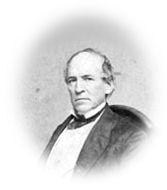
A delightful morning and a very pleasant day. City full of Military and full of excitement. Nothing heard from Charleston unusual, but news expected by tomorrow. Fort Sumpter, it is now thought, is without doubt to be relieved in some way. The Cotton States are all up in Arms, while Ben McCulloch is threatening Washington. He is fearless and desperate. Chas took dinner with us and came up in the evening with Miss Woodward and staid till 10. Sent young H N to the Ave for the NY papers early in the evening. Retired at 11 o’clock.

______
The three diary manuscript volumes, Washington during the Civil War: The Diary of Horatio Nelson Taft, 1861-1865, are available online at The Library of Congress.
HDQRS. PROV. ARMY CONFEDERATE STATES OF AMERICA,
Charleston, S.C., April 11, 1861.
Hon. L. P. WALKER,
Secretary of War, Montgomery, Ala.:
SIR: I transmit herewith, for the information of the Department, a copy of my note of this morning to Major Anderson, commanding at Fort Sumter, demanding the surrender of that fort to the Confederate Government, together with a copy of his reply thereto. As soon as his answer was received a telegraphic dispatch (a copy of which is inclosed) was sent to you, communicating its purport, and asking for your instructions. I regret to add here that the new levies at Morris Island are not in as complete a state of organization as I desire; but I hope, in the event of an attempt to land by the enemy, that I will be able to give you a satisfactory account of them.
I remain, sir, very respectfully, your obedient servant,
G. T. BEAUREGARD,
Brigadier-General, Commanding.

[Inclosure.]
CHARLESTON, April 11, 1861.
Hon. L. P. WALKER, Secretary of War:
Major Anderson replies: “I have the honor to acknowledge the receipt of your communication demanding the evacuation of this fort, and to say in reply thereto that it is a demand with which I regret that my sense of honor and of my obligations to my Government prevent my compliance.” He says verbally: “I will await the first shot, and if you do not batter us to pieces we will be starved out in a few days.”
Answer.
G. T. BEAUREGARD.
—–
MONTGOMERY, April 11, 1861.
General BEAUREGARD, Charleston:
Do not desire needlessly to bombard Fort Sumter. If Major Anderson will state the time at which, as indicated by him, he will evacuate, and agree that in the mean time he will not use his guns against us unless ours should be employed against Fort Sumter, you are authorized thus to avoid the effusion of blood. If this or its equivalent be refused, reduce the fort as your judgment decides to be most practicable.
L. P. WALKER.
—–
WASHINGTON, April 11, 1861.
General G. T. BEAUREGARD:
The Tribune of to-day declares the main object of the expedition to be the relief of Sumter, and that a force will be landed which will overcome all opposition.
ROMAN.
CRAWFORD.
FORSYTH.
—–
CHARLESTON, S.C., April 11, 1861.
ROMAN, CRAWFORD, and FORSYTH,
Commissioners Confederate States, Washington, D.C.:
Evacuation of Fort Sumter will be demanded to-day. If refused, hostilities will commence to-night. Answer.
G. T. BEAUREGARD.
—–
CHARLESTON, April 11, 1861.
Hon. L. P. WALKER:
Ought not demand of Sumter be made also by Commissioners at Washington for its evacuation?
G. T. BEAUREGARD.
—–
MONTGOMERY, April 11, 1861.
General BEAUREGARD, Charleston:
No. Yours is the only demand to be made.
L. P. WALKER.
—–
CHARLESTON, April 11, 1861.
L. P. WALKER:
Demand sent at 2. Allowed until 6 to answer.
G. T. BEAUREGARD.
—–
HEADQUARTERS MORRIS ISLAND, S.C.,
April 11, 1861.
Brigadier-General BEAUREGARD, Commanding:
MY DEAR GENERAL: It is absolutely necessary that some assistance be sent here, in the Adjutant-General’s Department–I mean of the kind that will be useful. I am expected to be engineer and everything else, The regimental organization (mixed up of infantry and riflemen, without bayonets) cannot be preserved. Cannot you take charge, or at least come here and see the state of affairs? We must have a clerk experienced. Must have an order book, stationery, &c. Transportation is wanted. Horses are required for officers, staff, and orderlies (at least, half a dozen}, especially if you come down.
Colonel Gregg has 1,100 men; Colonel Cunningham, 418; Colonel Kershaw, between 300 and 500–in all, 2,000, exclusive of artillery. Orders have been issued for all the batteries to be in readiness, but with the exception of Colonel Gregg’s I find great confusion in the new re-enforcements.
Very truly, yours,
W. H. G. WHITING.
—–
MORRIS ISLAND, S.C.,
April 11, 1861—4 p.m.
[General BEAUREGARD:]
GENERAL: We are ready, perhaps, to open fire, but we are not ready to support it. For God’s sake have this post inspected by yourself, or some one else competent, before you open fire. I am alone here, as you know, and heretofore have been exclusively occupied with the construction of batteries. De Saussure complains that he has not men enough to work his guns for any length of time, and Kershaw’s force is “helter skelter,” having just arrived. Cunningham’s is but little better. Both are badly supplied with cartridges. A full and efficient staff is needed. There are no regulars here at all. I can say but little now. The general agrees with me in begging you to examine this position.
W. H. G. WHITING.
—–
Charleston S. C., April 11, 1861.
Maj. W. H. C. WHITING,
Assistant Adjutant-General, Morris Island, S. C.:
MAJOR: Your letter and note of this day are just received. Things always appear worst at first sight when not perfect. We cannot delay now. I think you will have all day to-morrow to organize. I am, however, surprised that Lieutenant-Colonel De Saussure should not have men enough, when ten days ago I told him to call for any number he might require. General Simons must supply that deficiency; but I am of the opinion that two thousand Americans ought to beat, on favorable ground, twice that number of troops landing. Remember New Orleans.
Moreover, to-morrow you will have another regiment. I send you Captains Winder and Allston, and two of the best men as clerks from Winder’s company. Call on Colonel Cunningham for one or more men from his regiment as clerks. Major Trapier has been ordered as chief engineer on Morris Island, to relieve you of that duty. Colonel Gregg has more ammunition than you can all require.
Respectfully, your obedient servant,
T. BEAUREGARD,
Brigadier-General, Commanding.
P. S.–My duties are so important here I cannot leave at present, but will be with you when the fighting commences.
G. T. B.
—–
HEADQUARTERS, STATE OF SOUTH CAROLINA,
April 11, 1861.
General BEAUREGARD:
DEAR GENERAL: I inclose the within that you may see what General Bonham offers. His command is confined to the volunteer regiments, ordered into service under a bill to raise ten thousand volunteers in reserve. Three of his regiments are ordered here now. One difficulty I apprehend in his command is that General Dunovant will object, perhaps, to his command over him; but this is nothing, if you desire Bonham to command the whole as major-general. Yet, under the resolutions of the Convention, reporting to you for orders as commander of all, confirmed by myself, I will order him to report to you, with all his staff, and make a special order for him. Perhaps he might be of great service in bringing all into one command for you, and I know he would fight like a true soldier. Besides, he has knowledge, derived from actual service in Mexico, and stands high in the State. But, general, you must candidly say if it is suitable to you, for at this critical juncture I desire to do nothing but what is agreeable to you.
With great esteem, yours, truly,
F. W. PICKENS.
[Inclosure.]
CHARLESTON, S.C., April 11, 1861.
Governor PICKENS:
SIR: Three regiments of the division of the South Carolina Volunteers, of which you have been pleased to appoint me major-general have been ordered into the field. I have the honor, therefore, respectfully, to ask the command of those troops, together with such as may be associated with them. Having learned that the Convention of the State has made General Beauregard commander of all the State troops which have been or are likely to be ordered into service in and about Charleston Harbor, I take pleasure in saying I will cheerfully report to that able and distinguished officer.
I am, very respectfully, your obedient servant,
M. L. BONHAM,
Major-General of Volunteers, Division of South Carolina.
—–
HDQRS. PROV. ARMY CONFEDERATE STATES OF AMERICA,
Charleston, S.C., April 11, 1861.
His Excellency Gov. F. W. PICKENS, Charleston, S. C.:
SIR: I inclose you herewith the copy of the orders referred to in your letter of this morning. The copy of this day’s instructions, relative to the harbor lights, &c., have already been communicated to you.
With regard to your suggestion, relative to the application of Major General Bonham for service under my orders (an application which adds so much to the high reputation of that gallant and distinguished officer), I beg to state that they cannot at present be carried into effect; but, as soon as sufficient force shall have been collected on Morris Island or elsewhere to form two brigades thereat, I shall be most happy to accept his proffered services.
I remain, sir, very respectfully, your obedient servant,
G. T. BEAUREGARD,
Brigadier-General, Commanding.
—–
EXECUTIVE OFFICE, April 11, 1861.
Brigadier-General BEAUREGARD:
DEAR SIR: In corroboration of the information which I am told you have already received, Captain Davenport, of the pilot-boat Palmetto, reports that he saw the Harriet Lane this afternoon, making towards this city with speed, until within about fifteen miles of the bar, when she “hove to.” That then he was about two miles from her, when he distinctly recognized her. He says he has no doubt about her identity, as he knows her well.
I am, dear sir, respectfully yours,
D. F. JAMISON.
—–
HEADQUARTERS, CHARLESTON, S.C., April 11, 1861.
Hon. L. P. WALKER, Secretary of War, C. S. A. :
SIR: I am in receipt of your two communications of 8th instant, and note contents. In reply to the suggestion of your Department of “the necessity of calling at once for three thousand volunteers, to be drilled, equipped, and held in instant readiness to meet any requisition from this Department,” I have to say the necessary orders have been issued to carry out the same as far as this State is concerned. One regiment, containing twelve companies, will concentrate as soon as practicable at Columbia, to be there quartered, drilled, and prepared for orders to move to any point desired. Two companies of this regiment will be drilled as artillery, and two other full regiments are ordered to hold themselves in readiness for immediate service.
Very respectfully, your obedient servant,
F. W. PICKENS.
—–
GENERAL ORDERS,
NO. 13
HDQRS. PROVISIONAL FORCES,
Charleston, S. C., April 11, 1861.
I. Brig. Gen. James Simons, S.C. V., having been ordered into service by the governor of the State, and having reported to the brigadier-general commanding for duty, is assigned to the command of the forces on Morris Island, whither he will repair without delay and assume the command.
II. Maj. W. H. C. Whiting, Corps of Engineers, C. S. A., is appointed acting assistant adjutant and inspector general of the forces on said island, and will be obeyed and respected accordingly. He will report to Brigadier-General Simons.
By order of Brigadier-General Beauregard:
D. R. JONES,
Assistant Adjutant-General.

HEADQUARTERS PROVISIONAL FORCES, C. S. A.,
Charleston, S.C., April 11, 1861.
SIR: In obedience to the orders of Brigadier-General Beauregard, we left headquarters at 2.20 p.m., charged with a communication from him to Major Anderson, at Fort Sumter, in which we were authorized to demand the evacuation of the fort. We arrived there at 3.45 p.m., under a white flag. Lieutenant Davis, the officer of the day, received us very politely, and on being informed that we had a message in writing for Major Anderson which we desired to deliver in person to the officer in command of the fort, conducted us into the presence of Major Anderson. We were welcomed by the major with great courtesy, who, after receiving and reading our communication, left us to consult with his officers. About 4.30 he again joined us, bringing his reply, the contents of which he stated to us, after which, and but a short time before departing, we held a short conversation with him, in the course of which he made the following remarks: “Gentlemen, if you do not batter the fort to pieces about us, we shall be starved out in few days.” These words, under the circumstances, seemed to have much significance, and to be of sufficient importance to induce us to report them particularly. We took leave of Major Anderson and the fort at 4.40 p.m., and reached the city at 5.10 p.m. We verbally reported immediately at headquarters the substance of what is written above.
All of which is respectfully submitted for the information of the brigadier-general commanding.
JAMES CHESNUT,
Aide-de-Camp.
STEPHEN D. LEE,
Captain C. S. Army, Aide-de-Camp.
A. R. CHISOLM,
Lieutenant-Colonel and Aide-de-Camp.
Maj. D. R. JONES,
Adjutant-General of the Provisional Forces, C. S. A., Charleston, S. C.
U. S. TRANSPORT SHIP ATLANTIC,
April 11, 1861.
Bvt. Maj. L. G. ARNOLD, Commanding Fort Jefferson:
SIR: You will take measures for the occupation by sea-coast earthen batteries of all the points in the harbor of Tortugas necessary to secure a complete command of the anchorage and of the channels of entrance thereto. For this purpose you will consider that a certain number of sailing vessels of the Navy will be available. They will be moored in such positions as to command the anchorage and the passes, and will themselves be supported by the shore batteries. These batteries should be constructed to resist projectiles now used in our own and European navies, and should therefore be provided with earthen parapets of not less than twenty-four feet in thickness. It is considered that no battery should contain less than three pieces of heavy caliber, and that the means disposable will not permit more than three to be constructed at any one point. The batteries should be closed works capable of offering some resistance to a sudden assault; should contain bomb-proof magazines for a small supply of ammunition, renewable from the ships or from Fort Jefferson, and will be occupied by detachments from the crew, of the troops or the garrison of the fort, relieved at short intervals.
Sufficient shelter for the garrison must be provided. For this purpose temporary sheds of lumber will suffice. The guns should be mounted in barbette. They will be supplied either by the fleet or by the Ordnance Department. The works will be constructed of the materials to be found on the spot, sand and fascines or gabions. Timber will be supplied from the public stores for the platforms, magazines, &c.
The points to which your attention is particularly directed as probable to be occupied are Bird Key, Sand Key, Loggerhead Key, East Key, Middle Key, and Bush Key. The construction of their outlines should be commenced at once, in order that they may be ready to receive the guns as soon as they arrive. In their construction your command will be employed. The Engineer officers at Fort Jefferson will be called upon by you for their professional advice and assistance in this matter.
Plans, as soon as prepared, should be forwarded to the headquarters of the department for consideration and approval, but you will not wait for this approval of the complete system to commence the works.
The first point on which to commence work is Bird Key.
Respectfully, your obedient servant,
HARVEY BROWN,
Colonel, Commanding.
HEADQUARTERS U. S. TRANSPORT SHIP ATLANTIC,
April 11, 1861.
Lieut. J. ST. C. MORTON, Fort Jefferson, Tortugas:
SIR: You will act in concert with Major Arnold, commanding the harbor of the Tortugas, in preparing with the least possible delay projects for the complete temporary defense and occupation of the whole harbor of the Tortugas. The orders issued to Major Arnold, which he will exhibit to you, will impress you of the general project. Requisitions have been made upon the Ordnance Department for twenty to twenty-four heavy guns with barbette carriages and platforms of timber for these batteries. If these arrive they will be used. If ships arrive before them, the guns from the ships will be landed for this use, to be replaced by the Army pieces when received.
Orders have been issued to the commander of Fort Taylor to clear the brush and timber from a certain portion of the island of Key West. This brushwood will be used to make fascines, and will be transferred to the Tortugas upon requisition.
Relying upon your resources, energy, and intelligence for official professional aid in this matter,
I am, respectfully, your obedient servant,
HARVEY BROWN,
Colonel, Commanding.

—The steamship Coatzacoalcos arrived at New York this morning, bringing home the Federal troops who were left in Texas without a commander, after the treason of General Twiggs.
—The Government at Washington is acting on positive information in taking all possible precautionary measures for the defence of, and the maintenance of peace at, that point.
A company of military were marched inside the capitol to-night, and a picket of guards is stationed on each of the roads leading into the city. This was done on no new information, but is among the signs of the revolution. A military company has not been within the walls of the capitol before since the war of 1812.
The oath of fidelity was administered to several companies of volunteers to-day.— World, April 12.
—Unusual activity now prevails in military circles in Pennsylvania. New companies are forming, and the old organizations are drilling frequently. The prospect of active service in the event of the breaking out of actual hostilities in the South, is exciting much discussion among the volunteer companies, and it is understood that several have already tendered their services to the Secretary of War, in case the Government should need their aid. It is also understood that in the event of an attack on the Government, the latter will make an early call upon Pennsylvania for men. Our volunteers labor under great disadvantages in respect to arms, and in a case of emergency many more men would be forthcoming than there are arms to place in their hands.—Phila. Press.
—This morning the Commissioners of the Confederate States left Washington. They are satisfied that no recognition of the Southern Confederacy will ever take place under the administration of President Lincoln. In their final communication they reflect severely on the Administration, taking the ground they have exhausted every resource for a peaceful solution of the existing difficulties, and that if civil war results, on the head of the Federal Government will rest the responsibility. They charge the Administration with gross perfidy, insisting that under the shelter of the pretext and assertion that Fort Sumter was to be evacuated, an immense armada has been despatched to provision and reinforce that fort. They repeat they had almost daily indirect assurances from the Administration that Fort Sumter was positively to be abandoned, and that all the Government’s efforts were to be directed toward peace. The commissioners allege that the Government at Montgomery was earnestly desirous of peace; and that, in accordance with its instructions, as well as their own feelings, they left no means unexhansted to secure that much-desired end; but all their efforts having failed, they were now forced to return to an outraged people with the object of their mission unaccomplished; and they express the firm conviction that war is inevitable.—(Doc. 51.)—World, April 12.
—At 2 P. M. Colonel Chesnut and Major Lee, aids to General Beauregard, conveyed to Fort Sumter the demand that Major Anderson should evacuate that fort. Major Anderson replied at 6 P. M. that his “sense of honor and his obligations to his Government would prevent his compliance” with the demand. He informed the gentlemen verbally that he would be “starved out in a few days.”
It was stated that there were at this time 7,000 men around Fort Sumter under arms, and 140 pieces of ordnance of heavy calibre in position and ready for use.—Charleston Mercury.
HEADQUARTERS U. S. TRANSPORT SHIP ATLANTIC,
April 11, 1861.
Capt. E. B. HUNT, U. S. Engineers, Fort Taylor:
SIR: You will make a reconnaissance of the island of Key West with a view to the erection of any field-works which may be required to enable the garrison of Fort Taylor and of the town of Key West to prevent a hostile landing. In making this project you will consult with the commander of the forces in the island, and call upon him for any necessary assistance. The project, when complete, should be submitted to headquarters of the Department of Florida for further orders. You will, for fear of accident, make it in duplicate, retaining one copy and forwarding the other to said headquarters.
I am, sir, very respectfully, your obedient servant,
HARVEY BROWN,
Colonel, Commanding.


