Following the American Civil War Sesquicentennial with day by day writings of the time, currently 1863.

Wednesday, April 20, 2011

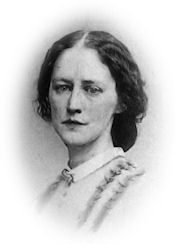
April 20.—The last few days have glided away in a halo of beauty. I can’t remember such a lovely spring ever before. But nobody has time or will to enjoy it. War, war! is the one idea. The children play only with toy cannons and soldiers; the oldest inhabitant goes by every day with his rifle to practice; the public squares are full of companies drilling, and are now the fashionable resorts. We have been told that it is best for women to learn how to shoot too, so as to protect themselves when the men have all gone to battle. Every evening after dinner we adjourn to the back lot and fire at a target with pistols.

Yesterday I dined at Uncle Ralph’s. Some members of the bar were present and were jubilant about their brand-new Confederacy. It would soon be the grandest government ever known. Uncle Ralph said solemnly, “No, gentlemen; the day we seceded the star of our glory set.” The words sunk into my mind like a knell, and made me wonder at the mind that could recognize that and yet adhere to the doctrine of secession.

In the evening I attended a farewell gathering at a friend’s whose brothers are to leave this week for Richmond. There was music. No minor chord was permitted.

______

Note: To protect Mrs. Miller’s job as a teacher in New Orleans, the diary was published anonymously, edited by G. W. Cable, names were changed and initials were often used instead of full names — and even the initials differed from the real person’s initials.

April 20th.—I visited the editors of the Charleston Mercury and the Charleston Courier to-day at their offices. The Rhett family have been active agitators for secession, and it is said they are not over well pleased with Jefferson Davis for neglecting their claims to office. The elder, a pompous, hard, ambitious man, possesses ability. He is fond of alluding to his English connections and predilections, and is intolerant of New England to the last degree. I received from him, ere I left, a pamphlet on his life, career, and services. In the newspaper offices there was nothing worthy of remark; they were possessed of that obscurity which is such a characteristic of the haunts of journalism—the clouds in which the lightning is hiding. Thence to haunts more dingy still where Plutus lives—to the counting houses of the cotton brokers, up many pairs of stairs into large rooms furnished with hard seats, engravings of celebrated clippers, advertisements of emigrant agencies and of lines of steamers, little flocks of cotton, specimens of rice, grain, and seed in wooden bowls, and clerks living inside railings, with secluded spittoons, and ledgers, and tumblers of water.

I called on several of the leading merchants and bankers, such as Mr. Rose, Mr. Muir, Mr. Trenholm, and others. With all it was the same story. Their young men were off to the wars—no business doing. In one office I saw an announcement of a company for a direct communication by steamers between a southern port and Europe. “When do you expect that line to be opened?” I asked. “The United States’ cruisers will surely interfere with it.” “Why, I expect, sir,” replied the merchant, “that if those miserable Yankees try to blockade us, and keep you from our cotton, you’ll just send their ships to the bottom and acknowledge us. That will be before autumn, I think.” It was in vain I assured him he would be disappointed. “Look out there,” he said, pointing to the wharf, on which were piled some cotton bales; “there’s the key will open all our ports, and put us into John Bull’s strong box as well.”

I dined to-day at the hotel, notwithstanding many hospitable invitations, with Messrs. Manning, Porcher Miles, Reed, and Pringle. Mr. Trescot, who was Under-Secretary-of-State in Mr. Buchanan’s Cabinet, joined us, and I promised to visit his plantation as soon as I have returned from Mr. Pringle’s. We heard much the same conversation as usual, relieved by Mr. Trescot’s sound sense and philosophy. He sees clearly the evils of slavery, but is, like all of us, unable to discover the solution and means of averting them.

The Secessionists are in great delight with Governor Letcher’s proclamation, calling out troops and volunteers, and it is hinted that Washington will be attacked, and the nest of Black Republican vermin which haunt the capital driven out. Agents are to be at once despatched to get up a navy, and every effort made to carry out the policy indicated in Jeff Davis’s issue of letters of marque and reprisal. Norfolk harbor is blocked up to prevent the United States ships getting away; and at the same time we hear that the United States officer commanding at the arsenal of Harper’s Ferry has retired into Pennsylvania, after destroying the place by fire. How “old John Brown” would have wondered and rejoiced had he lived a few months longer!

Saturday night, April 20th. To-morrow we start for the war. Since Wednesday I have been receiving the utmost attention from everybody. It is so strange to see this wonderful enthusiasm and loyalty. It is impossible for a man in uniform to pay for anything he wants; wherever I go all want to do something for me; in crossing the ferries men filled my pockets with cigars, and even insisted upon my taking money from them, and when I refused, actually forced it into my pockets; they must do something, and look upon us, I suppose, as their representatives. There is no end to their generosity and enthusiasm, which is well for the republic.

I attended a great reception given in my honor at the E-Hotel to-night, which proved a magnificent affair. Everybody that I knew, almost, was there, and fun and frolic with songs, music, and speeches, continued until the clock struck twelve. There were amongst the young fellows a number belonging to a glee club, who sang patriotic and pathetic war-songs innumerable, and contributed immensely to the enjoyment of the evening. When we broke up, and our last good-byes were spoken, every man grasped me by the hand, many of them kissed me, and all united in wishing me good luck and a safe return. After taking an affectionate farewell of one who was more to me than all others, I hastened from the room amidst the cries of “God bless you”; “Take care of yourself”; “Be sure and thrash the rascals,” etc.

It was very hard to part when the time actually came, being my first experience, and I must admit feeling decidedly unwarlike and very desolate. However, I went home, turned into my comfortable bed, wondering what sort of beds we should probably have in the army.

SATURDAY 20

A fine pleasant day. No troops today, all stoped beyond Balt. Bridges destroyed, track torn up and the Steam Ferry Boat over the Susquehannah scuttled and sunk. Balt in the hands of the mob. A critical time for Washington. A large body of Rebels at Alexandria and an attack upon the City may be expected any hour. I went to the Depot and to the Capitol again tonight. The Mass. Regnt marched out and through Pa Ave to 15 st making a fine appearance and being cheered frequently by the people. The Hotels are full and all seem agreed that Balt is a doomed City. 12 o’c.

______

The three diary manuscript volumes, Washington during the Civil War: The Diary of Horatio Nelson Taft, 1861-1865, are available online at The Library of  Congress.

April, 1861.

My dear Cousin Margaret: I fancy that you may like to know how we have gone through the dreadful tumoil and excitement of the last few days, and so I send you an incoherent line tonight, though my wits are scarcely under command of my fingers.

The three great local incidents this week have been the arrival of Major Anderson, the leaving of the Seventh Regiment, and the great mass-meeting today in Union Square, or rather whose centre was Union Square, for the huge sea of men overflowed the quadrangle of streets where the speakers’ stands were, and surged down Broadway, up Broadway, through Fourteenth street and along Fourth avenue far beyond the Everett House. We were in a balcony at the corner of Union Square and Broadway and saw the concourse, though we could not distinguish the words of any speaker. We could only tell when the “ points” were made by the thousands of hats lifted and swung in the air and by the roar of the cheering. Every house fronting the square, and up and down the side streets, was decorated with flags and festoons, and the Sumter flag, on its splintered staff, hung over the stand where the gentlemen of the Sumter command were. The Puritan Church had a great banner afloat on its tower. Trinity set the example to the churches yesterday, when a magnificent flag was raised on its tall spire with a salvo of artillery. The sight was a grand one today, and in some of its features peculiar. As the tide rolled up under our balcony we could see scarcely a man who was not earnest-looking, grave, and resolved, and all seemed of the best classes, from well-dressed gentlemen down to hardworking, hard-fisted draymen and hod-carriers, but no lower. There was not a single intoxicated man as far as we could see, or a single one trying to make any disturbance or dissent. You will see by the reports of the meeting who were the officers, speakers, etc., and judge how all colors of opinion were represented and were unanimous. New York, at any rate, is all on one side now— all ready to forget lesser differences, like the household into which grief has entered. Almost every individual, man, woman and child, carried the sacred colors in some shape or other, and the ladies at the windows had knots of ribbon, tricolored bouquets, and flags without number. There was not a policemen to be seen from our outlook, though no doubt there were some about the square, but the crowd kept itself in order and perfect good nature, and whenever the flag appeared at the head of any procession or deputation it fell back instantly and respectfully to let it pass through. The resolutions, Committee for Patriotic Fund, etc., you will see in the papers.

I have given the first place to the meeting because it was the most recent, but yesterday was a more exciting and saddening day than this. Beside Meredith Howland, Captain Schuyler Hamilton, Howland Robbins and other friends and acquaintances in the “Seventh,” our two cousins Theodore and William Winthrop went. All these are privates except Merry, who is on the staff — Paymaster. The Winthrops came in their accoutrements at one o’clock to get their twenty-four hours’ rations (sandwiches which Georgy had been making all the morning), and we filled their cases and liquor flasks, with great satisfaction that we were able to do even such a little thing for them. We gave them a hearty “feed,” helped them stow their things with some economy of space, buckled their knapsack straps for them, and sent them off with as cheerful faces as we could command. They were in excellent spirits, on the surface at any rate, and promised to come back again in glory in a little while. We in our turn promised to go down to them if they needed us. Poor fellows! It was heart-sickening to think of any such necessity. Then we went down to a balcony near Prince street, in Broadway, and saw them off. The whole street was densely crowded, as today, and the shops and houses decorated—only there were three miles of flags and people. After long waiting we began to see in the distance the glimmer of the bayonets. Then the immense throng divided and pressed back upon the sidewalks, and the regiment came,—first the Captain of Police with one aid, then the Artillery corps, then company after company, in solid march, with fixed faces, many of them so familiar, so pleasant, and now almost sacred. The greeting of the people was a thing to see! The cheers were almost like a cannonade. People were leaning forward, shouting, waving handkerchiefs, crying, praying aloud, and one block took up the voice from the other and continued the long, long cry of sympathy and blessing through the entire route. Some friends of the soldiers who marched all the way with them to the Jersey cars, said the voice never ceased, never diminished, till they reached the end of that first triumphal stage of their journey. It was a triumph though a farewell.  At Ball and Black’s Major Anderson was in the balcony with Cousin John’s and Cousin William Aspinwall’s families, and each company halted and cheered him as it passed. Except for this, they looked neither right nor left, but marched as if at that moment they were marching into the thick of battle. They were not long in passing, and the crowd closed in upon them like a parted sea. We watched the bayonets as far and long as we could see them, and the last we saw was a late warm beam of sunshine touching the colors as they disappeared.

Great anxiety is felt tonight about their arrival in Washington and what they may meet there. Many gentlemen here think the forces in the District quite inadequate and blame anybody and everybody for not hurrying on more troops. A gentleman was here late this afternoon looking for Cousin William Aspinwall. They were hunting him up everywhere where there was any chance of his being found, to make instant arrangements for steam vessels to take reinforcements tomorrow. Several regiments are ready, only waiting orders and means of transit. Uncle Edward came to the meeting today—very grave indeed—and I don’t doubt very efficient and open-handed, as usual, in anything that needed his help. He has ordered a great flag for the “barrack.” Joe has set one flying from his house-top. He (J. H.) has joined a cavalry company in Fishkill who are drilling for a Home Guard or a “reserve.” Charley has joined a similar company (foot) in town. He is uneasy and wants to “do something.” Uncle Edward says: “Stay at home, my boy, till you’re wanted, and if the worst comes to the worst I’ll shoulder a musket myself!”

Major Anderson was the hero of Cousin Anna’s party last night. Only Charley represented us; we didn’t feel “up to it.” C. said it was a very handsome party, as usual with their entertainments, and that a portrait of Major Anderson was hung in the picture gallery, wreathed with laurel, and all the “Baltic’s” flags decorated the hall and supper room. Thirty of the expected guests had marched at four o’clock with the Seventh. Major Anderson is very grave, almost sad, in expression and manner, as a man may well be who has been through such scenes and looks with a wise eye into such a future; but if anything could cheer a man’s soul it would be such enthusiasm and almost love as are lavished on him here. He says “they had not had a biscuit to divide among them for nearly two days, and were almost suffocated.” They say he talks very little about it all; only gives facts in a few modest words. He is “overwhelmed” with the sight of the enthusiasm and unanimity of the North; “the South has no idea of it at all.” He says that he “felt very much aggrieved at being attacked at such disadvantage;” that “for four weeks he only received one message from government, and was almost broken down with suspense, anxiety, and ignorance of what was required of him.” He went to all the stands today at the mass-meeting, and was received with a fury of enthusiasm everywhere. Yesterday he was obliged to leave the balcony at Ball and Black’s, the excitement and applause were so overpowering; and he goes about with tears in his eyes all the time.

Mrs. Gardiner Howland is very anxious and sad about Merry in the Seventh. She says she is “no Spartan mother.” Mary G. G. has sent to Kate Howland withdrawing her invitations for her bridesmaids’ dinner on Tuesday. She is not in spirits to give it.[1] Two regiments start tonight instead of tomorrow to go by rail to Philadelphia and thence by steamboats, outside. There are the gravest fears that they may be too late. . . . I have been writing while the others have gone to the Philharmonic concert. They have come back and had a splendid scene at the close — singing of the Star-Spangled Banner, solo, and chorus by the Lierderkranz and the whole huge audience, standing, to the hundred stringed and wind instruments of the orchestra, while a great silken banner was slowly unrolled from the ceiling to the floor. Then followed rounds of vociferous applause, and three times three for everything good, especially for Major Anderson, and the Seventh.

The Massachusetts contingent passed through on Thursday, and then we got the news of the cowardly assault in Baltimore.[2] The poor fellows tasted war very soon. Tonight the city is full of drum-beating, noise and shouting, and they are crying horrible extras, full of malicious falsehoods (we hope). G. G., we hear, is going from home to his Mother’s and back again, all the evening, contradicting them. There should be authentic news by this time of the progress of the Seventh, but people will not believe these horrible rumors, and refuse to believe anything.

There is the most extraordinary mixture of feeling with everyone— so much resistless enthusiasm and yet so much sadness for the very cause that brings it out. It seems certainly like a miracle, this fresh and universal inspiration of patriotism surmounting the sorrow, like a fire kindled by God’s own hand from his own altar—and this alone ought to inspire us with hope of the future.


[1] Kate Howland was married April 2, 1861, to Richard Morris Hunt.

[2] The Sixth Massachusetts, crossing Baltimore to the Washington depot, were set upon by a furious mob of roughs and pelted with stones and brickbats. Two soldiers were killed and eight wounded, and the troops forming in solid square with fixed bayonets at last forced their way through the crowds.

April 20th.—The news has been confirmed. It was a brickbat ” Plug Ugly” fight — the result of animal, and not intellectual or patriotic instincts. Baltimore has better men for the strife than bar-room champions. The absence of dignity in this assault will be productive of evil rather than good. Maryland is probably lost — for her fetters will be riveted before the secession of Virginia will be communicated by the senseless form of ratification a month hence. Woe, woe to the politicians of Virginia who have wrought this delay! It is now understood that the very day before the ordinance was passed, the members were gravely splitting hairs over proposed amendments to the Federal Constitution!

Guns are being fired on Capitol Hill in commemoration of secession, and the Confederate flag now floats unmolested from the summit of the capitol. I think they had better save the powder, etc.

At night. We have a gay illumination. This too is wrong. We had better save the candles.

HEADQUARTERS DEPARTMENT OF FLORIDA,
April 20, 1861.

Col. L. THOMAS, Adjutant-General:

COLONEL: I inclose you a report of Lieutenant Slemmer in relation to an attempt of the seceders to bribe and seduce the garrison from their duty. That the attempt was made is fully proved by the fact that the money paid to Private McGarr is now actually in the possession of Lieutenant Slemmer. This noble fidelity should be rewarded, but the kind of reward I am not prepared to yet recommend. The design was to spike the flank casemate howitzer, and then to take the work by escalade. I have no doubt but that other soldiers of Lieutenant Slemmer’s garrison were tampered with, and I fear in one or two cases successfully, but have not yet had time to investigate the affair.

I am, colonel, very respectfully, your obedient servant,

HARVEY BROWN,
Brevet Colonel, Commanding.

[Inclosure.]

FORT PICKENS, FLA., April 18, 1861.

To the ASSISTANT ADJUTANT-GENERAL, Headquarters of the Army:

SIR: Having had my suspicions aroused by letters passing to and from Fort Pickens and the village of Warrington, I issued orders that no letters or packages should be sent from or received at the post except those passing through my hands. Subsequent to this a roll of papers came from Warrington, addressed to Ordnance Sergeant E. H. Broady. Upon opening them a letter fell out, of which the following is a copy:

BROADY: You are without exception the dam’dest fool I have the pleasure of knowing. Bragg will give you a dam’d sight better berth than you have, and besides, you will be on the right side. Don’t be a jackass always. Look at Gardner–see his position. I have authority for offering you a like commission. Answer me. Where can I take you a cocktail? My regards to Flynn. Come over and see me. I can assure you that permission to visit your wife, and in a capacity she will be more than glad to find you in, will be granted you. No humbug. Come over.

Yours,

B.

I kept this letter, determining to watch the sergeant and intercept other letters. The next day another roll of papers came to the same address, out of which the following note was obtained:

What a jackass you are. I again renew my offer of a position with a lieutenant’s commission and all your pay twofold that is due you from the Federal Government. Also to Flynn. If you will help us along to save bloodshed, I can offer any private in the company $500, and any non-commissioned officer $1,000 too, with a guarantee of future provision as high or higher as he now stands. Every man who will take upon themselves to give us the fort without bloodshed, and save the lives of your garrison, will be well paid–all back pay, $500 for the privates, $1,000 for non-commissioned officers, and a commission in the Confederate army. This, Broady, I offer from authority. I would not offer it otherwise. You as a friend I believe will trust me. We must and will have the fort, but ’tis not worth one drop of blood; but if it cost 5,000 lives we must and will have it. Fill it full of Federal troops if you will, yet we must and will have it. Don’t be a dam’d fool. When and where can I see you? I will go over to-night, and will take a cocktail if you say so.

Answer first opportunity.

Yours, &c.,

B.

The same day I received private information that the troops on the opposite side were making preparations, preparing boats, &c., and intended to come over that night or the next. I immediately addressed a note to Captain Adams, commanding the squadron, informing him of the fact, and requested re-enforcements. A storm prevented the Wyandotte from coming out the harbor that night. I kept my men in position, keeping a strict watch on the sergeant. Nothing occurred. The next day I received a letter from Captain Adams, of which the following is a copy:

U. S. FRIGATE SABINE,
Off Pensacola, April 11, 1861.

Lieut. A. J. SLEMMER,
Commanding Fort Pickens, Fla.:

SIR: You have stated in your communication to me of the 10th instant, that from information received through private hands you have reason to believe that the safety of the fort depends on its immediate re-enforcement. Will you be pleased to lay this information in full before me? So many unfounded rumors have been in circulation to this same effect that it is necessary to be cautious, and my orders are positive not to land re-enforcements unless the fort is actually attacked or preparations are making to attack it. Should your information be such as to justify it, I will have re-enforcements landed as soon as practicable when the state of the sea will admit of boats landing outside the harbor and at night, as you recommend.

Very respectfully, your obedient servant,

H. A. ADAMS,
Captain, Senior Officer Present.

A storm prevented the steamer Wyandotte from returning to the squadron that night. On the morning of the 12th I made the following answer:

FORT PICKENS, FLA., April 12, 1861.

Capt. H. A. ADAMS, Commanding Squadron off Pensacola Harbor:

SIR: In reply to your communication of the 11th instant, I have to state the information I received is through varied sources, and all to the same effect, viz, that the troops were preparing to embark for this island, and that boats and material were ready at the navy-yard to start at any moment; that the intention was to land either last night or the night before. The weather having been such these nights that they could scarcely cross unless very determined, they may be expected at the first favorable opportunity. I have deemed my information of such importance that for the last two nights my men have been placed at the guns in readiness to repel an attack. My men and officers are much fatigued, and I deem it absolutely necessary that the fort should be re-enforced immediately. Provisions should also be landed while there is yet time to do so by the Wyandotte.

I am, sir, very respectfully, your obedient servant,

A. J. SLEMMER,
First Lieutenant, First Artillery, Commanding.

On the night of the 12th instant, Captain Adams having received instructions from the Navy Department, Captain Vogdes landed with his company and the marines from the vessels, and relieved me from the command of the post. On the morning of the 11th instant I sent Ordnance Sergeant Broady on board the frigate Sabine, as I deemed it very unsafe to keep him in the fort, even if a good man, subject to the seductive influences I knew to be at work upon him. On the morning of the 13th instant a private of my company, G, First Artillery, Owen McGarr, came to me and made the following statement:

I was on picket guard last night. During the night I saw a small boat approach the beach. I stepped back to see what it was about, when a man came before me. I brought my musket to a charge and ordered him to halt. He said, “Don’t shoot; I am a friend.” He then began to talk to me and ask about the fort. While he was talking three others came up behind me. They asked me many questions, asking me about the number of men, &c., about the flank defense, whether the guns could not be spiked, &c. Said they would give any man plenty of money if he would only spike the flank defense guns. Asked when I would be on picket guard again. I told them on Monday night. They said, “We will be over and ready.” As they were going away one said to me, “How are you off for money in the fort? “‘ I said, ” We have not been paid for six months.” He then put a roll of bills in my hand and said, ” Give that to them.”

He then gave me a roll of bills, in amount sixty dollars. I have it now in my possession. There are evidences that the intention was to bribe my men to spike the flank defense and thus obtain possession of the fort.

I am, sir, very respectfully, your most obedient servant,

A. J. SLEMMER,
First Lieutenant, First Artillery.

CINCINNATI, April 20, 1860 [1861].

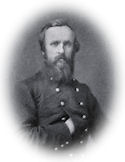
DEAR UNCLE:—. . . I have joined a volunteer home company to learn drill. It is chiefly composed of the Literary Club. Includes Stephenson, Meline, John Groesbeck, Judge James, McLaughlin, Beard, and most of my cronies. We wish to learn how to “eyes right and left,” if nothing more. A great state of things for Christian people, and then to have old gentlemen say, as you do, “I am glad we have got to fighting at last.” Judge Swan and Mr. Andrews and the whole Methodist clergy all say the same. Shocking! One thing: Don’t spend much on your house or furniture henceforth. Save, save, is the motto now. People who furnish for the war will make money, but others will have a time of it.

Mother thinks it is a judgment on us for our sins. Henry Ward Beecher, who is now here, says it is divine work, that the Almighty is visibly in it.

Sincerely,

R. B. HAYES.

S. BIRCHARD.

HDQRS. TROOPS CONFEDERATE STATES,
Near Pensacola, Fla., April 20, 1861..

GENERAL ORDERS
NO. 24.

I. All intercourse hereafter with Santa Rosa Island, Fort Pickens, or the United States fleet, is strictly prohibited.

II. Martial law is declared to exist and will be rigidly enforced on all territory within five miles of the lines of this army.

By command of Brigadier-General Bragg:

ROBERT C. WOOD, JR.,

Assistant Adjutant-General.

—Last night a mob from Baltimore, lying in wait for the train from Philadelphia, at Canton, fired a pistol at the engineer, who stopped the train. The crowd, compelling the passengers to leave the cars, occupied the train, and forced the engineer to take them back to Gunpowder Bridge. There the train was stopped, and the crowd set fire to the draw of the bridge and waited till that portion was burned; returning to Bush River Bridge, the draw was likewise burned. The mob then returned to Canton Bridge and burned that. The train then conveyed the mob to the President-street station.—Phila. Press.

—The Charleston Courier of to-day contains an account of the damage done by Fort Sumter to Fort Moultrie and the surrounding property. It says the fire was “terribly destructive, and, when viewed in connection with the fact that no life was lost, is the most extraordinary case ever recorded in history.”—(Doc. 73.)

—A mass meeting of citizens in support of the Union, the Constitution and the Government, was held in Union Square, New York City. It was called by leading citizens without distinction of party.—(Doc. 73½)

—John C. Brekenridge, Ex-Vice-President, addressed a large audience at Louisville, Ky., this afternoon, denouncing President Lincoln’s proclamation as illegal, and saying that he could not make his 75,000 men efficient until after the meeting of Congress. He proposed that Kentucky present herself to Congress on the Fourth of July through her Senators and Representatives, and protest against the settlement of the present difficulties of the country by the sword—meanwhile that Kentucky call a State Convention to aid her Congressmen in presenting such a protest. Should that fail, however, it was the duty and the interest of Kentucky to unite her fortunes with the South. —N. Y. Times, April 22.

—The Fourth Regiment of Massachusetts militia landed at Fortress Monroe, Va., from the steamer State of Maine.—(Doc. 74.)—J. B. B. in the N. Y. Times, April 22.

—The citizens of Taunton, Mass., presented Major Robert Anderson a sword, “as an expression of their admiration of his courage, loyalty, and devotion to the country.” The presentation was made by Capt. W. C. Lovering at the Brevoort House in New York.—Tribune, April 22.

—Union meetings were held at Schenectady, Hudson, Utica, Waverley, and Dunkirk, N. Y; Stockbridge, Mass.; Bridgeport, Conn.; Springfield and Chicago, Ill. During the proceedings at Chicago, at the suggestion of Judge Mannierre, the whole audience raised their right hands and took the oath of allegiance to the Union, repeating the oath after the Judge.—Detroit Free Press.

—A southern merchant writes to a correspondent in New York:

“—, Tenn, April 20, 1861.

“Gentlemen: Our note to you for $187 12—100, due to-day, has not been paid.

“We deeply regret the necessity that impels us to say, that during the existence of this war we are determined to pay no notes due our northern friends.”—Evening Post.

—The St. Nicholas, a steamer plying between Washington and Baltimore, was seized at the former place this morning for prudential purposes.—National Intelligencer.

—Hiram Sibley, President of the Western Union, and T. R. Walker, President, and J. D. Reid, Superintendent of the New York, Albany and Buffalo Telegraph Companies, issued orders that no messages, ordering arms or munitions of war, will be received by their companies unless for the defence of the Government of the United States, and endorsed by the Mayor of the City from which it proceeds. Messages in cypher, excepting despatches from the Press of the U. S. officers of the Government, will be refused.

The Toronto Globe of this morning has a long article on the relations between England and the United States, advocating a sincere and firm alliance, forgetting all past differences, and says that the North has a just cause; that the permanent good will of the American people is worth striving for, and hopes to see the rebellion put down and the traitors dealt with as they deserve.—Louisville Democrat, April 21.

—The Missourians seized the United States Arsenal at Liberty, Mo., and garrisoned it with 100 men. In the arsenal were 1,300 stand of arms, ten or twelve pieces of cannon, and quite an amount of powder.

Two thousand stand of arms were furnished the citizens of Leavenworth from the arsenal at Fort Leavenworth, and the commander at that post accepted the services of 800 volunteers to guard the arsenal pending the arrival of troops from Fort Kearney.—Times, April 22.

—The Council of Wilmington, Delaware, appropriated $8,000 to defend the city, and passed resolutions approving of the President’s proclamation. Also, asking the Governor to issue a proclamation for the same purpose. The Brandywine bridges and all on the road between Susquehanna and Philadelphia are guarded, and workmen have been sent to repair the bridges destroyed on the Northern Central road.—Phila. Enquirer.

—Governor Curtin of Pennsylvania issued a proclamation calling a meeting of the State Legislature for the 30th of April, “to take into consideration and adopt such measures as the present emergencies may demand.”—(Doc. 75.) —Phila. Press.

—A letter was received at Philadelphia from Governor Letcher, of Virginia, offering $30,000 to the patentee of the bullet mould. The reply was “no money can purchase it against the country.”—Evening Post.

—An enthusiastic Union meeting was held at Middletown, Orange County, N. Y., this evening. The assemblage was presided over by Moses H. Corwin, a veteran of the war of 1812, and speeches were made by C. C. McQuoid, A. H. Byington, Charles H. Van Wyck and others. Mr. Van Wyck announced the fact of his having “enlisted for the war,” and with his company, just organized at Newburgh, he should proceed to Washington as a regular, if he had to walk all the way.—Tribune, April 23.

—The steamship, Star of the West, was taken into New Orleans as a prize to the Confederate States Government.—(Doc. 76.)

—Gosport Navy Yard, opposite Norfolk, Va., with stores, timber, munitions of war, etc., was burned by the U. S. officers in charge, to prevent its falling into the hands of the Secessionists, who occupied Norfolk and Portsmouth in force under Gen. Taliefero. The U. S. liners Pennsylvania, 74 guns; Delaware, 74; Columbus, 74; steam frigate Merrimac, 44; frigate Raritan, 45; frigate Columbia, 44; sloop Germantown, 21; sloop Plymouth, 22; brig Dolphin, 8; a powder-boat, and the frigate United States, (in ordinary.) It being impossible to get them out of the harbor, they were scuttled, and were also fired.

The frigate Cumberland was towed out by the steam-tug Yankee. The value of the property destroyed is estimated at $50,000,000.—(Doc. 77.)— Times, April 24.