Following the American Civil War Sesquicentennial with day by day writings of the time, currently 1863.

Tuesday, April 19, 2011

April 19th.—An exceeding hot day. The sun pours on the broad sandy street of Charleston with immense power, and when the wind blows down the thoroughfare it sends before it vast masses of hot dust. The houses are generally detached, surrounded by small gardens, well provided with verandas to protect the windows from the glare, and are sheltered with creepers and shrubs and flowering plants, through which flit humming-birds and fly-catchers. In some places the streets and roadways are covered with planking, and as long as the wood is sound they are pleasant to walk or drive upon.

I paid a visit to the markets; the stalls are presided over by negroes, male and female; the colored people engaged in selling and buying are well clad; the butchers’ meat by no means tempting to the eye, but the fruit and vegetable stalls well filled. Fish is scarce at present, as the boats are not permitted to proceed to sea lest they should be whipped up by the expected Yankee cruisers, or carry malcontents to communicate with the enemy. Around the flesh-market there is a skirling crowd of a kind of turkey-buzzard; these are useful as scavengers and are protected by law. They do their nasty work very zealously, descending on the offal thrown out to them with the peculiar crawling, puffy, soft sort of flight which is the badge of all their tribe, and contending with wing and beak against the dogs which dispute the viands with the harpies. It is curious to watch the expression of their eyes as with outstretched necks they peer down from the ledge of the market roof on the stalls and scrutinize the operations of the butchers below. They do not prevent a disagreeable odor in the vicinity of the markets, nor are they deadly to a fine and active breed of rats.

Much drumming and marching through the streets to-day. One very ragged regiment which had been some time at Morris’ Island halted in the shade near me, and I was soon made aware they consisted, for the great majority, of Irishmen. The Emerald Isle, indeed, has contributed largely to the population of Charleston. In the principal street there is a large and tine red sandstone building with the usual Greek-Yankee-composite portico, over which is emblazoned the crownless harp and the shamrock wreath proper to a St. Patrick’s Hall, and several Roman Catholic churches also attest the Hibernian presence.

I again called on General Beauregard, and had a few moments’ conversation with him. He told me that an immense deal depended on Virginia, and that as yet the action of the people in that State had not been as prompt as might have been hoped, for the President’s proclamation was a declaration of war against the South, in which all would be ultimately involved. He is going to Montgomery to confer with Mr. Jefferson Davis. I have no doubt there is to be some movement made in Virginia. Whiting is under orders to repair there, and he hinted that he had a task of no common nicety and difficulty to perform. He is to visit the forts which had been seized on the coast of North Carolina, and probably will have a look at Portsmouth. It is incredible that the Federal authorities should have neglected to secure this place.

Later I visited the Governor of the State, Mr. Pickens, to whom I was conducted by Colonel Lucas, his aide-de-camp. His palace was a very humble shed-like edifice with large rooms, on the doors of which were pasted pieces of paper with sundry high-reading inscriptions, such as “Adjutant General’s Dept., Quartermaster-General’s Dept., Attorney General of State,” &c., and through the doorways could be seen men in uniform, and grave, earnest people busy at their desks with pen, ink, paper, tobacco, and spittoons. The governor, a stout man, of a big head, and a large important looking face, with watery eyes and flabby features, was seated in a barrack-like room, furnished in the plainest way and decorated by the inevitable portrait of George Washington, close to which was the “Ordinance of Secession of the State of South Carolina” of last year.

Governor Pickens is considerably laughed at by his subjects, and I was amused by a little middy, who described with much unction the governor’s alarm on his visit to Fort Pickens, when he was told that there were a number of live shells and a quantity of powder still in the place. He is said to have commenced one of his speeches with “Born insensible to fear,” &c. To me the governor was very courteous, but I confess the heat of the day did not dispose me to listen with due attention to a lecture on political economy with which he favored me. I was told, however, that he had practiced with success on the late Czar when he was United States Minister to St. Petersburg, and that he does not suffer his immediate staff to escape from having their minds improved on the relations of capital to labor, and on the vicious condition of capital and labor in the North.

“In the North, then, you will perceive, Mr. Russell, they have maximized the hostile condition of opposed interests in the accumulation of capital and in the employment of labor, whilst we in the South, by the peculiar excellence of our domestic institution, have minimized their opposition and maximized the identity of interest by the investment of capital in the laborer himself,” and so on, or something like it. I could not help remarking it struck me there was “another difference betwixt the North and the South which he had overlooked—the capital of the North is represented by gold, silver, notes, and other exponents, which are good all the world over and are recognized as such; your capital has power of locomotion, and ceases to exist the moment it crosses a geographical line.” “That remark, sir,”said the Governor, “requires that I should call your attention to the fundamental principles on which the abstract idea of capital should be formed. In order to clear the ground, let us first inquire into the soundness of the ideas put forward by your Adam Smith ” I had to look at my watch and to promise I would come back to be illuminated on some other occasion, and hurried off to keep an engagement with myself to write letters by the next mail.

The Governor writes very good proclamations, nevertheless, and his confidence in South Carolina is unbounded. “If we stand alone, sir, we must win. They can’t whip us.” A gentleman named Pringle, for whom I had letters of introduction, has come to Charleston to ask me to his plantation, but there will be no boat from the port till Monday, and it is uncertain then whether the blockading vessels, of which we hear so much, may not be down by that time.

April 19th.—Dispatches from Montgomery indicate that President Davis is as firm a States right man as any other, perfectly content to bear the burdens of government six years, and hence I apprehend he will not budge in the business of guarding Virginia until after the ratification of the secession ordinance. Thus a month’s precious time will be lost; and the scene of conflict, instead of being in Pennsylvania, near Philadelphia, will be in Virginia. From the ardor of the volunteers already beginning to pour into the city, I believe 25,000 men could be collected and armed in a week, and’ in another they might sweep the whole Abolition concern beyond the Susquehanna, and afterward easily keep them there. But this will not be attempted, nor permitted, by the Convention, so recently composed mostly of Union men.

To-night we have rumors of a collision in Baltimore. A regiment of Northern troops has been assailed by the mob. No good can come of mob assaults in a great revolution.

Wrote my wife to make preparations with all expedition to escape into Virginia. Women and children will not be molested for some weeks yet; but I see they have begun to ransack their baggage. Mrs. Semple, daughter of President Tyler, I am informed, had her plate taken from her in an attempt to get it away from New York.

FRIDAY, APRIL 19, 1861.

Another cool pleasant day but one of great excitement. Reports from various quarters indicate that danger is iminent of an attack upon the City. Harpers Ferry Armory and arsenal was destroyed this morning by Govt troops. The Steam Boats on the River have also been seized by Govt order. I went to the Depot to see the arrival of the Mass. Regiment. They came at last, after fighting their way through Baltimore loosing two men killed and firing upon the rioters, killing a number. A splendid looking set of men. They were marched directly to the Capitol and quartered there. I was at all the Hotels, home at 10 o’ck.

______

The three diary manuscript volumes, Washington during the Civil War: The Diary of Horatio Nelson Taft, 1861-1865, are available online at The Library of  Congress.

NEW YORK, April 19, 1861.

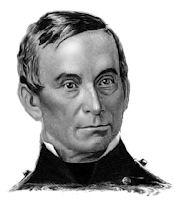
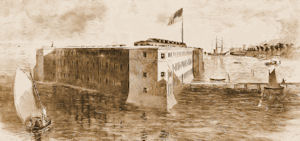
COLONEL: I have the honor to send herewith dispatches Nos. 99 and 100, written at but not mailed in Fort Sumter, and to state that I shall, at as early a date as possible, forward a detailed report of the operations in the harbor of Charleston, S.C., in which my command bore a part on the 12th and 13th instants, ending with the evacuation of Fort Sumter, and the withdrawal, with the honors of war, of my garrison on the 14th instant from that harbor, after having sustained for thirty-four hours the fire from seventeen 10-inch mortars and from batteries of heavy guns, well placed and well served, by the forces under the command of Brigadier-General Beauregard. Fort Sumter is left in ruins from the effect of the shell and shot from his batteries, and officers of his army reported that our firing had destroyed most of the buildings inside Fort Moultrie. God was pleased to guard my little force from the shell and shot which were thrown into and against my work, and to Him are our thanks due that I am enabled to report that no one was seriously injured by their fire. I regret that I have to add that, in consequence of some unaccountable misfortune, one man was killed, two seriously and three slightly wounded whilst saluting our flag as it was lowered.

The officers and men of my command acquitted themselves in a manner which entitles them to the thanks and gratitude of their country, and I feel that I ought not to close this preliminary report without saying that I think it would be injustice to order them on duty of any kind for some months, as both officers and men need rest and the recreation of a garrison life to give them an opportunity to recover from the effects of the hardships of their three months’ confinement within the walls of Fort Sumter.

I have the honor to be, very respectfully, your obedient servant,

ROBERT ANDERSON,

Major, First Regiment Artillery, &c.

P. S.–I inclose herewith copies of the correspondence between General Beauregard and myself.

R.A.

Col. L. THOMAS,

Adjutant-General, Washington, D.C.

[Inclosures.]

1.]

HEADQUARTERS PROVISIONAL ARMY, C. S. A.,
Charleston, S. C., April 11, 1861.

SIR: The Government of the Confederate States has hitherto forborne from any hostile demonstration against Fort Sumter, in the hope that the Government of the United States, with a view to the amicable adjustment of all questions between the two Governments, and to avert the calamities of war, would voluntarily evacuate it.

There was reason at one time to believe that such would be the course pursued by the Government of the United States, and under that impression my Government has refrained from making any demand for the surrender of the fort. But the Confederate States can no longer delay assuming actual possession of a fortification commanding the entrance of one of their harbors, and necessary to its defense and security.

I am ordered by the Government of the Confederate States to demand the evacuation of Fort Sumter. My aides, Colonel Chesnut and Captain Lee, are authorized to make such demand of you. All proper facilities will be afforded for the removal of yourself and command, together with company arms and property, and all private property, to any post in the United States which you may select. The flag which you have upheld so long and with so much fortitude, under the most trying circumstances, may be saluted by you on taking it down.

Colonel Chesnut and Captain Lee will for a reasonable time, await your answer.

I am, sir, very respectfully, your obedient servant,

G. T. BEAUREGARD,

Brigadier-General, Commanding.

Maj. ROBERT ANDERSON,

Commanding at Fort Sumter, Charleston Harbor, S.C.

2.]

FORT SUMTER, S. C., April 11, 1861.

GENERAL: I have the honor to acknowledge the receipt of your communication demanding the evacuation of this fort, and to say, in reply thereto, that it is a demand with which I regret that my sense of honor, and of my obligations to my Government, prevent my compliance. Thanking you for the fair, manly, and courteous terms proposed, and for the high compliment paid me,

I am, general, very respectfully, your obedient servant,

ROBERT ANDERSON,

Major, First Artillery, Commanding.

Brig. Gen. BEAUREGARD,

Commanding Provisional Army.

3.]

HEADQUARTERS PROVISIONAL ARMY, C. S. A.,
Charleston, S.C., April 11, 1861.

MAJOR: In consequence of the verbal observation made by you to my aides, Messrs. Chesnut and Lee, in relation to the condition of your supplies, and that you would in a few days be starved out if our guns did not batter you to pieces, or words to that effect, and desiring no useless effusion of blood, I communicated both the verbal observations and your written answer to my communications to my Government.

If you will state the time at which you will evacuate Fort Sumter, and agree that in the mean time you will not use your guns against us unless ours shall be employed against Fort Sumter, we will abstain from opening fire upon you. Colonel Chesnut and Captain Lee are authorized by me to enter into such an agreement with you. You are, therefore, requested to communicate to them an open answer.

I remain, major, very respectfully, your obedient servant,

G. T. BEAUREGARD,

Brigadier-General, Commanding.

Maj. ROBERT ANDERSON,

Commanding Fort Sumter, Charleston Harbor, S.C.

4.]

Fort SUMTER, S.C., April 12, 1861.

GENERAL: I have the honor to acknowledge the receipt by Colonel Chesnut of your second communication of the 11th instant, and to state in reply that, cordially uniting with you in the desire to avoid the useless effusion of blood, I will, if provided with the proper and necessary means of transportation, evacuate Fort Sumter by noon on the 15th instant, and that I will not in the mean time open my fires upon your forces unless compelled to do so by some hostile act against this fort or the flag of my Government by the forces under your command, or by some portion of them, or by the perpetration of some act showing a hostile intention on your part against this fort or the flag it bears, should I not receive prior to that time controlling instructions from my Government or additional supplies.

I am, general, very respectfully, your obedient servant,

ROBERT ANDERSON,

Major, First Artillery, Commanding.

Brig. Gen. BEAUREGARD,

Commanding.

5.]

FORT SUMTER, S.C., April 12, 18613.20 a.m.

SIR: By authority of Brigadier-General Beauregard, commanding the Provisional Forces of the Confederate States, we have the honor to notify you that he will open the fire of his batteries on Fort Sumter in one hour from this time.

We have the honor to be, very respectfully, your obedient servants,

JAMES CHESNUT,  JR.,

Aide-de-Camp.

STEPHEN D. LEE,

Captain, C. S. Army, Aide-de-Camp.

Maj. ROBERT ANDERSON,

U. S. Army, Commanding Fort Sumter.

6.]

FORT SUMTER, S.C., April 13, 186120 min. past 2 o’clock.

GENERAL: I thank you for your kindness in having sent your aide to me with an offer of assistance upon your having observed that our flag was down–it being down a few moments, and merely long enough to enable us to replace it on another staff. Your aides will inform you of the circumstance of the visit to my fort by General Wigfall, who said that he came with a message from yourself.

In the peculiar circumstances in which I am now placed in consequence of that message, and of my reply thereto, I will now state that I am willing to evacuate this fort upon the terms and conditions offered by yourself on the 11th instant, at any hour you may name to-morrow, or as soon as we can arrange means of transportation. I will not replace my flag until the return of your messenger.

I have the honor to remain, very respectfully, your obedient servant,

ROBERT ANDERSON,

Major, First Artillery, Commanding.

Brig. Gen. G. T. BEAUREGARD,

Charleston, S.C.

7.]

HEADQUARTERS PROVISIONAL ARMY, C. S. A.,
April 13, 18615 min. to 6 o’clock p.m.

SIR: On being informed that you were in distress, caused by a conflagration in Fort Sumter, I immediately dispatched my aides, Colonels Miles and Pryor, and Captain Lee, to offer you any assistance in my power to give.

Learning a few moments afterwards that a white flag was waving on your ramparts, I sent two others of my aides, Colonel Allston and Major Jones, to offer you the following terms of evacuation: All proper facilities for the removal of yourself and command, together with company arms and private property, to any point within the United States you may select.

Apprised that you desire the privilege of saluting your flag on retiring, I cheerfully concede it, in consideration of the gallantry with which you have defended the place under your charge.

The Catawba steamer will be at the landing of Sumter to-morrow morning at any hour you may designate for the purpose of transporting you whither you may desire.

I remain, sir, very respectfully, your obedient servant,

G. T. BEAUREGARD,

Brigadier-General, Commanding.

[Maj. R. ANDERSON,

First Artillery, Commanding Fort Sumter, S.C.]

8.]

HEADQUARTERS, FORT SUMTER, S. C.,
April 13, 18617.50 p.m.

GENERAL: I have the honor to acknowledge the receipt of your communication of this evening, and to express my gratification at its contents. Should it be convenient, I would like to have the Catawba here at about nine o’clock to-morrow morning.

With sentiments of the highest regard and esteem, I am, general, very respectfully, your obedient servant,

ROBERT ANDERSON,

Major, U. S. Army, Commanding.

Brig. Gen. G. T. BEAUREGARD,

Commanding Provisional Army, C. S.

9.]

HEADQUARTERS PROVISIONAL FORCES, C. S. A.,
Charleston, April 15, 1861.

The commanding general directs that the commanding officer of the garrison of Fort Sumter will bury the unfortunate soldier who has been accidentally killed by explosion of misplaced powder while saluting his flag. He will be buried with all the honors of war in the parade of the fort.

By order of Brigadier-General Beauregard:

W. H. C. WHITING,

Adjutant and Engineer General.

Copy furnished to–

Major ROBERT ANDERSON, U. S., First Regiment of Artillery.

P. S.–The wounded will receive the best attention, and will be placed in the State hospital.

By order of General Beauregard:

W. H. C. WHITING,

Adjutant and Engineer General.

—A meeting of the merchants of New York city was held at the Chamber of Commerce. The proceedings were characterized by the utmost harmony and unanimity. Mr. Peletiah Perit occupied the chair, and patriotic speeches were made by Mr. Perit, George Opdyke, James Gallatin, Royal Phelps, S. B. Chittenden, Prosper M. Wetmore, George W. Blunt, John E. King, William E. Dodge, John A. Stevens, R. H. McCurdy, and others. Resolutions upholding the Federal Government, and urging a strict blockade of all ports in the secession States were unanimously adopted. It being announced that several of the regiments needed assistance to enable them to leave—on motion, a committee was appointed to receive donations, and in ten minutes the subscription had reached over $21,000. What was still more important was the appointment of a large committee of the most influential capitalists, to use their exertions to secure an immediate taking of the $9,000,000 remaining of the Government loan.—(Doc. 66.)

—The President of the United States issued a proclamation, announcing the blockade of the Southern ports.—(Doc. 67.)

—Sherrard Clemens, a strong Union man, and late member of Congress for Richmond, Va., is held as a prisoner at Richmond. He is still firm in his loyalty to the Government and his opposition to rebellion. —Tribune, April 19.

—At Wilmington, Ohio, the first volunteer company, consisting of 125 men, organized today. Three thousand dollars were subscribed in one hour for the benefit of volunteers. Great enthusiasm prevails, and the work goes bravely on in raising both men and money. Another company is forming. A suspected Secessionist was seized this evening, and experienced some rough treatment.—Louisville Democrat, April 21.

—A rifle company was organized at Dayton, Ohio, under command of Captain Childs, consisting of 75 picked men. The company left Columbus at noon to-day, amid the cheers of a large crowd of citizens. Home guards are being formed. One company is to be formed of men over forty-five years old, under the command of Edward W. Davis.—Idem.

—Rev. Warren Swift; of Utica, N. Y a Presbyterian minister of excellent abilities and wide-spread reputation, enlisted, and started for head-quarters this morning.—Idem.

—General Sherman, the State commandant at Galveston, Texas, issued an order enrolling “all citizens capable of bearing arms, not over sixty years of age, who do not enroll themselves into some one of the volunteer companies of the city by the 28d inst., in the militia. In case of being called into service they will be required to bring such arms as they may have, until they can be furnished by the State.

“The war has begun! It may reach our shores! Who in Texas will shrink from his duty in such a crisis? We invoke the spirit not only of 1776, but of 1836, to arouse from its slumber, and again assert the independence of Texas. The misrule of Black Republicanism would scarcely be less fatal to our interests than that of Mexican intolerance. We have shaken off the one; let us manfully repel the other.”

The order is accompanied by other similar ones, necessary to carry it into effect. The alarm signal for the assembling of the city troops will be first a fire alarm, and secondly after an interval of one minute, six taps of the bell, to be repeated four times with intervals.—N. O. Picayune, April 23.

—It is now learned by the return of the expedition to relieve Sumter, that a plan was perfected to throw in 300 men and supplies by boats at daylight on the 13th. This was frustrated, however, by the Baltic running upon Rattlesnake shoal on the night of the 12th.—World, April 19.

—Maryland, Delaware, and Pennsylvania, were added to the Military Department of Washington.—(Doc. 68.)—Times, April 25.

—A positive announcement “that General Scott had resigned his position in the army of the United States and tendered his sword to his native State—Virginia,” was made at Montgomery. At Mobile, one hundred guns were fired in honor of his resignation.—Charleston Mercury, April 22.

—Immense Union meetings were held last night at Auburn, Hudson, Ogdensburgh, Albion, Binghamton, and other towns and villages in western New York. Past political differences are forgotten, and the people are enthusiastic in support of the Administration.—Troy Times.

—At New York a large American flag, forty feet long by twenty wide, was flung out upon a flagstaff from a window in Trinity steeple, at a height of 240 feet. The chimes meanwhile played several airs appropriate to the occasion, among which were “Yankee Doodle,” “the Red, White, and Blue,” winding up with “All’s well.” The enthusiasm of the large concourse that had spontaneously gathered was most intense.

A flagstaff, with flag attached, was also run out of a window over the portico in front of St. Paul’s Church.—Tribune, April 20.

—A Portion of the Sixth Massachusetts, and the Seventh Pennsylvania, were attacked in the streets of Baltimore by a mob upon their passage through that city.

The Massachusetts Regiment occupied eleven cars. Upon their arrival at the President-street depot, the cars were permitted to leave with the troops still on board, and proceeded quietly through the streets of Baltimore, on their way to the depot at the other side of the town. But they had not gone more than a couple of blocks before the crowd became so dense that the horses attached to each car were scarcely able to push their way through. At this point the mob began to hoot and yell frightfully, and loud threats were uttered against the military. The troops, however, maintained a strict reserve, and the crowd then commenced to throw stones, brickbats, and other missiles, in a perfect shower, against the cars. Many of the troops were severely wounded in this manner. However, the first nine cars reached the depot, and departed for Washington. The remaining two cars of the train, with about 100 men, were thus cut off from the main body, and the men found themselves encompassed by an infuriated mob of over 8,000. These isolated cars were immediately attacked, and several of the soldiers had their muskets snatched from them. At this moment news came that the Philadelphia Volunteers had arrived, and the report excited the mob to a fearful degree. The road was now obstructed, and the soldiers alighted, formed a solid square, and advanced with fixed bayonets in double quick time, the Mayor of Baltimore at their head, all the while surrounded by the mob—now swelled to at least 10,000. The military behaved admirably, and still abstained from firing upon their assailants. The mob now commenced a perfect shower of missiles, occasionally varied by a random shot from a revolver or one of the muskets taken from the soldiers. The soldiers suffered severely from the immense quantity of stones, brickbats, paving-stones, &c.; the shots fired also wounded several. When two of the soldiers had been killed, and the wounded had been conveyed to the centre of the column, the troops at last, exasperated by the treatment they had received, commenced to return the fire singly, but at no one time did a platoon fire in a volley.

The volunteers, after a protracted and severe struggle, at last reached the depot, bearing with them in triumph their killed and wounded, and immediately embarked.

Two of the Massachusetts men were killed and eight wounded. Seven rioters were killed, and many wounded, but the number is not known. When information was received at the depot of this attack, the Pennsylvania regiment, which was unarmed, was sent back. Some were slightly wounded.—Times, April 20, 21

The mob completely reigned in Baltimore after the attack.—All the gunshops were plundered. Other shops throughout the city were closed.—A public meeting was held in the afternoon, at which the Mayor and Gov. Hicks were present.—Secession sentiments prevailed.

The Mayor and Governor both notified the President that no more troops could pass through Baltimore unless they fought their way.—(Doc. 69.)—Times, April 21.

—Boston was terribly excited at the attack on the Massachusetts troops in Baltimore. The Government recognizes the similarity in the day and event suggested by the 19th of April, 1776, and those immortal memories which cluster around the men of Lexington and Concord.

The Governor sent the following despatch to the Mayor of Baltimore:

I pray you cause the bodies of our Massachusetts soldiers, dead in battle, to be immediately laid out, preserved in ice, and tenderly sent forward by express to me. All expenses will be paid by this Commonwealth.

John A. Andrew,
Governor of Massachusetts. —(Doc. 70.)

At Fall River, Mass, a meeting was called on the reception of the news. Patriotic speeches were made, and the city government was instructed to appropriate $10,000 to fit out volunteers, and to pay each volunteer $20 per month in addition to the Government pay.—Providence Journal.

—The City Council of Philadelphia, this morning, at a special meeting, appropriated $1,000,000 to equip the volunteers and support their families during their absence from home. Fourteen thousand dollars were subscribed for the same purpose at Norwich, Conn.—N. Y. Times.

—The Seventh Regt., N. Y. S. M., left for Washington amid the greatest enthusiasm. In every street an immense innumerable throng cheered them on their way. News of the fight in Baltimore was received before they left, and 48 rounds of ball-cartridge were served out.—(Doc. 71.)

Lieut. Jones, late in command of Harper’s Ferry, arrived at Carlisle Barracks, Pa., Laving made a forced march the previous night of 30 miles from Harper’s Ferry to Hagerstown.—Times, April 20.

—The Rhode Island Marine Artillery passed through New York, on their way to the seat of war. These troops are officered by—Commanding Officer, Colonel Tomkins; Lieutenant Colonel, George C. Harkness; Captain, Benjamin F. Remington; Lieutenant, A. M. Tower; Lieutenant, Henry B. Brastow; Surgeon, Nathaniel Millar. They number 130 men, and carry with them 110 horses, eight guns of very heavy calibre, and the other requisite arms and ammunition. The horses are fine, spirited-looking animals, and appeared to be in that condition which will enable them to sustain a good deal of field hardship.—Herald, April 20.

—The Eighth Regiment of Massachusetts Volunteers, under command of Colonel Timothy Munroe, passed through New York on their march to the south. It is composed of six companies: Newburyport Artillery, Newburyport Light Infantry, Gloucester Artillery, Lynn City Guards, Capt. Hundson, Lynn Light Infantry, Capt. Frazer, Lafayette Guards, Marblehead, Capt. Orne, all of Essex County, numbering twelve hundred. They are all picked men, those of Gloucester and Marblehead being stout and sturdy fishermen; those from Lynn and Newburyport chiefly shoemakers. Many of the members of the two Lynn companies served throughout the Mexican campaign. All of the men were in the best of spirits. Brig.-Gen. Benj. F. Butler and Quartermaster John Moran, of Boston, accompany the Regiment.—(Doc. 72.)—N. Y. Tribune, April 20.

MONTGOMERY, April 19, 1861.

General BRAGG, Pensacola:

Events are such as to excite belief that demonstrations may be made upon you at an early day. I would, therefore, advise increased vigilance in preventing possible communication with the fleet or Fort Pickens. Martial law should be rigidly enforced. Everything is being done to send you guns and artillerists. We are badly off, however, especially in this latter particular.

L. P. WALKER.

—–

MONTGOMERY, April 19, 1861.

J. E. BROWN, Milledgeville:

Have just received your letter of the 18th instant.(*) You are mistaken about the fleet. It lies off Pensacola. Am willing to do anything necessary to defend Savannah and its approaches, but think you will concur in opinion that your suggestion is not now necessary. Pensacola and not Pulaski is the point. This is certain.

L. P. WALKER.

—–

MONTGOMERY, April 19, 1861.

General BRAGG, Pensacola:

Do you need for any purpose more troops than you have?

L. P. WALKER.

—–

MONTGOMERY, April 19, 1861.

General BEAUREGARD, Charleston:

Send to Pensacola the workman who planned and Captain Hamilton who superintended the construction of your floating battery. Hope you will do so at once. Mortars very much needed at Pensacola, and I hope you will send as many as possible, and without delay.

L. P. WALKER.

COLUMBUS, April 19, 1861.

DEAR UNCLE:—I came up last night to help Dr. James Webb get a place as surgeon, and for other purposes not war- like. The doctor left for the East as assistant surgeon of [the] Second Regiment with the soldiers this morning. I shall return home on [the] next train.

At the first, I put down my foot that I would not think of going into this first movement. This, of course, I shall stick to; but if this war is [to] go on, it is obvious that sooner or later thousands will be dragged into it who would now not contemplate doing so. Platt enjoys it hugely. So do all the old-style people who like a strong government. It took a great many delicate youngsters from our neighborhood; almost every other family on our street sent somebody—Wilson Woodrow, Wright, Schooley, of our near neighbors. I saw them in their tents last night—cold as Halifax, and compelled to get up at 2:30 this morning to go East. A sharp experience for tenderly reared boys.

Come down and see us. All well here.

Sincerely,

R. B. HAYES.

S. BIRCHARD.

ENGINEER DEPARTMENT,
Washington, April 19, 1861.

Hon. SIMON CAMERON, Secretary of War:

SIR: I inclose the copy of a letter from Captain Hunt, dated Key West, April 11, which you may think advisable to lay before the Secretary of the Navy. I may be permitted to add that the danger is a real one that Captain Hunt specifies, namely, the landing of a considerable body of hostile troops on the shore of that island, out of reach of the guns of Fort Taylor. This the fort and its garrison can in no degree prevent. If landed with heavy artillery this force may reduce the fort by siege, because as yet that part of the structure that is to cover its walls from land batteries has not been built, nor can it be erected so as to fulfill its object for a year or more.

In the mean time complete security may be assured by small, quick-armed steamers stationed at Key West and cruising in its vicinity, provided other demands of the public service will permit the Navy Department to supply such protection.

I have the honor to be, very respectfully, your obedient servant,

JOS. G. TOTTEN,
Brevet Brigadier-General.

[Inclosure.]

FORT TAYLOR, KEY WEST, FLA., April 11, 1861.

General J. G. TOTTEN, Chief Engineer, Washington, D.C.:

SIR: It will probably be known ere this time if there is reason to anticipate any active demonstration by the C. S. Army to secure possession of this work. With the probability of such an occurrence will come the duty of defeating or preventing it by anticipatory measures. It is not for me to speculate on this probability, but if it does exist it cannot be amiss for me to ask attention to the defensive problem which would then arise. I shall do this, although perfectly aware of your acquaintance with the case, and strongly hoping that a peaceful possession by the United States of this line of keys may be assured. Supererogation can be no crime in this instance.

If there is any likelihood now of a large demonstration to take this place, measures should at once be taken to prevent the landing of forces and munitions on the part of the key beyond the range of Fort Taylor guns. This landing can be made without difficulty unless something more is done, and thus regular siege can be laid to the fort. This ought to be prevented, as it can most readily by maintaining an excess of naval force. The only good landing places not commanded by our guns are along the east portion of the south beach. You will see the landing even of a siege train there would be quite practicable if left undisturbed. But if two or three naval vessels, steamers being best, of course, are stationed along the south beach at points near the shore, say one-half mile, there is enough water, and they could cover all this line by their fires, and could also watch for any rendezvous of an attacking force in the vicinity. The same result can be attained by establishing two or three batteries along that shore and having the forces stationed here increased by several hundred men. The landing of men in boats would be quite practicable with such rapidity as to speedily outnumber the permanent garrison of the key, and, indeed, I see nothing to hinder putting several thousand ashore almost before the landing is suspected. This, however, would be made an entirely fruitless operation if our naval strength and distribution were such as to make the landing of stores and munitions impracticable, and the capture of the transport fleet certain. Along the north side the water is quite shoal, and a landing of men or stores could only be made by boats or scows of light draught, and, indeed, on the south beach scows would be the landing agency for stores.

You will at once see that if we are kept restrained by a superior field force suddenly landed, the debarkation could go on if no naval interference interrupts it. Open batteries could hardly be held against the assault of superior numbers, and might be turned by landing on the north side through Boca Chica or more eastern channels.

Thus, unless we have a force superior to any likely to be landed, open batteries would be rather unsafe reliances. By using abatis, &c., some power of resistance could be given to such defensive batteries, and they might be useful adjuncts. But the best and safest reliance is in a naval cordon and reef cruisers to cut up any expedition by the roots, and forbid it any foothold on this island. Our Navy, being at once available, could crush out any demonstration and annihilate the fleet of transports on which reliance would be placed as the base of operations. The combination of a larger land artillery force with naval strength would be the same basis of defense, and this would afford the needed watch and give a chance of forming a line across the key east of the salt-house. I might discuss the strategy of the case much more, but it can hardly be needful. I should mention that the necessity of using steamers for dispatch boats in case of siege should be duly considered. Without this resource we might be for a long time shut up without information being conveyed. Whether the Havana and New York boats could be relied on then is to be doubted. On the whole, the main question is this: Are we in any danger of siege? If so, landing should be made impracticable or useless by such a concentration of force here as to control the east end of the key or to cut off all chance of landing a siege train and supplies. The attempt to use light-draught steamers to operate out of reach of naval vessels on the north side is to be considered and duly obviated.

I have been obliged to write this in haste. I do not suppose you will need to be reminded of the points considered, but it is better that I should omit nothing which might be thought my duty, should these considerations chance not to have been entertained.

Mr. Mallory wrote here, I have been told, by a recent mail, that when the C. S. Army were ready, an attempt to take these works would be made, but I do not believe this would be tried were our assured strength such as to contest the debarkation.

I am glad to say that from what I have heard to-day the secessionists here have essentially given in and are beginning to see the error of their ways. Judge Marvin has at last been induced, I believe, to hold on to his place, and I trust that all conflict of jurisdictions will now be avoided. It is surmised that Judge McIntosh may conclude not to come here at all.

Very respectfully, yours, &c.,

E. B. HUNT,
Captain of Engineers.

P. S.–Judge Marvin feels sure he will be here by the next boat, April 21. I suppose the shadow of destiny begins to show too clearly for further doubt. I think a turning point is passed, and “submission” to their former peace and quiet will, I hope, replace the rule of bad passions.

The main question is to be decided by the United States once for all, and I do not doubt that this decision is already made.

P. S.–The yellow fever is to be considered in sending men here, acclimation being very important. Crowding a large force on the key will endanger its appearance in a destructive type, and if acclimated crews and troops can be sent this would be a great safeguard.

Abby Howland Woolsey to Eliza Woolsey Howland.

April 19, 1861.

My Dear Eliza: Your’s and Joe’s note and the box of birthday flowers for Charley came yesterday morning, and the latter we have all had the benefit of. Charley did not want to give any away, so we used them for the dinner-table and parlor, and looked and smelled “lovely” last night when we entertained eight young men callers. Charley did not have any of his friends to dinner or supper. On Wednesday he said he should keep his birthday on Thursday, and on Thursday he said he had kept it the day before. I think he preferred not having any special celebration this year. Meantime, the candy pyramid stands untouched, consolidating gradually into a huge sugary drop. The city is like a foreign one now; the flag floats from every public building and nearly every shop displays some patriotic emblem. Jane amused herself in shopping yesterday, by saying to everyone: “You have no flag out yet! Are you getting one ready?” etc. Shopkeepers said in every instance: “No — well— we mean to have one; we are having one prepared,” etc. She met Mr. Charles Johnson, of Norwich, who had been down to see the Massachusetts contingent off —a splendid set of men — hardy farmers, sailors from Marblehead, some in military hats, some in fatigue caps, some few in slouched felts — all with the army overcoat. C. J. had a talk with some of them in their New England vernacular, which he described as very funny, “thought there might be some fightin’, but by golly! there’s one thing we want to do—a lot of us—just pitch into an equal number of South Carolinas.” C. J. says a few gentlemen in Norwich came in to the “Norwich Bank” to his father and authorized him to offer Governor Buckingham $137,000 as a private subscription. This is beside the $100,000 offered by the other bank the “Thames.”

Yesterday Mother and I went round to see Mary Carey, who was out, but seeing policemen about the door of the Brevoort House, colors flying, and a general look of expectancy on the faces of people in opposite windows, we hung round and finally asked what was going on? “Why nothing ma’am, only Major Anderson has just arriv’.” Sure enough, he had driven up rapidly, reported himself at General Scott’s headquarters, and then driven round to the hotel. In five minutes the crowd on foot had got wind of it and came surging up Eighth street with the Jefferson Guard, or something of that sort —a mounted regiment—who wished to give the Major a marching salute. Band playing, colors flying, men’s voices cheering lustily, and everywhere hats tossed up and handkerchiefs waving—it was an enthusiastic and delightful tribute! We clung to an iron railing inside an adjoining courtyard and, safe from the crush of the crowd, waved our welcome with the rest and saw Major Anderson come out, bow with military precision several times and then retire. He looked small, slender, old, wrinkled, and grey, and was subdued and solemn in manner. Charley Johnson was on hand, of course — he is up to everything — and later in the day pressed his way in with some ladies, shook hands impressively and prayed, “God bless you, Sir!” “I trust He will!” said Major Anderson, and expressed himself honored by the interest felt in him. Our Charley went round in the evening, found Mr. Aspinwall in close conversation with the Major in the parlor, but not liking to intrude, looked his fill at him through the crack of the door.

Yesterday was “one of the days” in 10th street — a steady stream of people all day. While Mother and I went out for a few calls and had our little adventure, as above described, Jane took a short constitutional. C. Johnson, whom she met, gave her a flag, and as she walked up Broadway a large omnibus, with six horses, passed, gaily decked with flags and filled with gentlemen — some delegation —going to wait on Major Anderson as they supposed. Jane said she could not help giving her flag a little twirl— not daring to look to the right or left— and instantly the whole load of men broke out into vociferous cheers. They tell us that quantities of Union cockades were worn in the streets yesterday, and I should not be surprised if they should become universally popular. Just at dusk Will Winthrop came in to say good bye. To our immense surprise, he said he and Theodore joined the Seventh Regiment a week ago—he as a private in the ranks and Theodore in the artillery in charge of a howitzer— and they were all to leave this afternoon for Washington. It seemed to bring war nearer home to us. Mother was quite concerned, but I cannot but feel that the Seventh Regiment is only wanted there for the moral influence. It will act as guard of honor to the Capitol and come home in a fortnight. However, the demand for troops in Washington is very urgent. They are telegraphing here for all the regular officers. Even Colonel Ripley, the Dennys’ cousin, who arrived on government business yesterday on his way to Springfield, was overtaken by a telegram as he took his seat in the New Haven train and ordered back by night train to Washington. Other men received similar despatches, and the idea is that Washington may be attacked at once now that Virginia has gone out, and the fear is that if done this week it may be taken. Troops are hurrying on. The Rhode Island contingent passed down at nine this morning, the Seventh goes at three — that will be a grand scene! We shall be somewhere on Broadway to see them pass. Georgy has been busy all the morning cutting up beef sandwiches and tying them up in white papers as rations. Each man tonight must take his supply with him for twenty-four hours, and Theodore Winthrop, who was in last night, suggested that we should put up “something for him and Billy in a newspaper.” The Seventh is likely to have more than it needs in that way; it is being greatly pampered; but it all helps to swell the ardor of those who stay behind I suppose. The more troops who can be sent off to Washington the less chance for fighting. The immensity of our preparations may over-awe the South. Last night we had rather jolly times, joking and telling war anecdotes, and worked ourselves up into a very merry cheerful spirit. It is well that we can sometimes seize on the comic points of the affair or we should be overwhelmed by the dreadful probabilities.

STEAMER BALTIC,
New York, April 19, 1861.

SIR: I sailed from New York in this vessel Tuesday morning, the 10th instant, having dispatched one steam-tug, the Uncle Ben, the evening previous to rendezvous off Charleston. The Yankee, another chartered tug, followed us to the Hook, and I left instructions to send on the Freeborn.

We arrived off Charleston the 12th instant, at 3 a.m., and found only the Harriet Lane. Weather during the whole time a gale. At 7. a.m. the Pawnee arrived, and, according to his orders, Captain Rowan anchored twelve miles east of the light, to await the arrival of the Powhatan. I stood in with the Baltic to execute my orders by offering, in the first place, to carry provisions to Fort Sumter. Nearing the bar it was observed that war had commenced, and, therefore, the peaceful offer of provisions was void.

The Pawnee and Lane immediately anchored close to the bar, notwithstanding the heavy sea, and though neither tugs or Powhatan or Pocahontas had arrived, it was believed a couple of boats of provisions might be got in. The attempt was to be made in the morning, because the heavy sea and absence of the Powhatan’s gunboats crippled the night movement. All night and the morning of the 13th instant it blew strong, with a heavy sea. The Baltic stood off and on, looking for the Powhatan, and in running in during the thick weather struck on Rattlesnake Shoal, but soon got off. The heavy sea, and not having the sailors (three hundred) asked for, rendered any attempt from the Baltic absurd. I only felt anxious to get in a few days’ provisions to last the fort until the Powhatan’s arrival. The Pawnee and Lane were both short of men, and were only intended to afford a base of operations whilst the tugs and three hundred sailors fought their way in.

However, the Powhatan and tugs not coming, Captain Rowan seized an ice schooner and offered her to me, which I accepted, and Lieutenant Hudson, of the Army, several Navy officers, and plenty of volunteers agreed to man the vessel, and go in with me the night of the 13th. The events of that day, so glorious to Major Anderson and his command are known to you. As I anticipated, the guns from Sumter dispersed their naval preparations excepting small guard-boats, so that with the Powhatan a re-enforcement would have been easy. The Government did not anticipate that the fort was so badly constructed as the event has shown.

I learned on the 13th instant that the Powhatan was withdrawn from duty off Charleston on the 7th instant, yet I was permitted to sail on the 9th, the Pawnee on the 9th, and the Pocahontas on the 10th, without intimation that the main portion–the fighting portion–of our expedition was taken away. In justice to itself as well as an acknowledgment of my earnest efforts, I trust the Government has sufficient reasons for putting me in the position they have placed me.

I have the honor to be, your obedient servant,

G. V. FOX.

The Baltic has been chartered for one month.

Hon. SIMON CAMERON,

Secretary of War, Washington.