Following the American Civil War Sesquicentennial with day by day writings of the time, currently 1863.

Friday, April 22, 2011

April 22nd.—To-day was fixed for the visit to Mr. Pringle’s plantation, which lies above Georgetown near the Peedee River. Our party, which consisted of Mr. Mitchell, an eminent lawyer of Charleston, Colonel Reed, a neighboring planter, Mr. Ward of New York, our host, and myself, were on board the Georgetown steamer at seven o’clock, A.M., and started with a quantity of commissariat stores, ammunition, and the like, for the use of the troops quartered along the coast. There was, of course, a large supply of newspapers also. At that early hour invitations to the “bar” were not uncommon, where the news was discussed by long-legged, grave, sallow men. There was a good deal of joking about “old Abe Lincoln’s paper blockade,” and the report that the Government had ordered their cruisers to treat the crew of Confederate privateers as “pirates” provoked derisive and menacing comments. The full impulses of national life are breathing through the whole of this people. There is their flag flying over Sumter, and the Confederate banner is waving on all the sand-forts and headlands which guard the approaches to Charleston.

A civil war and persecution have already commenced. “Suspected Abolitionists” are ill-treated in the South, and “Suspected Secessionists” are mobbed and beaten in the North. The news of the attack on 6th Massachusetts, and the Pennsylvania regiment, by the mob in Baltimore, has been received with great delight; but some long-headed people see that it will only expose Baltimore and Maryland to the full force of the Northern States. The riot took place on the anniversary of Lexington.

The “Nina” was soon in open sea, steering northwards and keeping four miles from shore in order to clear the shoals and banks which fringe the low sandy coasts, and effectually prevent even light gunboats covering a descent by their ordnance. This was one of the reasons why the Federal fleet did not make any attempt to relieve Fort Sumter during the engagement. On our way out we could see the holes made in the large hotel and other buildings on Sullivan’s Island behind Fort Moultrie, by the shot from the fort, which caused terror among the negroes “miles away.” There was no sign of any blockading vessel, but look-out parties were posted along the beach, and as the skipper said we might have to make our return-journey by land, every sail on the horizon was anxiously scanned through our glasses.

Having passed the broad mouth of the Santee, the steamer in three hours and a-half ran up an estuary, into which the Maccamaw River and the Peedee River pour their united waters.

Our vessel proceeded along shore to a small jetty, at the end of which was a group of armed men, some of them being part of a military post, to defend the coast and river, established under cover of an earthwork and palisades constructed with trunks of trees, and mounting three 32-pounders. Several posts of a similar character lay on the river banks, and from some of these we were boarded by men in boats hungry for news and newspapers. Most of the men at the pier were cavalry troopers, belonging to a volunteer association of the gentry for coast defence, and they had been out night and day patrolling the shores, and doing the work of common soldiers—very precious material for such work. They wore grey tunics, slashed and faced with yellow, buff belts, slouched felt hats, ornamented with drooping cocks’ plumes, and long jackboots, which well became their fine persons and bold bearing, and were evidently due to “Cavalier” associations. They were all equals. Our friends on board the boat hailed them by their Christian names, gave and heard the news. Among the cases landed at the pier were certain of champagne and pâtés, on which Captain Blank was wont to regale his company daily at his own expense, or that of his cotton broker. Their horses picketed in the shade of trees close to the beach, the parties of women riding up and down the sands, or driving in light tax-carts, suggested images of a large picnic, and a state of society quite indifferent to Uncle Abe’s cruisers and “Hessians.” After a short delay here, the steamer proceeded on her way to Georgetown, an ancient and once important settlement and port, which was marked in the distance by the little forest of masts rising above the level land, and the tops of the trees beyond, and by a solitary church-spire.

As the “Nina” approaches the tumble-down wharf of the old town, two or three citizens advance from the shade of shaky sheds to welcome us, and a few country vehicles and light phaetons are drawn forth from the same shelter to receive the passengers, while the negro boys and girls who have been playing upon the bales of cotton and barrels of rice, which represent the trade of the place on the wharf, take up commanding positions for the better observation of our proceedings.

There is about Georgetown, an air of quaint simplicity and old-fashioned quiet, which contrasts refreshingly with the bustle and tumult of American cities. While waiting for our vehicle we enjoyed the hospitality of Colonel Reed, who took us into an old-fashioned, angular, wooden mansion, more than a century old, still sound in every timber, and testifying, in its quaint wainscotings, and the rigid framework of door and window, to the durability of its cypress timbers and the preservative character of the atmosphere. In early days it was the grand house of the old settlement, and the residence of the founder of the female branch of the family of our host, who now only makes it his halting-place when passing to and fro between Charleston and his plantation, leaving it the year round in charge of an old servant and her grandchild. Rose-trees and flowering shrubs clustered before the porch and filled the garden in front, and the establishment gave one a good idea of a London merchant’s retreat about Chelsea a hundred and fifty years ago.

At length we were ready for our journey, and, in two light covered gigs, proceeded along the sandy track which, after a while, led us to a road cut deep in the bosom of the woods, where silence was only broken by the cry of a woodpecker, the scream of a crane, or the sharp challenge of the jay. For miles we passed through the shades of this forest, meeting only two or three vehicles containing female planterdom on little excursions of pleasure or business, who smiled their welcome as we passed. Arrived at a deep chocolate-colored stream, called Black River, full of fish and alligators, we find a flat large enough to accommodate vehicles and passengers, and propelled by two negroes pulling upon a stretched rope, in the manner usual in the ferry-boats of Switzerland.

Another drive through a more open country, and we reach a fine grove of pine and live-oak, which melts away into a shrubbery guarded by a rustic gateway: passing through this, we are brought by a sudden turn to the planter’s house, buried in trees, which dispute with the green sward and with wild flower-beds the space between the hall-door and the waters of the Peedee; and in a few minutes, as we gaze over the expanse of fields marked by the deep water-cuts, and bounded by a fringe of unceasing forest, just tinged with green by the first life of the early rice crops, the chimneys of the steamer we had left at Georgetown, gliding as it were through the fields, indicate the existence of another navigable river still beyond.

Leaving the verandah which commanded this agreeable foreground, we enter the mansion, and are reminded by its low-browed, old-fashioned rooms, of the country houses yet to be found in parts of Ireland or on the Scottish border, with additions, made by the luxury and love of foreign travel, of more than one generation of educated Southern planters. Paintings from Italy illustrate the walls, in juxtaposition with interesting portraits of early colonial governors and their lovely womankind, limned with no uncertain hand, and full of the vigor of touch and naturalness of drapery, of which Copley has left us too few exemplars; and one portrait of Benjamin West claims for itself such honor as his own pencil can give. An excellent library—filled with collections of French and English classics, and with those ponderous editions of Voltaire, Rousseau, the “Mémoires pour Servir,” books of travel and history which delighted our forefathers in the last century, and many works of American and general history— affords ample occupation for a rainy day.

It was five o’clock before we reached our planter’s house—White House Plantation. My small luggage was carried into my room by an old negro in livery, who took great pains to assure me of my perfect welcome, and who turned out to be a most excellent valet. A low room hung with colored mezzotints, windows covered with creepers, and an old-fashioned bedstead and quaint chairs, lodged me sumptuously; and after such toilette as was considered necessary by our host for a bachelor’s party, we sat down to an excellent dinner, cooked by negroes and served by negroes, and aided by claret mellowed in Carolinian suns, and by Madeira brought down stairs cautiously, as in the days of Horace and Maecenas, from the cellar between the attic and the thatched roof.

Our party was increased by a neighbouring planter, and after dinner the conversation returned to the old channel—all the frogs praying for a king—anyhow a prince—to rule over them. Our good host is anxious to get away to Europe, where his wife and children are, and all he fears is being mobbed at New York, where Southerners are exposed to insult, though they may get off better in that respect than Black Republicans would down South. Some of our guests talked of the duello, and of famous hands with the pistol in these parts. The conversation had altogether very much the tone which would have probably characterized the talk of a group of Tory Irish gentlemen over their wine some sixty years ago, and very pleasant it was. Not a man—no, not one—will ever join the Union again! “Thank God!” they say, “we are freed from that tyranny at last.” And yet Mr. Seward calls it the most beneficent government in the world, which never hurt a human being yet!

But alas! all the good things which the house affords, can be enjoyed but for a brief season. Just as nature has expanded every charm, developed every grace, and clothed the scene with all the beauty of opened flower, of ripening grain, and of mature vegetation, on the wings of the wind the poisoned breath comes borne to the home of the white man, and he must fly before it or perish. The books lie unopened on the shelves, the flower blooms and dies unheeded, and, pity ’tis, ’tis true, the old Madeira garnered ‘neath the roof, settles down for a fresh lease of life, and sets about its solitary task of acquiring a finer flavor for the infrequent lips of its banished master and his welcome visitors. This is the story, at least, that we hear on all sides, and such is the tale repeated to us beneath the porch, when the moon while softening enhances the loveliness of the scene, and the rich melody of mocking-birds fills the grove.

Within these hospitable doors Horace might banquet better than he did with Nasidienus, and drink such wine as can be only found among the descendants of the ancestry who, improvident enough in all else, learnt the wisdom of bottling up choice old Bual and Sercial, ere the demon of oidium had dried up their generous sources for ever. To these must be added excellent bread, ingenious varieties of the galette, compounded now of rice and now of Indian meal, delicious butter and fruits, all good of their kind. And is there anything better rising up from the bottom of the social bowl? My black friends who attend on me are grave as Mussulman Khitmutgars. They are attired in liveries and wear white cravats and Berlin gloves. At night when we retire, off they go to their outer darkness in the small settlement of negro-hood, which is separated from our house by a wooden palisade. Their fidelity is undoubted. The house breathes an air of security. The doors and windows are unlocked. There is but one gun, a fowling-piece, on the premises. No planter hereabouts has any dread of his slaves. But I have seen, within the short time I have been in this part of the world, several dreadful accounts of murder and violence, in which masters suffered at the hands of their slaves. There is something suspicious in the constant never-ending statement that “we are not afraid of our slaves.” The curfew and the night patrol in the streets, the prisons and watch-houses, and the police regulations, prove that strict supervision, at all events, is needed and necessary. My host is a kind man and a good master. If slaves are happy anywhere, they should be so with him.

These people are fed by their master. They have half a pound per diem of fat pork, and corn in abundance. They rear poultry and sell their chickens and eggs to the house. They are clothed by their master. He keeps them in sickness as in health. Now and then there are gifts of tobacco and molasses for the deserving. There was little labor going on in the fields, for the rice has been just exerting itself to get its head above water. These fields yield plentifully; the waters of the river are fat, and they are let in whenever the planter requires it by means of floodgates and small canals, through which the flats can carry their loads of grain to the river for loading the steamers.
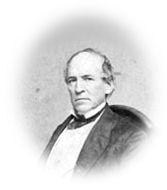
MONDAY, APRIL 22, 1861.

Another delightful day, but no troops yet. We are in a beleaguered City with enimies on every side and and [sic] at our doors. The ratling of musquetry and the booming of cannon may startle us any moment. Many have left the City, but all communication with the North is now cut off. No NY mail since friday last. Myself and family are [sic] have concluded to stay and see it out for the present at least. The Govt is now taking very decided measures to protect the City and thwart the designs of the enimy. Was at the office all day, took the “strong oath” required at the department.

______

The three diary manuscript volumes, Washington during the Civil War: The Diary of Horatio Nelson Taft, 1861-1865, are available online at The Library of  Congress.

April 22d.—Arranging my photograph book. On the first page, Colonel Watts. Here goes a sketch of his life; romantic enough, surely: Beaufort Watts; bluest blood; gentleman to the tips of his fingers; chivalry incarnate. He was placed in charge of a large amount of money, in bank bills. The money belonged to the State and he was to deposit it in the bank. On the way he was obliged to stay over one night. He put the roll on a table at his bedside, locked himself in, and slept the sleep of the righteous. Lo, next day when he awaked, the money was gone. Well! all who knew him believed him innocent, of course. He searched and they searched, high and low, but to no purpose. The money had vanished. It was a damaging story, in spite of his previous character, and a cloud rested on him.

Years afterward the house in which he had taken that disastrous sleep was pulled down. In the wall, behind the wainscot, was found his pile of money. How the rats got it through so narrow a crack it seemed hard to realize. Like the hole mentioned by Mercutio, it was not as deep as a well nor as wide as a church door, but it did for Beaufort Watts until the money was found. Suppose that house had been burned, or the rats had gnawed up the bills past recognition?

People in power understood how this proud man suffered those many years in silence. Many men looked askance at him. The country tried to repair the work of blasting the man’s character. He was made Secretary of Legation to Russia, and was afterward our Consul at Santa Fe de Bogota. When he was too old to wander far afield, they made him Secretary to all the Governors of South Carolina in regular succession.

I knew him more than twenty years ago as Secretary to the Governor. He was a made-up old battered dandy, the soul of honor. His eccentricities were all humored. Misfortune had made him sacred. He stood hat in hand before ladies and bowed as I suppose Sir Charles Grandison might have done. It was hard not to laugh at the purple and green shades of his overblack hair. He came at one time to show me the sword presented to Colonel Shelton for killing the only Indian who was killed in the Seminole war. We bagged Osceola and Micanopy under a flag of truce—that is, they were snared, not shot on the wing.

To go back to my knight-errant: he knelt, handed me the sword, and then kissed my hand. I was barely sixteen and did not know how to behave under the circumstances. He said, leaning on the sword, “My dear child, learn that it is a much greater liberty to shake hands with a lady than to kiss her hand. I have kissed the Empress of Russia’s hand and she did not make faces at me.” He looks now just as he did then. He is in uniform, covered with epaulettes, aigulettes, etc., shining in the sun, and with his plumed hat reins up his war-steed and bows low as ever.

Now I will bid farewell for a while as Othello did to all the “pomp, pride, and circumstance of glorious war,” and come down to my domestic strifes and troubles. I have a sort of volunteer maid, the daughter of my husband’s nurse, dear old Betsy. She waits on me because she so pleases. Besides, I pay her. She belongs to my father-inlaw, who has too many slaves to care very much about their way of life. So Maria Whitaker came, all in tears. She brushes hair delightfully, and as she stood at my back I could see her face in the glass. “Maria, are you crying because all this war talk scares you?” said I. “No, ma ‘am.” “What is the matter with you?” “Nothing more than common.” “Now listen. Let the war end either way and you will be free. We will have to free you before we get out of this thing. Won’t you be glad?” “Everybody knows Mars Jeems wants us free, and it is only old Marster holds hard. He ain’t going to free anybody any way, you see.”

And then came the story of her troubles. “Now, Miss Mary, you see me married to Jeems Whitaker yourself. I was a good and faithful wife to him, and we were comfortable every way—good house, everything. He had no cause of complaint, but he has left me.” “For heaven’s sake! Why?” “Because I had twins. He says they are not his because nobody named Whitaker ever had twins.”

Maria is proud in her way, and the behavior of this bad husband has nearly mortified her to death. She has had three children in two years. No wonder the man was frightened. But then Maria does not depend on him for anything. She was inconsolable, and I could find nothing better to say than, “Come, now, Maria! Never mind, your old Missis and Marster are so good to you. Now let us look up something for the twins.” The twins are named “John and Jeems,” the latter for her false loon of a husband. Maria is one of the good colored women. She deserved a better fate in her honest matrimonial attempt. But they do say she has a trying temper. Jeems was tried, and he failed to stand the trial.

(Tuesday, April 23rd)

On Tuesday morning we came to an anchor, and were told the ship was off the Naval Academy at Annapolis, on the Chesapeake Bay. Our experience the past two days has been most unpleasant. The ship is outrageously crowded from deck to keelson; towards evening of the first day out the wind began to blow, increasing until midnight, when it blew a gale and rain fell in torrents. Those of us who were quartered on deck got promptly soaked through, and as a rule were horribly seasick, with no conveniences, and packed literally like sardines in a box; the state of affairs may readily be imagined by one who has been to sea, but it is difficult to describe. Seasickness is a dreadful leveler of rank and destroyer of the ordinary amenities of life; every one is indifferent to the wants of others and utterly without sympathy. There were a few facetious fellows, too gross to feel the effects of the rolling of the ship themselves, who took a fiendish delight in dangling pieces of fat pork from the end of a string in the faces of those less gross, and this little pleasantry usually succeeded in producing the desired effect. There were many of us who wished more than once that we had never been born.

At 5 P. M. the first day out we fell in for dinner, struggled up to the galley, and there received a chunk of salt pork and large slice of bread, which we ate standing, bread in one hand, meat in the other. My piece of meat had a large bone in it, and smelt so badly that I threw it overboard to the fishes, and ate the bread alone. As the wind was freshening every minute, and the ship beginning to roll suspiciously, my appetite was not of the best, and later on entirely disappeared. Monday the wind went down and it stopped raining, but we did not get dried out, and as we had no shelter, were much the worse for want of sleep. There is not much romance about this, certainly, but we are beginning to get experience.

This morning, Tuesday, we found ourselves in company with five other vessels, all packed with troops similar to our own, convoyed by a small cutter called the Harriet Lane, a handsome craft carrying a couple of guns, and regular man-of-war crew. She is ready for action and looks quite warlike. Abut nine o’clock we anchored, rations were issued, including hot coffee, the band shook themselves together and played some stirring airs, and as the sun came out just about this time, we soon forgot our little troubles and became thoroughly interested in the magnificent view around us. The bay was smooth as glass, all the ships were gay with bunting, and crowds of armed men were mustering on every deck, while their bands were playing, sending their martial strains far over the silvery surface of the placid waters. Surely this is a small but beautiful picture of glorious war that we have dreamed of so much. Some time afterwards a tug boat came puffing along, and reported to the officer commanding the Lane that the rebels were reported in force ashore, intending to dispute our landing. In consequence the Lane steamed in towards shore, guns shotted and run out; when she got pretty close she lowered boats, armed with howitzers and marines, and sent them in to land and reconnoiter the town. We knew Maryland was a questionable state, being about evenly divided in its sympathies, and, consequently, were greatly interested in the outcome of the present affair. If they proved friendly, our chances would be greatly improved; on the contrary, if they opposed our landing, the capital might be in serious danger. After a good deal of delay and manœuvering, the boat’s crews landed, finding nobody to oppose them. This was signaled to the Lane, when our ship was immediately ordered to weigh anchor, go in and disembark the regiment. We got aground, and were transferred to the steamer Boston, and then landed at the Naval Academy docks. The Academy we found deserted, the students scattered, and only a few men in charge. We stacked arms, broke ranks, and received rations, coffee, meat (the same old salt pork), and bread, but we did not confine ourselves to this diet; the grounds swarmed with negroes, men and women, who had for sale, in abundance, eggs, pies, butter, and milk; we soon bought them out, and for the first time since leaving home fared sumptuously. We appreciated it immensely, not yet being used to hard living and roughing it, and miss our regular meals prodigiously.

There were no white persons in the camp, nor any white men in town; all had disappeared, the negroes say, to join the rebel army. We remained overnight for want of transportation for the quartermaster’s department, and were quartered in some of the many class-rooms. We heard various rumors about the doings of the rebels in this neighborhood, and since dark have seen many blue lights and rockets in the air, no doubt signals to warn their friends of our arrival; we conclude rail traffic between here and Washington is destroyed, from the reports of the negroes, and that we shall have to march, instead of going by train, as was expected; and possibly have to fight, if, as is reported, some organized rebel troops are in the neighborhood. Marching in the condition we are in, loaded down with satchels, bundles, etc., is going to be very tiresome. It is nearly thirty miles to the junction, the place we must reach before we can go by rail.

WILMINGTON, N. C., April 22, 1861.

Brigadier-General REAUREGARD
………………..Commanding Provisional Army, Charleston, S. C.

MY DEAR GENERAL: I find myself installed here in command of the defenses of Cape Fear; to be sure, by commission from the governor, but in a babel of confusion, to which Morris Island and Charleston Harbor were child’s play. Without having had the advantage of you for my exemplar during the past six trying weeks, I would be utterly at a loss. The worst is I have nothing to work with. Can you not cause to be sent me a few hundred fuses for the 8-inch shells? We have shells enough here at the railroad depot; also, some boxes of friction tubes with lanyards. Besides, I desire very much the sponge staves and various implements belonging to the guns you have lent us. This would be a great favor.

I have started all the ladies to making cartridge bags and sand bags, and that keeps their little hearts quiet. I want Gomez to send me drawings of the columbiad platform and carriage, and of the 32 and 24 pounder carriage barbette. Please to examine whether it is possible to spare us one hundred pounds of 24-grape. We have the arsenal to-clay. Would Allston (Ben.) come over here with me? My kindest regards to all.

……………Very truly, yours,

W. H. C. WHITING.

P. S.—I try to be as cool and patient as you are, but it is awful hard work. They are military in South Carolina. Here they are willing enough, but the military has yet to grow.


HEADQUARTERS DEPARTMENT OF FLORIDA,
Fort Pickens, April 22, 1861.

Lieut. Col. E. D. KEYES, Secretary to the General-in-Chief, Washington, D.C.:

COLONEL: I wrote you on the 19th, detailing my proceedings to that time. Having sent my dispatches by a sailing vessel, I herewith inclose duplicates.

Since my last the weather has been generally favorable, and we have been busily employed in putting the fort in a condition of defense, and in landing provisions and other stores. I have made quite as good progress as I could have expected. The steamship Atlantic will be discharged to-day, when I shall send her to New York. The Illinois arrived yesterday, and landed Brooks’ and Allen’s companies, Second Artillery, and a detachment of recruits, so that I have now at this post nine full companies; aggregate about eight hundred and sixty men. I have also sent to Key West for the two infantry companies there. My present command is more than sufficient to repel any assault that may be made on the fort, but the holding the western portion of this island and preventing the rebels making a lodgment on it is of vital importance, and to do so effectually a larger force than I now have is required. If the assistance of the ships could always be insured, my present force might perhaps suffice, but they are constantly liable to be blown off, and may be so for several days, of which an enterprising and numerous enemy might and probably would avail himself. The presence of a large force here also prevents the secessionists from weakening their force, and thus prevents diversion to other places where their presence would be more unwelcome. I propose, as soon as I can put the fort in a defensive state, to throw up field works. No. 1, about one and a half miles from the fort, to be garrisoned by Barry’s battery and two foot companies; No. 2, about the same distance in advance, to be defended by two or three foot companies, leaving five or six for the garrison of the fort. I shall then strongly urge on Captain Adams, commanding the naval forces, the necessity of keeping his ships, or at least two of them, so close to the shore as to be able to rake the island. I have already so requested, and it has been in part complied with, but great reluctance is felt in placing sailing ships so near the shore. It gives me pleasure to state that I have received from the Navy very valuable assistance, which has been cheerfully and cordially rendered.

The work in the fort is progressing rapidly under the supervision of Major Tower and Captain Vogdes. Having now established something like system, I hope very soon to have it in fighting order. Guns are now being mounted, and traverses for the protection of the works and men being made; but there is an immense work to do. Our prospects are daily brightening, and I hope very soon to be in a situation to act both offensively and defensively. My command is in excellent health, and the men cheerful and in fine spirits. With such officers and such men I have nothing to fear from any number of rebels. Although most of my stores have been landed in full view and within range of the guns of Fort McRee, yet no hostile demonstration has been made; all has been quiet. I cannot at all account for their not taking possession of the island during the term of Lieutenant Slemmer’s command, its importance being so great and so evident; nor can I account for their abstaining to take the fort, their number rendering its success almost certain, unless from a reluctance on their part to commence hostilities, or their not being prepared for it. I think their present peaceful attitude arises from a consciousness of our ability to greatly distress them by destroying the navy-yard and by closing the port, while they can only hope to do us partial injury by a long and fruitless bombardment.

I am, sir, very respectfully, your obedient servant,

HARVEY BROWN,
Colonel, Commanding.

—–

HEADQUARTERS DEPARTMENT OF FLORIDA,
Fort Pickens, April 22, 1861.

Lieut. Col. E. D. KEYES, Secretary to the General-in-Chief, Washington, D.C.:

COLONEL: Since writing my dispatches, I have seen newspaper extracts announcing the secession of Virginia, the taking Fort Sumter and Gosport navy-yard. Should this news be true the security of Key West and Tortugas might be jeopardized. I have therefore countermanded my order for bringing two companies from Key West here, and I shall urge Captain Adams to keep a ship at Tortugas and one at Key West, in position to protect the works at these places.

I am, colonel, very respectfully, your obedient servant,

HARVEY BROWN,
Colonel, Commanding.

—–

U. S. TROOP-SHIP ATLANTIC, SANTA ROSA,
April 22, 1861.

Col. H. BROWN, Commanding Military Department of Florida, Fort Pickens :

DEAR SIR: If the news sent to Major Hunt by Colonel Bragg be correct as reported to me by Captain Porter, it becomes necessary to look for means to guard your communications and the most important posts of Key West and Tortugas against a naval enterprise. If the State of Virginia has really rebelled, and surprised the Gosport navy-yard, she has some good vessels, and she will very soon have officers to fight them, as Virginians will follow the fortunes of their native State. I do not think, then, that the two companies ordered up from Key West should now be withdrawn from that place. I think that the Sabine and St. Louis, useless here, should go, one to Key West and one to Tortugas, and be moored in position to aid in the occupation and defense  of these harbors. The letter of the President of 1st April, which you bear, and which Captain Adams has seen, gives you full and ample authority to call upon him to make this disposition of his ships.

The expedition under your command embraces the coast and islands of Florida in its scope, and your attention was particularly called to the “even greater importance” of Forts Taylor and Jefferson than of Fort Pickens. The value of all these posts is greatly increased if the news referred to be correct. I would call upon Captain Adams, in virtue of the authority in you vested by the President, to “co-operate” by sending these ships to Key West and Tortugas. The Crusader will be very useful here, the sailing ships there. Here you need steamers, and sailing ships, except as depots, are useless. From his present position it would take Captain Adams half a day in good weather to bring his guns into play, and in bad weather he could not move at all.

The team road should be extended up the island to the landing. The sailors are hard worked and should be spared rowing. The plank between the gate and dock would make the road. Now less than ever would I put this precious material on the Atlantic and Illinois at peril of destruction by a rough, drunken volunteer’s shot. If one of these ships is struck by such a shot, apologies will not restore her. Too little work was done yesterday on ship and shore.

I inclose a copy of your letter of the 17th instant to me, which I handed to Captain Porter indorsed, as you will see. By this I succeeded in stopping him.

I am, very truly and respectfully, your obedient servant,

M. C. MEIGS,
Captain, Engineers, Chief Engineer.

P. S.–This ship, if properly supplied with boats, can sail by 1 p.m. to-day.

—–

HEADQUARTERS DEPARTMENT OF FLORIDA,
Fort Pickens, Fla., April
22, 1861.

Bvt. Maj. L. G. ARNOLD,
Commanding Fort Jefferson, Tortugas:

MAJOR: News has been received here that Virginia has seceded and Gosport navy-yard taken. If so, several large ships have fallen into the hands of the secessionists, and your post may be jeopardized. I shall try to get a ship stationed near to support you, but every effort must be made to strengthen your position as much as possible. Mount all the guns you can, and keep your whole force at work until all is finished that your means may permit.

I am, sir, very respectfully, your obedient servant,

HARVEY BROWN,
Colonel, Commanding.

—–

HEADQUARTERS DEPARTMENT OF FLORIDA,
Fort Pickens, Fla., April 22, 1861.

Bvt. Maj. L. G. ARNOLD,
Commanding Fort Jefferson:

MAJOR: At my request Captain Adams, commanding the naval forces at this place, has ordered the ship St. Louis to be stationed off your fort in such a manner as to give you necessary aid and protection. He is  also required to render you assistance in any manner that you may require, consistently with the safety of his vessel.

I am, sir, very respectfully, your obedient servant,

HARVEY BROWN,
Colonel, Commanding.

April 22nd.— Early a few mornings since, I called on Gov. Wise, and informed him that Lincoln had called out 70,000 men. He opened his eyes very widely and said, emphatically, “I don’t believe it.” The greatest statesmen of the South have no conception of the real purposes of the men now in power in the United States. They cannot be made to believe that the Government at Washington are going to wage war immediately. But when I placed the President’s proclamation in his hand, he read it with deep emotion, and uttered a fierce “Hah!” Nevertheless, when I told him that these 70,000 were designed to be merely the videttes and outposts of an army of 700,000, he was quite incredulous. He had not witnessed the Wide-Awake gatherings the preceding fall, as I had done, and listened to the pledges they made to subjugate the South, free the negroes, and hang Gov. Wise. I next told him they would blockade our ports, and endeavor to cut off our supplies. To this he uttered a most positive negative. He said it would be contrary to the laws of nations, as had been decided often in the Courts of Admiralty, and would be moreover a violation of the Constitution. Of course I admitted all this; but maintained that such was the intention of the Washington Cabinet. Laws and Courts and Constitutions would not be impediments in the way of Yankees resolved upon our subjugation. Presuming upon their superior numbers, and under the pretext of saving the Union and annihilating slavery, they would invade us like the army-worm, which enters the green fields in countless numbers. The real object was to enjoy our soil and climate by means of confiscation. He poohed me into silence with an indignant frown. He had no idea that the Yankees would dare to enter upon such enterprises in the face of an enlightened world. But I know them better. And it will be found that they will learn how to fight, and will not be afraid to fight.

MONTGOMERY, April 22, 1861.

Gov. J. W. ELLIS, Raleigh, N. C.

SIR : Your patriotic response to the requisition of the President of the United States for troops to coerce the Confederate States justifies the belief that your people are prepared to unite with us in repelling the common enemy of the South.

Virginia needs our aid. I therefore request you to furnish one regiment of infantry without delay to rendezvous at Richmond, Va. It must consist of ten companies, of not less than sixty-four men each.

L. P. WALKER,
Secretary of War.

—Several delegations of citizens of Maryland waited upon President Lincoln, to endeavor to procure some countermand of the order for troops to march to Washington. One delegation of thirty, from five “Young Men’s Christian Associations” of Baltimore, had a prolonged interview, but made no impression upon him.—N. Y. Times, April 25.

—Gov. Hicks presented to the President a communication again urging the withdrawal of troops from Maryland, a cessation of hostilities, and a reference of the national dispute to the arbitrament of Lord Lyons. To this the Secretary of State replied, that the troops were only called out to suppress insurrection, and must come through Maryland, as that was the route chosen for them by the Commander-in-Chief, and that our troubles could not be “referred to any foreign arbitrament.”—(Doc. 84.)

—A meeting was held in Clarksburg, Harrison county, Virginia. Resolutions were adopted censuring severely the course pursued by Governor Letcher and the Eastern Virginians. Eleven delegates were appointed to meet delegates from other northwestern counties, to meet at Wheeling, May 13th, to determine what course should be pursued in the present emergency. Reports thus far received speak encouragingly of the Union sentiment in Western Virginia.—National Intelligencer, April 29.

—The Twenty-fifth Regiment of New York Militia arrived at New York from Albany. The regiment numbers over five hundred men, and is commanded ‘by Colonel M. K. Bryan.—N. Y. Tribune, April 23.

—A meeting was held at Palace Garden, in New York, for the purpose of organizing a “Home Guard” of men over 45 years. The following Committee was appointed to carry out the objects of the meeting: Major A. M. Bininger, Col. Charles B. Tappen, Col. Burr Wakeman, Samuel Hotaling, Esq., and Judge Edmonds. Upwards of 300 names were enrolled.—N. Y. Tribune, April 25.

—The Baltimore American of this day contains a recapitulation of the killed and wounded during the riot that occurred at Baltimore on the 19th April.—(Doc. 85.)

—An embargo upon “provisions of any kind,” and upon steamboats, was declared by the Mayor and Police Board of Baltimore.—(Doc. 86.)

—The Charleston Mercury of to-day, in an article headed “President Lincoln a Usurper,” concludes that he will “deplore the `higher-law’ depravity which has governed his counsels. Seeking the sword, in spite of all moral or constitutional restraints and obligations, he may perish by the sword. He sleeps already with soldiers at his gate, and the grand reception-room of the White House is converted into quarters for troops from Kansas—border ruffians of Abolitiondom.”

—At Lexington, Ky., between two and three hundred Union men assembled, raised the Stars and Stripes, and expressed their determination to adhere to them to the last. Speeches were made by Messrs. Field, Crittenden, Codey, and others. The most unbounded enthusiasm prevailed, and the speakers were greeted with great applause.—Phila. Inquirer.

—A large and enthusiastic meeting of the residents of Chestnut Hill, Pa., and its vicinity, was held to “counsel together in the present alarming condition of the country, and take some steps to protect it from the assaults of traitors.”—Idem.

—Robt. E. Lee, late of the United States Army, was nominated by the Governor and unanimously confirmed by the Convention as “Commander of the military and naval forces Virginia.”—National Intelligencer, April 27.

—The Charleston Mercury of this day says that “the officers of the army and navy of the Confederate States, and captains sailing under letters of marque, will greatly oblige the proprietors of that paper by furnishing sketches and incidents of the expected conflict between our gallant soldiers and their enemies.

“When supplied exclusively, a liberal compensation will be allowed.”

—The United States Arsenal at Fayetteville, North Carolina, surrendered to the State authorities. It contains a large number of arms.

—Governor Ellis of North Carolina, called for 30,000 volunteers additional to the regular militia, and all the organized corps are under orders to be in readiness at a moment’s notice. —Boston Transcript, April 29.

—Information was received by Gov. Curtin that Lieut. Jennifer, late of the United States Army, stationed at Carlisle Barracks, Pa., had fled from that place. Gov. Curtin, by aid of the telegraph facilities in his possession, succeeded in having him arrested at Hanover, in York County, Pa. It is said that Jennifer has been communicating information to the rebels as to the exact condition of things at Carlisle, and of the movements of Gov. Curtin’s troops.—N. Y. Times, April 23.

—The N. Y. City Common Council passed an ordinance appropriating $1,000,000 for outfit and equipment and for the families of volunteers.

—Several hundred uniforms made for the Southern army were seized at 4 Dey street, N. Y. City.—Idem.

—Gen. Thomas Jones, under instructions received from Governor Rector, seized at Napoleon, Arkansas, a large quantity of Government military supplies, consisting of one hundred and forty thousand ball cartridges, one hundred Maynard rifles, two hundred cavalry saddles, and five hundred sabres.—Memphis Argus, April 25.

—A. H. Stephens, Vice-President of the Southern Confederacy, arrived at Richmond, Va. In the evening he was serenaded, and made a speech, in which he said, that if the Federal Administration made war upon Maryland, the whole South would rally to her aid.—(Doc. 87.)

—A meeting of the Bench and Bar of the city of New York, in view of the present crisis in the history of the country, was held at the Superior Court room, in that city. The judges and ex-judges of the different benches were present, and nearly every law firm in the city had its representative. Judge Daniel P. Ingraham presided; speeches were made, and patriotic resolutions were adopted.—(Doc. 88.)

—In the evening a large meeting of the citizens of Westchester, N. Y., was held in Morrisania.—N. Y. Tribune, April 23.

—Father Rafina, priest of the Montrose Avenue Catholic church, Williamsburg, N. Y., with his own hands raised the American flag upon the top of his church. The ceremony was witnessed by at least two thousand people, who greeted the glorious emblem with cheer after cheer as it waved majestically over the sacred edifice. The reverend father addressed the assemblage in a few appropriate remarks, which were received with marked enthusiasm.—Idem.

—Union meetings were held at Geneva and Adams, N. Y. At Geneva, speeches were made by Judge Folger and others, and a large sum of money was subscribed and guaranteed for the families of the volunteers. At Adams the utmost enthusiasm prevailed.—Albany Journal, April 24.

—The New York Seventh Regiment arrived at Annapolis, Md., and were joined there by the Eighth Massachusetts Regiment, with Gen. Butler in command.

An attack upon the School-ship Constitution was anticipated in Annapolis, and she was drawn out of the harbor.—N. Y.  Times, April 25.

—Secretary Cameron, in an official letter, conveyed the thanks of the Federal Government to Major Anderson for his conduct at Fort Sumter, as follows

War Department,
Washington, April 22, 1861.

Major Robert Anderson, late Commanding Officer of Fort Sumpter:
My Dear Sir: I am directed by the President of the United States to communicate to you, and through you to the officers and men under your command at Forts Moultrie and Sumter, the approbation of the Government of your and their judicious and gallant conduct there; and to tender to you and them the thanks of the Government for the same.

I am, very respectfully,
………..Simon Cameron,
……………Secretary of War.

National Intelligencer, April 24.