Following the American Civil War Sesquicentennial with day by day writings of the time, currently 1863.

April 2011

HEADQUARTERS U. S. TRANSPORT SHIP ATLANTIC,
April 11, 1861.

Lieut. J. ST. C. MORTON,  Fort Jefferson, Tortugas:

SIR: You will act in concert with Major Arnold, commanding the harbor of the Tortugas, in preparing with the least possible delay projects for the complete temporary defense and occupation of the whole harbor of the Tortugas. The orders issued to Major Arnold, which he will exhibit to you, will impress you of the general project. Requisitions have been made upon the Ordnance Department for twenty to twenty-four heavy guns with barbette carriages and platforms of timber for these batteries. If these arrive they will be used. If ships arrive before them, the guns from the ships will be landed for this use, to be replaced by the Army pieces when received.

Orders have been issued to the commander of Fort Taylor to clear the brush and timber from a certain portion of the island of Key West. This brushwood will be used to make fascines, and will be transferred to the Tortugas upon requisition.

Relying upon your resources, energy, and intelligence for official professional aid in this matter,

I am, respectfully, your obedient servant,

HARVEY BROWN,
Colonel, Commanding.

—The steamship Coatzacoalcos arrived at New York this morning, bringing home the Federal troops who were left in Texas without a commander, after the treason of General Twiggs.

—The Government at Washington is acting on positive information in taking all possible precautionary measures for the defence of, and the maintenance of peace at, that point.

A company of military were marched inside the capitol to-night, and a picket of guards is stationed on each of the roads leading into the city. This was done on no new information, but is among the signs of the revolution. A military company has not been within the walls of the capitol before since the war of 1812.

The oath of fidelity was administered to several companies of volunteers to-day.— World, April 12.

—Unusual activity now prevails in military circles in Pennsylvania. New companies are forming, and the old organizations are drilling frequently. The prospect of active service in the event of the breaking out of actual hostilities in the South, is exciting much discussion among the volunteer companies, and it is understood that several have already tendered their services to the Secretary of War, in case the Government should need their aid. It is also understood that in the event of an attack on the Government, the latter will make an early call upon Pennsylvania for men. Our volunteers labor under great disadvantages in respect to arms, and in a case of emergency many more men would be forthcoming than there are arms to place in their hands.—Phila. Press.

—This morning the Commissioners of the Confederate States left Washington. They are satisfied that no recognition of the Southern Confederacy will ever take place under the administration of President Lincoln. In their final communication they reflect severely on the Administration, taking the ground they have exhausted every resource for a peaceful solution of the existing difficulties, and that if civil war results, on the head of the Federal Government will rest the responsibility. They charge the Administration with gross perfidy, insisting that under the shelter of the pretext and assertion that Fort Sumter was to be evacuated, an immense armada has been despatched to provision and reinforce that fort. They repeat they had almost daily indirect assurances from the Administration that Fort Sumter was positively to be abandoned, and that all the Government’s efforts were to be directed toward peace. The commissioners allege that the Government at Montgomery was earnestly desirous of peace; and that, in accordance with its instructions, as well as their own feelings, they left no means unexhansted to secure that much-desired end; but all their efforts having failed, they were now forced to return to an outraged people with the object of their mission unaccomplished; and they express the firm conviction that war is inevitable.—(Doc. 51.)—World, April 12.

—At 2 P. M. Colonel Chesnut and Major Lee, aids to General Beauregard, conveyed to Fort Sumter the demand that Major Anderson should evacuate that fort. Major Anderson replied at 6 P. M. that his “sense of honor and his obligations to his Government would prevent his compliance” with the demand. He informed the gentlemen verbally that he would be “starved out in a few days.”

It was stated that there were at this time 7,000 men around Fort Sumter under arms, and 140 pieces of ordnance of heavy calibre in position and ready for use.—Charleston Mercury.

HEADQUARTERS U. S. TRANSPORT SHIP ATLANTIC,
April 11, 1861.

Capt. E. B. HUNT, U. S. Engineers, Fort Taylor:

SIR: You will make a reconnaissance of the island of Key West with a view to the erection of any field-works which may be required to enable the garrison of Fort Taylor and of the town of Key West to prevent a hostile landing. In making this project you will consult with the commander of the forces in the island, and call upon him for any necessary assistance. The project, when complete, should be submitted to headquarters of the Department of Florida for further orders. You will, for fear of accident, make it in duplicate, retaining one copy and forwarding the other to said headquarters.

I am, sir, very respectfully, your obedient servant,

HARVEY BROWN,
Colonel, Commanding.

April 10th.—To-day I devoted to packing up such things as I did not require, and sending them to New York. I received a characteristic note from General Scott, asking me to dine with him to-morrow, and apologizing for the shortness of his invitation, which arose from his only having just heard that I was about to leave so soon for the South. The General is much admired by his countrymen, though they do not spare some “amiable weaknesses;” but, in my mind, he can only be accused of a little vanity, which is often found in characters of the highest standard. He likes to display his reading, and is troubled with a desire to indulge in fine writing. Some time ago he wrote a long letter to the “National Intelligencer,” in which he quoted Shakespeare and Paley to prove that President Buchanan ought to have garrisoned the forts at Charleston and Pensacola, as he advised him to do; and he has been the victim of poetic aspirations. The General’s dinner hour was early; and when I arrived at his modest lodgings, which, however, were in the house of a famous French cook, I found a troop of mounted volunteers of the district, parading up and down the street. They were not bad of their class, and the horses, though light, were active, hardy, and spirited; but the men put on their uniforms badly, wore long hair, their coats and buttons and boots were unbrushed, and the horses’ coats and accoutrements bore evidence of neglect. The General, who wore an undress blue frock-coat, with eagle-covered brass buttons, and velvet collar and cuffs, was with Mr. Seward and Mr. Bates, the Attorney-General, and received me very courteously. He was interrupted by cheering from the soldiers in the street, and by clamors for “General Scott.” He moves with difficulty, owing to a fall from his horse, and from the pressure of increasing years; and he evidently would not have gone out if he could have avoided it. But there is no privacy for public men in America.

Out the General went to them, and addressed a few words to his audience in the usual style about “rallying round,” and “dying gloriously,” and “old flag of our country,” and all that kind of thing; after which, the band struck up “Yankee Doodle.” Mr. Seward called out “General, make them play the ‘Star- Spangled Banner,’ and ‘Hail Columbia.'” And so I was treated to the strains of the old bacchanalian chant, “When Bibo,” &c, which the Americans have impressed to do duty as a national air. Then came an attempt to play “God save the Queen,” which I duly appreciated as a compliment; and then followed dinner, which did credit to the cook, and wine, which was most excellent, from France, Spain, and Madeira. The only addition to our party was Major Cullum, aide-de-camp to General Scott, an United States’ engineer, educated at West Point. The General underwent a little badinage about the phrase “a hasty plate of soup,” which he used in one of his despatches during the Mexican War, and he appealed to me to decide whether it was so erroneous or ridiculous as Mr. Seward insisted. I said I was not a judge, but certainly similar liberal usage of a well-known figure of prosody might be found to justify the phrase. The only attendants at table were the General’s English valet and a colored servant; and the table apparatus which bore such good things was simple and unpretending. Of course the conversation was of a general character, and the General, evidently picking out his words with great precision, took the lead in it, telling anecdotes of great length, graced now and then with episodes, and fortified by such episodes as— “Bear with me, dear sir, for a while, that I may here diverge from the main current of my story, and proceed to mention a curious” &c., and so on.

To me his conversation was very interesting, particularly that portion which referred to his part in the last war, where he was wounded and taken prisoner. He gave an account of the Battle of Chippewa, which was, he said, fought on true scientific principles; and in the ignorance common to most Englishmen of reverses to their arms, I was injudicious enough, when the battle was at its height, and whole masses of men were moving in battalions and columns over the table, to ask how many were engaged. The General made the most of his side: “We had, sir, twenty-one hundred and seventy-five men in the field.” He told us how, when the British men-of-war provoked general indignation” in Virginia by searching American vessels for deserters in the Chesapeake, the State of Virginia organized a volunteer force to guard the shores, and, above all things, to prevent the country people sending down supplies to the vessels, in pursuance of the orders of the Legislature and Governor. Young Scott, then reading for the bar, became corporal of a troop of these patrols. One night, as they were on duty by the banks of the Potomac, they heard a boat with muffled oars coming rapidly down the river, and soon saw her approaching quite close to the shore under cover of the trees. When she was abreast of the troopers, Scott challenged “What boat is that?”

“It’s His Majesty’s ship ‘Leopard’ and what the d— is that to you? Give way, my lads!” “I at once called on him to surrender,” said the General, “and giving the word to charge, we dashed into the water. Fortunately, it was not deep, and the midshipman in charge, taken by surprise by a superior force, did not attempt to resist us. We found the boat manned by four sailors, and filled with vegetables and other supplies, and took possession of it; and I believe it is the first instance of a man-of-war’s boat being captured by cavalry. The Legislature of Virginia, however, did not approve of the capture, and the officer was given up accordingly.

“Many years afterwards, when I visited Europe, I happened to be dining at the hospitable mansion of Lord Holland, and observed during the banquet that a gentleman at table was scrutinizing my countenance in a manner indicative of some special curiosity. Several times, as my eye wandered in his direction, I perceived that he had been continuing his investigations, and at length I rebuked him by a continuous glance. After dinner, this gentleman came round to me and said, ‘General Scott, I hope you will pardon my rudeness in staring at you, but the fact is that you bear a most remarkable resemblance to a great overgrown, clumsy, country fellow of the same name, who took me prisoner in my boat when I was a midshipman in the “Chesapeake,” at the head of a body of mounted men. He was, I remember quite well, Corporal Scott.’ ‘That Corporal Scott, sir, and the individual who addresses you, are identical one with the other.’ The officer whose acquaintance I thus so auspiciously renewed, was Captain Fox, a relation of Lord Holland, and a post-captain in the British navy.”

Whilst he was speaking, a telegraphic dispatch was brought in, which the General perused with evident uneasiness. He apologized to me for reading it by saying the dispatch was from the President on Cabinet business, and then handed it across the table to Mr. Seward. The Secretary read it, and became a little agitated, and raised his eyes inquiringly to the General’s face, who only shook his head. Then the paper was given to Mr. Bates, who read it, and gave a grunt, as it were, of surprise. The General took back the paper, read it twice over, and then folded it up and put it in his pocket. “You had better not put it there, General,” interposed Mr. Seward; “it will be getting lost, or into some other hands.” And so the General seemed to think, for he immediately threw it into the fire, before which certain bottles of claret were gently mellowing.

The communication was evidently of a very unpleasant character. In order to give the Ministers opportunity for a conference, I asked Major Cullum to accompany me into the garden, and lighted a cigar. As I was walking about in the twilight, I observed two figures at the end of the little enclosure, standing as if in concealment close to the wall. Major Cullum said “The men you see are sentries I have thought it expedient to place there for the protection of the General. The villains might assassinate him, and would do it in a moment if they could. He would not hear of a guard, nor anything of the sort, so, without his knowing it, I have sentries posted all round the house all night.” This was a curious state of things for the commander of the American army, in the midst of a crowded city, the capital of the free and enlightened Republic, to be placed in! On our return to the sitting-room, the conversation was continued some hour, or so longer. I retired with Mr. Seward in his carriage. As we were going up Pennsylvania Avenue—almost lifeless at that time—I asked Mr. Seward whether he felt quite secure against any irruption from Virginia, as it was reported that one Ben McCullough, the famous Texan desperado, had assembled 500 men at Richmond for some daring enterprise: some said to carry off the President, cabinet, and all. He replied that, although the capital was almost defenseless, it must be remembered that the bold bad men who were their enemies were equally unprepared for active measures of aggression.

April 10.–Every one, by order of the commanding officer, Major Anderson, changed his quarters into the gun casemates to-day. The work on the traverse progressed well. Lieut. R. K. Meade, Engineers, being placed on ordnance duty, found the supply of cartridges on hand to be too small, and took immediate measures to increase the supply by cutting up all the surplus blankets and extra company clothing to make cartridge bags. The curb for the traverse at the right shoulder angle was completed and put together on the terre-plein at nightfall, and after dark raised up on the parapet and filled with earth, which had been hoisted from the parade. The working party, under Lieutenant Snyder, increased by a large detail from the command, completed this work about midnight.

The supply of bread failed to-day, and its absence was supplied by rice obtained by picking over some damaged rice, which, while spread out to dry in one of the quarters, had been filled with pieces of glass from the window-panes shattered by the concussion of guns fired in practice.

A second battery was unmasked to-day on Sullivan’s Island, nearer the western point of the island than the one last discovered. It is of one gun, and very heavy–evidently a 9-inch Dahlgren gun, or a 10-inch columbiad.

The enemy’s steamers were very active at night, but no alarm occurred.

WEDNESDAY, APRIL 10, 1861.

Rain again until noon. It has rained all the time since Sunday morning, and the water in the Potomac is higher than it has been before in some years. The District Militia were all out on parade and eight Companies entered the service of the U.S. upon requisition of the Secy of War for the Protection of the City. The guards are doubled at all the Public Buildings, and Military companies were on duty all last night. Exciting rumors from the South & exciting news expected. Was on the Ave, at the Hotels, much excitement.

______

The three diary manuscript volumes, Washington during the Civil War: The Diary of Horatio Nelson Taft, 1861-1865, are available online at The Library of  Congress.

April 10th.—Making an early start this morning, I once more arrived at Washington City. I saw no evidences of a military force in the city, and supposed the little army to be encamped at the west end of the Avenue, guarding the Executive Mansion.

We took an omnibus without delay and proceeded to the steamer. As soon as we left the shore, I fancied I saw many of the passengers breathing easier and more deeply. Certainly there was more vivacity, since we were relieved of the presence of Republicans. And at the breakfast table there was a freer flow of speech, and a very decided manifestation of secession proclivities.

Among the passengers was Major Holmes, who had just resigned his commission in the U. S. army. He had been ordered to proceed with the expedition against Charleston; but declined the honor of fighting against his native land. The major is a little deaf, but has an intellectual face, the predominant expression indicating the discretion and prudence so necessary for success in a large field of operations. In reply to a question concerning the military qualities of Beauregard and Bragg, he said they were the flower of the young officers of the U. S. army. The first had great genius, and was perhaps the most dashing and brilliant officer in the country; the other, more sedate, nevertheless possessed military capacities of a very high order. President Davis, in his opinion, had made most excellent selections in the appointment of his first generals. The major, however, was very sad at the prospect before us; and regarded the tenders of pecuniary aid to the U. S. by the Wall Street capitalists as ominous of a desperate, if not a prolonged struggle. At this time the major’s own State, North Carolina, like Virginia, Tennessee, Kentucky, Arkansas, and Missouri, yet remains in the Union.

We were delayed several hours at Aquia Creek, awaiting the arrival of the cars, which were detained in consequence of a great storm and flood that had occurred the night before.

CINCINNATI, April 10, 1861.

DEAR UNCLE:—You spoke too late. I am again settled in a respectable practice. I tried a case today and shall try another tomorrow. Mr. Hassaurek, the German who gets the highest office, viz., nine thousand feet above the sea at Quito, leaves a good German practice. I have taken it with his half- brother, a bright, gentlemanly, popular young German [Leopold Markbreit]. It will have both advantages and drawbacks, but it was the best that offered, and not getting a letter from you, I left the solicitor’s office yesterday and entered my new quarters at once. I enclose my card for the German side of the house. I feel free and jolly.

Sincerely,

R. B. HAYES.

S. BIRCHARD.

—The floating battery, finished, mounted, and manned at Charleston, was taken out of the dock last evening, and anchored in the cove, near Sullivan’s Island.

The people are not excited, but there is a fixed determination to meet the issue. The Convention has just adjourned, subject to the call of the president. Before adjourning, it passed resolutions approving the conduct of General Twiggs in resigning his commission and turning over the public property under his control to the authorities.

Governor Pickens was in secret session with the Convention. About 1,000 troops were sent to the fortifications to-day; 1,800 more go down to-morrow.

Messrs. Wigfall, Chesnut, Means, Manning, McGowan, and Boyleston, have received appointments in General Beauregard’s staff. A large number of the members of the Convention, after adjournment, volunteered as privates. About 7,000 troops are now at the fortifications. The beginning of the end is coming to a final closing. Fort Sumter will be attacked without waiting for the fleet. Every thing is prepared against a land attack. The enthusiasm is intense, and the eagerness for the conflict, if it must come, unbounded.—N. Y. Day Book.

—The officers of the District of Columbia militia were ordered to meet at 10 o’clock A. M., in consequence of information relative to a contemplated movement for the seizure of the city of Washington by the secessionists under Ben McCullough. Orders were issued for the militia to assemble at their armories.

Seven militia companies reported to General Scott, and between six and eight hundred of them volunteered for any service in which the President might desire them to act.—Times, April 11.

MONTGOMERY, April 10, 1861.

General BEAUREGARD, Charleston:

If you have no doubt of the authorized character of the agent who communicated to you the intention of the Washington Government to supply Fort Sumter by force you will at once demand its evacuation, and if this is refused proceed, in such manner as you may determine, to reduce it. Answer.

L. P. WALKER.

—–

CHARLESTON, April 10, 1861.

L. P. WALKER:

The demand will be made to-morrow at 12 o’clock.

G. T. BEAUREGARD,

Brigadier-General.

—–

MONTGOMERY, April 10, 1861.

General BEAUREGARD, Charleston:

Unless there are special reasons connected with your own condition, it is considered proper that you should make the demand at an earlier hour.

L. P. WALKER.

—–

CHARLESTON, S.C., April 10, 1861.

Hon. L. P. WALKER:

The reasons are special for 12 o’clock.

G. T. BEAUREGARD.

—–

HEADQUARTERS PROVISIONAL FORCES,
Charleston, S.C., April 10, 1861.

Hon. L. P. WALKER, Secretary of War:

SIR: I have the honor to transmit copies of a set of complimentary resolutions, and of a resolution placing all the forces that may be called into service in this State under my orders, passed by the Convention of the State of South Carolina.

I am, sir, very respectfully, your obedient servant.

G. T. BEAUREGARD,

Brigadier-General, Commanding.
P.S.–I am doing all in my power to prevent re-enforcements by barges to Sumter to-night or to-morrow night.

G. T. B.

[Inclosure.]

Resolved, That this Convention approves of the action of the governor, in placing the forces for the military defense of Charleston under the command of General Beauregard, and that he be authorized to call into the field immediately such number of the volunteer regiments, raised under the act of assembly, as General Beauregard may require for the operations under his control; the whole force to be placed under the command of General Beauregard, or such other general officer as may be ordered to the same command by the authorities of the Confederate States of America.

[Adopted Monday, April 8, 1861.]

Resolved, That this Convention, on behalf of the people of this State, repose entire confidence in the eminent professional skill, courage, and sound judgment of Brig. Gen. P. G. T. Beauregard, and in the intelligent and efficient co-operation of the various members of his staff, and other assistants, military and naval, and respectfully tender to them, and to the various forces in the service, and individuals designated, the thanks of the State for their successful efforts thus far, to protect the honor and interests of the State.

Resolved, That if Fort Sumter shall fall into the hands of our present Government, and the harbor of Charleston should be relieved from all hostile occupation or obstruction, although without any actual conflict of arms, such result will be not the less achieved by our forces aforesaid, and their wise and effective operations.

Resolved, That the foregoing resolutions be communicated to General Beauregard, with a request that he extend them to the various regiments, battalions, and separate companies, and to his staff and assistants, in such form and manner as he shall judge expedient.

[Adopted Monday, April 8, 1861.]

—–

MORRIS ISLAND, S.C., April 10, 1861.

Brigadier-General BEAUREGARD,
Commanding, Headquarters Provisional Forces, Charleston, S. C.:

MY DEAR GENERAL: There are two 4-pounder pieces here, with their limbers. There is a caisson in the city. There is also ammunition. These guns are very light, and belong to the Citadel Cadets, who are, I believe, instructed in their use. Put horses to it, and it will make a most excellent addition to our force against a landing. I regard this as very important, and the sooner it is carried out the better.

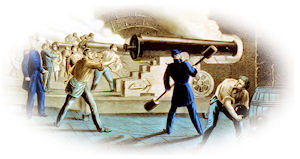
I learned this morning, with surprise, that the Dahlgren had been dismounted at Sullivan’s Island, my countermand of your orders not having been forwarded, as it seems. In this case it must either be sent over here or at once remounted in its former position; the latter is, of course, the quickest. I think Stevens’ iron battery and the two 42s a sufficient fire on the gorge. I send this up by Captain Jones, who returns immediately.

Very respectfully,

W. H. C. WHITING,

Major, Engineers.

—–

STEAMER GORDON,
Off Sumter, S.C., April 10, 1861.

General BEAUREGARD:

DEAR GENERAL: I have had under my charge during the night, in addition to my three steamers, the Charleston. The Seabrook came down about 8 o’clock and received orders, but I knew nothing of her during the night. She did not obey my orders. This morning I saw her anchored away to the southward. The Catawba has been all night in the offing. It is my opinion that Sumter can be relieved, by boats from vessels outside of the bars, on any night as dark as the last, or, if we have to take it, you had better be making a beginning. If a vessel of war is placed off each bar, when Sumter opens I will lose all my steamers, as there will be no escape for me. Therefore, before firing, these steamers should be called in. If the steamers are to guard the entrances, please send them down before dark, that they may be positioned. Yesterday I looked into Bull’s Bay, at Stono, and saw nothing.

Excuse my bad writing, my hands are so cold, and my light is so bad that I can scarcely see. I have ordered the Charleston up.

Respectfully,

H. J. HARTSTENE.

—–

HDQRS. PROVISIONAL ARMY CONFEDERATE STATES.
Charleston, S.C., April 10, 1861.

Maj. W. H. C. WHITING, Engineers, Morris Island, S. C. :

DEAR MAJOR: Your note of this day from the wharf has just been handed to me. I have just ordered Lieutenant-Colonel Ripley to put that Dahlgren gun in position between the wharf and extreme westerly point of Sullivan’s Island, to fire on the landing of the westerly face of Sumter and its postern. I have ordered those two additional 24-pounders to be sent forthwith to Cummings Point. Do the best with them, and caution Colonels Gregg and De Saussure to be on the lookout to-night. To-morrow morning’s sun must see us victorious.

Yours, truly,

G.T. BEAUREGARD,

Brigadier-General, Commanding.
—–

HDQRS. PROVISIONAL ARMY CONFEDERATE STATES,
Charleston, S.C., April 10, 1861.

General R. G. M. DUNOVANT,
Commanding Sullivan’s Island, S.C.:

MY DEAR GENERAL: Please tell Colonel Ripley I have received his letter of this day to Major Jones. I appreciate all the difficulties he refers to, but this is one of those moments when the word impossible must be ignored, for the fate of Anderson and Sumter depends upon the result of this night’s firing. Captain Hartstene and the naval officers are of opinion that the barges can pass our batteries in a dark night, hence we must be prepared to fire on their landing place, which will be the western face and postern of Sumter, not seen by any of our guns. Captain Hartstene is going to light up the entrance of the harbor with floating light-wood fires, and our Drummond lights must be set in active operation as soon as the alarm of “boats are coming” is given. Up to that time they must be kept ready for operations.

Respectfully, your obedient servant,

G. T. BEAUREGARD,

Brigadier-General, Commanding.
—–

HDQRS. PROVISIONAL ARMY CONFEDERATE STATES,
Charleston, S.C., April 10, 1861.

General R. G. M. DUNOVANT, Sullivan’s Island, S.C.:

DEAR GENERAL: From all the information we can receive it is probable that the attempt to relieve and provision Sumter will be made to-night in barges, through, probably, the Swash Channel. I have sent verbal orders to Ripley a moment ago to endeavor to put forthwith that dismounted Dahlgren gun (now on the Sullivan Wharf) in position near the extreme end of said island, and then to construct a hasty parapet in front of it. Its main object is to enfilade the landing of the western face of Sumter, and the postern in that angle, for that is where the disembarkation is going to take place. Will you see at once to the execution of these instructions? Then I wish Captain Hamilton to mark out the best position for his battery, just outside of said western point of Sullivan’s Island, for the same purpose as that already indicated by me for the Dahlgren gun, and to let me know when he will require a steamboat to report to him for that object. He must be careful to put his battery as near the point as practicable, so as to avoid the heavier fire of Sumter.

Respectfully, your obedient servant,

G. T. BEAUREGARD,

Brigadier-General, Commanding.