Following the American Civil War Sesquicentennial with day by day writings of the time, currently 1863.

Thursday, May 5, 2011

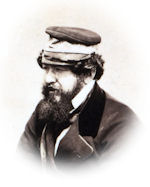
May 5th.—Very warm, and no cold water, unless one went to the river. The hotel baths were not promising; This hotel is worse than Mill’s House or “Willard’s. The feeding and the flies are intolerable. One of our party comes in to say that he could scarce get down to the hall on account of the crowd, and that all the people who passed him had very hard, sharp bones. He remarks thereupon to the clerk at the bar, who tells him that the particular projections he alludes to are implements of defence or offence, as the case may be, and adds, “I suppose you and your friends are the only people in the house who haven’t a bowie-knife, or a six-shooter, or Derringer about them.” The house is full of Confederate Congress men, politicians, colonels, and placemen with or without places, and a vast number of speculators, contractors, and the like, attracted by the embryo government. Among the visitors are many filibusters, such as Henningsen, Pickett, Tochman, Wheat*. [*Since killed in action.] I hear a good deal about the association called the Knights of the Golden Circle, a Protestant association for securing the Gulf provinces and states, including —which has been largely developed by recent events— them in the Southern Confederacy, and creating them into an independent government.

Montgomery has little claims to be called a capital. The streets are very hot, unpleasant, and uninteresting. I have rarely seen a more dull, lifeless place; it looks like a small Russian town in the interior. The names of the shopkeepers indicate German and French origin. I looked in at one or two of the slave magazines, which are not unlike similar establishments in Cairo and Smyrna. A certain degree of freedom is enjoyed by some of the men, who lounge about the doors, and are careless of escape or liberty, knowing too well the difficulties of either.

It is not in its external aspects generally that slavery is so painful. The observer must go with Sterne, and gaze in on the captives’ dungeons through the bars. The condition of a pig in a sty is not, in an animal sense, anything but good. Well fed, over fed, covered from the winds and storms of heaven, with clothing, food, medicine provided, children taken care of, aged relatives and old age itself succored and guarded—is not this ——? Get thee behind us, slave philosopher! The hour comes when the butcher steals to the stye, and the knife leaps from the sheath.

Now there is this one thing in being an ẵvaξ ẵvδpϖv, that be the race of men bad as it may, a kind of grandiose character is given to their leader. The stag which sweeps his rivals from his course is the largest of the herd; but a man who drives the largest drove of sheep is no better than he who drives the smallest. The flock he compels, must consist of human beings to develop the property of which I speak, and so the very superiority of the slave master in the ways and habits of command proves that the negro is a man But, at the same time the law which regulates all these relations between man and his fellows, asserts itself here. The dominant race becomes dependent on some other body of men, less martial, arrogant, and wealthy, for its elegances, luxuries, and necessaries. The poor villeins round the Norman castle forge the armor, make the furniture, and exercise the mechanical arts which the baron and his followers are too ignorant and too proud to pursue; if there is no population to serve this purpose, some energetic race comes in their place, and the Yankee does the part of the little hungry Greek to the Roman patrician.

The South has at present little or no manufactures, takes everything from the Yankee outside or the mean white within her gates, and despises both. Both are reconciled by interest. The one gets a good price for his manufacture and the fruit of his ingenuity from a careless, spendthrift proprietor; the other hopes to be as good as his master some day, and sees the beginning of his fortune in the possession of a negro. It is fortunate for our great British Catherine-wheel, which is continually throwing off light and heat to the remotest parts of the world—I hope not burning down to a dull red cinder in the centre at last—that it had not to send its emigrants to the Southern States, as assuredly the emigration would soon have been checked. The United States has been represented to the British and Irish emigrants by the free States—the Northern States and the great West—and the British and German emigrant who finds himself in the South, has drifted there through the Northern States, and either is a migratory laborer, or hopes to return with a little money to the North and West, if he does not see his way to the possession of land and negroes.

After dinner at the hotel table, which was crowded with officers, and where I met Mr. Howell Cobb and several senators of the new Congress, I spent the evening with Colonel Deas, Quartermaster-General, and a number of his staff, in their quarters. As I was walking over to the house, one of the detached villa-like residences so common in Southern cities, I perceived a crowd of very well-dressed negroes, men and women, in front of a plain brick building which I was informed was their Baptist meeting-house, into which white people rarely or never intrude. These were domestic servants, or persons employed in stores, and their general appearance indicated much comfort and even luxury. I doubted if they all were slaves. One of my companions went up to a young woman in a straw-hat, with bright red-and-green ribbon trimmings and artificial flowers, a gaudy Paisley shawl, and a rainbow-like gown, blown out over her yellow boots by a prodigious crinoline, and asked her “Whom do you belong to?” She replied, “I b’long to Massa Smith, sar.” Well, we have men who “belong” to horses in England. I am not sure if Americans, North and South, do not consider their superiority to all Englishmen so thoroughly established, that they can speak of them as if they were talking of inferior animals. Tonight, for example, a gallant young South Carolinian, one Ransome Calhoun [since killed], was good enough to say that “Great Britain was in mortal fear of France, and was abjectly subdued by her great rival.” Hence came controversy, short and acrimonious.
SUNDAY 5

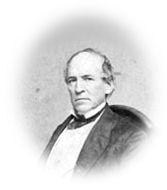
Went to ch this morning with whole family, some soldiers in the congregation in uniform. Cool day, wore my cloak. Chas was up to dine with us. Doct Eddy called in the afternoon with Mr Cramer. He is on a visit to the City, staid an hour or two. Went down to Willards, saw A B Williams, Mr Pomeroy, the new M.C. from our district, and other gentlemen at his room. On my return home, got challenged by the Sentinel at Franklin Square. I did not understand that he was talking to me as it was dark, until he cried Stand, and cocked his Musket. I was very near the point of his Bayonet then, but backed down and went another way home.

______

The three diary manuscript volumes, Washington during the Civil War: The Diary of Horatio Nelson Taft, 1861-1865, are available online at The Library of  Congress.

Cairo, May 5, 1861, Sunday, 11 a.m.

The bells are just ringing for church. I intended going, but it is such hard work getting out of camp that I concluded to postpone it. Anyway, we have service in camp this p.m. This is an awful lazy life we lead here. Lying down on our hay constitutes the principal part of the work. As our routine might be of interest to you, I will give it. At 5 a.m. the reveille is sounded by a drum and fife for each regiment. We arise, fold our blankets in our knapsacks and prepare to march. We then “fall in,” in front of our quarters for roll-call; after which we prepare our breakfast and at the “breakfast call” (taps of the drum at 7) we commence eating; and the way we do eat here would astonish you. At 9 a.m. we fall in for company drill. This lasts one hour. Dinner at 12. Squad drill from 1 to 3 and supper at 5:30. At 6 p.m. the whole regiment is called out for parade. This is merely a review by the colonel, and lasts not more than 30 minutes and often but 15. After 8 p.m. singing and loud noises are stopped; at 9:30 the tattoo is beat when all are required to be in quarters, and at three taps at 10 p.m. all lights are put out, and we leave things to the sentries. Our company of 77 men is divided into six messes for eating. Each mess elects a captain, and he is supreme, as far as cooking and eating are concerned. Our company is considered a crack one here and we have had the post of honor assigned us, the right of the regiment, near the colors. Our commanders, I think, are anticipating some work here, though they keep their own counsels very closely. They have spies out in all directions, down as far as Vicksburg. I think that Bradley’s detective police of Chicago are on duty in this vicinity. We also have two very fleet steamers on duty here to stop boats that refuse to lay to, and to keep a lookout up and down the Mississippi river. Yesterday, p.m., I noticed considerable bustle at headquarters which are in full view of our quarters, and at dark last night 20 cartridges were distributed to each man, and orders given to reload revolvers and to prepare everything for marching at a minute’s notice, and to sleep with our pistols and knives in our belts around us. That’s all we know about it though. We were not aroused except by a shot at about 2 this morning. I heard a little while ago that it was a sentinel shooting at some fellow scouting around. The Rebels have a host of spies in town but I think they are nearly all known and watched. The men confidently expect to be ordered south shortly. Nothing would suit them better. I honestly believe that there is not a man in our company that would sell his place for $100. We call the camp Fort Defiance, and after we receive a little more drilling we think we can hold it against almost any number. We have 3,300 men here to-day, but will have one more regiment to-day and expect still more.

We are pretty well supplied with news here; all the dailies are offered for sale in camp, but we are so far out of the way that the news they bring is two days old before we get them. Transcripts and Unions are sent to us by the office free. I wish you would send me the Register once and a while, and put in a literary paper or two, for we have considerable time to read. We have a barrel of ice water every day. Milk, cake and pies are peddled round camp, and I indulge in milk considerably at five cents a pint. Everything is much higher here than above. Potatoes, 50 cents; corn, 60 cents, etc. It has been raining like blue blazes since I commenced this, and the boys are scrambling around looking for dry spots on the hay and trying to avoid the young rivers coming in. Almost all are reading or writing, and I defy anyone to find 75 men without any restraint, paying more respect to the Sabbath. We have not had a sick man in camp. Several of the boys, most all of them in fact, have been a little indisposed from change of diet and water, but we have been careful and are now all right. There are 25, at least, of us writing here, all lying on our backs. I have my paper on a cartridge box on my knees.

We have been seeing and feeling the roughest side of camp life, ever since my last. Rain in double-headed torrents; lightning that will kill easily at five miles; thundering thunder; and wind from away back. But the mud dries like water on a hot brick, and six hours sun makes our parade ground fit for drill. Afternoon when the sun is out its hot enough to scorch a phoenix; yesterday we drilled from 1 to 3. I was almost crisped, and some of the boys poured a pint of grease out of each boot after we finished. Up to 10 last night when I went to sleep it was still boiling, but at five this morning, when we got up, we shivered in coat, vest and blankets. Bully climate! And then the way that the rain patters down through the roof, now on your neck; move a little and spat it goes, right into your ear, and the more you try to get away from it the more you get, until disgusted, you sit up and see a hundred chaps in the same position. A good deal of laughing, mixed with a few swears follows, and then we wrap our heads in the blankets, straighten out, “let her rip.” I never was in better health, have gained four pounds since we started, and feel stronger and more lively than I have for a coon’s age. Health generally excellent in our company, because we are all careful. There has not been a fight yet in the whole camp. A man was shot dead last night by one of the guards by accident. We have a fellow in the guardhouse whom we arrested a couple of days since as a spy. He is almost crazy with fear for his future. His wife is here and has seen him. His trial comes off this p.m. We all hope that he will be hung, for he laid forty lashes on the back of a man down south a few weeks since, who is now a volunteer in our camp. The boys would hang him in a minute but for the officers.

The news of the fuss in St. Louis has just reached us. We suppose it will send Missouri kiting out of the Union. General Prentiss has some information (don’t know what it is) that makes our officers inspect our arms often and carefully. I know that he expects a devil of a time here shortly, and preparations of all kinds are making for it.

The boys are just now having a big time over a letter in the Transcript of the 10th, signed W. K. G. Of course it is a bundle of lies. We have given nine groans and three tiger tails for the writer W. K. G. A man just from Mobile is in camp now. He landed this morning. He took off his shirt and showed a back that bore marks of 30 strokes. They laid him across a wooden bench and beat him with a paling. His back looks harder than any one I ever saw. He says that nine men were hung the day before he left, good citizens, and men whose only crime was loyalty to the United States Government. They would not volunteer under the snake flag. He reports 1,500 men at Memphis, a few at Columbus, only 50 at Mobile, and none worth mentioning at other points. A man has been here this morning from 20 miles up the river in Missouri. He wants arms for four companies of Union men that have formed there, and who are expecting an attack from the secessionists. The Union men have but 20 shotguns now. A boat came up yesterday crowded with passengers. Looked as though she might have a thousand on her. All Northerners.

One of the boys has just come in with a report that there are “to a dead certainty” 5,000 men now at Columbus (20 miles below) who have just arrived this morning. They are after Cairo. The boys are all rumor proof, though, and the above didn.t get a comment. One of the boys has just expressed my feelings by saying: “I don’t believe anything, only that Cairo is a damned mud hole.” I have not stood guard yet a minute. Have been on fatigue duty is the reason. A general order was given last night for every man to bathe at least twice a week. Most of us do it every day. The Ohio is warm enough and I swim every night now. There were over 2,000 of us in at once last night. We had a candy pulling this p.m. There was an extra gallon in to-day’s rations, and we boiled it and had a gay time. Our company is, I believe, the orderly one here. We have lots of beer sent us from Peoria, and drink a half barrel a day while it lasts. (Do those two statements tally?)

__________

Life at Fort Defiance is also described today at Seven Score and Ten from an 1861 New York Times article.

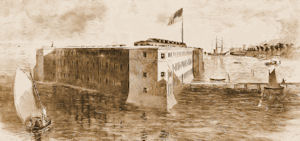
HEADQUARTERS TROOPS AT KEY WEST,
Fort Taylor, May
5, 1861.

Col. L. THOMAS, Adjutant-General U. S. Army:

COLONEL: The Illinois, from Fort Pickens, is in coaling, and knowing the anxiety of the Government with respect to the insulated forts, Taylor and Jefferson, I communicate direct. This key is in an excellent state for defense. The few suggestions given by me to Captain Meigs are all that will be required until winter. The more men the more disease. I have used my general authority to mount a section of Light Company K, and expect acclimated horses from the Havana in a few days, cheap and hardy. With these the island can be patrolled, vedettes kept up, and light guns moved rapidly.

The sentiment on the key is strictly selfish. The Union man to-day is the disunionist of the morrow. My effort has been to make it the interest of the citizens to be loyal, to encourage the Union men, and to lift up the faint-hearted. The judiciary (Federal) have had but little to act upon. I call upon them officially, indirectly. Brought up and resident with the citizens, it might at this time compromise. I have made myself acquainted with the respectable inhabitants under the same rules and formalities which exist elsewhere. The effect has been to open the trial sooner than might have been anticipated. Everything which should have been for sale, after a refusal, when Captain Meigs passed by on the Atlantic North, is now given–coal, water, wharfage. I am opening propositions through Colonel Patterson, naval officer, to buy out for the Government at reduced rates water lines, &c. I have asked from the mayor of Key West lists of the inhabitants, extra mouths, &c., which will have to be fed by the United States. Extraneous people will have to leave. Now there are not ten barrels of flour for sale on the island. Military organizations have been directed to make to me (ex officio) their rolls. No more troops are needed; water is scarce, not doubtful, and the command is equal to every occasion. My position has required me to take responsibility. This I never shrink from. I have the confidence of my officers and the loyalty of the rank and file. Indorse my recommendations, as they are moderate. This place is safe.

I am, colonel, very respectfully, your most obedient servant,

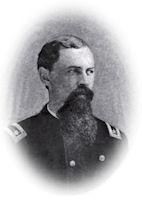
WM. H. FRENCH,
Brevet Major, U. S. Army, Commanding.

MAY 5th. —President Tyler has placed in my hands a memorial to President Davis, signed by himself and many of the members of the Convention, asking appropriate civil employment for me in the new government. I shall be content to obtain the necessary position to make a full and authentic Diary of the transactions of the government. I could not hope for any commission as a civil officer, since the leaders who have secured possession of the government know very well that, as editor, I never advocated the pretensions of any of them for the Presidency of the United States. Some of them I fear are unfit for the positions they occupy. But the cause in which we are embarked will require, to be successful, the efforts of every man. Those capable of performing military duty, must perform it; and those physically incapable of wielding the bayonet and the sword, must wield the pen. It is no time to stand on ceremony or antecedents. The post of duty is the post of honor. In the mighty winnowing we must go through, the wheat will be separated from the chaff. And many a true man who this day stands forth as a private, will end as a general. And the efficient subordinate in the departments may be likewise exalted if he deserves it, provided the people have rule in the new confederacy. If we are to have a monarchy for the sake of economy and stability, I shall submit to it in preference to the domination of the Northern radicals.

—Raleigh, North Carolina, is alive with soldiers, who have been pouring in at the call of the Governor. Sixteen companies, comprising twelve hundred men, rank and file, are encamped at the Fair Grounds, and there are several more quartered in other parts of the city. They are all fine looking, and in their eagerness to acquire military knowledge frequently have voluntary drills, not being satisfied with the three regularly appointed ones for each day.

Ten companies have been selected by the Governor to constitute the “First Regiment of North Carolina Volunteers,” and an election of field officers has taken place, resulting in the selection of D. H Hill, O. C. Lee, and J. H. Lane, respectively, to the offices of Colonel, Lieutenant-Colonel, and Major.—Charleston Mercury, May 11.

—The Twenty-eighth New York Regiment (from Brooklyn) arrived at Washington by the steamer Star of the South. In the absence of Col. Bennett, detained at home by sickness, Lieut.-Col. E. Burns is in command. The other officers are Acting Lieut.-Col. W. R. Brewster; Adjutant, D. A. Bokee; Surgeon, P. B. Rice; Surgeon’s Mates, Drs. Rappold and Prentice; Captain of Engineer Corps, Von Kumeke; Quartermaster, F. Steigier; Assistant Quartermaster, O. Menseh; Acting Paymaster, W. Mavelle; Chaplain, Mr. Zapt. They number about six hundred men, divided into ten companies, commanded by Captains Brewer, Baker, Campbell, Brandenberry, Beadle, Seeper, Ruegor, Wills, Kuhl, and Weaver. —National Intelligencer, May 7.

—Brigadier-General Philip St. George Cocke commanding the “Potomac Department” of the State of Virginia, in orders issued to-day, says:

“The capital of the United States has never been threatened, and it is not now threatened. It is beyond and outside the limits of the free and sovereign State of Virginia.”

If Gen. Cocke means to say that the “capital of the United States” has never been threatened by him, all credence will be given to his declarations under this head; but if it is intended to suggest that there have been no threats of attack from other quarters, sufficient to justify the precautionary measures taken by the Federal Government, his assurances cannot be received without casting discredit on men high in the confidence of the Confederate States, and on able and influential journals, heretofore understood to be the authentic exponents of Southern wishes and purposes.—(Doc. 134.)

—A body of, Federal troops, under command of Gen. B. F. Butler, arrived at the Relay House, nine miles from Baltimore, took possession of the telegraph wires, planted eight howitzers on the viaduct, and invested the entire neighborhood. They encamped on the grounds of William Talbot, adjoining those of George W. Dobbin, on the west side of the Patapsco. This point is the junction of the Baltimore and Ohio road, and the Washington branch, and gives full command of the road to and from the West.—The World, May 6.

—The women of Mobile organized themselves into a society to make sand bags for defence, lint and bandages for the wounded, clothes for the soldiers of the Confederate Army, to nurse the sick and wounded, and to seek out the families of those volunteers upon whose exertions their families are dependent for daily support.—N. O. Picayune, May 5.