Following the American Civil War Sesquicentennial with day by day writings of the time, currently 1863.

Thursday, May 26, 2011

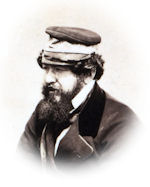
May 26th.—The heat to-day was so great, that I felt a return of my old Indian experiences, and was unable to go, as I intended, to hear a very eminent preacher discourse on the war at one of the principal chapels.

All disposable regiments are on the march to Virginia. It was bad policy for Mr. Jefferson Davis to menace Washington before he could seriously carry out his threats, because the North was excited by the speech of his Secretary at War to take extraordinary measures for the defence of their capital; and General Scott was enabled by their enthusiasm not only to provide for its defence, but to effect a lodgment at Alexandria, as a base of operations against the enemy.

When the Congress at Montgomery adjourned, the other day, they resolved to meet on the 20th of July at Richmond, which thus becomes the capital of the Confederacy. The city is not much more than one hundred miles south of Washington, with which it was in communication by rail and river; and the selection must cause a collision between the two armies in front of the rival capitals. The seizure of the Norfolk navy yard by the Confederates rendered it necessary to reinforce Fortress Monroe; and for the present the Potomac and the Chesapeake are out of danger.

The military precautions taken by General Scott, and the movements attributed to him to hold Baltimore and to maintain his communications between Washington and the North, afford evidence of judgment and military skill. The Northern papers are clamoring for an immediate advance of their raw levies to Richmond, which General Scott resists.

In one respect the South has shown greater sagacity than the North. Mr. Jefferson Davis having seen service in the field, and having been Secretary of War, perceived the dangers and inefficiency of irregular levies, and therefore induced the Montgomery Congress to pass a bill which binds volunteers to serve during the war, unless sooner discharged, and reserves to the President of the Southern Confederacy the appointment of staff and field officers, the right of veto to battalion officers elected by each company, and the power of organizing companies of volunteers into squadrons, battalions, and regiments. Writing to the Times at this date, I observed: “Although immense levies of men may be got together for purposes of local defence or aggressive operations, it will be very difficult to move these masses like regular armies. There is an utter want of field-trains, equipage, and commissariat, which cannot be made good in a day, a week, or a month. The absence of cavalry, and the utter deficiency of artillery, may prevent either side obtaining any decisive result in one engagement; but there can be no doubt large losses will be incurred whenever these masses of men are fairly opposed to each other in the open field.”
SUNDAY 26

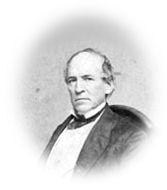
Warm today, went to church with family. Chas and young Saml Androus are both with us, came up last night. Saml is somewhat sick, is geting better. His Regt is at Alexandria. The excitement of yesterday has passed off but troops are passing over the River today and the large Govt Wagons are taking over stores, tents, implements, &c., and the soldiers there are busy throwing up breastworks at “Arlington.” The rebels had the stakes all stuck for the entrenchment and would have had possession in a day or two more.

______

The three diary manuscript volumes, Washington during the Civil War: The Diary of Horatio Nelson Taft, 1861-1865, are available online at The Library of  Congress.

Eliza Woolsey Howland to Joseph Howland at Albany.

Sunday (between churches), May 26.

I am going over to the Dutch Church at the Corners more, I confess, to hear the news from Washington than for the sermon’s sake. The rumor by telegraph this morning was that Washington was on fire. I am restless and anxious. There must be important movements on one side or the other before long, now that we have advanced beyond the Potomac.

In yesterday’s papers the great camp preparing on Staten Island is described — 10,000 acres on the southeast slope of the island, with room for the tents and evolutions of an army of 60,000 men. Is it likely that you will be ordered there?

Mr. Masters told me this morning to tell you you were not forgotten in the village, for the boys have organized a company and are drilling under the name of the “Howland Guard.” Mother thinks it should be called Mrs. Howland’s Guard. . . . .

May 27. This morning I deposited Mother with the papers at the old chestnut tree seat and helped Thomson and Mechie get a good line for the turf on the carriage road. It is not right yet, but shall be made so. Thomson says: “We’ll na gie it up, ma’am, till you say it’s right.” The sodding round the door and kitchen end[1] is a great improvement and gives quite a finished look. We all took a turn in the wagon after dinner, stopping for me to get some cut-out work from the Women’s Army Association, which is fairly under way now, with Mrs. David Davis as President, Mrs. James Kent Secretary and Miss Rankin Treasurer. Five or six dozen shirts were given out today. . . . I have a note this morning from L. H. H. asking me to make them a visit at Newport and saying Mr. H. would come on for me and bring me back. It is very kind, but I shall stand by my post here this summer. . . .

Mr. Masters told us an anecdote of old R_______ who was in a tavern barroom the other day with a party of rough fellows discussing the war, when one of them declared that “any man who would refuse to go now that Mr. Howland had gone ought to be drummed out of the community.”


[1] Where the rhododendrons are now twelve to fifteen feet high.


CINCINNATI, May 26, 1861.

DEAR UNCLE:—. . . I have been watching the enlistments for the war during the last week with much interest, as the chance of our enterprise for the present depends on it. If twenty regiments enlist out of the twenty-six now on foot in the State, there will be no room for ours. If less than twenty go in for three years, we are safe. Until the news of the advance into Virginia arrived, and the death of Colonel Ellsworth, there was a good deal of hesitation in the various camps. The natural dissatisfaction and disgust which many felt, some with and some without adequate cause, were likely to prevent the quota from being filled out of the three-months men. But now all is enthusiasm again. Of course I like to see it, but for the present it probably cuts us out. Well, we shall be ready for next time. If all immediate interest in this quarter is gone, I shall likely enough come up and spend next Sunday with you.

Sincerely,

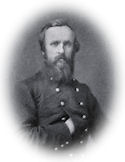
R. B. HAYES.

S. BIRCHARD.

MAY 26TH.—The President is sick to-day—having a chill, I believe. Adjutant-General Cooper was in, comparing notes with the Secretary as to the number of regiments in the field. The Secretary has a most astonishing memory, and could easily number the forces without referring to his notes. The amount is not large, it is true; but, from the eagerness to volunteer, I believe if we had the arms there might soon be organized an army of three or four hundred thousand men. And yet it would seem that no one dreams of armies of such magnitude. Wait till we sleep a little longer! A great many separate companies are accepted; all indeed that offer for three years or the war, provided they have arms—even double-barreled shot-guns and hunting rifles. What a deal of annoyance and labor it will be to organize these into battalions, regiments, brigades, and divisions! And then comes the appointment of staff and field officers. This will be labor for the President. But he works incessantly, sick or well.

We have an agent in Europe purchasing arms. This was well thought on. And Capt. Huse is thought to be a good selection. It will be impossible for Lincoln to keep all our ports hermetically sealed. Hitherto improvident, it is to be hoped the South will now go to work upon her own resources. We have plunged into the sea of revolution, and must, unaided, sink or swim. The Yankees say they are going to subdue us in six months. What fools!

I tasted green corn to-day, and, although very fond of it, I touched it lightly, because it seemed so much out of season. The country around is beautiful, and the birds are singing as merrily as if we were about to enter upon a perennial Sabbath-day, instead of a desolating war. But the gunpowder will be used to destroy the destroyer, man, and why should not the birds sing? The china-trees are beautiful, and abundant about the dwellings.

MAY 26TH.—Was called on by the Episcopal minister to-day, Dr. Sawyer having informed him that I was a member of the church—the doctor being one also. He is an enthusiastic young man, and though a native of the North, seems to sympathize with us very heartily. He prays for the President of the Confederate States. The President himself attends very regularly, and some intimate that he intends to become a candidate for membership.

I have not learned whether he has been baptized. Gen. Cooper, the first on our list of generals in the regular army, is a member of the church. The general was, I think, adjutant-general at Washington. He is Northern born. Major Gorgas is likewise a native of the North. He is Chief of the Bureau of Ordnance. The Quartermaster-General, Major Myers, is said to be a Jew; while the Commissary-General is almost a Jesuit, so zealous is he in the advocacy of the Pope.

Mr. Mallory, the Secretary of the Navy, I have seen but once; but I have heard him soundly abused for not accepting some propositions and plans from Mobile and elsewhere, to build iron-clad steam rams to sink the enemy’s navy. Some say Mr. M. is an Irishman born. He was in the United States Senate, and embraced secession with the rest of the “conspirators” at Washington.

I saw the Vice-President to-day. I first saw Mr. Stephens at Washington in 1843. I was behind him as he sat in the House of Representatives, and thought him a boy, for he was sitting beside large members. But when I got in front of him, it was apparent he was a man—every inch a man.

There is some excitement in official circles here against Mr. Browne, the Assistant Secretary of State, on the ground that he interfered in behalf of a Mr. Hurlbut, a Northern man (probably arrested), a writer in the English Reviews against slavery in the South, and a correspondent for the New York Tribune. Mr. B. is an Englishman, who came from Washington on the invitation of Mr. Toombs, and through his influence was appointed Assistant Secretary of State, and the Southern gorge rises at it. I doubt whether he will be molested.

I saw Major Tochman to-day, also a foreigner. He is authorized to enlist a regiment or two of Polanders in New Orleans, where I am told there are none.

And there are several Northern men here wanting to be generals. This does not look much like Southern homogeneity. God save us, if we are not to save ourselves!

How hot it is! But I like hot weather better than cold, and would soon become accustomed to this climate. This morning Mr. Hunter really seemed distressed; but he has four inches on his ribs, and I not the eighth of an inch.

Since writing the foregoing, I have seen Mr. Hunter again, and although there is no diminution of heat, he is quite cheerful. Congress has again passed the resolution to remove the seat of government to Richmond, and it is said the President will not veto it this time. The President himself came into our office to-day and sat some time conversing with Secretary Walker. He did not appear vexed at the determination of Congress, which he must have been apprised of.

—A letter from Major Sprague, U. S. A., giving an account of affairs in Texas, since the arrest of the federal troops in that locality, was published in the Albany (N. Y.) Argus.— (Doc. 197.)

—The privateer Calhoun, Capt. Wilson, arrived at New Orleans, La., having in tow the following prizes: schooners John Adams and Mermaid, of Provincetown, Mass., and the brig Panama, of Boston, Mass.; all these are whalers, and have on board about 215 bbls. of sperm and black whale oil. They were taken about 10 miles from the passes; their crews number 63 men; and all of them told that these vessels had been whaling for some time and cruising in the Gulf —Natchez Courier, May 30.

—The Mobile Register of yesterday, after announcing the invasion of Virginia by the Federal troops, observes: “Servile insurrection is a part of their programme, but they expect no great amount of practical good to result therefrom—consequently, it is contended that it would be a far better course of policy for the Abolitionists to murder the slaves and thus exterminate slavery. A more monstrous proposition could not emanate from the most incarnate fiend among the damned. But infamous as it is it finds an advocate in the abolition press. The slaves are to be indiscriminately slaughtered, and when the last one is butchered, then it it is thought the institution will cease to exist. The soul recoils in horror at the idea of an unscrupulous war upon the innocent and defenseless slave. The Syrian massacre of the Christians and all the crimes of its bloody participants pale before the proposed atrocities of the Black Republicans. Their masters, however, in this, as all other instances, will be their protectors and saviors. With this much of their published programme, we must not be surprised at any act or threat as the campaign advances.”

—A correspondent writes from Montgomery to the New Orleans Delta:—”The startling intelligence of the invasion of the soil of Virginia, and the actual occupation of Alexandria by United States forces, was received here last evening. The Cabinet, I am informed, immediately went into a procrastinated session. No event since the initiation of this revolution has ever created a sensation so profound, and so sorrowful. The mere taking of a deserted and exposed village, is in itself nothing; but when regarded as indicative of the future policy of the old Government, it at once becomes a question pregnant with great importance. Mr. Lincoln has declared in his proclamation, and at various other times reiterated the expression, that the only object his Government had in view, was the retaking and the reoccupation of what he asserted to be Government property; but now, in the face of this promise, which has gone before the world, he converts his Abolition horde into an army of invasion, and now occupies a city within the boundaries of our Republic. This Government has no longer an election. Its duty is now manifest to all. The nation must rise as a man and drive the hireling miscreants from a soil polluted by the foulness of their tramp. Virginia alone could speedily perform the work of expurgation, but her cause is now our cause, her battles our battles, and let the Government at large pour a continuous stream of men into Virginia, and preserve from dishonor that patriotic mother of States.”

—The rebel Congress passed an act to prohibit the exportation of cotton, except through Southern seaports.—(Doc. 198.)

—This afternoon at about 4 o’clock, Gen. McClellan, commanding the military department of Ohio, received information that two bridges had been burned near Farmington, on the B. & O. R. R., and that arrangements had been made to burn the others between that point and Wheeling. The general had been making arrangements to move on Grafton in force, but this intelligence caused him to hasten his movements. He returned at once to Cincinnati and issued telegraphic orders for an advance. One column was directed to move from Wheeling and Bellaire, under command of Col. B. F. Kelly, 1st Virginia Volunteers; another from Marietta, on Parkersburg, under Col. Steedman, 14th Ohio Volunteers. These officers were directed to move with caution, and to occupy all the bridges, etc., as they advanced. A proclamation to Virginians, and address to the troops, were issued by Gen. McClellan simultaneously with the advance.—(Doc. 199.)

—The First Regiment of New Hampshire Volunteers, Colonel Tappan, passed through New York on their way to the seat of war. The regiment left Camp Union, at Concord, yesterday morning. Its progress through Massachusetts and Connecticut was an ovation, crowds assembling at all the stations to give them a greeting.—(Doc. 200.)

—Postmaster-General Blair issued the following order:—”All postal service in the States of Virginia, North Carolina, South Carolina, Georgia, Florida, Alabama, Mississippi, Louisiana, Arkansas, and Texas, will be suspended from and after the 31st inst. Letters for offices temporarily closed by this order, will be forwarded to the dead letter office, except those for Western Virginia, which will be sent to Wheeling.”—Boston Transcript, May 27.