Following the American Civil War Sesquicentennial with day by day writings of the time, currently 1863.

Tuesday, May 17, 2011

May 17, 1861.

Sun and dust. Hot as ___ the deuce. Lots of drilling and ditto fun. Suits me to a T. Am going in for three years as quick as I can. All chance for fight is given up here. We are getting sharp. We trade off our extra fodder for pies, milk and good things.

It’s too hot to write. I am going to sleep.

17th.—Still quiet. Mrs. J., Mrs. B., and myself, sat at the Malvern windows yesterday, spying the enemy as they sailed up and down the river. Those going up were heavily laden, carrying provisions, etc., to their troops. I think if all Virginia could see their preparations as we do, her vote would be unanimous for secession.

FRIDAY 17

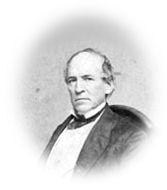
Another fine day. The Michigan Regt got in last night, Col Wilcox. Young Saml Androus is among them from Coldwater. He called upon me at the office this morning. The Regt is for the Present quartered at Woodwards Building. Attended the Parade of the 12th with Wife and Doct Everitt & Lady. Afterwards I went on to the Av’e, and was at Willards. Hotel full. Things are looking to an attack upon Norfolk, but nothing is known to the public. At “Drum beat” (1/2 past 9.) the soldiers must all be in quarters.

______

The three diary manuscript volumes, Washington during the Civil War: The Diary of Horatio Nelson Taft, 1861-1865, are available online at The Library of  Congress.

MAY 17th. —Was introduced to the President to-day. He was overwhelmed with papers, and retained a number in his left hand, probably of more importance than the rest. He received me with urbanity, and while he read the papers I had given him, as I had never seen him before, I endeavored to scrutinize his features, as one would naturally do, for the purpose of forming a vague estimate of the character and capabilities of the man destined to perform the leading part in a revolution which must occupy a large space in the world’s history. His stature is tall, nearly six feet; his frame is very slight and seemingly frail; but when he throws back his shoulders he is as straight as an Indian chief. The features of his face are distinctly marked with character; and no one gazing at his profile would doubt for a moment that he beheld more than an ordinary man. His face is handsome, and his thin lip often basks a pleasant smile. There is nothing sinister or repulsive in his manners or appearance; and if there are no special indications of great grasp of intellectual power on his forehead and on his sharply defined nose and chin, neither is there any evidence of weakness, or that he could be easily moved from any settled purpose. I think he has a clear perception of matters demanding his cognizance, and a nice discrimination of details. As a politician he attaches the utmost importance to consistency —and here I differ with him. I think that to be consistent as a politician, is to change with the circumstances of the case. When Calhoun and Webster first met in Congress, the first advocated a protective tariff and the last opposed it. This was told me by Mr. Webster himself, in 1842, when he was Secretary of State; and it was confirmed by Mr. Calhoun in 1844, then Secretary of State himself. Statesmen are the physicians of the public weal; and what doctor hesitates to vary his remedies with the new phases of disease?

When the President had completed the reading of my papers, and during the perusal I observed him make several emphatic nods, he asked me what I wanted. I told him I wanted employment with my pen, perhaps only temporary employment. I thought the correspondence of the Secretary of War would increase in volume, and another assistant besides Major Tyler would be required in his office. He smiled and shook his head, saying that such work would be only temporary indeed; which I construed to mean that even he did not then suppose the war was to assume colossal proportions.

Abby Howland Woolsey to Eliza Woolsey Howland

Friday, May 17, 1861.

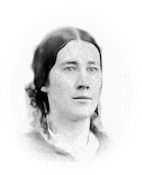
My dear Eliza: Your nice long letter of yesterday from Albany came this morning at breakfast. I say your “nice” letter in the sense of its being long and circumstantial. That anything concerning Joe’s going off is nice, I shall never be brought to say. It seems as if you both had been snatched up and swept away from us by some sudden and awful fate. No time for thought about it and no use for regrets! I hardly think he himself realized all he was pledging himself to—the bothering duties, I mean, of an Adjutant’s office, a great deal of work and no glory; a sort of upper servant to an exacting Colonel; though some people tell us that the Adjutant’s post is a highly military one, requiring fine military education — a knowledge, at least, of theories and laws, etc.  I am glad that Colonel Davies impresses you pleasantly.

Do find out from Joe’s Dr. Crandall what style of garments he thinks best for hospital wear, as we are constantly cutting them out, and may as well make them with reference to his wants. Should the nightshirts be of unbleached or canton flannel, and drawers ditto? Should the shirts be long or short? and are extra flannel shirts necessary for hospital wear? I am going to the Cooper Union today to try and get some simple pattern for calico gowns. They advertise to supply paper patterns of garments to ladies, and their published circular, a copy of which I have seen, is far more particular and satisfactory in its directions than the one we have had.

I went to Astoria day before yesterday and came back yesterday noon. Aunt E. and I spent all the time in Casina library. The women dusted the books and I checked them off on the catalogue to see if they were all right and to leave them in good order for G. G. Howland, who moves up next week. I saw the transport go up to Riders’ Island with George Betts’ Zouaves—the Hawkins’ Zouaves as they are called. We can see the barracks built for them from Casina. I thought if Robert were at home he would be flying about in his sailboat, visiting these points, and could make many a call on Joe if he were to be at Fort Schuyler. I found on coming home from Astoria that Georgy had fairly begun at the hospital — the City Hospital on Broadway—but as she has requested me not to “discuss her” with anybody I had better leave her to tell her own story. She and Mrs. Trotter go down daily at twelve o’clock, and yesterday, Mother tells me, they went before breakfast beside, at 6 a. m. Two such visits a day, when a singing lesson and a German lesson come in between, are rather too much, I think, but this insane war is making men and women insane,— Mr. ___________ of Alexandria, for instance. Mother had a letter from him this morning written in the true Southern style — so highfalutin — with abuse and melancholy, martial ardor and piety, beautifully commingled. Mother wrote the other day to find out something about them, and this letter was to say that her’s had been received and forwarded to his wife and daughters at Lexington, Va., where he had removed them “to be out of the reach of the licensed outrages of our Northern outcasts, who make up the Northern army!”

Today we are going to try and decide on our wedding presents for Jenny Woolsey. Just think of Susan Johnson, too! and now Sarah Winthrop tells us of her engagement to Mr. Weston, a friend of her brother Will’s. It reminds me of the days of Noe when there was marrying and giving in marriage and the flood came and drowned them all. Love to Joe. What is his title now? We cannot call him plain Mister!
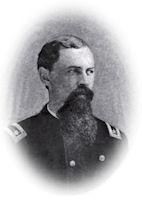
—In behalf of the Government of the United States, and the better to secure the peace of St. Louis, and promote the tranquillity of Missouri, United States warrants were issued for the search of places suspected to contain articles contraband of war. The warrants were placed in the hands of United States Marshal Rawlings, who proceeded, accompanied by a corps of United States soldiers, under Captain Sweeney, to the State Tobacco Warehouse on Washington Avenue, and to the Central Metropolitan Police Station on Chesnut street. At the former were found several hundred rifles, muskets, cavalry pistols, holsters, small boxes of ammunition; and at the latter place, Arnot’s Building, two pieces of cannon, and several hundred rifles.—St. Louis Democrat, May 18.

—A submarine boat, or infernal machine supposed to be owned by the secessionists, was captured in Philadelphia.—(Doc. 175.)

—Suregeon-General Gibbes  of the C. S. A., reports that no serious casualty occurred in the bombardment of Sumter to the Confederate forces. “Four trifling contusions at Fort Moultrie only; none at other posts.”

The Virginia papers recommend Southerners to sing the Marseillaise.—N. Y. Express, May 20.

—The Confederate Congress authorizes the issue of $50,000,000 in bonds, payable in twenty years, at an interest not exceeding eight per centum, and in lieu of bonds to issue $20,000,000 in treasury notes, in small sums, without interest.—N. Y. Herald, May 19.