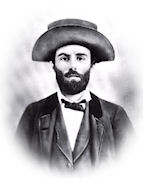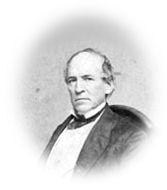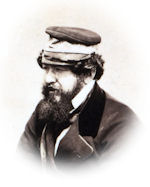
—N. P. Banks, of Massachusetts, was appointed a Major-General, and Robert C. Schenck, of Ohio, a Brigadier-General in the Army. The eminent intelligence, energy, and activity of these distinguished citizens render their appointment signally judicious and fortunate.—National Intelligencer, June 1.
—The Twelfth, Onondaga, and the Thirteenth, Rochester, N. Y., Regiments, commanded by Colonels Mulrath and Trumby, left Elmira for Washington. The Buffalo and Cayuga Regiments escorted them to the depot. An immense crowd was present to witness their departure.—N. Y. Commercial, May 30.
—The New Orleans Delta of to-day says: “Henceforth all the cotton and other produce of the South destined for foreign markets must go from our seaports. So it has been determined by our Congress at Montgomery. The only exemption under the law is in favor of the trade between Mexico and Northwestern Texas. This is a wise measure. The threat of the Northern journals to force our shipments of produce to the North by a blockade of our seaports is thus promptly met, and their scheme defeated. Now, let us see who can stand the embargo longest. Our cotton and tobacco planters can go on and gather the immense crops which this season promises, and store them in their barns and warehouses, only sending to the ports what may be necessary to pay expenses, and which our friends from abroad insist upon having, and will take all the risk of buying and sending abroad. Meantime, what with two crops of corn, and any quantity of other produce, we can maintain a very comfortable existence. The negroes not being hurried to take off the crops, will have a very easy time of it. Their truck patches will supply them with an abundance of good vegetables. Their only trouble is that they can’t go to the war and help their young masters to wallop the Abolitionists. This is rather hard upon them, especially as every plantation and household will have one or more of their race to represent them in battle. ‘Old Wirginny’ is the dance ground of our negroes, and to fight for it is their highest ambition. One of our negro acquaintances asked us a few days ago to intercede with his master to allow him to go on with one of our volunteer companies to the scene of war, stating that he wanted to fight for the graves of his ancestors, and he could not understand why his master should object to his going, when the Massachusetts people had placed a negro in command of one of their divisions. The story of General Butler’s African descent had been communicated to him.”
—The Sixth Indiana Regiment, Colonel Crittenden, fully armed and equipped, passed through Cincinnati, O., on their way to the scene of action. The Dunkirk Battalion left Dunkirk for the city of New York. At Bethlehem, Pa., a very interesting ceremony took place at the Young Ladies’ Seminary. Three national flags were raised on the principal buildings. Mr. Van Kirk, one of the Professors, made a patriotic speech, and the pupils, who were gathered upon the roof of the Seminary, amid loud cheers, raised the Star-Spangled banner. Nearly two hundred young ladies joined in singing national airs. After the ceremonies, the pupils, with flags and banners, paraded the town.—N. Y. Tribune, May 31.
—The U. S. ship Brooklyn captured the bark H. J. Spearing, from Rio Janeiro for New Orleans, with $120,000 worth of coffee.—N. O. Picayune, May 31.
—A portion of the Confederate troops were ordered away from Pensacola. Little apprehension of a fight existed there. General Twiggs was put in command of the Military Department of Louisiana.—Montgomery Post, May 31.
—Gen. Butler, having asked information from head-quarters in reference to the matter of fugitive slaves, was ordered to retain such as came within his lines, employ them, and keep an account of their services and expenses. —(Doc. 215.)
—The New Orleans Delta of to-day publishes the following concerning the condition of society in New Orleans:—“Personal security is fast becoming a matter of doubtful assurance. Men of high and low estate are met upon the street, assaulted, and in many cases murderously used, with an insolent disregard of law which argues a conviction of escape from punishment.”
—A party of rowdies left Baltimore at night to go to Federal Hill and kill some of the U. S. picket-guard there, but the guard shot three, and the rest fled. The Fire Zouaves seized sixty kegs of powder and five tons of lead in a house about four and a half miles from the further outpost from Alexandria, Va., southwest from camp. The scouting party who seized it were at a loss to know what to do with the prize. It would not do to leave it, and yet the party was so small and far from camp that they could not separate to go back to give notice; so they took all the lead, and about half the powder, in the only conveyance they could find, and blew up the powder which they could not carry with them by a train which they fired at a safe distance. The explosion was distinctly heard in Washington, and for many miles around.—N. Y. Times, June 1.
—The Ohio and Virginia troops, under command of Col. Kelly, occupied Grafton, Va., at 2½ o’clock P. M. The secessionists fled without firing a gun. The secession troops fell back two miles from Williamsport, on the Potomac, in the direction of Martinsburg. They have about 500 men and two small swivel guns. About 100 desertions have occurred since the Williamsport camp was established.—The Second Maine Regiment, Col. Jamison, left Willets Point, N. Y., for the seat of war.—(Doc. 216.)