
MAY 5th. —President Tyler has placed in my hands a memorial to President Davis, signed by himself and many of the members of the Convention, asking appropriate civil employment for me in the new government. I shall be content to obtain the necessary position to make a full and authentic Diary of the transactions of the government. I could not hope for any commission as a civil officer, since the leaders who have secured possession of the government know very well that, as editor, I never advocated the pretensions of any of them for the Presidency of the United States. Some of them I fear are unfit for the positions they occupy. But the cause in which we are embarked will require, to be successful, the efforts of every man. Those capable of performing military duty, must perform it; and those physically incapable of wielding the bayonet and the sword, must wield the pen. It is no time to stand on ceremony or antecedents. The post of duty is the post of honor. In the mighty winnowing we must go through, the wheat will be separated from the chaff. And many a true man who this day stands forth as a private, will end as a general. And the efficient subordinate in the departments may be likewise exalted if he deserves it, provided the people have rule in the new confederacy. If we are to have a monarchy for the sake of economy and stability, I shall submit to it in preference to the domination of the Northern radicals.
May 2011
—Raleigh, North Carolina, is alive with soldiers, who have been pouring in at the call of the Governor. Sixteen companies, comprising twelve hundred men, rank and file, are encamped at the Fair Grounds, and there are several more quartered in other parts of the city. They are all fine looking, and in their eagerness to acquire military knowledge frequently have voluntary drills, not being satisfied with the three regularly appointed ones for each day.
Ten companies have been selected by the Governor to constitute the “First Regiment of North Carolina Volunteers,” and an election of field officers has taken place, resulting in the selection of D. H Hill, O. C. Lee, and J. H. Lane, respectively, to the offices of Colonel, Lieutenant-Colonel, and Major.—Charleston Mercury, May 11.
—The Twenty-eighth New York Regiment (from Brooklyn) arrived at Washington by the steamer Star of the South. In the absence of Col. Bennett, detained at home by sickness, Lieut.-Col. E. Burns is in command. The other officers are Acting Lieut.-Col. W. R. Brewster; Adjutant, D. A. Bokee; Surgeon, P. B. Rice; Surgeon’s Mates, Drs. Rappold and Prentice; Captain of Engineer Corps, Von Kumeke; Quartermaster, F. Steigier; Assistant Quartermaster, O. Menseh; Acting Paymaster, W. Mavelle; Chaplain, Mr. Zapt. They number about six hundred men, divided into ten companies, commanded by Captains Brewer, Baker, Campbell, Brandenberry, Beadle, Seeper, Ruegor, Wills, Kuhl, and Weaver. —National Intelligencer, May 7.
—Brigadier-General Philip St. George Cocke commanding the “Potomac Department” of the State of Virginia, in orders issued to-day, says:
“The capital of the United States has never been threatened, and it is not now threatened. It is beyond and outside the limits of the free and sovereign State of Virginia.”
If Gen. Cocke means to say that the “capital of the United States” has never been threatened by him, all credence will be given to his declarations under this head; but if it is intended to suggest that there have been no threats of attack from other quarters, sufficient to justify the precautionary measures taken by the Federal Government, his assurances cannot be received without casting discredit on men high in the confidence of the Confederate States, and on able and influential journals, heretofore understood to be the authentic exponents of Southern wishes and purposes.—(Doc. 134.)
—A body of, Federal troops, under command of Gen. B. F. Butler, arrived at the Relay House, nine miles from Baltimore, took possession of the telegraph wires, planted eight howitzers on the viaduct, and invested the entire neighborhood. They encamped on the grounds of William Talbot, adjoining those of George W. Dobbin, on the west side of the Patapsco. This point is the junction of the Baltimore and Ohio road, and the Washington branch, and gives full command of the road to and from the West.—The World, May 6.
—The women of Mobile organized themselves into a society to make sand bags for defence, lint and bandages for the wounded, clothes for the soldiers of the Confederate Army, to nurse the sick and wounded, and to seek out the families of those volunteers upon whose exertions their families are dependent for daily support.—N. O. Picayune, May 5.
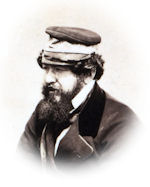
May 4th.—In the morning I took a drive about the city, which is loosely built in detached houses over a very pretty undulating country covered with wood and fruit-trees. Many good houses of dazzling white, with bright green blinds, verandas, and doors, stand in their own grounds or gardens. In the course of the drive I saw two or three signboards and placards announcing that “Smith & Co. advanced money on slaves, and had constant supplies of Virginian negroes on sale or hire.” These establishments were surrounded by high walls enclosing the slave-pens or large rooms, in which the slaves are kept for inspection. The train for Montgomery started at 9·45 A.m., but I had no time to stop and visit them.
It is evident we are approaching the Confederate capital, for the candidates for office begin to show, and I detected a printed testimonial in my room in the hotel. The country, from Macon in Georgia to Montgomery in Alabama, offers no features to interest the traveler which are not common to the districts already described. It is, indeed, more undulating, and somewhat more picturesque, or less unattractive, but, on the whole, there is little to recommend it, except the natural fertility of the soil. The people are rawer, ruder, bigger—there is the same amount of tobacco chewing and its consequences—and as much swearing or use of expletives. The men are tall, lean, uncouth, but they are not peasants. There are, so far as I have seen, no rustics, no peasantry in America; men dress after the same type, differing only in finer or coarser material; every man would wear, if he could, a black satin waistcoat and a large diamond pin stuck in the front of his shirt, as he certainly has a watch and a gilt or gold chain of some sort or other. The Irish laborer, or the German husbandman is the nearest approach to our Giles Jolter or the Jacques Bonhomme to be found in the States. The mean white affects the style of the large proprietor of slaves or capital as closely as he can; he reads his papers—and, by the by, they are becoming smaller and more whitey-brown as we proceed—and takes his drink with the same air —takes up as much room, and speaks a good deal in the same fashion.
The people are all hearty Secessionists here—the Bars and Stars are flying at the road-stations and from the pine-tops, and there are lusty cheers for Jeff Davis and the Southern Confederacy. Troops are flocking towards Virginia from the Southern States in reply to the march of Volunteers from Northern States to Washington; but it is felt that the steps taken by the Federal Government to secure Baltimore have obviated any chance of successfully opposing the “Lincolnites” going through that city. There is a strong disposition on the part of the Southerners to believe they have many friends in the North, and they endeavor to attach a factious character to the actions of the Government by calling the Volunteers and the war party in the North “Lincolnites,” “Lincoln’s Mercenaries, ” ” Black Republicans,” “Abolitionists,” and the like. The report of an armistice, now denied by Mr. Seward officially, was for some time current, but it is plain that the South must make good its words, and justify its acts by the sword. General Scott would, it was fondly believed, retire from the United States’ army, and either remain neutral or take command under the Confederate flag, but now that it is certain he will not follow any of these courses, he is assailed in the foulest manner by the press and in private conversation. Heaven help the idol of a democracy!
At one of the junctions General Beauregard, attended by Mr. Manning, and others of his staff, got into the car, and tried to elude observation, but the conductors take great pleasure in unearthing distinguished passengers for the public, and the General was called on for a speech by the crowd of idlers. The General hates speech-making, he told me, and he had besides been bored to death at every station by similar demands. But a man must be popular or he is nothing. So, as next best thing, Governor Manning made a speech in the General’s name, in which he dwelt on Southern Rights, Sumter, victory, and abolitiondom, and was carried off from the cheers of his auditors by the train in the midst of an unfinished sentence. There were a number of blacks listening to the Governor, who were appreciative.
Towards evening, having thrown out some slight out works against accidental sallies of my fellow-passengers’ saliva, I went to sleep, and woke up at 11 P.M. to hear we were in Montgomery. A very rickety omnibus took the party to the hotel, which was crowded to excess. The General and his friends had one room to themselves. Three gentlemen and myself were crammed into a filthy room which already contained two strangers, and as there were only three beds in the apartment it was apparent that we were intended to “double up considerably;” but after strenuous efforts, a little bribery and cajoling, we succeeded in procuring mattresses to put on the floor, which was regarded by our neighbors as a proof of miserable aristocratic fastidiousness. Had it not been for the flies, the fleas would have been intolerable, but one nuisance neutralized the other. Then, as to food—nothing could be had in the hotel—but one of the waiters led us to a restaurant, where we selected from a choice bill of fare, which contained, I think, as many odd dishes as ever I saw, some unknown fishes, oyster-plants, ‘possums, raccoons, frogs, and other delicacies, and, eschewing toads and the like, really made a good meal off dirty plates on a vile table-cloth, our appetites being sharpened by the best of condiments.
Colonel Pickett has turned up here, having made his escape from Washington just in time to escape arrest— travelling in disguise on foot through out-of-the-way places till he got among friends.
I was glad, when bed-time approached, that I was not among the mattress men. One of the gentlemen in the bed next the door was a tremendous projector in the tobacco juice line: his final rumination ere he sank to repose was a masterpiece of art—a perfect liquid pyrotechny, Roman candles and falling stars. A horrid thought occurred as I gazed and wondered. In case he should in a supreme moment turn his attention my way!—I was only seven or eight yards off, and that might be nothing to him!—I hauled down my mosquito curtain at once, and watched him till, completely satiated, he slept.
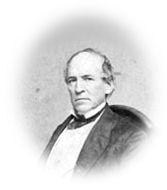
SATURDAY, MAY 4, 1861.
Rain all the first part of the day. Soldiers still drilling in the Halls. Our ears are constantly saluted with the word of command and and [sic] the clangor of arms on the marble floors. Went on to the Ave after dinner with wife and Juliet. Soldiers and citizens crowded that prominade about equaly divided in numbers. In the streets Regiments were paraded. We saw 2200 march into the Treasury. At the Pat office the RI Regt were paraded and reviewed by Gov Sprague. On Louisiana Ave another Regt were paraded. Went down to Willards in the evening. Not much of a crowd. Mostly soldiers.

______
The three diary manuscript volumes, Washington during the Civil War: The Diary of Horatio Nelson Taft, 1861-1865, are available online at The Library of Congress.
MAY 4th. —Met Win. H. B. Custis, Esq., to-day in the square, and had a long conversation with him. He has made up his mind to sign the ordinance. He thinks secession might have been averted with honor, if our politicians at Washington had not been ambitious to figure as leaders in a new revolution. Custis was always a Democrat, and supported Douglas on the ground that he was the regular nominee. He said his negro property a month before was worth, perhaps, fifty thousand dollars; now his slaves would not bring probably more than five thousand; and that would be the fate of many slaveowners in Virginia.
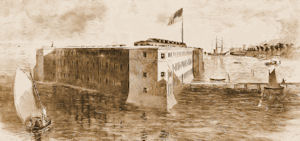
FORT TAYLOR, FLA., May 4, 1861.
J. P. BALDWIN, Esq., Mayor, Key West City :
MY DEAR SIR: I proposed on yesterday to print an address to the citizens of the United States on Key West. The address was delayed, and I take the opportunity to say to you, in continuation of the conversation had a few days since, that from circumstances brought to my attention direct, and from reliable sources, it is my opinion that there will be a strong effort made to distress the inhabitants of this key. Isolated and shut up by the water of the Gulf, should what I hear prove correct, the distress would be extreme upon the inhabitants of the island. It is in your power to aid in avoiding this contingency, which, whether near or remote, will be terrible when it comes. I have served in Florida during the early wars, and remember the distress of the inhabitants of Saint Augustine, to whom the government had to furnish subsistence. It is probable that such may be the case on the key. The government determining to hold it will be responsible for its loyal citizens; and should the necessities referred to arise, it will be necessary to discriminate, and those who do not belong here should be so notified.
It is also essential that it should be generally known that the functions of the commanding officer on Key West, ex officio, embrace during the present crisis all the military, including citizens desirous to bear arms for the preservation of life and property. It will be necessary for me, in order to combine them with those of the government, that a muster-roll according to the form prescribed should be supplied to these headquarters by any military organization now existing.
I am, sir, very respectfully, your most obedient servant,
WM. H. FRENCH,
Brevet Major, U. S. Army, Commanding.
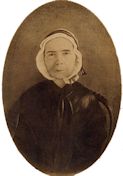
At Home, May 4, 1861.—I am too nervous, too wretched to-day to write in my diary, but that the employment will while away a few moments of this trying time. Our friends and neighbors have left us. Every thing is broken up. The Theological Seminary is closed; the High School dismissed. Scarcely any one is left of the many families which surrounded us. The homes all look desolate; and yet this beautiful country is looking more peaceful, more lovely than ever, as if to rebuke the tumult of passion and the fanaticism of man. We are left lonely indeed; our children are all gone—the girls to Clarke, where they may be safer, and farther from the exciting scenes which may too soon surround us; and the boys, the dear, dear boys, to the camp, to be drilled and prepared to meet any emergency. Can it be that our country is to be carried on and on to the horrors of civil war? I pray, oh how fervently do I pray, that our Heavenly Father may yet avert it. I shut my eyes and hold my breath when the thought of what may come upon us obtrudes itself; and yet I cannot believe it. It will, I know the breach will be healed without the effusion of blood. The taking of Sumter without bloodshed has somewhat soothed my fears, though I am told by those who are wiser than I, that men must fall on both sides by the score, by the hundred, and even by the thousand. But it is not my habit to look on the dark side, so I try hard to employ myself, and hope for the best. To-day our house seems so deserted, that I feel more sad than usual, for on this morning we took leave of our whole household. Mr. ––––and myself are now the sole occupants of the house, which usually teems with life. I go from room to room, looking at first one thing and then another, so full of sad associations. The closed piano, the locked bookcase, the nicely-arranged tables, the formally-placed chairs, ottomans and sofas in the parlor! Oh for some one to put them out of order! And then the dinner-table, which has always been so well surrounded, so social, so cheerful, looked so cheerless to-day, as we seated ourselves one at the head, the other at the foot, with one friend,—but one,—at the side. I could scarcely restrain my tears, and but for the presence of that one friend, I believe I should have cried outright. After dinner, I did not mean to do it, but I could not help going into the girls’ room, and then into C.’s. I heard my own footsteps so plainly, that I was startled by the absence of all other sounds. There the furniture looked so quiet, the beds so fixed and smooth, the wardrobes and bureaux so tightly locked, and the whole so lifeless! But the writing-desks, work-boxes, and the numberless things so familiar to my eyes! Where were they? I paused, to ask myself what it all meant. Why did we think it necessary to send off all that was so dear to us from our own home? I threw open the shutters, and the answer came at once, so mournfully! I heard distinctly the drums beating in Washington. The evening was so still that I seemed to hear nothing else. As I looked at the Capitol in the distance, I could scarcely believe my senses. That Capitol of which I had always been so proud! Can it be possible that it is no longer our Capitol? And are our countrymen, under its very eaves, making mighty preparation to drain our hearts’ blood? And must this Union, which I was taught to revere, be rent asunder? Once I thought such a suggestion sacrilege; but now that it is dismembered, I trust it may never, never be reunited. We must be a separate people—our nationality must be different, to insure lasting peace and good-will. Why cannot we part in peace?
Harper’s Ferry, May 4, 1861.
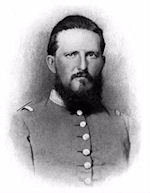
Write very often. Nothing can be so interesting to me as your letters. Some of the other wives, you think, get more letters than you do, and you women measure your husband’s love by the number and length of their letters. I will write to you, Love, about once a week and half a page at a time. I cannot with justice to my eyes write longer letters. This will be handed to you by Maj. Preston, who will tell you everything you want to know. Kiss the children for me, and for yourself take my best love.
—A large Union meeting was held at Kingwood, Preston county, Va., when resolutions were adopted expressing unalterable opposition to the ordinance of secession, favoring a division of the State, and resolving to vote for a delegate to the next session of Congress.—National Intelligencer, May 11.
—Commodore Charles Stewart, of the United States Navy, addressed a letter to George W. Childs of Philadelphia, furnishing him with the reminiscences of a conversation which passed between Com. Stewart and John C. Calhoun, in the year 1812, after the declaration of war against Great Britain by the Congress of the United States.—(Doc. 132.)
—The artists of New York met at the rooms of Messrs. Kensett and Lang in that city. Mr. D. Huntingdon was called to the chair. Messrs. Kensett, Gray, and Lang embodied resolutions which were adopted by those present, expressing their desire to contribute to the relief of families of volunteers of the city of New York who are now serving in defence of government and law, and resolving that a committee be appointed to solicit contributions of pictures or other works of art, to be disposed of at public auction; said committee to have power, also, to receive moneys presented in aid of the fund. Messrs. Gray, Lang, Hubbard, Huntington, Stone, and Baker were named the committee, with full power to forward the plan proposed. —N. Y. Evening Post, May 7.
—The Ithaca (N. Y.) volunteers arrived in New York on their way to the seat of war. They number one hundred and fifteen men, and are commanded by the following officers:—Captain, Jerome Rowe; First Lieutenant, James Tischner; Ensign, William O. Wyckoff; Orderly Sergeant, William Godley; Second Sergeant, Edwin C. Fulkenson; Third do., Edward Atwater; Fourth do., Dr. Tolbo; First Corporal, Leonard Atwater; Second do., Clinton McGill; Third do., James A. Dickinson; Fourth do., George Shepherd.—N. Y. Herald, May 5.
—The Onondaga Regiment left Syracuse, N. Y., for Elmira. This is the first regiment organized under the new Volunteer bill of the State of New York. Ten full companies presented their muster-rolls to the Adjutant-General, not merely full, but with an excess of nearly one hundred men.—N. Y. Tribune, May 5.
—The New Orleans Delta of to-day contains a full account of the numbers and condition of the rebel troops and defences in the vicinity of Fort Pickens; from which it appears that Gen. Bragg has under his command an army of over six thousand fighting men, besides a large force of laborers, sailors, and marines.—(Doc. 133.)
—The Buena Vista Volunteers, from Philadelphia, Captain Powers, arrived at New York. They are to join Col D. E. Sickles’s regiment. These are men who went unarmed to Baltimore, and fought the Gorillas with their fists.— N. Y. Tribune, May 5.
—The Phoenix Ironworks at Gretna, opposite Lafayette, New Orleans, cast the first gun for the Confederate Navy. It is an eight-inch Dahlgren shell, and has eight feet six inches bore.
The steamship Star of the West was put in commission as the receiving ship of the Confederate States Navy at New Orleans. She is stationed at the navy yard at Algiers, under the temporary command of Midshipman Comstock, for receiving sailors and marines now being enlisted for the navy.—N. O. Picayune, May 5.
—A committee of the Maryland Legislature held an interview with President Lincoln. They admitted both the right and the power of the government to bring troops through Baltimore or the State, and to take any measures for the public safety which, in the discretion of the President, might be demanded either by actual or reasonably apprehended exigencies. They expressed their belief that no immediate effort at secession or resistance of the federal authority would be attempted by the Legislature or State authorities, and asked that, in this view, the State should, as long as possible, be spared the evils of a military occupation or a mere revengeful chastisement for former transgressions. The President replied that their suggestions and representations should be considered, but that he should now say no more than that the public interests, and not any spirit of revenge, would actuate his measures—N. Y. Herald, May 5.
—A Union meeting was held at Wheeling, Va, Hon. Frank Pierpont, of Mason county, and George M. Porter, late member of the convention, addressed the people in able speeches, urging resistance to the secession ordinance, ad favoring the division of the State. Resolutions were adopted approving the action of the merchants in refusing to pay taxes to the authorities at Richmond, denunciatory of the secession ordinance, and declaring adhesion to the stars and stripes.—Boston Transcript, May 8.
—The American flag was displayed from the tower of the First Baptist Church in Broome street, New York, with appropriate ceremonies. A large concourse of people listened to stirring speeches by President Eaton, of Madison University, Rev. Dr. Armitage, Rev. Mr. Webber, of Rochester, and Hon. W. D. Murphy, of the Oliver street church.
Dr. Armitage referred to the fact that the pastors of this First Baptist Church (a church which has existed more than a century) had all been noted for their zealous patriotism. One of the most eminent of them—Spencer H. Cone—had, in the war of 1812, himself gallantly defended that emblem of civil and religious liberty, the stars and stripes, at Fort McHenry; and at this moment members of this church are in the camp, equally ready to defend it against all aggression. No free government or constitutional liberty have ever been secured or perpetuated by any nation without the seal of its own blood. If the liberties thus purchased for us by our fathers, and the government which they founded—the best the world has ever seen—are to be insulted and trampled upon, shall we not strike down the traitor, even though he be one of the family—even though he be our own brother?
“I too,” said Dr. Eaton, “am emphatically a man of peace, for I am a minister of the gospel of the Prince of Peace; but in this crisis, my friends, it is my firm conviction that the best and surest way to perpetuate the blessing is promptly to send down, if need be, half a million of men to those seditious brethren of ours, and compel them to keep the peace. We cherish no malice against them—God forbid. But their traitorous hands are now clutching the very life of our body politic, and we must use prompt and vigorous action in defence of our very national existence.”—N. Y. Evening Post, May 7.
May 3rd.—I bade good-by to Mr. Green, who with several of his friends came down to see me off, at the terminus or “depȏt” of the Central Railway, on my way to Montgomery—and looked my last on Savannah, its squares and leafy streets, its churches, and institutes with a feeling of regret that I could not see more of them, and that I was forced to be content with the outer aspect of the public buildings. I had been serenaded and invited out in all directions, asked to visit plantations and big trees, to make excursions to famous or beautiful spots, and specially warned not to leave the State without visiting the mountain district in the northern and western portion; but the march of events called me to Montgomery.
From Savannah to Macon, 191 miles, the road passes through level country only partially cleared. That is, there are patches of forest still intruding on the green fields, where the jagged black teeth of the destroyed trees rise from above the maize and cotton. There were but few negroes visible at work, nor did the land appear rich, but I was told the rail was laid along the most barren part of the country. The Indians had roamed in these woods little more than twenty years ago—now the wooden huts of the planters’ slaves and the larger edifice with its verandah and timber colonnade stood in the place of their wigwam.
Among the passengers to whom I was introduced was the Bishop of Georgia, the Rev. Mr. Elliott, a man of exceeding fine presence, of great stature, and handsome face, with a manner easy and graceful, but we got on the unfortunate subject of slavery, and I rather revolted at hearing a Christian prelate advocating the institution on scriptural grounds.
This affectation of Biblical sanction and ordinance as the basis of slavery was not new to me, though it is not much known at the other side of the Atlantic. I had read in a work on slavery, that it was permitted by both the Scriptures and the Constitution of the United States, and that it must, therefore, be doubly right. A nation that could approve of such interpretations of the Scriptures and at the same time read the “New York Herald,” seemed ripe for destruction as a corporate existence. The malum prohibitum was the only evil its crass senses could detect, and the malum per se was its good, if it only came covered with cotton or gold. The miserable sophists who expose themselves to the contempt of the world by their paltry thesicles on the divine origin and uses of slavery, are infinitely more contemptible than the wretched bigots who published themes long ago on the propriety of burning witches, or on the necessity for the offices of the Inquisition.
Whenever the Southern Confederacy shall achieve its independence — no matter what its resources, its allies, or its aims —it will have to stand face to face with civilized Europe on this question of slavery, and the strength which it derived from the ægis of the Constitution — “the league with the devil and covenant with Hell” — will be withered and gone.
I am well aware of the danger of drawing summary conclusions off-hand from the windows of a railway, but there is also a right of sight which exists under all circumstances, and so one can determine if a man’s face be dirty as well from a glance as if he inspected it for half an hour. For instance, no one can doubt the evidence of his senses, when he sees from the windows of the carriages that the children are barefooted, shoeless, stockingless — that the people who congregate at the wooden huts and grog-shops of the stations are rude, unkempt, but great fighting material, too — that the villages are miserable places, compared with the trim, snug settlements one saw in New Jersey from the carriage windows. Slaves in the fields looked happy enough — but their masters certainly were rough looking and uncivilized — and the land was but badly cleared. But then we were traversing the least fertile portions of the State — a recent acquirement — gained only one generation since.
The train halted at a snug little wood-embowered restaurant, surrounded by trellis and lattice-work, and in the midst of a pretty garden, which presented a marked contrast to the “surroundings” we had seen. The dinner, served by slaves, was good of its kind, and the charge not high. On tendering the landlord a piece of gold for payment, he looked at it with disgust, and asked, “Have you no Charleston money? No Confederate notes?” “Well, no! Why do you object to gold?” “Well, do you see, I’d rather have our own paper! I don’t care to take any of the United States gold. I don’t want their stars and their eagles; I hate the sight of them.” The man was quite sincere — my companion gave him notes of some South Carolina bank.
It was dark when the train reached Macon, one of the principal cities of the State. We drove to the best hotel, but the regular time for dinner hour was over, and that for supper not yet come. The landlord directed us to a subterranean restaurant, in which were a series of crypts closed in by dirty curtains, where we made a very extraordinary repast, served by a half-clad little negress, who watched us at the meal with great interest through the curtains — the service was of the coarsest description; thick French earthenware, the spoons of pewter, the knives and forks steel or iron, with scarce a pretext of being cleaned. On the doors were the usual warnings against pickpockets, and the customary internal police regulations and ukases. Pickpockets and gamblers abound in American cities, and thrive greatly at the large hotels and the lines of railways.


