Following the American Civil War Sesquicentennial with day by day writings of the time, currently 1863.

Tuesday, March 1, 2011

March 1st.—Dined to-day with Mr. Hill¹ from Georgia, and his wife. After he left us she told me he was the celebrated individual who, for Christian scruples, refused to fight a duel with Stephens.² She seemed very proud of him for his conduct in the affair. Ignoramus that I am, I had not heard of it. I am having all kinds of experiences. Drove to-day with a lady who fervently wished her husband would go down to Pensacola and be shot. I was dumb with amazement, of course. Telling my story to one who knew the parties, was informed, “Don’t you know he beats her?” So I have seen a man “who lifts his hand against a woman in aught save kindness.”

Brewster says Lincoln passed through Baltimore disguised, and at night, and that he did well, for just now Baltimore is dangerous ground. He says that he hears from all quarters that the vulgarity of Lincoln, his wife, and his son is beyond credence, a thing you must see before you can believe it. Senator Stephen A. Douglas told Mr. Chesnut that “Lincoln is awfully clever, and that he had found him a heavy handful.”

Went to pay my respects to Mrs. Jefferson Davis. She met me with open arms. We did not allude to anything by which we are surrounded. We eschewed politics and our changed relations.

____

¹ Benjamin H. Hill, who had already been active in State and National affairs when the Secession movement was carried through. He had been an earnest advocate of the Union until in Georgia the resolution was passed declaring that the State ought to secede. He then became a prominent supporter of secession. He was a member of the Confederate Congress, which met in Montgomery in 1861, and served in the Confederate Senate until the end of the war. After the war, he was elected to Congress and opposed the Reconstruction policy of that body. In 1877 he was elected United States Senator from Georgia.

² Governor Herschel V. Johnson also declined, and doubtless for similar reasons, to accept a challenge from Alexander H. Stephens, who, though endowed with the courage of a gladiator, was very small and frail.
FRIDAY, MARCH 1

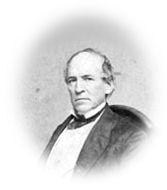
The weather has, today, been warmer still. No fire in the house except to cook with, and no fire in the office. The Patent office has been crowded with visitors and in fact the same may be said of the City generaly. I was down at the Hotels this evening, all crowded as more than ever, “and still they come.” Spent an hour with Col Paine at the Kirkwood House and another with Jas C Smith at Willards. He thinks that Mr Lincoln is a man Equal to his position and the crisis. It seems doubtful now whether anything will be done in Congress with the “Peace” Recommendations.

______

The three diary manuscript volumes, Washington during the Civil War: The Diary of Horatio Nelson Taft, 1861-1865, are available online at The Library of  Congress.

WAR DEPARTMENT, C. S. A.,
Montgomery, March 1, 1861.

Brig. Gen. P. G. T. BEAUREGARD:

SIR: You will proceed without delay to Charleston and report to Governor Pickens for military duty in that State.

You are authorized by your appointment as brigadier-general, under the provisions of the third section of an act of the Congress to raise Provisional Forces for the Confederate States, to receive into the service of this Government such forces as may be tendered or may volunteer, not to exceed five thousand men, as you may require, or for whom you can make suitable provision. A copy of the act referred to has been this day transmitted to Governor Pickens.

You will report to this Department your arrival at Charleston, and give such information with respect to the defenses of that harbor as you may consider important. You will also secure, if possible, the services of a competent adjutant, and report your action in that behalf to this Department.

Very respectfully, your obedient servant,

L. P. WALKER,

Secretary of War.

WAR DEPARTMENT, C. S. A.,
Montgomery, March 1, 1861.

His Excellency F. W. PICKENS, Governor, &c.:

“… the President has appointed Peter G. T. Beauregard brigadier-general to command the Provisional Forces of this Government in the harbor of Charleston.”

SIR: Your letter of the 27th ultimo addressed to the President has been referred by him to this Department for reply.

In controlling the military operations in the harbor of Charleston the President directs me to say that everything will be done that may be due to the honor and rights of South Carolina.

The President shares the feeling expressed by you that Fort Sumter should be in our possession at the earliest moment possible. But this feeling, natural and just as it is admitted to be, must yield to the necessity of the case. Thorough preparation must be made before an attack is attempted, for the first blow must be successful, both for its moral and physical consequences, or otherwise the result might be disastrous to your State in the loss of many of those whom we can least afford to spare. A failure would demoralize our people and injuriously affect us in the opinion of the world as reckless and precipitate.

Entertaining these opinions, the President directs me to say that he is engaged assiduously in pressing forward measures to effect results in which all are interested. Under the fourth section of an act of Congress to raise Provisional Forces for the Confederate States of America, and for other purposes, a copy of which I have the honor to inclose in another communication of this date, the President has appointed Peter G. T. Beauregard brigadier-general to command the Provisional Forces of this Government in the harbor of Charleston. General Beauregard will be accompanied by an adjutant, whose duty it will be to receive into the Provisional Army, with their officers, under the provisions of the act aforesaid, the forces of your State now in Charleston.

General Beauregard has the entire confidence of the President and of this Department, and I beg to commend him as possessing every soldierly quality.

I have the honor to be, with high regard, your obedient servant,

L. P. WALKER,

Secretary of War.

—General Twiggs was expelled from the army of the United States. The following is the official order for his expulsion:

War Department,
Adjutant-General’s Office,
Washington, March 1, 1861.

The following order is published for the information of the army:
“War Department, March 1, 1861.

“By the direction of the President of the United States, it is ordered that Brigadier-General David E. Twiggs be and is hereby dismissed from the army of the United States for his treachery to the flag of his country, in having surrendered on the 18th of February, 1861, on the demand of the authorities of Texas, the military posts and other property of the United States in his department and under his charge.

J. HOLT, Secretary of War.
“By order of the Secretary of War.
“S. COOPER, Adjutant-General.”
Evening Post, March 4.

—The Secretary of War at Washington received a despatch from Major Anderson, in which he contradicts the statement that President Davis had been to Charleston. He says that the report that he had been sick is without a particle of foundation. He is -in good health, as is also his little band of soldiers. Affairs in Charleston harbor are arriving at a point when further delay on their part will be impossible. Their extensive works of defence and attack are nearly if not quite completed. The feeling between the authorities and Major Anderson continues to be friendly, and he is allowed all the facilities that he could expect. Fresh provisions and marketing are supplied in abundance. He experienced no difficulty in sending or receiving his mail matter. — Washington Star.