Following the American Civil War Sesquicentennial with day by day writings of the time, currently 1863.

Wednesday, March 9, 2011

HDQRS. PROV. ARMY
CONFEDERATE STATES
OF AMERICA
Charleston, S.C., March 9, 1861.


Hon. L. P. WALKER, Secretary of War, Montgomery, Ala.:

SIR: I inclose you herewith the report of Col. M. Gregg, First Regiment South Carolina Volunteers, commanding on Morris Island, at the entrance of this harbor, reporting the circumstances connected with the accidental shooting of a loaded gun towards Fort Sumter on the 8th instant. From the inquiries thus far made, it would appear to have been entirely accidental; but I have ordered a thorough investigation of the affair to be made at once, and in order to prevent the recurrence of an event which might be attended with such disastrous consequences, I have ordered that hereafter no gun should be practiced with without first ascertaining whether it be loaded or not.

The channel batteries are progressing regularly, and the other works are being corrected and consolidated. Nothing new otherwise.

I remain, sir, very respectfully, your obedient servant,

G. T. BEAUREGARD,

Brigadier-General, Commanding.

[Inclosure. 1]

HEADQUARTERS MORRIS ISLAND, S.C.,
March 8, 1861.

To the CHIEF OF STAFF OF BRIGADIER-GENERAL BEAUREGARD:

SIR: I am informed by Major Stevens that a shot was accidentally fired from the iron battery this morning, which struck Fort Sumter. Major Stevens was practicing with blank cartridges, and does not know how a shot got in. He does not suspect that it was put in by any man intentionally. Major Stevens is about to go with a flag to Fort Sumter to explain the accident.

I have to request that General Beauregard will forward this note for the information of the commander-in-chief.

I have the honor to be, your obedient servant,

MAXCY GREGG,

Colonel First Regiment South Carolina Volunteers,
Commanding on Morris Island.
SATURDAY 9

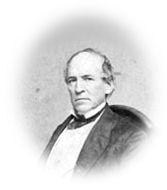
A rainy morning but most of the day was rather pleasant. No particular news stirring. Spent an hour after dinner with Bro. at the office of Dr John W [Bulkley?] and his father Solomon [Bulkley?] talking of Williamstown people &c. Went down to Willards with Bro. and from there to the “National” to see Philip Dorsheimer. He had left on the 3.10 train. We got the evening NY papers. Called at “Kirkwoods” and came home about 9 o’clock and read the news till 11 o’clock and then went to bed.

______

The three diary manuscript volumes, Washington during the Civil War: The Diary of Horatio Nelson Taft, 1861-1865, are available online at The Library of  Congress.

WAR DEPARTMENT, C. S. A.,
Montgomery, March 9, 1861.

Brig. Gen. P. G. T. BEAUREGARD, Charleston:

GENERAL: Your report of the 6th instant has been received at this Department. What you have done and what you propose to do is approved. Push forward your contemplated works with all possible expedition, especially with the view to prevent the re-enforcement of Fort Sumter. This must be prevented at all hazards, and by the use of every conceivable agency. Fort Sumter is silent now only because of the weakness of the garrison. Should re-enforcements get in, her guns would open fire upon you.

There is information at this Department–not official, it is true, but believed to be reliable–that five or six United States ships are in New York Harbor all ready to start.

The United States steamer Pawnee has left Philadelphia suddenly for Washington, fully provisioned and ready to go to sea, and it is probable that the effort to re-enforce Sumter may be made by sending in men in whale-boats by night. Should this plan succeed and the garrison be re-enforced sufficiently to stand an assault the attempt may be made to fight their way up by five or six war vessels.

In his report to this Department Major Whiting suggested the possibility of re-enforcements by land. Upon examining the map it occurs to me that this possibility might be accomplished in two ways: First, at the south of Morris Island there is an inlet which connects with Schooner Creek, and affords a water communication in the rear of all our works directly up to Fort Sumter. The creeks are, however, very winding, and probably if taken in hand at once could easily be obstructed by sinking flats or boats. Second, Stono River affords, I should think, an entrance to vessels of from eight to twelve feet draught, which may land troops on James Island, or go through a cut known as James Island Cut. Neither method, I take it, would be practicable if any troops were on James Island; but in the absence of them a sudden rush might possibly avail.

These suggestions are made without special knowledge, and are submitted for your consideration.

I have the honor to be, very respectfully, your obedient servant,

L. P. WALKER,

Secretary of War.

—The Southern Confederacy Congress passed an act for the establishment and organization of the army of the Confederate States.—(Doc. 44.) —Times, March 16.