Following the American Civil War Sesquicentennial with day by day writings of the time, currently 1863.

Friday, March 4, 2011

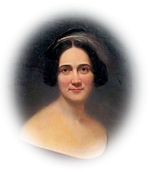
March 4th.—The Washington Congress has passed peace measures. Glory be to God (as my Irish Margaret used to preface every remark, both great and small).

At last, according to his wish, I was able to introduce Mr. Hill, of Georgia, to Mr. Mallory,¹ and also Governor Moore and Brewster, the latter the only man without a title of some sort that I know in this democratic subdivided republic.

I have seen a negro woman sold on the block at auction. She overtopped the crowd. I was walking and felt faint, seasick. The creature looked so like my good little Nancy, a bright mulatto with a pleasant face. She was magnificently gotten up in silks and satins. She seemed delighted with it all, sometimes ogling the bidders, sometimes looking quiet, coy, and modest, but her mouth never relaxed from its expanded grin of excitement. I dare say the poor thing knew who would buy her. I sat down on a stool in a shop and disciplined my wild thoughts. I tried it Sterne fashion. You know how women sell themselves and are sold in marriage from queens downward, eh? You know what the Bible says about slavery and marriage; poor women! poor slaves! Sterne, with his starling—what did he know ? He only thought, he did not feel.

In Evan Harrington I read: “Like a true English female, she believed in her own inflexible virtue, but never trusted her husband out of sight.”

The New York Herald says: “Lincoln’s carriage is not bomb-proof; so he does not drive out.” Two flags and a bundle of sticks have been sent him as gentle reminders. The sticks are to break our heads with. The English are gushingly unhappy as to our family quarrel. Magnanimous of them, for it is their opportunity.

____

¹ Stephen R. Mallory was the son of a shipmaster of Connecticut, who had settled in Key West in 1820. From 1851 to 1861 Mr. Mallory was United States Senator from Florida, and after the formation of the Confederacy, became its Secretary of the Navy.
MONDAY 4

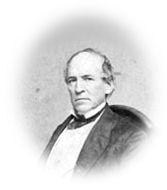
This has been an eventful day in Washington. A Lincoln has been Inaugurated Pres of the U.S. His address seems to give general satisfaction. I stood near him and heard it distinctly. The crowd was very great at the Capitol, probably Thirty Thousand people stood before Mr L, and all were very orderly, and nothing has occured during the day to interupt the proceedings. Was at Willards this evening with Brother C R, great crowd there still. Wife & boys saw the procession pass and went to the “White House.”

______

The three diary manuscript volumes, Washington during the Civil War: The Diary of Horatio Nelson Taft, 1861-1865, are available online at The Library of  Congress.

—Abraham Lincoln was inaugurated at Washington, sixteenth President of the United States. He kissed the thirty-four States of the Union as represented by thirty-four young ladies.

The inauguration procession proceeded to the east portico of the capitol, in front of which a platform had been erected. Every available space in the vicinity was packed with a curious crowd of spectators. Every thing being in readiness, Senator Baker, of Oregon, came forward and introduced Mr. Lincoln in these simple words: “Fellow-citizens: I introduce to you Abraham Lincoln, the President-elect of the United States of America.” Mr. Lincoln then advanced to a small table, which had been placed for his accommodation, and proceeded to deliver his inaugural address, every word of which was distinctly heard on the outskirts of the swaying crowd. The oath of office was then administered to Mr. Lincoln by Chief Justice Taney; the procession was again formed, Mr. Lincoln was escorted to the White House, and was duly installed in the office of President of the United States.—(Doc. 42.)

—A State Convention declared Texas out of the Union and Governor Houston issued his proclamation to that effect.