
March 31st, Easter Sunday.—I dined with Lord Lyons and the members of the Legation; the only stranger present being Senator Sumner. Politics were of course eschewed, for Mr. Sumner is Chairman of the Committee on Foreign Relations of the Senate, and Lord Lyons is a very discreet Minister; but still there crept in a word of Pickens and Sumter, and that was all. Mr. Fox, formerly of the United States’ Navy, and since that a master of a steamer in the commercial marine, who is related to Mr. Blair, has been sent on some mission to Fort Sumter, and has been allowed to visit Major Anderson by the authorities at Charleston; hut it is not known what was the object of his mission. Everywhere there is Secession resignation, in a military sense of the word. The Southern Commissioners declare they will soon retire to Montgomery, and that any attempt to reinforce or supply the forts will be a casus belli. There is the utmost anxiety to know what Virginia will do. General Scott belongs to the State, and it is feared he may be shaken if the State goes out. Already the authorities of Richmond have intimated they will not allow the foundry to furnish guns to the seaboard forts, such as Munroe and Norfolk in Virginia. This concession of an autonomy is really a recognition of States’ Rights. For if a State can vote itself in or out of the Union, why can it not make war or peace, and accept or refuse the Federal Government? In fact, the Federal system is radically defective against internal convulsion, however excellent it is or may be for purposes of external polity. I walked home with Mr. Sumner to his rooms, and heard some of his views, which were not so sanguine as those of Mr. Seward, and I thought I detected a desire to let the Southern States go out with their slavery if they so desired it. Mr. Chase, by the way, expressed sentiments of the same kind more decidedly the other day.
Thursday, March 31, 2011
SUNDAY 31
Went out to church this morning. It was cold enough to wear my cloak. Family wer[e] all out but Julia who is unwell. She went with Miss Sallie to “St Mathews” in the afternoon. Chas and Sallie came up about dark from “Vespers” and spent the evening. Miss S. performed on the Piano and the passersby might have heard in some of the pieces anything but Sunday music. I took a walk down 12th St to the Ave & back, quick step. It took me twenty minutes.

______
The three diary manuscript volumes, Washington during the Civil War: The Diary of Horatio Nelson Taft, 1861-1865, are available online at The Library of Congress.
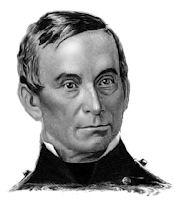
FORT SUMTER, S. C., March 31, 1861.
(Received A. G. O., April 4.)
Col. L. THOMAS, Adjutant-General U. S. Army:
COLONEL: I have the honor to report that we do not see any work going on this morning. Yesterday, in consequence of the members of the Convention coming down, a great deal of firing of shot and shell took place at Fort Moultrie and from the batteries on Morris Island.
The three batteries outside of the Star of the West have certainly guns of very heavy caliber; this we know from the great extent of the ranges and from the reports.
As our provisions are very nearly exhausted, I have requested Captain Foster to discharge his laborers, retaining only enough for a boat’s crew. I hope to get them off to-morrow. The last barrel of flour was issued day before yesterday.
I am colonel very respectfully, your obedient servant,
ROBERT ANDERSON,
Major, First Artillery, Commanding.
—It is asserted for the hundredth time, in apparently authoritative circles, that Fort Sumter will be evacuated on or before Wednesday next, April 8d.— World, April 1.


