Following the American Civil War Sesquicentennial with day by day writings of the time, currently 1863.

Saturday, March 26, 2011

There is no specific entry in the book for March 26th.  However, since there is a clear demarcation of arrival at Washington, the entry for the 25th is split at this point for publication in this blog.–MpG 1/23/2011

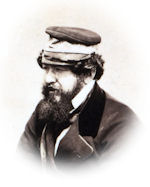
March 26th.–At six A.M., we were roused up by the arrival of the train at Washington, having crossed great rivers and traversed cities without knowing it during the night. I looked out and saw a vast mass of white marble towering above us on the left, stretching out in colonnaded porticoes, and long flanks of windowed masonry, and surmounted by an unfinished cupola, from which scaffold and cranes raised their black arms. This was the Capitol. To the right was a cleared space of mud, sand, and fields studded with wooden sheds and huts, beyond which, again, could be seen rudimentary streets of small red brick houses, and some church-spires above them.

Emerging from the station, we found a vociferous crowd of blacks, who were the hackney-coachmen of the place; but Mr. Sanford had his carriage in waiting, and drove me straight to Willard’s Hotel where he consigned me to the landlord at the bar. Our route lay through Pennsylvania avenue—a street of much breadth and length, lined with ælanthus trees, each in a white-washed wooden sentry box, and by most irregularly-built houses in all kinds of material, from deal plank to marble—of all heights, and every sort of trade. Few shop-windows were open, and the principal population consisted of blacks, who were moving about on domestic affairs. At one end of the long vista there is the Capitol; and at the other, the Treasury buildings—a fine block in marble, with the usual American classical colonnades.

Close to these rises the great pile of Willard’s Hotel, now occupied by applicants for office, and by the members of the newly-assembled Congress. It is a quadrangular mass of rooms, six stories high, and some hundred yards square; and it probably contains at this moment more scheming, plotting, planning heads, more aching and joyful hearts, that any building of the same size ever held in the world. I was ushered into a bed-room which had just been vacated by some candidate—whether he succeeded or not I cannot tell, but if his testimonials spoke truth, he ought to have been selected at once for the highest office. The room was littered with printed copies of letters testifying that J. Smith, of Hartford, Conn., was about the ablest, honestest, cleverest, and best man the writers ever knew. Up and down the long passages doors were opening and shutting for men with papers bulging out of their pockets, who hurried as if for their life in and out, and the building almost shook with the tread of the candidature, which did not always in its present aspect justify the correctness of the original appellation.

It was a remarkable sight, and difficult to understand unless seen. From California, Texas, from the Indian Reserves, and the Mormon territory, from Nebraska, as from the remotest borders of Minniesota, from every portion of the vast territories of the Union, except from the Seceded States, the triumphant republicans had winged their way to the prey.

There were crowds in the hall through which one could scarce make his way — the writing-room was crowded, and the rustle of pens rose to a little breeze —the smoking-room, the bar, the barbers, the reception-room, the ladies’ drawing-room—all were crowded. At present not less than 2,500 people dine in the public room every day. On the kitchen floor there is a vast apartment, a hall without carpets or any furniture but plain chairs and tables, which are ranged in close rows, at which flocks of people are feeding, or discoursing, or from which they are flying away. The servants never cease shoving the chairs to and fro with a harsh screeching noise over the floor, so that one can scarce hear his neighbor speak. If he did, he would probably hear as I did, at this very hotel, a man order breakfast, “Black tea and toast, scrambled eggs, fresh spring shad, wild pigeon, pigs’ feet, two robins on toast, oysters,” and a quantity of breads and cakes of various denominations. The waste consequent on such orders is enormous — and the ability required to conduct these enormous establishments successfully is expressed by the common phrase in the States, “Brown is a clever man, but he can’t manage an hotel.” The tumult, the miscellaneous nature of the company — my friends the prize-fighters are already in possession of the doorway—the heated, muggy rooms, not to speak of the great abominableness of the passages and halls, despite a most liberal provision of spittoons, conduce to render these institutions by no means agreeable to a European. Late in the day I succeeded in obtaining a sitting-room with a small bed-room attached, which made me somewhat more independent and comfortable—but you must pay highly for any departure from the routine life of the natives. Ladies enjoy a handsome drawing-room, with piano, sofas, and easy chairs, all to themselves.

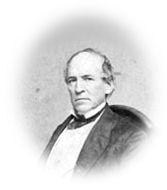
I dined at Mr. Sanford’s, where I was introduced to Mr. Seward, Secretary of State; Mr. Truman Smith, an ex-senator, much respected among the Republican party; Mr. Anthony, a senator of the United States, a journalist, a very intelligent looking man, with an Israelitish cast of face; Colonel Foster of the Illinois railway, of reputation in the States as a geologist; and one or two more gentlemen. Mr. Seward is a slight, middle-sized man, of feeble build, with the stoop contracted from sedentary habits and application to the desk, and has a peculiar attitude when seated, which immediately attracts attention. A well-formed and large head is placed on a long, slender neck, and projects over the chest in an argumentative kind of way, as if the keen eyes were seeking for an adversary; the mouth is remarkably flexible, large but well formed, the nose prominent and aquiline, the eyes secret, but penetrating, and lively with humor of some kind twinkling about them; the brow bold and broad, but not remarkably elevated; the white hair silvery and fine—a subtle, quick man, rejoicing in power, given to perorate and to oracular utterances, fond of badinage, bursting with the importance of state mysteries, and with the dignity of directing the foreign policy of the greatest country—as all Americans think—in the world. After dinner he told some stories of the pressure on the President for place, which very much amused the guests who knew the men, and talked freely and pleasantly of many things —stating, however, few facts positively. In reference to an assertion in a New York paper, that orders had been given to evacuate Sumter, “That” he said, “is a plain lie—no such orders have been given. We will give up nothing we have—abandon nothing that has been entrusted to us. If people would only read these statements by the light of the President’s inaugural, they would not be deceived.” He wanted no extra session of Congress. History tells us that kings who call extra parliaments lose their heads,” and he informed the company he had impressed the President with his historical parallels.

All through this conversation his tone was that of a man very sanguine, and with a supreme contempt for those who thought there was anything serious in secession. “Why,” said he, “I myself, my brothers, and sisters, have been all secessionists — we seceded from home when we were young, but we all went back to it sooner or later. These States will all come back in the same way.” I doubt if he was ever in the South; but he affirmed that the state of living and of society there was something like that in the State of New York sixty or seventy years ago. In the North all was life, enterprise, industry, mechanical skill. In the South there was dependence on black labor, and an idle extravagance which was mistaken for elegant luxury—tumble-down old hackney-coaches, such as had not been seen north of the Potomac for half a century, harness never cleaned, ungroomed horses, worked at the mill one day and sent to town the next, badly furnished houses, bad cookery, imperfect education. No parallel could be drawn between them and the Northern States at all. “You are all very angry,” he said, “about the Morrill tariff. You must, however, let us be best judges of our own affairs. If we judge rightly, you have no right to complain; if we judge wrongly, we shall soon be taught by the results, and shall correct our error. It is evident that if the Morrill tariff fulfils expectations, and raises a revenue, British manufacturers suffer nothing, and we suffer nothing, for the revenue is raised here, and trade is not injured. If the tariff fails to create a revenue, we shall be driven to modify or repeal it.”

The company addressed him as “Governor,” which led to Mr. Seward’s mentioning that when he was in England he was induced to put his name down with that prefix in a hotel book, and caused a discussion among the waiters as to whether he was the “Governor” of a prison or of a public company. I hope the great people of England treated Mr. Seward with the attention due to his position, as he would assuredly feel and resent very much any slight on the part of those in high places. From what he said, however, I infer that he was satisfied with the reception he had met in London. Like most Americans who can afford it, he has been up the Nile. The weird old stream has great fascinations for the people of the Mississippi —as far at least as the first cataract.
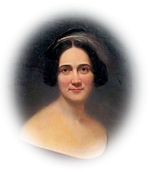
CHARLESTON, S. C, March 26, 1861—I have just just come from Mulberry, where the snow was a foot deep—winter at last after months of apparently May or June weather. Even the climate, like everything else, is upside down. But after that den of dirt and horror, Montgomery Hall, how white the sheets looked, luxurious bed linen once more, delicious fresh cream with my coffee! I breakfasted in bed.

Dueling was rife in Camden. William M. Shannon challenged Leitner. Kochelle Blair was Shannon’s second and Artemus Goodwyn was Leitner’s. My husband was riding hard all day to stop the foolish people. Mr. Chesnut finally arranged the difficulty. There was a court of honor and no duel. Mr. Leitner had struck Mr. Shannon at a negro trial. That’s the way the row began. Everybody knows of it. We suggested that Judge Withers should arrest the belligerents. Dr. Boykin and Joe Kershaw¹ aided Mr. Chesnut to put an end to the useless risk of life.

John Chesnut is a pretty soft-hearted slave-owner. He had two negroes arrested for selling whisky to his people on his plantation, and buying stolen corn from them. The culprits in jail sent for him. He found them (this snowy weather) lying in the cold on a bare floor, and he thought that punishment enough; they having had weeks of it. But they were not satisfied to be allowed to evade justice and slip away. They begged of him (and got) five dollars to buy shoes to run away in. I said: “Why, this is flat compounding a felony.” And Johnny put his hands in the armholes of his waistcoat and stalked majestically before me, saying, “Woman, what do you know about law?”

Mrs. Reynolds stopped the carriage one day to tell me Kitty Boykin was to be married to Savage Heyward. He has only ten children already. These people take the old Hebrew pride in the number of children they have. This is the true colonizing spirit. There is no danger of crowding here and inhabitants are wanted. Old Colonel Chesnut² said one day: “Wife, you must feel that you have not been useless in your day and generation. You have now twenty-seven great-grandchildren.”

____

¹ Joseph B. Kershaw, a native of Camden, S. C, who became famous in connection with “The Kershaw Brigade” and its brilliant record at Bull Run, Fredericksburg, Chickamauga, Spottsylvania, and elsewhere throughout the war.

²Colonel Chesnut, the author’s father-in-law, was born about 1760. He was a prominent South Carolina planter and a public-spirited man. The family had originally settled in Virginia, where the farm had been overrun by the French and Indians at the time of Braddock’s campaign, the head of the family being killed at Fort Duquesne. Colonel Chesnut, of Mulberry, had been educated at Princeton, and his wife was a Philadelphia woman. In the final chapter of this Diary, the author gives a charming sketch of Colonel Chesnut.

TUESDAY, MARCH 26, 1861.

Another warm pleasant day with some wind, rained some last night. At work hard in the office and very much fatigued tonight. Julia called for me from her school after calling upon Mr Alexander of the Seed Room and geting some garden & flower seeds. I did not go down to the Ave this evening. Took a walk with Julia up 14th St after taking short nap on the sofa. Read the days news in the “Star,” heard the boys read some. Their mother thrumed the Piano some. I have noded some, am off to bed at 1/2 past 9.

______

The three diary manuscript volumes, Washington during the Civil War: The Diary of Horatio Nelson Taft, 1861-1865, are available online at The Library of  Congress.

FORT SUMTER, S.C., March 26, 1861.
(Received A. G. O., March 29.)

Col. L. THOMAS, Adjutant-General U. S. Army:

“I inclose herewith a correspondence between the South Carolina officials and myself in reference to some points to which attention was called some time since.”

COLONEL: I have the honor to report that quite a large party is busy this morning on what is probably a bomb-proof in rear of the large work near Fort Johnson. They have extended and heightened several of the works on Morris Island, particularly No. 1 of Captain Seymour’s sketches.

We are constructing splinter-proofs on the parade, and closing the opening in the gorge wall. I have the honor to mention that Mr. Lamon, from Washington City, visited me yesterday.

I am, colonel, very respectfully, your obedient servant,

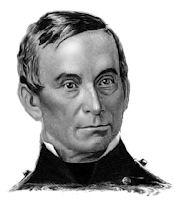
ROBERT ANDERSON,

Major, First Artillery, Commanding.

P. S.–I inclose herewith a correspondence between the South Carolina officials and myself in reference to some points to which attention was called some time since. Expecting a reply to my last communication, I have delayed sending these letters off, but now do so, as no rejoinder will probably be made.

Respectfully,

R. A.

[Inclosure No. 1.]

FORT SUMTER, S.C., March 13, 1861.

His Excellency Gov. F. W. PICKENS:

SIR: I have the honor herewith respectfully to inclose, for the consideration of your excellency, a note received yesterday by the clerk of Captain Foster from the beef contractor, which appears to show an interference with your excellency’s orders.

I am confident in the event of your excellency having made any change in your instructions in reference to my supplies I would have been promptly notified thereof. A similar interference may have prevented my receiving some boxes of solidified milk, which have been several days in the city to my address and which cannot have been detained on account of freight, as it was prepaid. This certainly would not, in the eyes of the transportation agent, come under the head of contraband of war or prohibited articles. It may be as well for me to mention here a few points which have not received that attention to which I think they are entitled.

About six weeks ago I sent, under cover to Col. L. M. Hatch, quartermaster-general, a note from Sergeant Renehan, of this command, to his brother-in-law, asking him to send from Fort Moultrie his private property, which was already packed up, and I respectfully asked Colonel Hatch if he would be pleased to give it his attention. No reply has been received to my communication, nor have the articles been sent.

About a month since instructions were given by the honorable Secretary of War that Captain Foster’s private property on Sullivan’s Island, as well as some public papers in the office in Charleston, should be sent down. Neither the property nor the papers have yet been received here.

Early in January I sent some officers to Fort Moultrie for certain private property left there. They were received in so different a manner from the civility and courtesy that characterized the manner of Colonel De Saussure that I have not ventured to make another attempt to obtain possession of it, and I am thus cut off from regimental books (not public property) and office papers, valuable to us, and merely interesting to others.

Some of the officers of this command have been put to considerable inconvenience and discomfort by the detention in the city of their hired servant, who left the post with a permit from the honorable Secretary of War. His detention after the discovery that the correspondence, at first characterized as a “very improper one,” proved to be “nothing more than what might have been expected between any silly persons in their situations,” is unwarranted. I attached no importance to this matter from the first, and so remarked to a gentleman who came down to see me in reference to it. No one, not even an owner of a slave, would have a right, under such circumstances, to prevent his return, and it was undoubtedly called for in this case by common civility and courtesy as the officers have no opportunity of replacing him.

In regard to packages arriving from time to time, through the express or otherwise, if it is necessary to trouble your excellency for special permits whenever articles of such mirror importance as condiments, &c., are to be sent down to us, it is questionable with me whether it would not be better for us to do without them altogether, and to send instructions to the various express companies not to receive any packages destined for my command.

With sentiments of high consideration and regard,

I am, very respectfully, your excellency’s obedient servant,

ROBERT ANDERSON,

Major, U. S. Army, Commanding.

[Inclosure No. 2.]

EXECUTIVE OFFICE, DEPARTMENT OF WAR,
Charleston, S. C., March 15, 1861.

Maj. ROBERT ANDERSON:

SIR: I am instructed by his excellency the governor to inform you that he is unwilling to modify his original permission that you should receive from the markets in this city such supplies of fresh meat and vegetables as you might indicate. A proper investigation will be instituted to inquire what obstacle has been interposed to the execution of the orders given on the subject.

I will inquire why Lieutenant-Colonel Hatch has not sent the private property of Sergeant Renehan which was left at Fort Moultrie.

With respect to the furniture left by Captain Foster in the house occupied by him before he left Sullivan’s Island, and the papers, &c., left in his office in this city, I reply that Captain Simonton was requested to separate the furniture claimed by Captain Foster from his own, and send it to Fort Sumter through the quartermaster-general. This has been delayed, I believe, chiefly on account of some reclamations on the part of Captain Simonton for injuries done to his own furniture during the time the house was occupied by Captain Foster, and for rent. I have been informed that the matter has been attended to by Captain Simonton within the past few days, and I will take steps to have Captain Foster’s property sent to him without delay. As to the papers, Mr. Legaré, who was indicated by Captain Foster as a proper person to carry out his wishes, reported to me that he had collected and sent the papers, &c., to Captain Foster.

With respect to the property which you failed to recover from Fort Moultrie, I am informed by Lieutenant-Colonel Ripley that he sent word to you that if you would transmit an inventory of any articles of property left by you he would endeavor to collect and send them to you, but that he received no reply to his offer.

As to the servant referred to in your letter, it is proper that I should say that I am unwilling to discuss any question of right or courtesy growing out of the case beyond the unquestionable privilege of a slave owner to permit or not, at his own pleasure, the return of his slave to a hostile fort; but, as you have put a different interpretation on the language employed by me in my letters on the subject than I designed, I desire to state what I did mean: “The very improper correspondence” between the slaves to which I alluded had reference to the slaves alone, as information was given by the woman to the boy of operations in this city which were not proper to be communicated to any one in your garrison, and the reply of the boy clearly showed that his temper and principles had not been improved by a residence in Fort Sumter. The other words of mine, which you quote–“nothing more than what might have been expected between silly persons in their situation”–were meant as kind expressions on my part, to disabuse the minds of Dr. Crawford and other officers at the fort of any unfavorable impression upon me of a complicity on their part with the improper correspondence of idle negroes.

I am, sir, respectfully, yours,

D. F. JAMISON.

[Inclosure No. 3.]

FORT SUMTER, S. C., March 17, 1861.

Hon. D. F. JAMISON, Executive Office, Department of War:

SIR: I have the honor to acknowledge the receipt of your communication of the 15th instant in reply to mine of the 13th to his excellency the governor.

I hasten to ask you to refer to my letter to his excellency, and you will see that I did not solicit any modification of his original permission about receiving supplies of fresh meat and vegetables. I am satisfied with the existing arrangement, and only called attention to a reported interference of it. I thank you for your promise in reference to the property of Captain Foster.

Lieutenant-Colonel Ripley did kindly offer to attend to collecting any “private property” left on the island by the officers, and I thanked him for having done so.

The property alluded to in my note is not, strictly speaking, private, but belongs to the regiment or post, and therefore was not, in my opinion, embraced in his offer. My object in mentioning this matter was to call attention to it, in order that such directions might be given regarding it as might be deemed proper.

I beg leave to assure you that I had no desire to discuss the question of right or of courtesy in reference to the treatment my officers received in the failure to return the hired boy, and my remarks were intended to apply to the professed owner of the boy, who, neglecting his duty as owner or master for months, had permitted the boy to hire himself out, every one supposing him to be free, and now, at a time when the exercise of his “undoubted right” puts gentlemen here to a serious inconvenience, for the first time asserts his rights of ownership.

His excellency mentions in his letter to me, received yesterday, that the boy is a slave, and, of course, that ends the matter. In justice to myself I must state that I did not intentionally place a forced construction on your words. The day your first letter was received about the boy a gentlemen came down to see me about the “improper correspondence,” which he was told had reference to the negroes joining us in the event of a collision. He remarked to his informants, as he told me, that he thought it a foolish story, advised them to say nothing about it, and said that he was certain, at all events, that I had no idea of anything of the kind, and came down to tell me of the rumor.

I regret exceedingly that your letter contains the remark it does in reference to the effect of a residence at Fort Sumter on the boy’s “temper and principles,” and I am satisfied that, upon further consideration, you will regret it.

I am, sir, respectfully, yours, &c.,

ROBERT ANDERSON,

Major, U. S. Army, Commanding.

HDQRS. PROVISIONAL ARMY CONFEDERATE STATES,

Charleston, S.C., March 26, 1861.

Hon. L. P. WALKER,

Secretary of War, Montgomery, Ala.:

SIR: The Department letter of the 21st has been received, and I inclose you herewith the copy of the letter I have thought proper to address to Maj. Robert Anderson, with whom I am personally well acquainted. His answer will be communicated to the Department as soon as received, and I have no doubt it will be satisfactory. Mr. Lamon left here last night, saying that Major Anderson and command would soon be withdrawn from Fort Sumter in a satisfactory manner. I am, however, progressing with my offensive and defensive batteries, which will all be finished and armed to-morrow night or the day after. I find great difficulty, for want of an ordnance officer, in properly organizing the armament, &c., of said batteries. I have this day had assigned to me for that duty Lieutenant Rutledge, South Carolina Navy, who I hope will be of assistance to me in that department.

As already telegraphed, Capt. W. H. Stevens, of the Engineers, is not at present required here. He might be usefully employed at Savannah if not wanted elsewhere, or I may soon have need of him for the defenses of the sea coast of South Carolina, which I may have to order hereafter.

Four of the Drummond lights ordered for this harbor have this day arrived, with the required instructions, a copy of which is herewith inclosed. No operator could be sent with them. I have procured the welcome and generous services of Professor Gibbes, of Charleston College, for the purpose of instructing a proper person here in their use. I have no doubt that Professor Riddle, of New Orleans, postmaster, would be happy to give his assistance in a like manner for the six sent there, two of which might be sent to Pensacola or some other harbor. With four here we shall have enough now.

I remain, sir, very respectfully, your obedient servant,

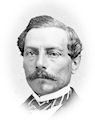
G. T. BEAUREGARD,

Brigadier-General, Commanding.