Following the American Civil War Sesquicentennial with day by day writings of the time, currently 1863.

Sunday, March 6, 2011

HEADQUARTERS C. S. ARMY,
Charleston, S. C., March 6, 1861.

SIR: In obedience to War Department orders of the 1st instant I arrived at this place on the 3d instant, and immediately reported to Governor Pickens for military duty. That day we inspected the floating battery now being constructed here. On the 4th instant we inspected the works on the southern portion of the harbor (Morris Island and Fort Johnson) and yesterday those on the north (Fort Moultrie, &c., including Castle Pinckney).

I have now the honor to state that I coincide fully in the opinion and views contained in Maj. W. H. C. Whiting’s letter preceding his full report, and that, as I have not time to write more fully on the subject, I desire that portion of his letter referring to the above works should be annexed to this report, and a copy thereof sent to me for my files.

On Morris Island the flanking defects are being remedied, and will probably soon be completed, as well as the position, &c., of said works will permit. I have ordered that only six mortars, instead of twelve, intended for that point, should be put in position there. I have ordered the construction of a series of small batteries of heavy guns, two in each, and twenty in all, well protected by traverses along the channel shore of that island, said batteries to be about fifty or one hundred yards apart (according to the nature of the ground), to prevent the broadsides of a vessel, from silencing them in a few minutes. When those batteries shall be ready, I will remove into them all the heavy guns I can dispose of. I have ordered to that island the whole of Colonel Gregg’s regiment, with two short 12-pounders and one light battery, for the protection of said works, selecting a strong natural position to protect their right flank from a land attack.

I have ordered an additional battery (for two mortars) to be constructed near Fort Johnson, to receive half of those intended for a defectively-placed mortar battery, to the south of said work, the latter not being in itself of much importance, containing only an open battery of four 24-pounders bearing on the inner harbor. At Fort Moultrie, towards the north of Fort Sumter, I have ordered additional traverses to be thrown up, of a better construction than those already there, for the protection of the channel guns against enfilade from Fort Sumter. Between Moultrie and the western extremity of Sullivan’s Island I have ordered the construction of a four-gun concealed battery, to enfilade the channel face of Sumter, having nine or ten guns (en barbette) bearing on the Morris Island works. I have ordered two more 32-pounders to be added to the extreme five-gun battery, commanding the Maffitt or northern shore channel into the harbor, and I have selected the site of two more mortar batteries, of two each, to take in reverse the casemate and barbette guns of Fort Sumter bearing on Morris Island.

I have fortunately found that we would soon have mortars enough for all our present wants; but, generally, the carriages and chassis of nearly all the guns, especially those on the Morris Island works, are either defective or not of the proper kind. I am going to remedy this defect as soon as practicable.

I find that the gorge of Fort Sumter is too much inclined to the guns on Morris Island to be breached by them at this distance (thirteen hundred yards); and, moreover, they have double the number of guns bearing on them, reversing thereby the advantages of the attack over the defense. If we succeed in constructing my enfilading battery on Sullivan’s Island we will then have a preponderating fire against said gorge wall (four feet six inches thick); but, as already stated, at about thirteen hundred yards, and at an angle of about fifty degrees.

I find that the battery of heavy guns (10-inch columbiads), which I proposed putting up in the vicinity of Fort Johnson, would be impracticable (if we had said guns), the grounds being too low and marshy.

I have now given you a general view of the condition of the offensive works of this harbor, and I am of the opinion that, if Sumter was properly garrisoned and armed, it would be a perfect Gibraltar to anything but constant shelling, night and day, from the four points of the compass. As it is, the weakness of the garrison constitutes our greatest advantage, and we must, for the present, turn our attention to preventing it from being re-enforced. This idea I am gradually and  cautiously infusing into the minds of all here; but, should we have to open our batteries upon it, I hope to be able to do so with all the advantages the condition of things here will permit. All that I ask is time for completing my batteries and preparing and organizing properly my command, which is still in a more or less confused state, not having yet my general staff officers around me. So soon as I shall have here a competent engineer officer (Major Whiting arrived here on the 4th, and will probably leave again for Savannah to day, where his presence is required), I will send to the department a plan of this harbor, with the position, &c., of all the works marked thereon. Those Drummond lights, ordered from New York, will be here in about ten days.

I remain, sir, very respectfully,

G. T. BEAUREGARD,

Brigadier-General, Commanding.

General L. P. WALKER,

Secretary of War, Montgomery, Ala.
WEDNESDAY 6

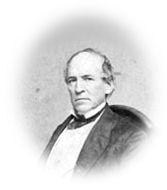
Worked busily in the office all day but had numerous “Calls.” Called, myself, upon Mr Kelly the acting Sec’y of Interior. The Sec’y [has] not taken his position yet but expected today. Wife & Julia called at the office for me just before 3 o’clock. I went home with them, C R T along. In the evening went to Willards with them all, staid two or three hours with our friends in the parlors. We went from there to “Gautiers” and took Ice Cream, Tea, &c. Got home about 11 o’clock and soon went to bed.

______

The three diary manuscript volumes, Washington during the Civil War: The Diary of Horatio Nelson Taft, 1861-1865, are available online at The Library of  Congress.

CHARLESTON,
March
6, 1861.

President DAVIS, Montgomery:

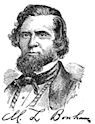
MY DEAR SIR: I inclose you, according to promise, a statement showing the strength of the volunteer division of South Carolina. Some of the regiments are commanded by highly accomplished graduates of our military academies, and some by officers of the Palmetto Regiment. It is altogether a superb body of troops, and I think will give a good account of themselves by their acts.

Under the skillful conduct of General Beauregard the works here are likely to be put promptly in the best possible condition to prevent re-enforcements. The danger to be feared is that light-draught vessels, barges, or boats in the night may be sent in through the two middle channels, known as the Overall and North Channels; but you doubtless get fuller information than I can give you on these points.

Mr. Miles has doubtless apprised you of my readiness to enter the service of the confederation in the capacity you indicated. I say to you, however, frankly, that I should like to see my brigadiers in the field with their commands, or so many as may be needed, and be there myself with my present rank. If raising General Beauregard’s rank a grade does not embarrass you, I would cheerfully report to him. The exhibition of skill, promptness, and energy by General Beauregard is highly gratifying to the authorities here.

I am, very sincerely and truly, yours,

M. L. BONHAM.

[Inclosure.]

HEADQUARTERS, STATE  OF SOUTH CAROLINA,
March 6, 1861.

M. L. BONHAM,
Major-General, Commanding Volunteer Forces of S. C.:

GENERAL: The number of companies organized and received under the act of general assembly of 17th December, 1860, is one hundred and four–in the aggregate amounting to 8,835, rank and file, constituting ten regiments of ten companies each. The force is divided into four brigades, constituting one division.

Respectfully,

S. R. GIST,

Adjutant and Inspector General of South Carolina.

FORT SUMTER, March 6, 1861.
(Received A. G. O., March 9.)

Col. S. COOPER, Adjutant-General U. S. Army :

COLONEL: I have the honor to report that a very large re-enforcement was landed last night at Cummings Point and bivouacs near No. 10. This morning it was marched out of sight, around the point of the island. Yesterday the three other guns were mounted in No. 10, thus completing its armament of four heavy pieces. They continued working yesterday at the places mentioned in my report, and are still so occupied to-day. A party has also been at work this morning on the Fort Moultrie glacis. Everything indicates activity and determination.

I had the honor to present in No. 58 my opinion of the strength of the army which will be necessary to force an entrance into the harbor. The presence here, as commander, of General Beauregard, recently of the U.S. Engineers, insures, I think, in a great measure the exercise of skill and sound judgment in all operations of the South Carolinians in this harbor. God grant that our country may be saved from the horrors of a fratricidal war!

I am, colonel, very respectfully, your obedient servant,

ROBERT ANDERSON,

Major, First Artillery, Commanding.

—–

FORT SUMTER, S.C., March 6, 1861.

General Jos. G. TOTTEN,
Chief Engineer U.S.. Army, Washington, D.C.:

GENERAL: I have the honor to report that during the day, and especially towards night, unusual activity was observed among the South Carolinians around us. Several steamer loads of men were landed on Cummings Point. The number was greater than the arrangements for shelter, apparently, for I observe quite a large number grouped about their bivouac fires this morning. Their suffering must have been considerable during the night, for the weather suddenly changed from the warm temperature of the preceding days to a high degree of cold for this climate, the wind blowing fresh from the north.

I learn that portable hot-shot furnaces have been furnished to several, and probably all, of the batteries. The mortar battery on James Island, south of Fort Johnson, is armed, but the number of mortars is not ascertained. The magazine in the flank of this battery is also finished. The mortar battery on Sullivan’s Island, west of Fort Moultrie, is also armed.

All the batteries on Morris Island are armed. The guns range from 32-pounders down, with the exception of the iron bomb-proof, which is (I think, from all reports and observations) armed with 8-inch columbiads–three of them.

The raft does not meet expectations. It is being covered with railroad strap-iron instead of the T rail. This has a cross-section of about three-fourths or one inch by two inches or two and a half inches. They are now ironing the top portion, the front not being yet commenced. Two 8-inch columbiads are lying on the wharf ready to be put on board. I do not think this floating battery will prove very formidable.

We have not yet received the inaugural address of President Lincoln, although it is reported from town that it is coercive in its character, and that much excitement prevails.

Very respectfully, your obedient servant,

J. G. FOSTER,

Captain, Engineers.

HDQRS. OF THE
CONFEDERATE STATES
OF AMERICA,
Charleston, S. C., March 6, 1861.

GENERAL ORDERS,
No. 1.

.

.

.

.

I. By virtue of authority from the War Department, Confederate States of America, bearing date Montgomery, March 1, 1861, and of authority of the Department of War, State of South Carolina, bearing date March 3, 1861, the undersigned assumes command of all the troops—Regulars, Volunteers, and Militia—on duty in and near Charleston Harbor.

II. The following appointments are announced on the staff of the brigadier-general commanding: Capt. D. R. Jones, as assistant adjutant general; Capt. Stephen D. Lee, of the regular artillery service of the State of South Carolina, as acting assistant quartermaster-general and acting assistant commissary-general; Capt. S. Wragg Ferguson, of the regular infantry service of the State of South Carolina, as aide-de-camp; First Lieut. Joseph J. Legaré, of the regular engineer service of the State of South Carolina, as private secretary.

G. T. BEAUREGARD,

Brigadier-General, Commanding.

—Fort Brown, Texas, was finally surrendered by arrangement between Captain Hill and the Texas Commissioners.—Galveston Civilian, March 11.