Following the American Civil War Sesquicentennial with day by day writings of the time, currently 1863.

March 2011

SUNDAY 10

Rather a cold day but no frost, a cold wind. Went to Trinity Ch (Dr Butlers.) this morning with my old friend S Patrick. Bro C R, Maj Sol [Bulkley?] & Juliet also there. In afternoon, all went to Dr Smiths ch, heard a Mr Fish from Paris (France). He is trying to raise funds for the Protestant cause in France. He did not speak very good English but was still very interesting and could be easily understood by close attention. Was in at Willards with Bro in the Evening. Wife has been writing to Hariet Brownson. C R & self talking of Wmstown Characters.

______

The three diary manuscript volumes, Washington during the Civil War: The Diary of Horatio Nelson Taft, 1861-1865, are available online at The Library of  Congress.

March 10, 1861.—The excitement in this house has risen to fever heat during the past week. The four gentlemen have each a different plan for saving the country, and now that the bridal bouquets have faded, the three ladies have again turned to public affairs; Lincoln’s inauguration and the story of the disguise in which he traveled to Washington is a never-ending source of gossip. The family board being the common forum, each gentleman as he appears first unloads his pockets of papers from all the Southern States, and then his overflowing heart to his eager female listeners, who in turn relate, inquire, sympathize, or cheer. If I dare express a doubt that the path to victory will be a flowery one, eyes flash, cheeks burn, and tongues clatter, till all are checked up suddenly by a warning rap for “Order, order!” from the amiable lady presiding. Thus we swallow politics with every meal. We take a mouthful and read a telegram, one eye on table, the other on the paper. One must be made of cool stuff to keep calm and collected. I say but little. There is one great comfort; this war fever has banished small talk. The black servants move about quietly, never seeming to notice that this is all about them.

“How can you speak so plainly before them?” I say.

“Why, what matter? They know that we shall keep the whip-handle.”

______

Note: To protect Mrs. Miller’s job as a teacher in New Orleans, the diary was published anonymously, edited by G. W. Cable, names were changed and initials were often used instead of full names — and even the initials differed from the real person’s initials.

HDQRS. PROV. ARMY
CONFEDERATE STATES
OF AMERICA
Charleston, S.C., March 9, 1861.


Hon. L. P. WALKER, Secretary of War, Montgomery, Ala.:

SIR: I inclose you herewith the report of Col. M. Gregg, First Regiment South Carolina Volunteers, commanding on Morris Island, at the entrance of this harbor, reporting the circumstances connected with the accidental shooting of a loaded gun towards Fort Sumter on the 8th instant. From the inquiries thus far made, it would appear to have been entirely accidental; but I have ordered a thorough investigation of the affair to be made at once, and in order to prevent the recurrence of an event which might be attended with such disastrous consequences, I have ordered that hereafter no gun should be practiced with without first ascertaining whether it be loaded or not.

The channel batteries are progressing regularly, and the other works are being corrected and consolidated. Nothing new otherwise.

I remain, sir, very respectfully, your obedient servant,

G. T. BEAUREGARD,

Brigadier-General, Commanding.

[Inclosure. 1]

HEADQUARTERS MORRIS ISLAND, S.C.,
March 8, 1861.

To the CHIEF OF STAFF OF BRIGADIER-GENERAL BEAUREGARD:

SIR: I am informed by Major Stevens that a shot was accidentally fired from the iron battery this morning, which struck Fort Sumter. Major Stevens was practicing with blank cartridges, and does not know how a shot got in. He does not suspect that it was put in by any man intentionally. Major Stevens is about to go with a flag to Fort Sumter to explain the accident.

I have to request that General Beauregard will forward this note for the information of the commander-in-chief.

I have the honor to be, your obedient servant,

MAXCY GREGG,

Colonel First Regiment South Carolina Volunteers,
Commanding on Morris Island.

SATURDAY 9

A rainy morning but most of the day was rather pleasant. No particular news stirring. Spent an hour after dinner with Bro. at the office of Dr John W [Bulkley?] and his father Solomon [Bulkley?] talking of Williamstown people &c. Went down to Willards with Bro. and from there to the “National” to see Philip Dorsheimer. He had left on the 3.10 train. We got the evening NY papers. Called at “Kirkwoods” and came home about 9 o’clock and read the news till 11 o’clock and then went to bed.

______

The three diary manuscript volumes, Washington during the Civil War: The Diary of Horatio Nelson Taft, 1861-1865, are available online at The Library of  Congress.

WAR DEPARTMENT, C. S. A.,
Montgomery, March 9, 1861.

Brig. Gen. P. G. T. BEAUREGARD, Charleston:

GENERAL: Your report of the 6th instant has been received at this Department. What you have done and what you propose to do is approved. Push forward your contemplated works with all possible expedition, especially with the view to prevent the re-enforcement of Fort Sumter. This must be prevented at all hazards, and by the use of every conceivable agency. Fort Sumter is silent now only because of the weakness of the garrison. Should re-enforcements get in, her guns would open fire upon you.

There is information at this Department–not official, it is true, but believed to be reliable–that five or six United States ships are in New York Harbor all ready to start.

The United States steamer Pawnee has left Philadelphia suddenly for Washington, fully provisioned and ready to go to sea, and it is probable that the effort to re-enforce Sumter may be made by sending in men in whale-boats by night. Should this plan succeed and the garrison be re-enforced sufficiently to stand an assault the attempt may be made to fight their way up by five or six war vessels.

In his report to this Department Major Whiting suggested the possibility of re-enforcements by land. Upon examining the map it occurs to me that this possibility might be accomplished in two ways: First, at the south of Morris Island there is an inlet which connects with Schooner Creek, and affords a water communication in the rear of all our works directly up to Fort Sumter. The creeks are, however, very winding, and probably if taken in hand at once could easily be obstructed by sinking flats or boats. Second, Stono River affords, I should think, an entrance to vessels of from eight to twelve feet draught, which may land troops on James Island, or go through a cut known as James Island Cut. Neither method, I take it, would be practicable if any troops were on James Island; but in the absence of them a sudden rush might possibly avail.

These suggestions are made without special knowledge, and are submitted for your consideration.

I have the honor to be, very respectfully, your obedient servant,

L. P. WALKER,

Secretary of War.

—The Southern Confederacy Congress passed an act for the establishment and organization of the army of the Confederate States.—(Doc. 44.) —Times, March 16.

March 8th.—Judge Campbell,¹ of the United States Supreme Court, has resigned. Lord! how he must have hated to do it. How other men who are resigning high positions must hate to do it.

Now we may be sure the bridge is broken. And yet in the Alabama Convention they say Reconstructionists abound and are busy.

Met a distinguished gentleman that I knew when he was in more affluent circumstances. I was willing enough to speak to him, but when he saw me advancing for that purpose, to avoid me, he suddenly dodged around a corner —William, Mrs. de Saussure’s former coachman. I remember him on his box, driving a handsome pair of bays, dressed sumptuously in blue broadcloth and brass buttons; a stout, respectable, fine-looking, middle-aged mulatto. He was very high and mighty.

Night after night we used to meet him as fiddler-in-chief of all our parties. He sat in solemn dignity, making faces over his bow, and patting his foot with an emphasis that shook the floor. We gave him five dollars a night; that was his price. His mistress never refused to let him play for any party. He had stable-boys in abundance. He was far above any physical fear for his sleek and well-fed person. How majestically he scraped his foot as a sign that he was tuned up and ready to begin!

Now he is a shabby creature indeed. He must have felt his fallen fortunes when he met me—one who knew him in his prosperity. He ran away, this stately yellow gentleman, from wife and children, home and comfort. My Molly asked him “Why? Miss Liza was good to you, I know.” I wonder who owns him now; he looked forlorn.

Governor Moore brought in, to be presented to me, the President of the Alabama Convention. It seems I had known him before; he had danced with me at a dancing-school ball when I was in short frocks, with sash, flounces, and a wreath of roses. He was one of those clever boys of our neighborhood, in whom my father saw promise of better things, and so helped him in every way to rise, with books, counsel, sympathy. I was enjoying his conversation immensely, for he was praising my father² without stint, when the Judge came in, breathing fire and fury. Congress has incurred his displeasure. We are abusing one another as fiercely as ever we have abused Yankees. It is disheartening.

____

¹ John Archibald Campbell, who had settled in Montgomery and was appointed Associate Justice of the United States Supreme Court by President Pierce in 1853. Before he resigned, he exerted all his influence to prevent Civil War and opposed secession, although he believed that States had a right to secede.

² Mrs. Chesnut’s father was Stephen Decatur Miller, who was born in South Carolina in 1787, and died in Mississippi in 1838. He was elected to Congress in 1816, as an Anti-Calhoun Democrat, and from 1828 to 1830 was Governor of South Carolina. He favored Nullification, and in 1830 was elected United States Senator from South Carolina, but resigned three years afterward in consequence of ill health. In 1835 he removed to Mississippi and engaged in cotton growing.
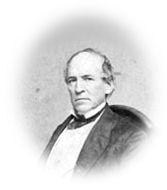
FRIDAY, MARCH 8, 1861.

Rather a cool day but cloudy with indications of rain at night. Shepherd Patrick of Norwalk Ohio called upon me today. I showed him round the office. This Evening was the first Levee of Mr Lincoln at the “White House.” Myself, Brother C R, and Julia went. The crowd was so great in the House that hundreds left without seeing the Prest. It was a perfect jam. Elegant Ladies dresses and Elegant Officers uniforms fared bad in the crowd. Got home about 10 and staid there quite as long as was desirable to us.

______

The three diary manuscript volumes, Washington during the Civil War: The Diary of Horatio Nelson Taft, 1861-1865, are available online at The Library of  Congress.

HEADQUARTERS CONFEDERATE STATES ARMY,
Charleston, S. C., March 8, 1861.

Hon. L. P. WALKER, Secretary of War, Montgomery, Ala.:

“Every one here seems to be gradually becoming aware, through my cautious representations, that we are not yet prepared for the contest, and that the first work in order is to endeavor to keep re-enforcements from getting into Fort Sumter by increasing our channel defenses.”

SIR: The Department letter of the 2d instant has been received, but could not be answered sooner. Governor Pickens, who obligingly affords me all the assistance in his power, as well as all his officers, suggests that the State of South Carolina should continue to defray all the present current expenses incurred within its limits, so as not to complicate the present moneyed difficulties of the Confederate States Government. This would probably be a very proper arrangement.

With regard to the supposed temporary dissatisfaction of the State troops, alluded to by you, upon consultation with the governor, he advises that the brigade of State Regulars should remain as at present organized, until required to enter the Federal service, but in the mean time to be under my orders. Its commanding general and staff have readily assented to this arrangement, and by the order of the governor (already communicated to the War Department), it must have been seen that all the troops (State, Regulars, and Volunteers) in or about Charleston have already been put under my orders, and I can perceive among them no spirit of opposition or dissatisfaction. On the contrary, they appear to be animated with the most kindly feelings towards me, and seem highly pleased at the order assigning me to their command.

I have already given the information here that cavalry would not, at present, be called into the service of the Confederate States.

Every one here seems to be gradually becoming aware, through my cautious representations, that we are not yet prepared for the contest, and that the first work in order is to endeavor to keep re-enforcements from getting into Fort Sumter by increasing our channel defenses, which I hope to be able to accomplish in about a week or ten days. In the mean time I will go on organizing everything around me.

Respectfully, your obedient servant,

G. T. BEAUREGARD,

Brigadier-General, Commanding.

THURSDAY 7

Somewhat frosty this morning, but a bright day. In the office all day. W VanMaster of Lyons called again. Went with him to the seed room and procured a variety of garden seeds, grape cutting, tea plants &c for him. Bro C R and also Julia were at the office today. Went with Bro after three o’clock to [“Klomans“?] and got some oysters and ale. Intending to go to the Navy Yard, but concluded that it was too late. Came home and dined at 4, did not go out this evening. Bro & I staid in parlor.

______

The three diary manuscript volumes, Washington during the Civil War: The Diary of Horatio Nelson Taft, 1861-1865, are available online at The Library of  Congress.