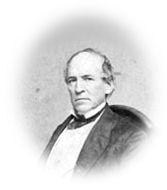
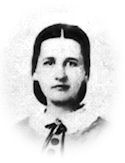
Following the American Civil War Sesquicentennial with day by day writings of the time, currently 1863.

March 2011

March 4, 1861.— President Lincoln was inaugurated to-day.

March 5. — I read the inaugural address aloud to Grandfather this evening. He dwelt with such pathos upon the duty that all, both North and South, owe to the Union, it does not seem as though there could be war!

—General Peter G. T. Beauregard, lately a major in the United States Engineer Corps, was ordered by Jefferson Davis, President of the Southern Confederacy, to proceed to Charleston and take command of the forces there assembled, and to be assembled for the investment of Fort Sumter.—Herald, March 7.

—In the Texas State Convention, a letter was received from General Wanl, enclosing a letter from the Secretary of War of the Confederate States, in relation to the military complications in Texas. President Davis instructs the Secretary of War to say that he is disposed to assume every responsibility compatible with the relations of the Federal Government to Texas. Davis considers it due to international courtesy that the Government of the Confederate States (Texas included, after her withdrawal from the United States) should accord to the troops belonging to the Federal Government a reasonable time within which to depart from her territory. Should the Federal Government refuse to withdraw them, President Davis does not hesitate to say, that all the powers of the Southern Confederacy shall be promptly employed to expel them. General Waul says that the possibility of settling difficulties by a reconstruction of the old Union is never alluded to in the Congress, and that the proposal would receive about the same encouragement as a proposition to reannex Texas to the States of Mexico.—Evening Post, March 20.

—The President’s inaugural meets with a varied reception throughout the country. The South pronounces it warlike, while a greater portion of the North considers it conservative. —(Doc. 43.)

A letter to the new president on Major Anderson and Fort Sumter.

War Department, March 5, 1861.

Sir,—I have the honor to submit for your consideration several letters with inclosures received on yesterday from Major Anderson and Captain Forster of the Corps of Engineers, which are of a most important and unexpected character. Why they were unexpected will appear from the following brief statement:

After transferring his forces to Fort Sumter he (Major Anderson) addressed a letter to this Department, under date of the 31st December, 1860, in which he says, ‘ Thank God! we are now where the Government may send us additional troops at its leisure. To be sure, the uncivil and uncourteous action of the Governor (of South Carolina) in preventing us from purchasing anything in the city will annoy and inconvenience us somewhat; still we are safe.’ And after referring to some deficiency in his stores, in the articles of soap and candles, he adds: ‘Still we can cheerfully put up with the inconvenience of doing without them for the satisfaction we feel in the knowledge that we can command this harbor as long as our Government wishes to keep it.’ And again, on the 6th of January, he wrote: ‘My position will, should there be no treachery among the workmen whom we are compelled to retain for the present, enable me to hold this fort against any force which can be brought against me; and it would enable me, in the event of war, to annoy the South Carolinians by preventing them from throwing supplies into their new posts except by the aid of the Wash Channel through Stono River.’

Before the receipt of this communication, the Government, being without information as to his condition, had despatched the Star of the West with troops and supplies for Fort Sumter, but the vessel, having been fired on from a battery at the entrance to the harbor, returned without having reached her destination.

On the 16th of January, 1861, in replying to Major Anderson’s letters of the 31st of December and of the 6th of January, I said, ‘Your late despatches, as well as the very intelligent statements of Lieutenant Talbot, have relieved the Government of the apprehensions previously entertained for your safety. In consequence it is not its purpose at present to reinforce you. The attempt to do so would no doubt be attended by a collision of arms and effusion of blood—a national calamity which the President is most anxious to avoid. You will, therefore, report frequently your condition, and the character and activity of the preparations, if any, which may be being made for an attack upon the fort or for obstructing the Government in any endeavors it may make to strengthen your command. Should your despatches be of a nature too important to be intrusted to the mails, you will convey them by special messenger. Whenever, in your judgment, additional supplies or reinforcements are necessary for your safety or for a successful defence of the fort, you will at once communicate the fact to this Department, and a prompt and vigorous effort will be made to forward them.’

Since the date of this letter Major Anderson has regularly and frequently reported the progress of the batteries being constructed around him, and which looked either to the defence of the harbor or to an attack on his own position. But he has not suggested that these works compromised his safety, nor has he made any request that additional supplies or reinforcements should be sent to him. On the contrary, on the 30th of January, 1861, in a letter to this Department, he uses this emphatic language: ‘I do hope that no attempt will be made by our friends to throw supplies in; their doing so would do more harm than good.’

On the 5th of February, when referring to the batteries, etc., constructed in his vicinity, he said, ‘Even in their present condition they will make it impossible for any hostile force, other than a large and well appointed one, to enter this harbor, and the chances are that it will then be at a great sacrifice of life;’ and in a postscript he adds : ‘Of course, in speaking of forcing an entrance, I do not refer to the little stratagem of a small party slipping in.’ This suggestion of a stratagem was well considered in connection with all the information that could be obtained bearing upon it, and in consequence of the vigilance and number of the guard-boats in and outside of the harbor it was rejected as impracticable.

In view of these very distinct declarations, and of the earnest desire to avoid a collision as long as possible, it was deemed entirely safe to adhere to the line of policy indicated in my letter of the 16th January, which has been already quoted. In that Major Anderson had been requested to report ‘at once,’ ‘whenever, in his judgment, additional supplies or reinforcements were necessary for his safety or for a successful defence of the fort.’ So long, therefore, as he remained silent upon this point the Government felt that there was no ground for apprehension. Still, as the necessity for action might arise at any moment, an expedition has been quietly prepared, and is ready to sail from New York on a few hours’ notice, for transporting troops and supplies to Fort Sumter. This step was taken under the supervision of General Scott, who arranged its details, and who regarded the reinforcements thus provided for aa sufficient for the occasion. The expedition, however, is not upon a scale approaching the seemingly extravagant estimates of Major Anderson and Captain Forster, now offered for the first time, and for the disclosures of which the Government was wholly unprepared.

The declaration now made by the major that he would not be willing to risk his reputation on an attempt to throw reinforcements into Charleston harbor, and with a view of holding possession of the same, with a force of less than twenty thousand good and well-disciplined men, takes the Department by surprise, as his previous correspondence contained no such intimation.

I have the honor to be,

Very respectfully,

Your obedient servant,

J. Holt.

To The President.
FORT SUMTER, S.C., March 5, 1861.

Col. S. COOPER, Adjutant-General:

COLONEL: I have the honor to report that parties are working to-day on the mortar battery at Fort Johnson, which they are making higher and stronger, and on the Morris Island batteries, numbered on Captain Seymour’s sketch Nos. 1, 9, and 10. They are filling the embrasures in this last battery, in which we see that one gun has been placed. They are also at work on the covered way connecting Nos. 9 and 7.

I presume, from the movements around us yesterday, that Brig. Gen. P. G. T. Beauregard assumed command and made an inspection of the forts, &c., in this harbor, which are garrisoned by the South Carolina troops.

I am, colonel, very respectfully, your obedient servant,

ROBERT ANDERSON,

Major, First Artillery, Commanding.

WASHINGTON CITY, March 5, 1861.

General L. POPE WALKER,
Secretary of War, Montgomery, Ala.:

“We agreed that it was Lincoln’s purpose at once to attempt the collection of the revenue, to re-enforce and hold Fort Sumter and Pickens, and to retake the other places. He is a man of will and firmness.

DEAR SIR: Judge Clay asked me before he left here to telegraph and write to Governor Moore any matters of importance. This was before the formation of the Provisional Government at Montgomery. Nothing has occurred since that request to justify a special dispatch, and now it appears to me that if there should be movements of troops or ships which come to my knowledge it would be better to send them to you. I shall do so on learning anything of importance in a reliable way. I may send the dispatch in a letter to Richmond to be telegraphed from there, or I may send it from here, as circumstances dictate.

The inaugural undoubtedly means war, and that right off. I have never doubted as to Lincoln’s views, and nothing would have changed them but the secession of the border States, who have not acted.

Mr. Crawford is here, and will proceed to execute the duties of his mission as soon as the new Secretary of State is installed. This will bet I suppose, to-morrow morning at furthest.

I was present last evening at a consultation of Southern gentlemen, at which Messrs. Crawford, Garnett, Pryor, De Jarnette, of Virginia, and Wigfall, of Texas, were present. We all put the same construction on the inaugural, which we carefully went over together. We agreed that it was Lincoln’s purpose at once to attempt the collection of the revenue, to re-enforce and hold Fort Sumter and Pickens, and to retake the other places. He is a man of will and firmness. His Cabinet will yield to him with alacrity, I think. Seward has, of course, agreed to the inaugural, and the pretenses of his conservatism are idle.

We believe that these plans will be put into execution immediately. I learn five or six United States ships are in New York Harbor, all ready to start. The United States steamer Pawnee came here the other day suddenly from Philadelphia, fully provisioned and ready to go to sea.

I understand that it is spoken of in Army circles to re-enforce Sumter by sending in men in whale-boats by night. This will probably be attempted in the first instance. After the garrison is re-enforced sufficiently to stand an assault, then the attempt may be made to fight the way up by five or six war vessels. Simultaneously or prior to this will be the change of programme at Pensacola by the United States, Pensacola being a point of infinitely more importance. Considering this and the evident purpose announced in the inaugural, would it not be expedient to prevent anything in the shape of dispatches, letters, or messengers from going to Slemmer or the other United States officers or men at Pensacola? By this you will have the advantage of knowing the movements from this point before the Government officers at Pensacola.

We shall endeavor to get hold of movements as soon as possible, and to advise you. Of course we labor under great difficulties in procuring early intelligence.

There is a general concurrence in the opinion that if any attack is made on Sumter it should be by order of the Government of the Confederate States and not by South Carolina alone.

Very truly yours,

L. Q. WASHINGTON.

Will you please show this letter to the Hon. Mr. Perkins, Secretary of the Navy?

I fear the present Virginia Convention will not pass an ordinance of secession unless a collision or war ensues; then public feeling will force them to it. There is a majority of old Federal submissionists, who got in by pretending to be resistance men.

March 4th.—The Washington Congress has passed peace measures. Glory be to God (as my Irish Margaret used to preface every remark, both great and small).

At last, according to his wish, I was able to introduce Mr. Hill, of Georgia, to Mr. Mallory,¹ and also Governor Moore and Brewster, the latter the only man without a title of some sort that I know in this democratic subdivided republic.

I have seen a negro woman sold on the block at auction. She overtopped the crowd. I was walking and felt faint, seasick. The creature looked so like my good little Nancy, a bright mulatto with a pleasant face. She was magnificently gotten up in silks and satins. She seemed delighted with it all, sometimes ogling the bidders, sometimes looking quiet, coy, and modest, but her mouth never relaxed from its expanded grin of excitement. I dare say the poor thing knew who would buy her. I sat down on a stool in a shop and disciplined my wild thoughts. I tried it Sterne fashion. You know how women sell themselves and are sold in marriage from queens downward, eh? You know what the Bible says about slavery and marriage; poor women! poor slaves! Sterne, with his starling—what did he know ? He only thought, he did not feel.

In Evan Harrington I read: “Like a true English female, she believed in her own inflexible virtue, but never trusted her husband out of sight.”

The New York Herald says: “Lincoln’s carriage is not bomb-proof; so he does not drive out.” Two flags and a bundle of sticks have been sent him as gentle reminders. The sticks are to break our heads with. The English are gushingly unhappy as to our family quarrel. Magnanimous of them, for it is their opportunity.

____

¹ Stephen R. Mallory was the son of a shipmaster of Connecticut, who had settled in Key West in 1820. From 1851 to 1861 Mr. Mallory was United States Senator from Florida, and after the formation of the Confederacy, became its Secretary of the Navy.

MONDAY 4

This has been an eventful day in Washington. A Lincoln has been Inaugurated Pres of the U.S. His address seems to give general satisfaction. I stood near him and heard it distinctly. The crowd was very great at the Capitol, probably Thirty Thousand people stood before Mr L, and all were very orderly, and nothing has occured during the day to interupt the proceedings. Was at Willards this evening with Brother C R, great crowd there still. Wife & boys saw the procession pass and went to the “White House.”

______

The three diary manuscript volumes, Washington during the Civil War: The Diary of Horatio Nelson Taft, 1861-1865, are available online at The Library of  Congress.

—Abraham Lincoln was inaugurated at Washington, sixteenth President of the United States. He kissed the thirty-four States of the Union as represented by thirty-four young ladies.

The inauguration procession proceeded to the east portico of the capitol, in front of which a platform had been erected. Every available space in the vicinity was packed with a curious crowd of spectators. Every thing being in readiness, Senator Baker, of Oregon, came forward and introduced Mr. Lincoln in these simple words: “Fellow-citizens: I introduce to you Abraham Lincoln, the President-elect of the United States of America.” Mr. Lincoln then advanced to a small table, which had been placed for his accommodation, and proceeded to deliver his inaugural address, every word of which was distinctly heard on the outskirts of the swaying crowd. The oath of office was then administered to Mr. Lincoln by Chief Justice Taney; the procession was again formed, Mr. Lincoln was escorted to the White House, and was duly installed in the office of President of the United States.—(Doc. 42.)

—A State Convention declared Texas out of the Union and Governor Houston issued his proclamation to that effect.

March 3rd, 1861.—Father has volunteered. Mother was bitterly opposed but though Father yielded to her in many things he would not in this. I wish I was a boy; even if I am young, I could go with him if only I were not a girl. It will beak my heart if he goes.

SUNDAY 3

Warmer than ever today, quite oppressive walking. Went up to the Depot at 6 o’clock for the Baggage, walked there and back. Went to the Capitol with Brother and Judge D., but there was no Services there today as we Expected to hear Mr Stockton the Chaplin. Fell in with Chas and brot him home to dine with us. Went to hear Doct Smith in the afternoon but heard Mr Collins. Went with Julia in the Evening to call on Miss Butterfield at Mis Mannings and we then went to Doct Gurleys church and heard Mr Haskel of Boston. Got home 1/2 past nine o’clock.

______

The three diary manuscript volumes, Washington during the Civil War: The Diary of Horatio Nelson Taft, 1861-1865, are available online at The Library of  Congress.