RALEIGH, April 26, 1861
L. P. WALKER:
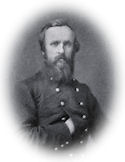
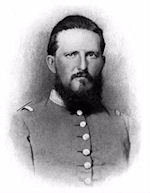
I have sent Colonel Holmes to take command of coast defenses, with full instructions. I regard the Cape Fear as perfectly secure. He can judge of that, however.
JOHN W. ELLIS.
RALEIGH, April 26, 1861
L. P. WALKER:
I have sent Colonel Holmes to take command of coast defenses, with full instructions. I regard the Cape Fear as perfectly secure. He can judge of that, however.
JOHN W. ELLIS.
U. S. FRIGATE SABINE,
Off Pensacola, April 26, 1861.
ORDER:
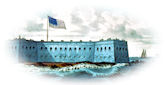
Colonel Brown thinks it probable that an attempt may be made by General Bragg to land forces on Santa Rosa Island with a view of making approaches by land against Fort Pickens, in which case he asks the co-operation of the squadron to prevent it. You will therefore have as many men ready to land as can be spared with safety to your ship. The signal of danger will be two rockets thrown up from the fort, which are to be answered by the ships. On seeing this signal you will immediately have your boats manned and armed for service. A detachment of soldiers will leave the fort at the same time, and march along the beach on the sea side toward the ships, displaying two red lights. They will form near the beach, opposite the ships, to cover the landing of the seamen. Their position being known by the red lights, the boats will land as near them as possible, and the men formed to unite with the soldiers in executing whatever orders are given by the commanding officer.
H. A. ADAMS,
Captain, U. S. Navy, Senior Officer Present.
—Governor Brown of Georgia issued a proclamation prohibiting the payment of all debts to Northern creditors till the end of hostilities, and directing the payment of money into the State Treasury, to be refunded to depositors with interest at the end of the war.—Montgomery Weekly Post, May 1.
—The enthusiasm of the people at the West in rallying for the defence of the Union, far exceeds the expectations of the most sanguine Republicans. Throughout the entire Northwest there is a perfect unanimity of sentiment. Ten days ago, men who now cry, down with the rebels, were apologizing for the South—justifying its action, and wishing it success. Every town in Illinois is mustering soldiers, and many of the towns of five or six thousand inhabitants have two and three companies ready for action. Companies are also formed for drill, so that, in case of need, they will be prepared to march at any moment. Money is poured out freely as water, and ladies unite in making shirts, blankets, and even coats and pants for the soldiers. Arrangements have been made to take care of the families of the soldiers during their absence. All say, none shall fight the battles of their country at their own expense.— Cor. Boston Transcript, May 1.
—The steamer Daniel Webster from New York, arrived at the bar at the month of the Mississippi, and received orders to return immediately for fear of seizure. The tug boat Tuscarora came alongside, and took four passengers off. The Webster left before the others could get ashore.—N. Y. Commercial, May 1.
—A meeting of the citizens of the Seventeenth Ward, N. Y., was held, to take action in behalf of the families of volunteers from that district.
B. R. Winthrop occupied the chair. Resolutions were adopted, and speeches were made by F. A. Conkling, Chauncey Schaeffer, John Cochrane and others.—N. Y. Tribune, April 27.
—A Union meeting at Bedford, Westchester county, N. Y., this afternoon, on the occasion of raising the flag, was addressed by Senator Hall, John Jay, Rev. M. Bogg, of the Episcopal Church, Rev. Mr. Ferris, Dr. Woodcock, Dr. Shores, Mr. Hart, Captain of the Bedford company, Mr. Brown, of the Croton Falls Company, and others.—N. Y. Times, April 27.
—John W. Ellis, governor of North Carolina, issued a proclamation calling an extra session of the General Assembly of the State, and deprecating the proclamation of President Lincoln asking for troops.—(Doc. 108.)
—The bridges over Gunpowder River on the Philadelphia, Wilmington and Baltimore Railroad were burned by the rebels of Baltimore. The bridge over Bush River, on the same route, was destroyed last evening about sundown.—N. Y. Herald, April 28.
—The Baltimore Sun of to-day, has a leader which seems to indicate that the conservative influence is gaining ground in that city. It emphatically declares that it is not a secession paper. It says that the passage of an ordinance of secession by the Legislature would be an arrogation of power not vested in it. It favors calling a State Convention, the delegates to be elected directly from the people. It denies the stories of violence to Union men at Baltimore. There is a great feeling among business men of the city for the re-establishment of trade, and silent conservatism is changing gradually to open Unionism—N. Y. Times, April 27.
—A large meeting of the ladies of Syracuse, N. Y., was held, to organize for providing supplies for the volunteers. Mrs. E. W. Leavenworth was made president, Mrs. H. W. Chittenden, vice-president, and Mrs. J. B. Burnet, treasurer.
The Common Council of Buffalo, N. Y., yesterday appropriated $85,000 to equip the Sixty-fifth and Seventy-fourth Regiments.—N. Y. Times, April 27.
—The Seventh Regiment of New York took the oath to support the Constitution of the United States, at the War Department, in Washington; not a man flinched; the scene was most impressive.
—Moses Herrick of the Beverly Company, Eighth Massachusetts Regiment, met with an accident by the discharge of a gun.—N. Y. Tribune, April 29.
—The Federal Government is taking most energetic measures to carry out the blockade of the ports of the seceded States. All the available war vessels are put into service. Mercantile steamers are also taken up, and such as are not used for purposes of transportation are being fitted out as gunboats, to cruise off the coast and run up shallow waters.—N. Y. Herald, April 27.
—William Burton, governor of Delaware, issued a proclamation calling out volunteers to defend the Union.—(Doc. 104.)
—A meeting of the ladies of the congregation of Trinity church, and of St. Paul’s, St. John’s, and Trinity chapels, in New York, to the number of about one hundred and fifty, took place in the Sunday-school room, of St. John’s chapel, for the purpose of providing articles for the hospitals and the use of the United States Army. —N. Y. Courier & Enquirer, April 27.
—The steam-tug Yankee, armed with two heavy guns, left New York to join the blockade of the Southern ports.—N. Y. Commercial Advertiser, April 27.
April 25th.—Sent off my letters by an English gentleman, who was taking despatches from Mr. Bunch to Lord Lyons, as the post-office is becoming a dangerous institution. We hear of letters being tampered with on both sides. Adams’s Express Company, which acts as a sort of express post under certain conditions, is more trustworthy; but it is doubtful how long communications will be permitted to exist between the two hostile nations, as they may now be considered.
Dined with Mr. Petigru, who had most kindly postponed his dinner party till my return from the plantations, and met there General Beauregard, Judge King, and others, among whom, distinguished for their esprit and accomplishments, were Mrs. King and Mrs. Carson, daughters of my host. The dislike, which seems innate, to New England is universal, and varies only in the form of its expression. It is quite true Mr. Petigru is a decided Unionist, but he is the sole specimen of the genus in Charleston, and he is tolerated on account of his rarity. As the witty, pleasant old man trots down the street, utterly unconscious of the world around him, he is pointed out proudly by the Carolinians as an instance of forbearance on their part, and as a proof at the same time of popular unanimity of sentiment.
There are also people who regret the dissolution of the Union—such as Mr. Huger, who shed tears in talking of it the other night; but they regard the fact very much as they would the demolition of some article which never can be restored and reunited, which was valued for the uses it rendered and its antiquity.
General Beauregard is apprehensive of an attack by the Northern “fanatics” before the South is prepared, and he considers they will carry out coercive measures most rigorously. He dreads the cutting of the levees, or high artificial works, raised along the whole course of the Mississippi, for many hundreds of miles above New Orleans, which the Federals may resort to in order to drown the plantations and ruin the planters.
We had a good-humored argument in the evening about the ethics of burning the Norfolk navy yard. The Southerners consider the appropriation of the arms, moneys, and stores of the United States as rightful acts, inasmuch as they represent, according to them, their contribution, or a portion of it, to the national stock in trade. When a State goes out of the Union she should be permitted to carry her forts, armaments, arsenals, &c., along with her, and it was a burning shame for the Yankees to destroy the property of Virginia at Norfolk. These ideas, and many like them, have the merit of novelty to English people, who were accustomed to think there were such things as the Union and the people of the United States.
THURSDAY, APRIL 25, 1861.
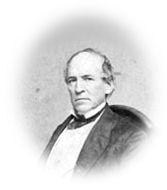
The 7th Regt is at last here, came at 12 o’clock and created much enthusiasm. We breathe a little free now. Self and wife attended the funeral of Mr Danl Douglass at 4 o’clock and then went to the Ave and took an Onibus and went to the Capitol. The Mass Regt were drilling in the East grounds. There were many spectators on foot and in carriages. The Prests Carriage with Mrs Lincoln and Mr Seward with himself, wife & son. On our return we saw the whole 7th Regt drawn up on the Ave near the National. We stoped at Gautiers and took tea. Got home at 9 c.

______
The three diary manuscript volumes, Washington during the Civil War: The Diary of Horatio Nelson Taft, 1861-1865, are available online at The Library of Congress.
April 25, 1861.—Yesterday I went with Cousin E. to have her picture taken. The picture-galleries are doing a thriving business. Many companies are ordered off to take possession of Fort Pickens (Florida), and all seem to be leaving sweethearts behind them. The crowd was in high spirits; they don’t dream that any destinies will be spoiled. When I got home Edith was reading from the daily paper of the dismissal of Miss G. from her place as teacher for expressing abolition sentiments, and that she would be ordered to leave the city. Soon a lady came with a paper setting forth that she has established a “company”—we are nothing if not military—for making lint and getting stores of linen to supply the hospitals.
My name went down. If it hadn’t, my spirit would have been wounded as with sharp spears before night. Next came a little girl with a subscription paper to get a flag for a certain company. The little girls, especially the pretty ones, are kept busy trotting around with subscription lists. A gentleman leaving for Richmond called to bid me good-bye. We had a serious talk on the chances of his coming home maimed. He handed me a rose and went off gaily, while a vision came before me of the crowd of cripples that will be hobbling around when the war is over. It stayed with me all the afternoon while I shook hands with one after another in their shining gray and gold uniforms. Latest of all came little Guy, Mr. F.’s youngest clerk, the pet of the firm as well as of his home, a mere boy of sixteen. Such senseless sacrifices seem a sin. He chattered brightly, but lingered about, saying good-bye. He got through it bravely until Edith’s husband incautiously said, “You didn’t kiss your little sweetheart,” as he always called Ellie, who had been allowed to sit up. He turned suddenly, broke into agonizing sobs and ran down the steps. I went right up to my room.
Suddenly the midnight stillness was broken by the sound of trumpets and flutes. It was a serenade, by her lover, to the young lady across the street. She leaves to-morrow for her home in Boston, he joins the Confederate army in Virginia. Among the callers yesterday she came and astonished us all by the change in her looks. She is the only person I have yet seen who seems to realize the horror that is coming. Was this pallid, stern-faced creature, the gentle, glowing Nellie whom we had welcomed and admired when she came early last fall with her parents to enjoy a Southern winter?
CINCINNATI, April 25, 1861.
DEAR UNCLE:— We are glad to hear from you often. I have written almost daily, and am surprised you do not hear from me more regularly. Your letters reach me in good time.
The point of interest here now is as to Kentucky. Her Legislature meets on the 6th of May. If a secession measure is passed we shall expect lively times here immediately afterwards. The chances are about equal in my opinion. If they were armed and ready they would go beyond all question; but their helpless condition will possibly hold them. Our people generally are quite willing to see them go. They prefer open enmity to a deceptive armed neutrality.
Sincerely,
R. B. HAYES.
P.S.—My company drills at 10 A. M. today—Sunday! I have two clergymen and the sons of two others in the ranks. I suspect they will not answer at roll-call.
S. BIRCHARD.
Harper’s Ferry, April 25,1861.
We reached this place on Tuesday morning. Instead of being fatigued, I was rather improved by the trip. Here we have all the comforts which we could expect, good food and comfortable quarters, better than generally falls to a soldier’s lot. I have enough to occupy every moment of my time in preparing the company for the service which we may expect to see before long. They have much to learn before they can be relied on for efficiency. I regret that my eyes are no better as it is necessary for me to read much for my own preparation. Try, Love, to make yourself contented and happy. I would not like to think that I was forgotten by dear wife and little ones at home, but it would give me a lighter heart to think that they appreciated the necessity of my absence, and the high importance of a faithful discharge of my present duties. My eyes will not enable me to write more without risk of injury to them.
April 25th — Ex-President Tyler and Vice-President Stephens are negotiating a treaty which is to ally Virginia to the Confederate States.
MONTGOMERY, April 25, 1861.
Gov. J. W. ELLIS, Raleigh, N. C.:
Major Whiting writes from Wilmington that he needs one thousand muskets and accouterments and one hundred rounds ammunition from Fayetteville Arsenal.
L. P. WALKER.
__________
MONTGOMERY, April 25, 1861.
Gov. J. W. ELLIS, Raleigh, N. C.
I shall have to supply with arms three regiments from Tennessee and one from Arkansas that rendezvous at Lynchburg, Va. Can you send this Government two thousand percussion muskets to be sent to Lynchburg?
L. P. WALKER
________
RALEIGH, April 25, 1861.
L. P. WALKER:
Arms at Fayetteville off the railroad. Two thousand percussion muskets are at your service soon as can be procured. Where will you have them sent?
JOHN W. ELLIS.
__________
MONTGOMERY, April 25, 1861.
Gov. J. W. ELLIS, Raleigh, N. C.:
Am much obliged for the muskets, and request that you send them to Richmond, Va., to my address as Secretary of War of the Confederate States. The troops to be supplied by North Carolina will rendezvous at Richmond. Transportation provided by the Government. Let me know when they will be ready.
L. P. WALKER.
 Follow on facebook
 RSS
RSS email
email