Following the American Civil War Sesquicentennial with day by day writings of the time, currently 1863.

May 2011

May 29.—I cannot get over my disappointment—I am not to return home!—The wagon was engaged. E. W. had promised to accompany me; all things seemed ready; but yesterday a gentleman came up from the Seminary, reporting that the public roads are picketed far beyond our house, and that he had to cross fields, etc., to avoid an arrest, as he had no pass. I know that there are private roads which we could take, of which the enemy knows nothing; and even if they saw me, they surely would not forbid ingress and egress to a quiet elderly lady like myself. But Mr. thinks that I ought not to risk it. The fiat has gone forth, and I am obliged to submit. I hear that the house has been searched for arms, and that J’s old rifle has been filched from its corner. It was a wonderfully harmless rifle, having been innocent even of the blood of squirrels and hares for some time past. I wonder if they do suppose that we would leave good fire-arms in their reach when they are so much wanted in the Confederacy, or if it is a mere pretext for satisfying a little innocent curiosity for seeing the interior of Southern homes? Ah, how many Northerners—perhaps the very men who have come to despoil these homes, to kill our husbands, sons and brothers, to destroy our peace—have been partakers of the warmhearted hospitality so freely offered by our people! The parlours and dining-rooms now so ignominiously searched, how often have they been opened, and the best cheer which the houses could afford set forth for them! I do most earnestly hope that no Northern gentleman, above all, no Christian gentleman, will engage in this wicked war of invasion. It makes my blood boil when I remember that our private rooms, our chambers, our very sanctums, are thrown open to a ruthless soldiery. But let me not do them injustice. I believe that they took nothing but the rifle, and injured nothing but the sewing-machine. Perhaps they knew of the patriotic work of that same machine—how it had stitched up many a shirt and many a jacket for our brave boys, and therefore did it wrong. But this silent agent for our country’s weal shall not lie in ruins. When I get it again, it shall be repaired, and shall

 

“Stitch, stitch, stitch,

Band, and gusset, and seam,”

for the comfort of our men, and it shall work all the more vigorously for the wrongs it has suffered.

I am indulging myself in writing on and on, because I have so little occupation now, and I feel so anxious and restless about those so near and dear to us, who have gone forth to defend us. The loss of property will be as nothing if our boys are spared. I am willing to be poor, but let, oh, let our family circles be unbroken! But I may feel too much anxiety, even on this subject. Our children have gone forth in a just and righteous cause; into God’s hands let us consign them; they are doing their duty; to His will let us submit!

29th, Night.—Several of our friends from Alexandria have passed to-day. Many families who attempted to stay at home are escaping as best they may, finding that the liberty of the hoary-headed fathers of patriotic sons is at stake, and others are in peril for opinion’s sake. It is too provoking to think of such men as Dr. _____ and Dr. _____ being obliged to hide themselves in their houses, until their wives, by address and strategy, obtain passes to get them out of town! Now they go with large and helpless families, they know not whither. Many have passed whom I did not know. What is to become of us all?
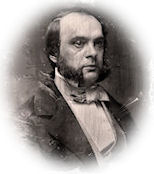
Post image for A Letter to Seward from DNC Chairman August Belmont.

To The Hon. W. H. SEWARD,

Secretary of State, Washington, D. C.

New York, May 29, 1861

My Dear Sir,—I am extremely obliged to you for the very kind and flattering manner with which you speak of a letter of mine to Baron Rothschild, of which a copy had been handed to you by Mr. Weed.

The Baron is a very intimate friend of Lord John Russell, both representing the city of London in Parliament, and he is on equally friendly relations with Lord Palmerston.

I know that his personal views and sympathies have been, and are, still, with the North, and I have no doubt but what he will communicate my views to his ministerial friends.

As you have given a favorable consideration to my views on the unfriendly attitude assumed by the British Crown, I beg to hand you the inclosed copy of another letter which I wrote yesterday to Baron Rothschild on the proclamation of the Queen, and which I hope you will find leisure to peruse.

Post image for “Went to the 69th, Col Corcoran, opposite Georgetown. Extensive and strong ‘works’ going up there.”—Horatio Nelson Taft

WEDNESDAY 29

It has been a fine, cool, and airy day. Took a longer walk than I have for some time. Got a “pass” from Genl Mansfield and about 12 o’clock started with Mr Vansantvoord for Virginia over the Long Bridge. Visited the encampments of some 6000 men and their entrenchments. Was at “Arlington House,” “the Head Quarters” of Genl Sanford. Most delightful place, within fine view of the City. The NY 8th Regt are there. The 25th (Including the Albany Burgeses Corps[?]) are about one mile below or south, 3 miles from the River. Went to the 69th, Col Corcoran, opposite Georgetown. Extensive and strong “works” going up there. Crossed the Aqueduct (canal) to Georgetown, got Home about 6 o’c. Walked about 8 miles.

______

The three diary manuscript volumes, Washington during the Civil War: The Diary of Horatio Nelson Taft, 1861-1865, are available online at The Library of  Congress.

—A mass meeting of leading members of the Baptist Church was held at Brooklyn, N. Y., for the purpose of giving formal expression to their feelings, as a religious community in the present crisis, and to record their attachment to the Union, and their determination to uphold the efforts of the Federal Government, in behalf of the Constitution.—(Doc. 211.)

—The Brooklyn, Capt. Poore, entered the Mississippi River, below New Orleans, and sent out a number of boats, strongly manned with armed men, to board the ships lying on the bar, to acquaint them of the terms of the blockade. After some discussion, it was agreed that the ships on the bar should have fourteen days to go out. Capt. Poore also made a full survey and soundings of the river.—N. O. Delta, May 31.

—A statement of the Geographical arrangements of the army of the United States, corrected to date, is published.—(Doc. 212.)

—President Davis reached Richmond this morning, accompanied by his nephew, Mr. Joseph Davis, Col. Northrop, of the Confederate Army, and Col. Wigfall. Gov. Letcher and the Executive Council met and received the President at Petersburg. An immense assemblage welcomed his arrival at Richmond, with the most enthusiastic demonstrations of delight. The President, in a brief address, thanked the multitude for the hearty reception given him.—N. O. Delta, May 30.

—To-day the American flag was raised over the late residence of Lieutenant-General Scott, at Elizabethtown, N. J., in the presence of about five thousand people. When the flag was given to the breeze, the “Star-Spangled Banner” was sung, the vast concourse of people joining the chorus, producing a fine effect. Mayor Burnett presided, and speeches were made by William F. Day and Rev. Hobart Chetwood, which were received with great applause.—N. Y. Commercial, May 30.

—The correspondence in relation to the establishment of a department of nurses, and the acceptance of the services of Miss Dix, by the Secretary of War, is published.—(Doc. 213.)

—The New Orleans True Delta of this day contains the following:—”We have again and again received information of the motions and sentiments of vagabond free persons of color, upon whom it would be well that the police should keep an eye. These men are without ostensible means of earning a livelihood, and are, by many degrees, too familiar with our slave population, instilling into their minds sanguine notions of the ‘good time’ to be experienced in the event of Lincoln’s hoped-for success over the Southern people. The lake end of the Pontchartrain Railroad is infested with persons of this character, who exhibit a remarkable shrewdness in broaching their pestiferous hints and suggestions. The city also affords rendezvous, at which there are gathered knots of these vagabonds at unseasonable hours. Of course the localities are selected with a view to privacy and remoteness from the inquisitive eyes of the watchman. Careful espionage may bring to light the object of these nocturnal consultations.”

—The Twentieth, Twenty-first, and Twenty-fourth Regiments of Pennsylvania militia left Philadelphia for Chambersburg.—N. Y. Commercial, May 30.

—Colonel Mann’s Regiment of Pennsylvania militia, arrived at Easton, Pa., and went into camp.—(Doc. 214.)

—The American citizens in Paris favorable to the Union breakfasted together in the Hotel du Louvre. About one hundred and fifty attended, of whom one-third were ladies, including the wife of General Scott. Mr. Cowdin presided. Resolutions were adopted, pledging the meeting to maintain the Union under any circumstances. Mr. Dayton, the U. S. Minister, said that, since his arrival in France, be could detect no unfriendly feeling on the part of France to the United States, and certainly no French citizen would be found among the privateersmen. He expressed the conviction that the rebellion would be put down. Cassius M. Clay spoke at length, and was emphatic in his comments on the conduct of England in recognizing Southern belligerent rights. He declared that if ever the flag of England was associated with the black flag of the South, the Star-Spangled Banner of the United States and the tricolor of France would be seen together against her, for France had not forgotten St. Helena. Hon. Anson Burlingame spoke on the same topic. Col. Fremont was next called upon, and was received with enthusiasm. He made a quiet and moderate speech. He regretted the fanatical war, and felt confident it would end in the triumph of truth and justice. He had been called back to America, and would lose no time in responding. He was ready to give his best services to his country. Rev. Dr. McClintock followed. He said he did not attach any importance to the mutterings of the English press. The people of England had not yet spoken, and when they did speak, their voices would not be found on the side of piracy and slavery. Capt. Simons, of the U. S. Army, said he was on his way home, in obedience to the summons of Gen. Scott. Mr. Haldeman, Minister to Vienna, and Rev. Mr. Thayer, also spoke. All the speakers evinced not the slightest doubt of the final triumph of the North.— Galignani’s Messenger, May 30.

—The London News, of this date, contains a remarkable article on the “War in America.” —(Doc. 214½.)

May 28th.—On dropping in at the Consulate to-day, I found the skippers of several English vessels who are anxious to clear out, lest they be detained by the Federal cruisers. The United States steam frigates Brooklyn and Niagara have been for some days past blockading Pass á l’outre. One citizen made a remarkable proposition to Mr. Mure. He came in to borrow an ensign of the Royal Yacht Squadron for the purpose, he said, of hoisting it on board his yacht, and running down to have a look at the Yankee ships. Mr. Mure had no flag to lend; whereupon he asked for a description by which he could get one made. On being applied to, I asked “whether the gentleman was a member of the Squadron?” “Oh, no,” said he, “but my yacht was built in England, and I wrote over some time ago to say I would join the squadron.” I ventured to tell him that it by no means followed he was a member, and that if he went out with the flag and could not show by his papers he had a right to carry it, the yacht would be seized. However, he was quite satisfied that he had an English yacht, and a right to hoist an English flag, and went off to an outfitter’s to order a facsimile of the Squadron ensign, and subsequently cruised among the blockading vessels.

We hear Mr. Ewell was attacked by an Union mob in Tennessee, his luggage was broken open and plundered, and he narrowly escaped personal injury. Per contra, “charges of abolitionism” continue to multiply here, and are almost as numerous as the coroner’s inquests, not to speak of the difficulties which sometimes attain the magnitude of murder.

I dined with a large party at the Lake, who had invited me as their guest, among whom were Mr. Slidell, Governor Hebert, Mr. Hunt, Mr. Norton, Mr. Fellows, and others. I observed in New York that every man had his own solution of the cause of the present difficulty, and contradicted plumply his neighbor the moment he attempted to propound his own theory. Here I found every one agreed as to the righteousness of the quarrel, but all differed as to the best mode of action for the South to pursue. Nor was there any approach to unanimity as the evening waxed older. Incidentally we had wild tales of Southern life, some good songs, curiously intermingled with political discussions, and what the Northerns call hyphileutin talk.

When I was in the Consulate to-day, a tall and well-dressed, but not very prepossessing-looking man, entered to speak to Mr. Mure on business, and was introduced to me at his own request. His name was mentioned incidentally to-night, and I heard a passage in his life not of an agreeable character, to say the least of it. A good many years ago there was a ball at New Orleans, at which this gentleman was present; he paid particular attention to a lady who, however, preferred the society of one of the company, and in the course of the evening an altercation occurred respecting an engagement to dance, in which violent language was exchanged, and a push or blow given by the favored partner to his rival, who left the room, and, as it is stated, proceeded to a cutler’s shop, where he procured a powerful dagger-knife. Armed with this, he returned, and sent in a message to the gentleman with whom he had quarreled. Suspecting nothing, the latter came into the antechamber, the assassin rushed upon him, stabbed him to the heart, and left him weltering in his blood. Another version of the story was, that he waited for his victim till he came into the cloak-room, and struck him as he was in the act of putting on his overcoat. After a long delay, the criminal was tried. The defence put forward on his behalf was that he had seized a knife in the heat of the moment when the quarrel took place, and had slain his adversary in a moment of passion; but evidence, as I understand, went strongly to prove that a considerable interval elapsed between the time of the dispute and the commission of the murder. The prisoner had the assistance of able and ingenious counsel; he was acquitted. His acquittal was mainly due to the judicious disposition of a large sum of money; each juror, when he retired to dinner previous to consulting over the verdict, was enabled to find the sum of 1000 dollars under his plate; nor was it clear that the judge and sheriff had not participated in the bounty; in fact, I heard a dispute as to the exact amount which it is supposed the murderer had to pay. He now occupies, under the Confederate Government, the post at New Orleans which he lately held as representative of the Government of the United States.

After dinner I went in company of some of my hosts to the Boston Club, which has, I need not say, no connection with the city of that name. More fires, the tocsin sounding, and so to bed.

TUESDAY, MAY 28, 1861.

The weather Continues very cool, a fire in the house to sit by is necessary mornings. The Heights opposite here in Virginia are now thoroughly occupied by some 15000 soldiers. More are going over every day, and more are coming from the North. 3000 came today, 1000 from N.H. and 2000 from Ohio. Walked up to see the NY 7th parade after dinner and at 9 o’ck went to the Prests Levee with Juliet and Saml Androus. Not much of a crowd there and quite pleasant. The officers of the military were out in force. Mr Seward was there and some other notables. Got Home at 10 1/2 .

______

The three diary manuscript volumes, Washington during the Civil War: The Diary of Horatio Nelson Taft, 1861-1865, are available online at The Library of  Congress.

—The forty-seventh annual meeting of the American Baptist Missionary Union, was held in the Pierrepont Street Baptist Church, Brooklyn, Ex-Gov. Briggs, of Massachusetts, in the chair. The exercises were opened with prayer by the Rev. Dr. Welch. The Chairman then addressed the meeting at some length, setting forth the object for which they had assembled. In reference to the present state of the country, he said that soldiers were now to be seen in every direction, flags were floating from every window in every street, old and young were rallying round the standard of the Government to sustain order and law, but amid all this outburst of enthusiasm the Prince of Peace must not be deserted. He was sure that the cause of all our difference with the South was owing to their misapprehension of the sentiments of the North, and he believed that if the heart of the North could be unveiled to their brethren of the South, all our national troubles would cease at once. Speaking of the charge made against the North by the Rev. Dr. Fuller of Baltimore—that the bad men of the North, the pastors, the churches, and the politicians, all united in crying for blood—for the blood of the Southern people, he inquired if this was the case? The congregation at once responded a vigorous “No.” “No,” said he, a more cruel, more unfounded charge never issued from the mouth of man. He denied that any such sentiments as Dr. Fuller had imputed to the North were entertained by Northern Christians. He hoped that the Union would place their sentiments on this subject on record, that the world might judge between truth and error.—N. Y. Tribune, May 29.

—The Ninth New York Regiment, which was the first to offer their services to the Government, arrived at Washington. Having enlisted for three years, they lose their identity as State militia, and at once enter service as United States troops. Eight hundred of them are fully uniformed, and will prove a valuable acquisition to the regular army.—(Doc. 206.)—National Intelligencer, May 29.

—A new military department is formed by Gen. Scott, out of that portion of Virginia lying east of the Alleghenies and north of James River, exclusive of Fortress Monroe and vicinity, and Brigadier General McDowell is appointed to its command. His staff consists of Colonel P. Stone, Fourteenth Infantry, who has recently rendered inestimable services in organizing the District of Columbia Militia; Captain B. O. Tyler, Brevet Captain James B. Fry, and Lieutenant Putnam, of the Topographical Engineers. —N. Y. Herald, May 29.

—The blockade of the port of Savannah was initiated by the U. S. gunboat Union.—Savannah Republican, May 31.

—Brigadier-General Pierce, Massachusetts Militia, was appointed to succeed Gen. Butler, promoted. He left for Washington immediately. Col. Waite, Major Sprague, and the other officers who were captured in Texas, and liberated on parole not to serve against the Confederate States, reached Washington, and reported to the War Department. Col. Lefferts, at Battalion Drill, took the sentiment of the Seventh N. Y. S. M., about remaining until ordered home by Government, their time having expired. Furloughs were offered to all who wished, but only five out of 1,225 asked for them.—N. Y. Times, May 29.

—In the case of Gen. Cadwallader, whose arrest for contempt of Court was ordered, the Marshal reported that, on going to Fort McHenry, he was refused admittance.—(Doc. 207.)

—The Chautauqua Volunteers, under the command of Capt. James M. Brown, left Jamestown, New York, for active service.—Chautauqua Democrat, May 29.

—In the English House of Commons, a debate on British relations with America took place, being opened by a communication from Lord John Russell concerning the blockade. Lord John stated that Lord Lyons had properly said to Admiral Milne that the blockade, if sufficient, must be respected. Mr. T. Duncombe spoke with some warmth on the treatment which British subjects received in the Southern States, and commented with great severity on the piratical offer of $20 per head offered by the rebels for every person killed on board an American vessel. The debate was further continued by Mr. B. Osborne, Mr. Bright, Mr. Gregory, and Mr. Bouverie. Mr. Gregory treated the reported offer spoken of as a newspaper rumor, and declared that he should, on the 7th, press his motion for the acknowledgment of the “Confederate States.”—(Doc. 207½.)

—Judge Hall’s charge to the grand jury at Rochester, N. Y., on the law of treason, was published.—N. Y. World, May 28.

—Two letters from Edward Bates, Attorney-General of the United States, to John Minor Botts of Virginia, were made public.—(Doc. 208.)

—The assertion of the Governor of Georgia, that property of citizens of that State found in the State of New York is forcibly taken from its owners, is denied in a letter published this day, signed by the officers of seven New York banks.—(Doc. 209.)

—The Rochester Regiment, Colonel Quimby, and the Syracuse Regiment, Colonel Walrath, left Elmira, N. Y., for the seat of war.—Buffalo Courier, May 31.

—The Garibaldi Guard, under the command of Colonel D’Utassy, left New York for the seat of war.—(Doc. 210.)

To Baron LIONEL de ROTHSCHILD, M.P.,

London.

New York, May 28

Dear Baron,—Since my letter by the Africa steamer we have received the proclamation of the Queen, commanding a strict neutrality to her subjects in the struggle in which the government of the United States is now engaged against a portion of its citizens, now in rebellion against their constituted authorities.

It would be difficult for me to convey to you an idea of the general feeling of disappointment and irritation produced in this country, by this manifesto of the British government, by which a few revolted States are placed, in their relations with Great Britain, upon the same footing as the government of the United States.

People naturally compare the position which England takes now against us, to her stand during the Carlist war in Spain. The rebellion in the South has not the same chances of success as there existed certainly at one time for the cause of the Spanish pretender. Yet it certainly never occurred to the British crown for one moment to acknowledge Don Carlos in the light of a belligerent. On the contrary, we saw a British legion, armed and equipped in England, and commanded by an English general officer, fight for the cause of the constitutional and rightful sovereignty.

When Hungary, some years later, made an heroic effort to reconquer her nationality and independence, England did not cease to consider her as a revolted province, although the sympathies of the majority of the English people were on the side of the rebels, and though nothing but the powerful intervention of Russia prevented a success of that revolution.

Recently, again, on the other hand, we have seen men and arms equipped by British subjects, leave the English ports to assist the cause of Italian independence under Garibaldi.

The people of the United States had certainly a right to hope and expect the same support in their struggle for their national existence against the unjust and unwarrantable revolt of an unprincipled oligarchy, based upon the most odious domestic institution, and against which no government has heretofore taken so decided a stand as Great Britain herself.

If not an actual violation of international law, it must certainly be considered an act of extreme unfriendliness on the part of any government to place itself on a footing of neutrality between a power with which it entertains intimate diplomatic and commercial relations, and a revolted portion of that nation, unrecognized by any civilized government, and having so far in no way shown any evidence that it will be able to maintain the position which it has assumed against its legitimate government.

I fear that the very cordial good-feeling which, notwithstanding the delicate questions arising, from time to time, between the two governments, has pervaded all classes of our people toward the British nation, and of which, as well as of their deep-felt veneration for the Queen, they have given such a unanimous and striking evidence on the occasion of the laying of the Atlantic telegraph cable, and the recent visit of the Prince of Wales, will make room to sentiments of bitter resentment and animosity if the British government should persist in its present attitude.

Even upon the point of strict neutrality the proclamation goes further than international law and comity would seem to require. While the prohibition of equipment and enlistment of armaments and troops by British subjects in British ports is a measure of neutrality, it is certainly stretching the point to prevent British merchant vessels from carrying arms, military stores, etc., etc., to our ports or those of the Confederate States. The ports of the latter being blockaded by our navy, this restriction is entirely aimed against us, and is, therefore, an actual assistance to the rebels.

During the Crimean war, notwithstanding the strict neutrality of our government, which forbade enlistments, etc., etc., our vessels carried troops, arms, and military stores from English and French ports into the Crimea. The American ship-owners did this at their own peril in case of capture by Russian vessels of war, but our government did not prohibit it, notwithstanding that, as in the present case, it only was done to the advantage of one of the belligerent parties, Russia being blockaded then as the South is now.

My fears that the position of England would only complicate matters, are, unfortunately, very likely to be realized. The sympathy of the British government for the South, so far from lessening the determination of our government and people, has only increased their ardor. It is now a question of national existence and commercial prosperity, and the choice can, of course, not be doubtful.

I have, within the last few days, seen the best informed and most influential men in our administration, and I am more than ever convinced that the war will be carried on with energy and vigor. Large numbers of troops are concentrating around Virginia and Maryland, and our navy is at once to be increased by the building of fifty steam gun-boats and several large vessels of war. The only chance for the peace of the world and the immense interests which are at stake in this struggle, is its early termination by the overshadowing power of the North.

England’s position threatens to prolong the war by giving hope and comfort to the rebels. The requirements of the cotton-spinners in Lancashire have, of course, a good deal to do with the unexpected attitude assumed by your government, but my conviction is, that if the North should be pushed to the wall by these hostile influences, and the war last more than a year, it will end in the complete destruction of the South, because what is now a war for the reconstruction of the Union, in which all the Constitutional rights of the South would be secured, would then lead to the utter annihilation of the slavery interest. The short-sighted policy of the gentlemen in Manchester, who now allow cotton to outweigh their anti-slavery professions, may therefore end in much worse consequences for them than the short supplies of one or two years.

The Morrill tariff would most assuredly have been modified, if not entirely repealed, at the next session of Congress, which is to assemble on the 4th of July next. The requirements of our revenue and the general feeling of the North called for it. I am, however, very much afraid that the unfriendly position assumed by England will produce a revulsion here, and that no modification can be obtained, unless preceded by a change in the tone and policy of your press and government.

I hope your influence and that of all those who wish to see a speedy end of our present calamities, will be exerted toward bringing about such a change.

Charles Francis Adams, Jr., To His Father

Quincy, May 27, 1861. I got out here last Saturday evening, having that day been relieved at Fort Independence by the 4th Battalion of rifles. We would like to have stayed there longer, and were certainly arriving at a state of very considerable proficiency in drill, but our being kept there was beginning to create some hard feeling and the Governor was obliged to yield to the pressure. What will be done with us now, if any thing, no one seems to know. I hardly think they will leave such an efficient body of men alone just now, and yet I do not see how we can be profitably employed. That we shall not be sent out of the State is certain; but the rumors seem to tend towards our being sent to the State camp to serve as a model and to furnish instructors, and ultimately to be used as a supply of officers. Meanwhile I find that I have not returned a day too early, and that my presence is necessary in Boston for some time to come. To me things look pretty bad. Money is plenty, but lenders are very timid. Business is wholly dead and the business community seems to be calculating as to whether they can live out the war or had better go down now. For myself, I see little to change the views I have entertained all along. We are going into this war too heavily to have it last long, but it will be an awful drag while it does last, and all who are not under short sail must go down. I do not believe in getting alarmed or in the eternal ruin of the country; but a great deal of money has got to be lost and all who have, have got to lose some, be it more or less. . . .

Of course all this does not at all add to the pleasure of a reluctant return. I have become fond of military life and I feel ashamed that I am here at home when so many of my friends have already gone, and gone in such a way. I do not wish to boast of what I should do under other circumstances, but I feel, as I look at these tedious and repulsive details [of business], that I should tonight sleep perfectly happy if tomorrow I could hand them all over to anyone who would take them, and for myself go and join my friends in camp. I could get a commission and a good one, for only today Dana evidently wanted to advise me to go and told me I ought to have a majority if I wished it. . . .

May 27th.—I visited several of the local companies, their drill-grounds and parades; but few of the men were present, as nearly all are under orders to proceed to the Camp at Tangipao or to march to Richmond. Privates and officers are busy in the sweltering streets purchasing necessaries for their journey. As one looks at the resolute, quick, angry faces around him, and hears but the single theme, he must feel the South will never yield to the North, unless as a nation which is beaten beneath the feet of a victorious enemy.

In every state there is only one voice audible. Hereafter, indeed, state jealousies may work their own way; but if words mean anything, all the Southern people are determined to resist Mr. Lincoln’s invasion as long as they have a man or a dollar. Still, there are certain hard facts which militate against the truth of their own assertions, “that they are united to a man, and prepared to fight to a man.” Only 15,000 are under arms out of the 50,000 men in the state of Louisiana liable to military service.

“Charges of abolitionism” appear in the reports of police cases in the papers every morning; and persons found guilty not of expressing opinions against slavery, but of stating their belief that the Northerners will be successful, are sent to prison for six months. The accused are generally foreigners, or belong to the lower orders, who have got no interest in the support of slavery. The moral suasion of the lasso, of tarring and feathering, head-shaving, ducking, and horseponds, deportation on rails, and similar ethical processes are highly in favor. As yet the North have not arrived at such an elevated view of the necessities of their position.

The New Orleans papers are facetious over their new mode of securing unanimity, and highly laud what they call “the course of instruction in the humane institution for the amelioration of the condition of northern barbarians and abolition fanatics, presided over by Professor Henry Mitchell,” who, in other words, is the jailer of the workhouse reformatory.

I dined at the Lake with Mr. Mure, General Lewis, Major Ranney, Mr. Duncan Kenner a Mississippi planter, Mr. Claiborne, &c., and visited the club in the evening. Every night since I have been in New Orleans there have been one or two fires; tonight there were three—one a tremendous conflagration. When I inquired to what they were attributable, a gentleman who sat near, bent over, and looking me straight in the face, said, in a low voice, “The slaves.” The flues, perhaps, and the system of stoves, may also bear some of the blame. There is great enthusiasm among the townspeople in consequence of the Washington artillery, a crack corps, furnished by the first people in New Orleans, being ordered off for Virginia.