Following the American Civil War Sesquicentennial with day by day writings of the time, currently 1863.

May 2011

MONDAY 27

Another hot morning but a terrible tempest of wind and rain came on before noon and raged for an hour or two after which it was cool and pleasant. Went down to the “National” after dinner with Saml and called upon Judge Grey & Lady from Coldwater Mich. Went down to Willards again in the evening, quite a crowd there but not many officers. All are anxiously waiting for news, and surmising what it will be. Came home at 9, read the papers, bed at 11.

______

The three diary manuscript volumes, Washington during the Civil War: The Diary of Horatio Nelson Taft, 1861-1865, are available online at The Library of  Congress.

MAY 27TH. —We leave Montgomery day after to-morrow. The President goes to-day—but quietly—no one, not connected with the Government, to have information of the fact until his arrival in Richmond. It is understood that the Minister of Justice (Attorney-General) accompanies him. There are a great number of spies and emissaries in the country—sufficient, if it were known when the train would pass, to throw it off the track. This precaution is taken by the friends of the President.

The day is pretty much occupied in the packing of boxes. It is astonishing how vast a volume of papers accumulates in a short space of time—but when we consider the number of applications for office, the wonder ceases.

May 27, 1861.—This has been a scenic Sabbath. Various companies about to depart for Virginia occupied the prominent churches to have their flags consecrated. The streets were resonant with the clangor of drums and trumpets. E. and myself went to Christ Church because the Washington Artillery were to be there.

______

Note: To protect Mrs. Miller’s job as a teacher in New Orleans, the diary was published anonymously, edited by G. W. Cable, names were changed and initials were often used instead of full names — and even the initials differed from the real person’s initials.

CINCINNATI, [May 27, 1861.]

DEAR UNCLE:—I have nothing in particular you to write. I heard a good war sermon today on the subject, “The Horrors of Peace”!

The weather is very unfavorable for troops in camp—wet and chilly. The tents leak and the ground is low and flat. These things will gradually mend themselves. We shall have precious little business this summer, judging by present appearances. Come down when you feel like it.

Sincerely,

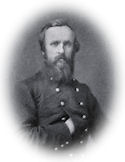
R. B. HAYES.

S. BIRCHARD.

May 27th.—They look for a fight at Norfolk. Beauregard is there. I think if I were a man I’d be there, too. Also Harper’s Ferry is to be attacked. The Confederate flag has been cut down at Alexandria by a man named Ellsworth,¹ who was in command of Zouaves. Jackson was the name of the person who shot Ellsworth in the act. Sixty of our cavalry have been taken by Sherman’s brigade. Deeper and deeper we go in.

Thirty of Tom Boykin’s company have come home from Richmond. They went as a rifle company, armed with muskets. They were sandhill tackeys—those fastidious ones, not very anxious to fight with anything, or in any way, I fancy. Richmond ladies had come for them in carriages, feted them, waved handkerchiefs to them, brought them dainties with their own hands, in the faith that every Carolinian was a gentleman, and every man south of Mason and Dixon’s line a hero. But these are not exactly descendants of the Scotch Hay, who fought the Danes with his plowshare, or the oxen’s yoke, or something that could hit hard and that came handy.

Johnny has gone as a private in Gregg’s regiment. He could not stand it at home any longer. Mr. Chesnut was willing for him to go, because those sandhill men said “this was a rich man’s war,” and the rich men would be the officers and have an easy time and the poor ones would be privates. So he said: “Let the gentlemen set the example; let them go in the ranks.” So John Chesnut is a gentleman private. He took his servant with him all the same.

Johnny reproved me for saying, “If I were a man, I would not sit here and dole and drink and drivel and forget the fight going on in Virginia.” He said it was my duty not to talk so rashly and make enemies. He “had the money in his pocket to raise a company last fall, but it has slipped through his fingers, and now he is a common soldier.” “You wasted it or spent it foolishly,” said I. “I do not know where it has gone,” said he. “There was too much consulting over me, too much good counsel was given to me, and everybody gave me different advice.” “Don’t you ever know your own mind?” “We will do very well in the ranks; men and officers all alike; we know everybody.”

So I repeated Mrs. Lowndes’s solemn words when she heard that South Carolina had seceded alone: “As thy days so shall thy strength be.” Don’t know exactly what I meant, but thought I must be impressive as he was going away. Saw him off at the train. Forgot to say anything there, but cried my eyes out.

Sent Mrs. Wigfall a telegram—”Where shrieks the wild sea-mew?” She answered: “Sea-mew at the Spotswood Hotel. Will shriek soon. I will remain here.”

______

¹ Ephraim Elmer Ellsworth was a native of Saratoga County, New York. In 1860 he organized a regiment of Zouaves and became its Colonel. He accompanied Lincoln to Washington in 1861 and was soon sent with his regiment to Alexandria, where, on seeing a Confederate flag floating from a hotel, he personally rushed to the roof and tore it down. The owner of the hotel, a man named Jackson, met him as he was descending and shot him dead. Frank E. Brownell, one of Ellsworth’s men, then killed Jackson.

—Emerson Etheridge, of Tennessee, addressed the citizens of Louisville, Ky., on the great questions which are dividing the South at the present time. He commenced his address with an allusion to the distracted condition of the country, congratulating himself and his audience that he stood upon Kentucky soil, a State that was yet loyal to the Union. He clearly proclaimed himself for his country, first, last, and forever. Having but recently come from a State in which anarchy reigned supreme, he could the better appreciate the blessings of political liberty which were yet vouchsafed to Kentuckians, and which he felt Kentuckians had the patriotism, the gallantry, and the power to perpetuate. He drew a picture of Kentucky in her proud position as a sister in the Union of the States, of her wealth, of her usefulness as an asylum for the oppressed of both sections of our unhappy and divided country, and of her grandeur in after days when she has safely outridden the storm which wrecked the frailer sisterhood around her. While he dealt deadly blows to the apologists of dissolution, he spoke cheering words of comfort and assurance to the friends of the Union. He was withering in his denunciation of rebellion, powerful in argument, ready and illustrative in anecdote, and fervid and glowing in eloquence.—Louisville Journal, May 28.

—General Beauregard issued orders in Charleston, relinquishing command of the forces around Charleston to Col. R. H. Anderson.—Augusta Chronicle, May 28.

—In the case of John Merryman, a secessionist arrested in Baltimore and detained a prisoner in Fort McHenry, a writ of habeas corpus was issued by Judge Taney, made returnable this day in the United States District Court. Gen. Cadwallader declined surrendering the prisoner till he heard from Washington, and an attachment was issued for Gem Cadwallader.—N. Y. Times, May 28.

—The United States steamer Brooklyn arrived off the Pass L’Outre bar at the mouth of the Mississippi, and commenced the blockade of that river.—N. O. Picayune, May 28.

—Brigadier-General McDowell, U. S. army, took command of the Union forces in Virginia, and relieved Major-General Sandford, N. Y. State Militia.—N. Y. Herald, May 28.

—George W. Thompson, one of the judges of the Circuit Court of the State of Virginia, issued a proclamation ordering the rebels in the western part of that State to disperse. Peculiar interest attaches to the document from the fact that one of Judge Thompson’s sons, W. P. Thompson, a young lawyer, resident at Fairmont, is aide-de-camp to Gem Thomas S. Haymond, commander of the confederate forces in Western Virginia, and the leader of the first company which marched on Grafton. Another of his sons is also a secessionist, and a private in the same company.—(Doc. 201.)

—The blockade of Mobile (Ala.) harbor was commenced. The Natchez Courier of to-day says:—”Fort Morgan welcomed the blockading fleet by displaying the U. S. flag, with the Union down, from the same staff, and below the confederate flag.”

—Col. A. Duryea. was placed in command of the camp near Fortress Monroe, by Major-General Butler.—(Doc. 202.)

—The Twentieth N. Y. Volunteer Regiment left New York city for the seat of war.—(Doc. 203.)

—The First Regiment of Virginia Volunteers, Col. Kelly, stationed at Wheeling, Va., left that place at 7 A. M., and moved towards Grafton. After their departure, the Sixteenth Ohio Regiment, 1,000 strong, stationed at Bellaire, Ohio, under command of Col. Irvine, crossed the Ohio and followed Col. Kelly’s command. The Fourteenth Ohio Regiment, Col. Steadman, crossed the Ohio, at Marietta, about the same time, and occupied Parkersburg. At midnight the rebels evacuated Grafton in great haste.—(Doc. 104.)

—The Washington Artillery of New Orleans, La., left that city for Virginia. Previous to their departure, they were addressed by the Rev. Dr. Palmer.—(Doc. 205.)
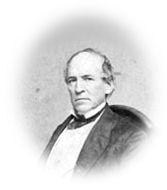
May 26th.—The heat to-day was so great, that I felt a return of my old Indian experiences, and was unable to go, as I intended, to hear a very eminent preacher discourse on the war at one of the principal chapels.

All disposable regiments are on the march to Virginia. It was bad policy for Mr. Jefferson Davis to menace Washington before he could seriously carry out his threats, because the North was excited by the speech of his Secretary at War to take extraordinary measures for the defence of their capital; and General Scott was enabled by their enthusiasm not only to provide for its defence, but to effect a lodgment at Alexandria, as a base of operations against the enemy.

When the Congress at Montgomery adjourned, the other day, they resolved to meet on the 20th of July at Richmond, which thus becomes the capital of the Confederacy. The city is not much more than one hundred miles south of Washington, with which it was in communication by rail and river; and the selection must cause a collision between the two armies in front of the rival capitals. The seizure of the Norfolk navy yard by the Confederates rendered it necessary to reinforce Fortress Monroe; and for the present the Potomac and the Chesapeake are out of danger.

The military precautions taken by General Scott, and the movements attributed to him to hold Baltimore and to maintain his communications between Washington and the North, afford evidence of judgment and military skill. The Northern papers are clamoring for an immediate advance of their raw levies to Richmond, which General Scott resists.

In one respect the South has shown greater sagacity than the North. Mr. Jefferson Davis having seen service in the field, and having been Secretary of War, perceived the dangers and inefficiency of irregular levies, and therefore induced the Montgomery Congress to pass a bill which binds volunteers to serve during the war, unless sooner discharged, and reserves to the President of the Southern Confederacy the appointment of staff and field officers, the right of veto to battalion officers elected by each company, and the power of organizing companies of volunteers into squadrons, battalions, and regiments. Writing to the Times at this date, I observed: “Although immense levies of men may be got together for purposes of local defence or aggressive operations, it will be very difficult to move these masses like regular armies. There is an utter want of field-trains, equipage, and commissariat, which cannot be made good in a day, a week, or a month. The absence of cavalry, and the utter deficiency of artillery, may prevent either side obtaining any decisive result in one engagement; but there can be no doubt large losses will be incurred whenever these masses of men are fairly opposed to each other in the open field.”

SUNDAY 26

Warm today, went to church with family. Chas and young Saml Androus are both with us, came up last night. Saml is somewhat sick, is geting better. His Regt is at Alexandria. The excitement of yesterday has passed off but troops are passing over the River today and the large Govt Wagons are taking over stores, tents, implements, &c., and the soldiers there are busy throwing up breastworks at “Arlington.” The rebels had the stakes all stuck for the entrenchment and would have had possession in a day or two more.

______

The three diary manuscript volumes, Washington during the Civil War: The Diary of Horatio Nelson Taft, 1861-1865, are available online at The Library of  Congress.

Eliza Woolsey Howland to Joseph Howland at Albany.

Sunday (between churches), May 26.

I am going over to the Dutch Church at the Corners more, I confess, to hear the news from Washington than for the sermon’s sake. The rumor by telegraph this morning was that Washington was on fire. I am restless and anxious. There must be important movements on one side or the other before long, now that we have advanced beyond the Potomac.

In yesterday’s papers the great camp preparing on Staten Island is described — 10,000 acres on the southeast slope of the island, with room for the tents and evolutions of an army of 60,000 men. Is it likely that you will be ordered there?

Mr. Masters told me this morning to tell you you were not forgotten in the village, for the boys have organized a company and are drilling under the name of the “Howland Guard.” Mother thinks it should be called Mrs. Howland’s Guard. . . . .

May 27. This morning I deposited Mother with the papers at the old chestnut tree seat and helped Thomson and Mechie get a good line for the turf on the carriage road. It is not right yet, but shall be made so. Thomson says: “We’ll na gie it up, ma’am, till you say it’s right.” The sodding round the door and kitchen end[1] is a great improvement and gives quite a finished look. We all took a turn in the wagon after dinner, stopping for me to get some cut-out work from the Women’s Army Association, which is fairly under way now, with Mrs. David Davis as President, Mrs. James Kent Secretary and Miss Rankin Treasurer. Five or six dozen shirts were given out today. . . . I have a note this morning from L. H. H. asking me to make them a visit at Newport and saying Mr. H. would come on for me and bring me back. It is very kind, but I shall stand by my post here this summer. . . .

Mr. Masters told us an anecdote of old R_______ who was in a tavern barroom the other day with a party of rough fellows discussing the war, when one of them declared that “any man who would refuse to go now that Mr. Howland had gone ought to be drummed out of the community.”


[1] Where the rhododendrons are now twelve to fifteen feet high.


CINCINNATI, May 26, 1861.

DEAR UNCLE:—. . . I have been watching the enlistments for the war during the last week with much interest, as the chance of our enterprise for the present depends on it. If twenty regiments enlist out of the twenty-six now on foot in the State, there will be no room for ours. If less than twenty go in for three years, we are safe. Until the news of the advance into Virginia arrived, and the death of Colonel Ellsworth, there was a good deal of hesitation in the various camps. The natural dissatisfaction and disgust which many felt, some with and some without adequate cause, were likely to prevent the quota from being filled out of the three-months men. But now all is enthusiasm again. Of course I like to see it, but for the present it probably cuts us out. Well, we shall be ready for next time. If all immediate interest in this quarter is gone, I shall likely enough come up and spend next Sunday with you.

Sincerely,

R. B. HAYES.

S. BIRCHARD.