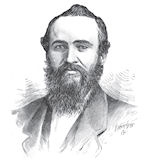
Thursday, Aug. 1st. — We (Ewing’s and Allison’s Companies) moved on through Lebanon and bivouacked seven miles beyond, on the Livingston road.
Monday, August 1, 2011
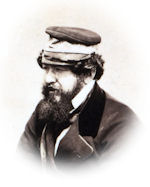
Day after day, till the month was over and August had come, I passed in a state of powder and julep, which the Virginian doctor declared saved my life. The first time I stirred out the change which had taken place in the streets was at once apparent: no drunken rabblement of armed men, no begging soldiers—instead of these were patrols in the streets, guards at the corners, and a rigid system of passes. The North begin to perceive their magnificent armies are mythical, but knowing they have the elements of making one, they are setting about the manufacture. Numbers of tapsters and serving men, and canaille from the cities, who now disgrace swords and shoulder-straps, are to be dismissed. Round the corner, with a kind of staff at his heels and an escort, comes Major General George B. M’Clellan, the young Napoleon (of Western Virginia), the conqueror of Garnet, the captor of Peagrim, the commander-in-chief, under the President, of the army of the United States. He is a very squarely-built, thick-throated, broad-chested man, under the middle height, with slightly bowed legs, a tendency to embonpoint, His head, covered with a closely cut crop of dark auburn hair, is well set on his shoulders. His features are regular and prepossessing—the brow small, contracted, and furrowed; the eyes deep and anxious-looking. A short, thick, reddish moustache conceals his mouth; the rest of his face is clean shaven. He has made his father-in-law, Major Marcy, chief of his staff, and is a good deal influenced by his opinions, which are entitled to some weight, as Major Marcy is a soldier, and has seen frontier wars, and is a great traveller. The task of licking this army into shape is of Herculean magnitude. Every one, however, is willing to do as he bids: the President confides in him, and “Georges” him; the press fawn upon him, the people trust him; he is “the little corporal” of unfought fields—omnis ignotus pro mirifico, here. He looks like a stout little captain of dragoons, but for his American seat and saddle. The latter is adapted to a man who cannot ride: if a squadron so mounted were to attempt a fence or ditch half of them would be ruptured or spilled. The seat is a marvel to any European. But M’Clellan is nevertheless “the man on horseback” just now, and the Americans must ride in his saddle, or in anything he likes.
In the evening of my first day’s release from juleps the President held a reception or levee, and I went to the White House about nine o’clock, when the rooms were at their fullest. The company were arriving on foot, or crammed in hackney coaches, and did not affect any neatness of attire or evening dress. The doors were open: any one could walk in who chose. Private soldiers, in hodden grey and hob-nailed shoes, stood timorously chewing on the threshold of the state apartments, alarmed at the lights and gilding, or, haply, by the marabout feathers and finery of a few ladies who were in ball costume, till, assured by fellow-citizens there was nothing to fear, they plunged into the dreadful revelry. Faces familiar to me in the magazines of the town were visible in the crowd which filled the reception-rooms and the ballroom, in a small room off which a military band was stationed.
The President, in a suit of black, stood near the door of one of the rooms near the hall, and shook hands with every one of the crowd, who was then “passed” on by his secretary, if the President didn’t wish to speak to him. Mr. Lincoln has recovered his spirits, and seemed in good humour. Mrs. Lincoln, who did the honours in another room, surrounded by a few ladies, did not appear to be quite so contented. All the ministers are present except Mr. Seward, who has gone to his own state to ascertain the frame of mind of the people, and to judge for himself of the sentiments they entertain respecting the war. After walking up and down the hot and crowded rooms for an hour, and seeing and speaking to all the celebrities, I withdrew. Colonel Richardson in his official report states Colonel Miles lost the battle of Bull Run by being drunk and disorderly at a critical moment. Colonel Miles, who commanded a division of three brigades, writes to say he was not in any such state, and has demanded a court of inquiry. In a Philadelphia paper it is stated M’Dowell was helplessly drunk during the action, and sat up all the night before drinking, smoking, and playing cards. M’Dowell never drinks, and never has drunk, wine, spirits, malt, tea, or coffee, or smoked or used tobacco in any form, nor does he play cards; and that remark does not apply to many other Federal officers.
Drunkenness is only too common among the American volunteers, and General Butler has put it officially in orders, that “the use of intoxicating liquors prevails to an alarming extent among the officers of his command,” and has ordered the seizure of their grog, which will only be allowed on medical certificate. He announces, too, that he will not use wine or spirits, or give any to his friends, or allow any in his own quarters in future—a quaint, vigorous creature, this Massachusetts lawyer.
The outcry against Patterson has not yet subsided, though he states that, out of twenty-three regiments composing his force, nineteen refused to stay an hour over their time, which would have been up in a week, so that he would have been left in an enemy’s country with four regiments. He wisely led his patriot band back, and let them disband themselves in their own borders. Verily, these are not the men to conquer the South.
Fresh volunteers are pouring in by tens of thousands to take their places from all parts of the Union, and in three days after the battle, 80,000 men were accepted. Strange people! The regiments which have returned to New York after disgraceful conduct at Bull Run, with the stigmata of cowardice impressed by their commanding officers on the colours and souls of their corps, are actually welcomed with the utmost enthusiasm, and receive popular ovations! It becomes obvious every day that M’Clellan does not intend to advance till he has got some semblance of an army: that will be a long time to come; but he can get a good deal of fighting out of them in a few months. Meantime the whole of the Northern states are waiting anxiously for the advance which is to take place at once, according to promises from New York. As Washington is the principal scene of interest, the South being tabooed to me, I have resolved to stay here till the army is fit to move, making little excursions to points of interest. The details in my diary are not very interesting, and I shall make but brief extracts.
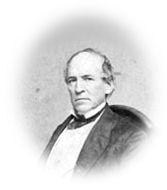
THURSDAY, AUGUST 1
My lameness is much better today. I have been down to the office where I remained most of the day writing &c. I think it quite possible that they will find it necessary to restore me to my Desk as Doct King was removed yesterday, among others. I was down to the Camp this evening with wife & Julia. The officers were very sociable, the Lieut Col a little drunk as usual. Wife & Chaplin Buck went to church.

______
The three diary manuscript volumes, Washington during the Civil War: The Diary of Horatio Nelson Taft, 1861-1865, are available online at The Library of Congress.
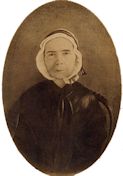
August 1.—This whole neighbourhood is busy to-day, loading a wagon with comforts for the hospital at Fairfax Court-House. They send it down once a week, under the care of a gentleman, who, being too old for the service, does this for the sick and wounded. The hospitals at Centreville and the Court-House are filled with those who are too severely wounded to be taken to Richmond, Charlottesville, and the larger hospitals. They are supplied, to a very great degree, by private contributions. It is beautiful to see the self-denying efforts of these patriotic people. Everybody sends contributions on the appointed day to Millwood, where the wagon is filled to overflowing with garments, brandy, wine, nice bread, biscuit, sponge cake, butter, fresh vegetables, fruit, etc. Being thoroughly packed, it goes off for a journey of fifty miles.
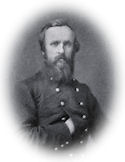
August 1, [1861].—Another hot, moist day; deep fogs in the night. Two gentlemen, suspected of secession proclivities, clerks of the courts, were required to take the oath of allegiance to the new State Government of Virginia and to the United States.
They say it is not always so rainy here; they lay it to the presence of our troops.
Colonel Matthews left with the five right-wing companies for Bulltown and Sutton at 1 P. M. today. I felt a little melancholy to see the fine fellows leaving us.
A year ago today was with Lucy travelling from Detroit on the Grand Trunk Railroad eastwardly for pleasure. A telegraph line is completed to this point connecting us with all the world.
Governor Wise, it is said, has continued his retreat up the Kanawha towards eastern Virginia. It is said that he has left Gauley River and burnt the bridge. If so western Virginia is now in our undisputed possession. But it is also said that General Lee is coming with a large force to look after General Rosecrans. I suspect that all the movements of the Southern army look to operations about Washington and Baltimore, and that all movements of troops in other directions are merely feints.
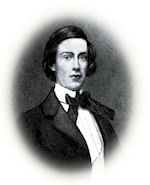
Meridian Hill, Washington,
Aug. 1st, 1861.
Dear Cousin Lou:
I am seated in my tent, the rain is pouring in torrents, and I am at leisure to think of friends at home. You see whom I was first remembering, not having forgotten the kind letter which Mr. Houston brought me from Thompsonville, when I was somewhere over in Virginia. I thank you so much for all the dear, kind expressions of love your letter contained.
Oh! Ah! Here come about twenty-five men or more with complaints, and as the Captain is away, I must straighten up, and play the part of Magistrate. Oh Olympian Jove! Oh Daniel risen to judgment! The malcontents have been severally coaxed, wheedled, threatened, and sent about their business, and the Centurion is once again at leisure. A pleasant thing is this exercise of power, especially when commands can be given in the quietest manner possible, and yet to feel that from your judgment there can be no appeal. In fact, dear Cousin Lou, imagine me when the Captain is away, performing the paternal function towards some hundred grown up children. Ah me! I am growing venerable and cares are weighing heavily upon me.
But I must not forget that I am a veteran soldier now. Poor Horace! How I shall assume superior airs, tell him, when I return home! In fact when,one of these days, I get a furlough and am surrounded by friends, how I shall exercise my soldier’s privilege of drawing the long bow! In my first battle, of course, I performed the most remarkable deeds of daring. I shall not pretend to tell you how many Secessionists I killed! Between ourselves though, in all privacy, I will confess that the fearful weapon with which I struck such terror in the hearts of the enemy, was a toy wooden sword, captured by one of our men from a secession boy-baby. In the great battle of Manassas, holding the occasion to be one of greater moment, I made the charge armed with a ramrod, which I picked up on the way thither! I acknowledge I found the work hotter than I anticipated in the latter engagement, and mean in future to go armed in regulation style. The truth of the matter was, that being ordered suddenly to march from our pleasant encampment in Georgetown, I was found unprepared, and must either stay behind, or trust to my pistol in case of emergency. I preferred the latter, and the kind Providence has brought me safely through the fiery ordeal through which we all had to pass. What think you, dear Cousin Lou ,of our miserable defeat? It seems hard, as we lost many good men out of our Regiment on that bloody day. I saw many things never to be forgotten. No matter for sickening details though. The ground lost must be recovered at any cost. We have lost out of the 800 who went into the engagement about 150 in killed and wounded, besides some fifty more numbered among the missing. Hardship and exposure have caused much sickness in the camp. Most of the liquor-dealing Captains and Lieutenants who commanded before the battle have resigned, many others are dead or in the hands of the enemy —so I can give no very cheerful picture of our camp at present. We are to be soon thoroughly reorganized, to be cared for tenderly by the President and Secretary of War, to be recruited to the army standard, and when once more discipline shall be enforced, we trust that the 79th will be able to charge as gallantly as at Manassas, but that the charge may result not in mere loss of life, but in glorious victory.
You would be much entertained, could you only see behind the scenes, at the daring feats of individuals, which are passing the rounds of the papers. A specimen is afforded by a story I read in the Herald of a certain Captain _____ who is reported to have repeatedly rallied the men of the 79th and led them back to battle. Now the fact is that Captain _____ never was within three days journey of the battle, and moreover, at least ten days before the engagement the Colonel threatened him with arrest should he dare to show himself in the Regiment. Captain _____ wrote the article himself, and had it published. This is only an isolated example of the manner by which this war is made to subserve the dirtiest of politicians. I have had no letter from Horace, and but few from home since I left New-York. I suppose some of the letters addressed to me have been captured by the Secessionists, and have been perused with the same gusto that we felt when a package of the enemy’s letters fell into our hands. Of course we had to read them to glean as far as possible the state of political feeling in the South, and I blush to say we read with special interest the tender epistles which fair South Carolina maidens penned for the eye alone of South Carolina heroes. Think of such sacred pages being polluted by the vulgar gaze of a parcel of peddling Yankees.
We learned some of the peculiarities of the Aborigines down South from these epistles. We learned that the ladies are so modest that they write of themselves with a little i — that all Southern babies send their papas “Howdy” — that a certain perfidious _____ _____ is “cortin the gall” of one of the brave palmetto soldiers who is congratulated by his sister upon having slain 3000 Yankees — that the ladies in the South are thirsting for the blood of the Northern mercenaries, and, above all, penmanship, spelling and composition showed that the greatest need of the South is an army of Northern Schoolmasters. Well, Cousin Lou, I must not write for ever, so good-bye. Love to all in Enfield and in Pelham.
Very affectionately,
Wm. T. Lusk,
Lieut. 10th Co. 79th Regiment, Washington.
AUGUST 1ST.—Col. Bledsoe again threatens to resign, and again declares he will get the President to appoint me to his place. It would not suit me.
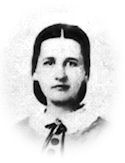
August 1st, 1861.—The Howell Guards are going to Virginia on the 12th of this month. Poor sister Mag, she is not a bit patriotic and she is almost brokenhearted at this news. Her baby is more than a year old now, fifteen months old, and he is learning to talk and is so funny and sweet but even Eddie cannot bring a smile to his mother’s face, she is the very picture of woe.
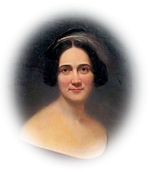
August 1st.—Mrs. Wigfall, with the “Lone Star” flag in her carriage, called for me. We drove to the fair grounds. Mrs. Davis’s landau, with her spanking bays, rolled along in front of us. The fair grounds are as covered with tents, soldiers, etc., as ever. As one regiment moves off to the army, a fresh one from home comes to be mustered in and take its place.
The President, with his aides, dashed by. My husband was riding with him. The President presented the flag to the Texans. Mr. Chesnut came to us for the flag, and bore it aloft to the President. We seemed to come in for part of the glory. We were too far off to hear the speech, but Jeff Davis is very good at that sort of thing, and we were satisfied that it was well done.
Heavens! how that redoubtable Wigfall did rush those poor Texans about! He maneuvered and marched them until I was weary for their sakes. Poor fellows; it was a hot afternoon in August and the thermometer in the nineties. Mr. Davis uncovered to speak. Wigfall replied with his hat on. Is that military?
At the fair grounds to-day, such music, mustering, and marching, such cheering and flying of flags, such firing of guns and all that sort of thing. A gala day it was, with double-distilled Fourth-of-July feeling. In the midst of it all, a messenger eame to tell Mrs. Wigfall that a telegram had been received, saying her children were safe across the lines in Gordonsville. That was something to thank God for, without any doubt.
These two little girls came from somewhere in Connecticut, with Mrs. Wigfall’s sister—the one who gave me my Bogotsky, the only person in the world, except Susan Rutledge who ever seemed to think I had a soul to save. Now suppose Seward had held Louisa and Fanny as hostages for Louis Wigfall’s good behavior; eh?
Excitement number two: that bold brigadier, the Georgia General Toombs, charging about too recklessly, got thrown. His horse dragged him up to the wheels of our carriage. For a moment it was frightful. Down there among the horses’ hoofs was a face turned up toward us, purple with rage. His foot was still in the stirrup, and he had not let go the bridle. The horse was prancing over him, tearing and plunging; everybody was hemming him in, and they seemed so slow and awkward about it. We felt it an eternity, looking down at him, and expecting him to be killed before our very faces. However, he soon got it all straight, and, though awfully tousled and tumbled, dusty, rumpled, and flushed, with redder face and wilder hair than ever, he rode off gallantly, having to our admiration bravely remounted the recalcitrant charger.
Now if I were to pick out the best abused one, where all catch it so bountifully, I should say Mr. Commissary-General Northrop was the most “cussed” and villified man in the Confederacy. He is held accountable for everything that goes wrong in the army. He may not be efficient, but having been a classmate and crony of Jeff Davis at West Point, points the moral and adorns the tale. I hear that alluded to oftenest of his many crimes. They say Beauregard writes that his army is upon the verge of starvation. Here every man, woman, and child is ready to hang to the first lamp-post anybody of whom that army complains. Every Manassas soldier is a hero dear to our patriotic hearts. Put up with any neglect of the heroes of the 21st July—never!
And now they say we did not move on right after the flying foe because we had no provisions, no wagons, no ammunition, etc. Rain, mud, and Northrop. Where were the enemy’s supplies that we bragged so of bagging? Echo answers where? Where there is a will there is a way. We stopped to plunder that rich convoy, and somehow, for a day or so, everybody thought the war was over and stopped to rejoice: so it appeared here. All this was our dinnertable talk to-day. Mr. Mason dined with us and Mr. Barnwell sits by me always. The latter reproved me sharply, but Mr. Mason laughed at “this headlong, unreasonable woman’s harangue and female tactics and their war-ways.” A freshet in the autumn does not compensate for a drought in the spring. Time and tide wait for no man, and there was a tide in our affairs which might have led to Washington, and we did not take it and lost our fortune this round. Things which nobody could deny.
McClellan virtually supersedes the Titan Scott. Physically General Scott is the largest man I ever saw. Mrs. Scott said, “nobody but his wife could ever know how little he was.” And yet they say, old Winfield Scott could have organized an army for them if they had had patience. They would not give him time.

August 1.—This morning the First Maine Regiment, Col. K. J. Jackson, passed through Philadelphia on their way home. Their appearance indicated the hard service which the regiment have had since leaving. They number 780 rank and fife, but intend, on reaching home, to immediately reorganize the regiment, increase the number to one thousand men, and re-enter the service for three years. The soldiers took breakfast at Washington avenue, prepared by the refreshment committee. This regiment passed through Philadelphia about three months ago; they have principally done guard duty on Meridian Hill, and at the Long Bridge, Washington.—Phila. Press, August 2.
—The War Department at Washington received the following direct from Gen. Rosecrans by telegraph, dated to-day:—”Gen. Cox reached Gauley Bridge on the 29th nit. Gen. Wise fled without fighting, destroying the bridge to prevent pursuit. We have captured a thousand muskets and several kegs of cannon powder. Many inhabitants of that section, who have heretofore been strong Secessionists, denounce Gen. Wise for his wanton destruction of property, and are abandoning him and his cause. His Western troops are rapidly disbanding. The valley of the Kanawha is now free from the rebel forces.”—Phila. Inquirer, August 2.
—Jeff. Thompson by proclamation informs the rebels of Missouri, that the North is whipped in Virginia; that “tardy action, like the gentle south wind, will only meet with Northern frosts,” and so invites them to “strike while the iron is hot.”—(Doc. 149.)
—The Twelfth Regiment N. Y. S. M., under the command of Colonel Butterfield, and the Twentieth Regiment, Colonel George W. Pratt, returned to New York from the seat of war. The Eighth Regiment, Mass., reached Boston from the seat of war.—N. Y. Herald, August 2.
—The prize brig Herald, with a cargo of naval stores and tobacco from Beaufort, S. C., bound to Liverpool, and which was captured by the frigate St. Lawrence on the 10th of July, arrived at Philadelphia, Pa. She cleared from Boston, May 27, ostensibly for Turk’s Island, but was then chartered by parties in New York for Beaufort, S. C., with the intent to try the experiment of running the blockade.—N. Y. Evening Post, August 2.
—Scouts returned to Cairo, Ill., from the South, and reported that the rebels at New Madrid were well-armed and drilled. They have five batteries of ten-pound field-pieces, officered by foreigners, and two regiments of cavalry well equipped. General Pillow is in command. He has promised Ex-Governor Jackson to place 20,000 men in Missouri at once. He has also issued a proclamation, full of bombast, to the people of Missouri, declaring his intention “to drive the invaders from the State, and enable her people to regain their rights so ruthlessly taken away by the forces who march under banners inscribed with Beauty and Booty, as the reward of victory.” He says he will show no quarter to those taken in arms.—Phila. Bulletin, August 2.
—New Orleans papers state that a “naval engagement” took place this day at the mouth of the Mississippi River between the U. S. frigate Niagara and “the little Confederate privateer J. O. Nixon;” and that, after an action of twenty minutes, the Niagara crowded on “every inch of canvas she could use, and made regular Manassas-time seaward.”—(Doc. 150.)
—The Onondaga County Cavalry, Capt. Moschell, departed from Syracuse, N. Y., for Washington at 10:20 to-night, to join Col.. Van Alen’s Cavalry Regiment. The company is 80 strong, and is composed of the very best material. A young bride, Mrs. Cook, accompanies them as a daughter of the regiment.—Baltimore American, August 3.
—The Secretary of War at Washington directed the commandant of the forces at Alexandria, Va., that from this day all slaves now in prison at that post be liberated, and that they may be employed on the fortifications and military works, and be paid for as day-laborers in the service of the Government. All other slaves escaping hereafter shall be treated in a similar manner.—Louisville Journal, August 3.
—Governor Gamble of Missouri delivered his inaugural to the Convention of that State. After referring to the personal sacrifices made by him in accepting the office, he calls upon the Convention and the people to give the experiment just made a fair trial. He then gives a vivid sketch of the evils arising from the anarchy with which that State has lately been threatened, assuring them that it will be his sole aim that the people of Missouri can worship God together, each feeling that his fellow-worshipper is not an enemy; that each can meet his neighbor without any conversations on blood and slaughter. The inaugural closes with a strong appeal for the cultivation of confidence and good feeling.—(Doc. 151.)
—The steamer B. P. Cheney was seized by the rebels at Columbus, Kentucky, and carried to the head-quarters of Gen. Pillow.—Louisville Courier, August 10.
—In the Senate of the United States, the bill to suppress insurrection and sedition was taken up, and an exciting debate occurred, in which Mr. Breckinridge and Mr. Baker, of Oregon, took part.—(Doc. 152.)
The St. Louis Democrat of this day gives an account of the preparation and departure of Gen. Fremont’s expedition from St. Louis to Bird’s Point, Cairo, and other positions on the Mississippi River.—(Doc. 153.)


