Following the American Civil War Sesquicentennial with day by day writings of the time, currently 1863.

Saturday, August 20, 2011

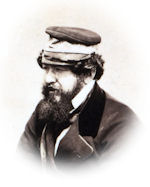
Next day (20th)I took the train, at Ellicott’s Mills, and went to Harper’s Ferry. There is no one spot, in the history of this extraordinary war, which can be well more conspicuous. Had it nothing more to recommend it than the scenery, it might well command a visit from the tourist; but as the scene of old John Brown’s raid upon the Federal arsenal, of that first passage of arms between the abolitionists and the slave conservatives, which has developed this great contest; above all, as the spot where important military demonstrations have been made on both sides, and will necessarily occur hereafter, this place, which probably derives its name from some wretched old boatman, will be renowned for ever in the annals of the civil war of 1861. The Patapsco, by the bank of which the rail is carried for some miles, has all the character of a mountain torrent, rushing through gorges or carving out its way at the base of granite hills, or boldly cutting a path for itself through the softer slate. Bridges, viaducts, remarkable archways, and great spans of timber trestle work leaping from hill to hill, enable the rail to creep onwards and upwards by the mountain side to the Potomac at Point of Rocks, whence it winds its way over undulating ground, by stations with eccentric names to the river’s bank once more. We were carried on to the station next to Harper’s Ferry on a ledge of the precipitous mountain range which almost overhangs the stream. But few civilians were in the train. The greater number of passengers consisted of soldiers and sutlers, proceeding to their encampments along the river. A strict watch was kept over the passengers, whose passes were examined by officers at the various stations. At one place an officer who really looked like a soldier entered the train, and on seeing my pass told me in broken English that he had served in the Crimea, and was acquainted with me and many of my friends. The gentleman who accompanied me observed, “I do not know whether he was in the Crimea or not, but I do know that till very lately your friend the Major was a dancing master in New York.” A person of a very different type made his offers of service, Colonel Gordon of the 2nd Massachusetts Regiment, who caused the train to run on as far as Harper’s Ferry, in order to give me a sight of the place, although in consequence of the evil habit of firing on the carriages in which the Confederates across the river have been indulging, the locomotive generally halts at some distance below the bend of the river.

Harper’s Ferry lies in a gorge formed by a rush of the Potomac through the mountain ridges, which it cuts at right angles to its course at its junction with the river Shenandoah. So trenchant and abrupt is the division that little land is on the divided ridge to build upon. The precipitous hills on both sides are covered with forest, which has been cleared in patches here and there on the Maryland shore, to permit of the erection of batteries. On the Virginian side there lies a mass of blackened and ruined buildings, from which a street lined with good houses stretches up the hill. Just above the junction of the Shenandoah with the Potomac, an elevated bridge or viaduct 300 yards long leaps from hill side to hill side. The arches had been broken—the rails which ran along the top torn up, and there is now a deep gulf fixed between the shores of Maryland and Virginia. The rail to Winchester from this point has been destroyed, and the line along the Potomac has also been ruined.

But for the batteries which cover the shoal water at the junction of the two rivers below the bridge, there would be no difficulty in crossing to the Maryland shore, and from that side the whole of the ground around Harper’s Ferry is completely commanded. The gorge is almost as deep as the pass of Killiecranckie, which it resembles in most respects except in breadth and the size of the river between, and if ever a railroad finds its way to Blair Athol, the passengers will find something to look at very like the scenery on the route to Harper’s Ferry. The vigilance required to guard the pass of the river above and below this point is incessant, but the Federals possess the advantage on their side of a deep canal parallel to the railway and running above the level of the river, which would be a more formidable obstacle than the Potomac to infantry or guns. There is reason to believe that the Secessionists in Maryland cross backwards and forwards whenever they please, and the Virginians coming down at their leisure to the opposite shore, inflict serious annoyance on the Federal troops by constant rifle practice.

Looking up and down the river the scenery is picturesque, though it is by no means entitled to the extraordinary praises which American tourists lavish upon it. Probably old John Brown cared little for the wild magic of streamlet or rill, or for the blended charm of vale and woodland. When he made his attack on the arsenal now in ruins, he probably thought a valley was as high as a hill, and that there was no necessity for water running downwards—assuredly he saw as little of the actual heights and depths around him when he ran across the Potomac to revolutionize Virginia. He has left behind him millions either as clear-sighted or as blind as himself. In New England parlours a statuette of John Brown may be found as a pendant to the likeness of our Saviour. In Virginia his name is the synonym of all that is base, bloody, and cruel.

Harper’s Ferry at present, for all practical purposes, may be considered as Confederate property. The few Union inhabitants remain in their houses, but many of the Government workmen and most of the inhabitants have gone off South. For strategical purposes its possession would be most important to a force desiring to operate on Maryland from Virginia. The Blue Ridge range running up to the Shenandoah divides the country so as to permit a force debouching from Harper’s Ferry to advance down the valley of the Shenandoah on the right, or to move to the left between the Blue Ridge and the Katoctin mountains towards the Manassas railway at its discretion. After a false alarm that some Secesh cavalry were coming down to renew the skirmishing of the day before, I returned, and travelling to Relay House just saved the train to Washington, where I arrived after sunset. A large number of Federal troops are employed along these lines, which they occupy as if they were in a hostile country. An imperfectly formed regiment broken up into these detachments and placed in isolated posts, under ignorant officers, may be regarded as almost worthless for military operations. Hence the constant night alarms—the mistakes—the skirmishes and instances of misbehaviour which arise along these extended lines.

On the journey from Harper’s Ferry, the concentration of masses of troops along the road, and the march of heavy artillery trains, caused me to think a renewal of the offensive movement against Richmond was immediate, but at Washington I heard that all McClellan wanted or hoped for at present, was to make Maryland safe and to gain time for the formation of his army.

The Confederates appear to be moving towards their left, and McClellan is very uneasy lest they should make a vigorous attack before he is prepared to receive them.

In the evening the New York papers came in with the extracts from the London papers containing my account of the battle of Bull’s Run. Utterly forgetting their own versions of the engagement, the New York editors now find it convenient to divert attention from the bitter truth that was in them, to the letter of the foreign newspaper correspondent, who, because he is a British subject, will prove not only useful as a conductor to carry off the popular wrath from the American journalists themselves, but as a means by induction of charging the vials afresh against the British people, inasmuch as they have not condoled with the North on the defeat of armies which they were assured would, if successful, be immediately led to effect the disruption of the British empire. At the outset I had foreseen this would be the case, and deliberately accepted the issue; but when I found the Northern journals far exceeding in severity anything I could have said, and indulging in general invective against whole classes of American soldiery, officers, and statesmen, I was foolish enough to expect a little justice, not to say a word of the smallest generosity.
TUESDAY, AUGUST 20, 1861.

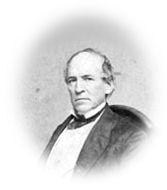
Many people in the City were much alarmed last night at a report that “the rebels had crossed the River below and were marching on Washington.” Similar rumors are constantly afloat. Went to the Express Office and sent off (as requested) Lieut Martins trunk which was left with me. Called at the “National” and also a[t] Bradys Photograph Gallery. Saw Maj Anderson there. I was at home most of the day contriving what course to pursue for the time being.

______

The three diary manuscript volumes, Washington during the Civil War: The Diary of Horatio Nelson Taft, 1861-1865, are available online at The Library of  Congress.

August 20. Tuesday.—After marching three miles we stopped for water and to let the teams come up. One man reclining was accidentally shot by another hitting his foot against the hammer of a musket. Poor Carr received the ball in the heel of his shoe; it passed up his leg, grazing it merely, grazed his body and arm and shoulder, and left him without a serious wound! Fortunate. Reached Buckhannon about 3:30 P. M.—so sleepy; no rest or sleep the night before. Stopped at noon—got good bread and milk, honey and blackberry jam, and slept nearly an hour in a barn. Buckhannon a pretty place.

image

74th Infantry Regiment .
Civil War .
Fifth Excelsior Regiment; Fifth Regiment, Sickles’ Brigade.

This regiment was recruited under the special authority of the War Department, issued to Gen. D. E. Sickles; organized under Col. Charles K. Graham at Camp Scott, L. I., and mustered in the service of the United States for three years between June 30 and October 6, 1861.  (New York State Military Museum and Veterans Research Center)

__________

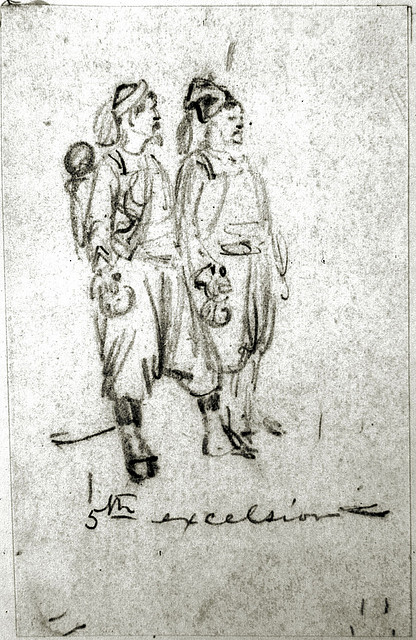
Alfred R. Waud Civil War Art

5th excelsiors

Sketch of two soldiers.

1 drawing on cream paper : pencil ; 9.9 x 6.4 cm. (sheet).

CREATED/PUBLISHED: [between 1860 and 1865]

Part of Library of Congress Civil War drawing collection

hdl.loc.gov/loc.pnp/cph.3a00529

August 20.—We are rejoicing over a victory at Springfield, Missouri—General Lyon killed and his troops routed. Our loss represented large. I have only seen the Northern account.

No news from home, and nothing good from that quarter anticipated. We are among dear, kind friends, and have the home feeling which only such genuine and generous hospitality can give; but it sometimes overpowers me, when I allow myself to think of our uncertain future.

Post image for “It was our first meal in the army and consisted of boiled potatoes, fried bacon and baked beans.”–Alexander G. Downing.

Tuesday, 20th—I went early this morning to Inland, where all who enlisted were to meet and go to Davenport.[1] Several of the friends came in to see us off. There were forty-five of us and at 9 o’clock we left in wagons for Davenport. After a hot, dusty ride we arrived at Davenport at 4 o’clock in the afternoon, and marched out to Camp McClellan, where they received us very kindly. We had very fine barracks to go into and the boys of the Eighth Iowa had a good supper for us. It was our first meal in the army and consisted of boiled potatoes, fried bacon and baked beans. We have lots of straw to sleep on at night. We were to meet a part of a company from Le Claire under command of Captain Foster and together form one company in the Eighth Iowa Infantry. But Captain Foster did not come, and since there are only eight Le Claire boys here we have not enough to make a company.


[1] When I bade father good-by, he said: “Well, Alec, as you have made up your mind to go into the army, I want you to promise me that you will not enter into any of the vices that you will come in contact with while in the army, but try to conduct yourself just as if you were at home.” Of course I was not an angel while in the army, but I always remembered father’s advice and to that I attribute what little success I have had in life—and this is my seventy-second year. Father was in his forty-sixth year, but he told me that if it were not for leaving the family alone, he would go with me. He was a strong Union man, and his father had served all through the War of the Revolution, in the command of General Wayne.—A. G. D.

AUGUST 20TH.—Secretary Walker returned last night, having heard of the death of Col. Jones before reaching his destination. I doubt whether the Secretary would have thought a second time of what had been done in his absence, if some of his friends had not fixed his attention upon it. He shut himself up pretty closely, and none of us could see or hear whether he was angry. But calling me into his room in the afternoon to write a dispatch which he dictated, I saw, lying on his table, an envelope directed in his own hand to the President. Hints had been circulated by some that it was his purpose to resign. Could this communication be his resignation? It was placed so conspicuously before me where I sat that it was impossible not to see it. It was marked, too, “immediate.”

August 20.—General Rosecrans issued the following card to the press, dated Clarksburg, Va.:—The General Commanding the Army of occupation in Western Virginia, and the Department of the Ohio, invites the aid of the press to prevent the enemy from learning, through it, the position, strength, and movements of the troops under his command. Such information is of the greatest service to the enemy, and deprives the commander of our own forces of all the advantages which arise from the secrecy of concentration and surprise. These advantages are constantly enjoyed by the rebels, whose press never betrays them.

—The bill entitled an Act to increase the Corps of Artillery, and for other purposes, passed by the “Confederate” Congress at Richmond, Va., was approved by Jeff. Davis and became a law.—(Doc. 198.)

—A Skirmish took place to-day at Hawks’ Nest, in Kanawha Valley, Va., eight miles beyond the river. The rebels, some four thousand strong, advanced to where the Eleventh Ohio Regiment had erected barricades, and were driven back with a loss of fifty killed and a number wounded and taken prisoners. The Federal loss was only two slightly wounded and one missing. They captured quite a number of horses and equipments.—(Doc. 199.)

—The New Orleans Delta declares: We want no corn, no flour, no swill-fed pork, no red-eye, no butter or cheese from that Great Western Reserve, no “sass,” no adulterated drugs, no patent physics, no poisoned pickles. We want none of these, we say, to exchange our money for them. And we will not pay the “Blue Grass” country of Kentucky for its loyalty to Lincoln by opening our markets to its hemp fabrics. Let it lay in the bed it has chosen until it awakes to a sense of its duty as well as its interest. We must discriminate in favor of our gallant ally, Missouri, and give her the benefits of our marts in preference to either open foes or insidious neutrals. It is the clear duty of our Government now to declare Kentucky under blockade. If in the existing state of affairs a sea separated us from that State, it would, with the naval power to execute our behests, behoove us to close the ports of a people who seek for themselves profit by impoverishing us and enriching our foes. The fact of their territorial contiguity does not weaken the argument. Kentucky and the West must be made to feel this war, and feel it until they cry peccavi.

—The Fifth Regiment of the Excelsior Brigade, N. Y. S. V., under the command of Col. C. K. Graham, left New York for the seat of war.—N. Y. Herald, August 21.

—A Train arrived at Jefferson City, Mo., this morning from Syracuse, having on board twenty-five passengers and two hundred and fifty United States soldiers. When the train was near Lookout station, about thirty shots were fired into it from behind a wood-pile and bush skirting the road, killing one of the soldiers and wounding six others, one of them fatally. One secessionist was killed. The train was stopped half a mile beyond the point where the attack was made, and two hundred soldiers put off and sent in pursuit of the miscreants. Guerilla parties are scouring the counties west of Jefferson City, selling property and arresting prominent citizens.—N. Y. World, August 21.

—The Second and Fourth battalions of Boston, Mass., voted unanimously to offer their services to the Government for three months.

Gov. Andrew, in a brief proclamation, calls upon citizens of Massachusetts to come forward and fill up the regiments already accepted for the war.—(Doc. 200.)

—August Douglas, a merchant of Baltimore, was arrested in Philadelphia, charged with an attempt to induce Lieutenant Hain to join the rebels, promising him higher rank and pay.—N. Y. Evening Post, August 21.

—The Albany Journal of to-day has the following: “Men and presses who are to-day preaching ‘Compromise’ and ‘Peace,’ are doing more to cripple the Government and help treason than the rebel armies themselves. We would hang a spy who should be caught prowling about our camp to obtain information to be used against as; but we must tolerate if not respect these loyal traitors who labor in the rostrum and through the press to aid the enemy!”

—This morning Albert Sanford, United States marshal of Rhode Island arrived at New York from Newport, having in custody a gentleman named Louis de Bebian, who claims to be a French citizen, but a resident of Wilmington, North Carolina. This gentleman is charged with some kind of political offence, or else appears to be suspected of going to Europe in the service of the Confederate States, or for purposes inimical to the United States. His story, which does not differ much from that of the marshal who has brought him here as a prisoner, is as follows:—He has been a resident and carrying on business as a merchant in Wilmington for several years, and being desirous to go to Europe on business and to see his family, he took passage on board a British vessel called the Adelso, bound to Halifax, N. S., in order to meet one of the Canard steamers. This vessel sailed from Wilmington without hindrance. During the storm of the 12th instant the vessel became disabled, and the captain, rather than let her go down with all hands on board, bore up for a friendly port, as he supposed, in distress. Having got safely into Newport, Rhode Island, under the British flog, the Adelso was boarded by the revenue yacht Henrietta, Lieut. Bennett, who, ascertaining that the Adelso was last from Wilmington, South Carolina, took possession of her and put a prize crew of one officer and five men on board, sealed up the trunks and papers of the master and passengers, and made them all prisoners, and processes for libel and condemnation were issued in the courts of that district by the captors. M. Bebian wished to go ashore and see the French consul, or to be permitted to go to some part of the British dominions, but was refused. After being kept in custody and subjected, as he complains, to a number of personal indignities, ho was sent to New York in custody, and will be transferred to one of the military prisons in the harbor until further orders as to his ultimate destination. Among the papers taken from the prisoner were letters of credit to the amount of $40,000, with which he was to purchase clothing, arms and iron, for shipment to Wilmington, N. C., and other places south.—N. Y. Evening Post, August 20.

—General McClellan assumed the command of the army of the Potomac, and announced the officers attached to his staff.—(Doc. 201.)

—The Convention of Western Virginia passed the ordinance creating a State, reported by the select committee on a division of the State, this morning, by a vote of fifty to twenty-eight. The boundary as fixed includes the counties of Logan, Wyoming, Raleigh, Fayette, Nicholas, Webster, Randolph, Tucker, Preston, Monongahela, Marion, Taylor, Barbour, Upshur, Harrison, Lewis, Braxton, Clay, Kanawha, Boone, Wayne, Cabell, Putnam, Mason, Jackson, Roane, Calhoun, Wirt, Gilmer, Ritchie, Wood, Pleasants, Tyler, Doddridge, Wetzel, Marshall, Ohio, Brooke, and Hancock. A provision was incorporated permitting certain adjoining counties to come in if they should desire, by expression of a majority of their people to do so. The ordinance also provides for the election of delegates to a Convention to form a constitution; at the same time the question “for a new State” or “against a new State” shall be submitted to the people within the proposed boundary. The election is to be held on the 24th of October. The name of the new State is to be Kanawha.— National Intelligencer, August 22.

—Got. Curtin issued a proclamation to the freemen of the Commonwealth of Pennsylvania, “in which he urges them again to sustain the country in its danger,” and calls upon every man to “so act that he will not be ashamed to look at his mother, his wife, or sisters.”—(Doc. 202.)

—Gen. Butler assumed command of the volunteer forces near Fortress Monroe in pursuance of the following order:

Headquarters Department of Virginia, &c.

Fortress Monroe, August 20, 1861.

Special Order No. 9.—Major-General B. F. Butler is hereby placed in command of the volunteer forces in this department, exclusive of those at Fort Monroe. His present command, at Camps Butler and Hamilton, will include the First, Second, Seventh, Ninth, and Twentieth Regiments, the battalion of Massachusetts Volunteers, and the Union Coast Guard and Mounted Rifles. By command of

Major-General Wool.

C. C. Churchill, Adjutant-General.

—Sterling Price issued a proclamation at Springfield, Mo., to the effect, that a great victory had been won; that northern oppressors of Missouri had been driven back; that every one belonging to the Home Guard organization would be regarded and treated as an enemy to the Southern Confederacy; but that his protection would extend to such who quietly return to their homes, and allow the Southern sway to prevail, and that whoever recognized the provisional government of Missouri would be considered as an enemy to the State, and dealt with accordingly.—(Doc. 204.)