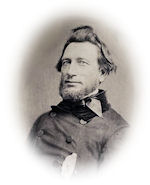
13th.—H. S. S. arrived at my hospital to-day, with orders, as I was sick, to take charge of and bring forward all the men left here. From the tenor of our Colonel’s letter of instructions to his messenger, I should take him to be a little “miffed” at the men’s not being sent forward earlier. What in the name of heaven can he wish to do with sick men in camp? However, I have no discretion, but shall turn over the men to S., and see how he will carry out instructions. I had already sent forward to-day, before his arrival, quite a number, leaving me only ten here.
Saturday, August 13, 2011
TUESDAY 13
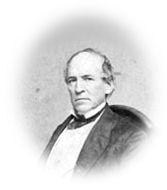
News today of the battle at Springfield Missori and death of Genl Lyon. My son Frank was in his Army, Co. E, 2nd Regt US Infantry, Capt Steel. Have been at the Camp much of the day seeing the soldiers pack up and get in readiness to leave. They go tomorrow morning. Doct Barnes here to tea. He presented Julia with a beautiful pocket pistol, “Elliotts self cocking” (very small) Six Shooter. I was at “Willards” an hour today, not a great crowd there. The City is patroled daily and nightly by mounted men.

______
The three diary manuscript volumes, Washington during the Civil War: The Diary of Horatio Nelson Taft, 1861-1865, are available online at The Library of Congress.
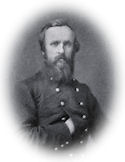
August 13.—Still rain. My horse hitched to a tree on the brow of a hill very near my tent broke loose during the night, and, it is said, rolled down the steep hill and swam the river. This morning he was seen trotting about in high feather on the opposite side of the river. He was caught and brought back unhurt, to the surprise of all who saw the place he must have gone down. Our right wing has been sent for to return to Bulltown. Captains Drake and Woodward who are out guerrilla hunting are still absent and not heard from for twenty-four hours.—P. M. Still raining. Captains Drake and Woodward have returned. They caught two of the pickets of the guerrilla party they were after but failed in surprising them, owing to a boy who gave information of their coming. They found a few good Union men; the mass of the people most ignorant. [They] describe the country in the edge of Webster County as precipitous and difficult; the people timid but cunning. They also brought two other prisoners, men who have been in the secession army.
S. C. W. to Eliza Howland Woolsey
New Haven, August, ‘61.
The Second Connecticut Regiment returned on Monday and Willy and I rushed out to see them pass, poor, way-worn, tired fellows, as they were; and in their ranks we saw Dr. Bacon prance by, much to our surprise as well as pleasure. His family are all spending the summer in the country, and as the last duties of his place would detain him here for a few days, we offered him the shelter of our roof till they should be over, and so have had him to ourselves all the week—too tired and unwell to be as entertaining as usual, but still invaluable as a guide-book and interpreter to all the recent war movements. I am hoping that a large blue pill which he swallowed publicly last night may make him even more graphic and interesting. . . . He gave me a charming description of his calls on you and Georgy and what you said and did, and what you meant to say and do. Oh, girls, don’t I envy you, being so in the thick of everything!
. . . The reports from Lenox—(where Jenny and Harry Yardley, newly married, were settled) —are charming; the little house is just like a bower, transformed into such by all simple means and expedients. I am really getting appalled by the smartness of the girls. Dora and Lilly put carpets down themselves the other day in three rooms and did it as well as a professional. The last addition to the ornaments of the rooms was the pretty picture which Carry and Hatty brought from Rome for Jenny. Carry and Charley walked in upon them on Monday evening to their delight and surprise, having come up in search of rooms for the family—found at once quite near the Parsonage, and occupied by them to-day.
AUGUST 13TH. —The President sent to the department an interesting letter from Mr. Zollicoffer, in Tennessee, relating to the exposed condition of the country, and its capacities for defense.
August 13th.—Hon. Robert Barnwell says, “The Mercury’s influence began this opposition to Jeff Davis before he had time to do wrong. They were offended, not with him so much as with the man who was put into what they considered Barnwell Rhett’s rightful place. The latter had howled nullification and secession so long that when he found his ideas taken up by all the Confederate world, he felt he had a vested right to leadership.”
Jordan, Beauregard’s aide, still writes to Mr. Chesnut that the mortality among the raw troops in that camp is fearful. Everybody seems to be doing all they can. Think of the British sick and wounded away off in the Crimea. Our people are only a half-day’s journey by rail from Richmond. With a grateful heart I record the fact of reconciliation with the Wigfalls. They dined at the President’s yesterday and the little Wigfall girls stayed all night.
Seward is fêting the outsiders, the cousin of the Emperor, Napoleon III., and Russell, of the omnipotent London Times.

August 13.—The New Orleans Delta of to-day rejoices over the contemplated expulsion of all citizens of the United States “from the Confederated States.” The law, it states, is, and the fact is confirmed from other sources, that all owning citizenship to the Federal Government are to be banished from the Confederated States. The Delta says:
“We cannot afford to tolerate enemies in our midst, because, forsooth, they may have the discretion to keep silent and to bear no arms in their hands. The man of Massachusetts, or the man of Kentucky, living, and perhaps thriving in our midst, has no business at this time to be among us, if he allows a reasonable suspicion to exist that he is not also cordially with us.”
—A severe skirmish took place a few miles from Grafton, Va., on the Fairmount and Webster road. Information having been received that a regularly organized body of rebels, living in the county, were lodged within a few miles of Webster, General Kelly sent Captain Dayton, of Company A, Fourth Virginia Regiment, with fifty men, from Webster to disarm them. After scouting nearly twenty-four hours he came suddenly on them, and after an hour’s severe fighting, succeeded in killing twenty-one and putting the others to flight, without loss to his command. The rebels numbered 200, and were composed of the worst characters of the county, led on by Zack Cochrane, sheriff under Gov. Letcher.—Ohio Statesman, August 16.
—The banks of New York, Philadelphia, and Boston agreed to take fifty millions of the Government loan, they to be the sole recipients of the Treasury notes.
William Gray, Franklin Haven, and J. Amory Davis were chosen a committee by the Boston bank directors to confer with the committees of the New York and Philadelphia banks in regard to the Government loan. The meeting adopted the following instructions to the Committee:
“That the Committee be authorized to say to the gentlemen of the Committees from the New York and Philadelphia banks, that, in the judgment of the gentlemen here assembled, the banks and bankers of Boston and of the State of Massachusetts and its people are prepared, ready, willing, and determined to do all in their power, in view of their duty to themselves, their trusts and their country, to aid it in suppressing the present rebellion by furnishing men and money to the utmost extent of their ability, now, henceforth and forever.”— N. Y. Evening Post, August 14.
—General Pope, at St. Louis, Mo., issued a general order, establishing regulations for the navigation of the Missouri River.—(Doc. 181.)


