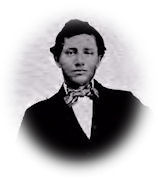
Tuesday, 27th—I went to Davenport today and returned to Camp McClellan. A force of about five hundred men was sent down the river by boat to Keokuk, for the purpose of reinforcing the troops at that place. It is expected that they will have a fight there. I was too late in returning to camp to go with them.
Saturday, August 27, 2011
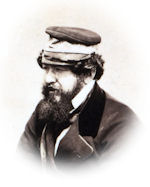
August 27th.—Fever and ague, which Gen. McDowell attributes to water-melons, of which he, however, had eaten three times as much as I had. Swallowed many grains of quinine, and lay panting in the heat in-doors. Two English visitors, Mr. Lamy and a Captain of the 17th, called on me; and, afterwards, I had a conversation with M. Mercier and M. Stoeckl on the aspect of affairs. They are inclined to look forward to a more speedy solution than I think the North is weak enough to accept. I believe that peace is possible in two years or so, but only by the concession to the South of a qualified independence. The naval operations of the Federals will test the Southern mettle to the utmost. Having a sincere regard and liking for many of the Southerners whom I have met, I cannot say their cause, or its origin, or its aim, recommends itself to my sympathies; and yet I am accused of aiding it by every means in my power, because I do not re-echo the arrogant and empty boasting and insolent outbursts of the people in the North, who threaten, as the first-fruits of their success, to invade the territories subject to the British crown, and to outrage and humiliate our flag.
It is melancholy enough to see this great republic tumbling to pieces; one would regret it all the more but for the fact that it re-echoed the voices of the obscene and filthy creatures which have been driven before the lash of the lictor from all the cities of Europe. Assuredly it was a great work, but all its greatness and the idea of its life was of man, not of God. The principle of veneration, of obedience, of subordination, and self-control did not exist within. Washington-worship could not save it. The elements of destruction lay equally sized, smooth, and black at its foundations, and a spark suffices to blow the structure into the air.
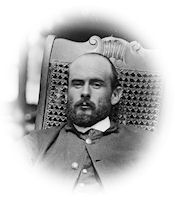
Boston, August 27, 1861
Your tone is too dull in your letters and I feel for you sincerely in your Bull-run panic in England. Here things certainly look much better and people feel much better. The money market is easy and our exportation of breadstuffs seems likely to continue. Finally, this steamer will advise you that at least the government is thoroughly in earnest and that spies and traitors can no longer enjoy immunity. Nor is this all. Last week we were in a terrible panic and Monday was the blackest day I ever saw; but now the Government is working for its life. McClellan has the complete confidence of the people, government securities are rising, money is plenty, and finally the indications are strong that the confederates are being ground to atoms by the very weight of their defensive preparations. Bull-run was a blessing to us, for it startled the people from the conceit, arrogance and pride which must have proved their ruin. There is a universal feeling of confidence abroad, and England may refuse our loan if she chooses to; but I don’t think she will for seven and three-tenths per cent is too much of the flesh-pots not to be longed for, and our securities must drift to England. . . .
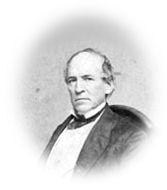
TUESDAY 27
A tent was pitched expressly for Julia which she occupied alone during the night with a sentinel pacing before her tent all night. I occupied a couch in Doct Barnes tent where we had taken tea. Julia was very much “lionized” by the officers while we staid in the camp. We took dinner with Col Bartlett, left the camp about 2 P.M., and rode to Fort Runyon, Fort Albany and to Arlington House, and from there to the “long Bridge.” Capt Albergen of Buffalo passed us over the Bridge. We got home before dark, had a pleasant trip.

______
The three diary manuscript volumes, Washington during the Civil War: The Diary of Horatio Nelson Taft, 1861-1865, are available online at The Library of Congress.

The nurses were required to take the oath of allegiance to the government, and to secure passes, in all of which G. helped them, also securing government ambulances to carry them to their destination:—
“Dr. Asch begs to inform Miss Woolsey that he has seen the officer in charge of the passes into Virginia. It will be impossible to procure them this evening as the office closes at 3 p. m., and in addition it will be necessary for the nurses to present themselves at General Porter’s office for the purpose of making affirmation as to their loyalty,—when, on presenting the accompanying note, Dr. Asch trusts that there will be no delay in the accomplishment of their object.”
– – – – –
Surg.-General’s Office, Aug. 27, 1861.
Dr. Wood has requested Dr. Spencer to attend to the wishes of Miss Woolsey (in regard to the ambulances).
He very much regrets he is prevented from attending personally.
AUGUST 27TH. —We have news of a fight at Hawk’s Nest, Western Virginia. Wise whipped the Yankees there quite handsomely.
Tuesday, [August] 27.—Ordered to make a forced march, without tents, knapsacks, or cooking utensils, to French Creek by a mountain path scarcely practicable for horsemen. At about 3 P. M. set out. I led the column afoot, Captain Sperry on Webby. Reached a river over the mountain after dark; kindled fires and slept on ground. Thirteen miles.
August 27th.—Theodore Barker and James Lowndes came; the latter has been wretchedly treated. A man said, “All that I wish on earth is to be at peace and on my own plantation,” to which Mr. Lowndes replied quietly, “I wish I had a plantation to be on, but just now I can’t see how any one would feel justified in leaving the army.” Mr. Barker was bitter against the spirit of braggadocio so rampant among us. The gentleman who had been answered so completely by James Lowndes said, with spitefulness: “Those women who are so frantic for their husbands to join the army would like them killed, no doubt.”
Things were growing rather uncomfortable, but an interruption came in the shape of a card. An old classmate of Mr. Chesnut’s—Captain Archer, just now fresh from California—followed his card so quickly that Mr. Chesnut had hardly time to tell us that in Princeton College they called him “Sally” Archer he was so pretty—when he entered. He is good-looking still, but the service and consequent rough life have destroyed all softness and girlishness. He will never be so pretty again.
The North is consolidated; they move as one man, with no States, but an army organized by the central power. Russell in the Northern camp is cursed of Yankees for that Bull Rim letter. Russell, in his capacity of Englishman, despises both sides. He divides us equally into North and South. He prefers to attribute our victory at Bull Run to Yankee cowardice rather than to Southern courage. He gives no credit to either side; for good qualities, we are after all mere Americans! Everything not “national” is arrested. It looks like the business of Seward.
I do not know when I have seen a woman without knitting in her hand. Socks for the soldiers is the cry. One poor man said he had dozens of socks and but one shirt. He preferred more shirts and fewer stockings. We make a quaint appearance with this twinkling of needles and the everlasting sock dangling below.
They have arrested Wm. B. Reed and Miss Winder, she boldly proclaiming herself a secessionist. Why should she seek a martyr’s crown? Writing people love notoriety. It is so delightful to be of enough consequence to be arrested. I have often wandered if such incense was ever offered as Napoleon’s so-called persecution and alleged jealousy of Madame de Stael.
.……..……..……..……..……..……..……..…….
Russell once more, to whom London, Paris, and India have been an every-day sight, and every-night, too, streets and all. How absurd for him to go on in indignation because there have been women on negro plantations who were not vestal virgins. Negro women get married, and after marriage behave as well as other people. Marrying is the amusement of their lives. They take life easily; so do their class everywhere. Bad men are hated here as elsewhere.
“I hate slavery. I hate a man who— You say there are no more fallen women on a plantation than in London in proportion to numbers. But what do you say to this—to a magnate who runs a hideous black harem, with its consequences, under the same roof with his lovely white wife and his beautiful and accomplished daughters? He holds his head high and poses as the model of all human virtues to these poor women whom God and the laws have given him. From the height of his awful majesty he scolds and thunders at them as if he never did wrong in his life. Fancy such a man finding his daughter reading Don Juan. ‘You with that immoral book!’ he would say, and then he would order her out of his sight. You see Mrs. Stowe did not hit the sorest spot. She makes Legree a bachelor.” “Remember George II. and his likes.”
“Oh, I know half a Legree—a man said to be as cruel as Legree, but the other half of him did not correspond. He was a man of polished manners, and the best husband and father and member of the church in the world.” “Can that be so?”
“Yes, I know it. Exceptional case, that sort of thing, always. And I knew the dissolute half of Legree well. He was high and mighty, but the kindest creature to his slaves. And the unfortunate results of his bad ways were not sold, had not to jump over ice-blocks. They were kept in full view, and provided for handsomely in his will.”
“The wife and daughters in the might of their purity and innocence are supposed never to dream of what is as plain before their eyes as the sunlight, and they play their parts of unsuspecting angels to the letter. They profess to adore the father as the model of all saintly goodness.” “Well, yes; if he is rich he is the fountain from whence all blessings flow.”
“The one I have in my eye—my half of Legree, the dissolute half—was so furious in temper and thundered his wrath so at the poor women, they were glad to let him do as he pleased in peace if they could only escape his everlasting fault-finding, and noisy bluster, making everybody so uncomfortable.” “Now—now, do you know any woman of this generation who would stand that sort of thing? No, never, not for one moment. The make-believe angels were of the last century. We know, and we won’t have it.”
“The condition of women is improving, it seems.” “Women are brought up not to judge their fathers or their husbands. They take them as the Lord provides and are thankful.”
“If they should not go to heaven after all; think what lives most women lead.” “No heaven, no purgatory, no— the other thing? Never. I believe in future rewards and punishments.”
“How about the wives of drunkards? I heard a woman say once to a friend of her husband, tell it as a cruel matter of fact, without bitterness, without comment, ‘Oh, you have not seen him! He has changed. He has not gone to bed sober in thirty years.’ She has had her purgatory, if not ‘the other thing,’ here in this world. We all know what a drunken man is. To think, for no crime, a person may be condemned to live with one thirty years.” “You wander from the question I asked. Are Southern men worse because of the slave system and the facile black women?” “Not a bit. They see too much of them. The barroom people don’t drink, the confectionery people loathe candy. They are sick of the black sight of them.”
“You think a nice man from the South is the nicest thing in the world?” “I know it. Put him by any other man and see!”
.……..……..……..……..……..……..……..…….
Have seen Yankee letters taken at Manassas. The spelling is often atrocious, and we thought they had all gone through a course of blue-covered Noah Webster spelling-books. Our soldiers do spell astonishingly. There is Horace Greeley: they say he can’t read his own handwriting. But he is candid enough and disregards all time-serving. He says in his paper that in our army the North has a hard nut to crack, and that the rank and file of our army is superior in education and general intelligence to theirs.
My wildest imagination will not picture Mr. Mason¹ as a diplomat. He will say chaw for chew, and he will call himself Jeems, and he will wear a dress coat to breakfast. Over here, whatever a Mason does is right in his own eyes. He is above law. Somebody asked him how he pronounced his wife’s maiden name: she was a Miss Chew from Philadelphia.
They say the English will like Mr. Mason; he is so manly, so straightforward, so truthful and bold. “A fine old English gentleman,” so said Russell to me, “but for tobacco.” “I like Mr. Mason and Mr. Hunter better than anybody else.” “And yet they are wonderfully unlike.” “Now you just listen to me,” said I. “Is Mrs. Davis in hearing—no? Well, this sending Mr. Mason to London is the maddest thing yet. Worse in some points of view than Yancey, and that was a catastrophe.”

______
¹ James Murray Mason was a grandson of George Mason, and hud been elected United States Senator from Virginia in 1847. In 1851 he drafted the Fugitive Slave Law. His mission to England in 1861 was shared by John Slidell. On November 8, 1861, while on board the British steamer Trent, in the Bahamas, they were captured by an American named Wilkes, and imprisoned in Boston until January 2, 1862. A famous diplomatic difficulty arose with England over this affair. John Slidell was a native of New York, who had settled in Louisiana and became a Member of Congress from that State in 1843. In 1853 he was elected to the United States Senate.
August 27.—Colonel Hoffman, of the Twenty-third New York (Elmira) regiment, with Captain Dinglee’s company and one other, started this afternoon to the vicinity of Ball’s Cross Roads, for the protection of the Federal pickets in that locality. Near Ball’s Cross Roads they encountered about six hundred secessionists, when a volley was exchanged. The two Federal companies retired, in presence of the superior force, in excellent order. About thirty rounds were exchanged, and _____ Carrol, of Elmira, was killed by a shot from the rebels. He was a young man, and was very popular with his regiment. Another of the national troops was wounded in the neck, and had a finger shot off. Whether the Confederates suffered any loss is not known. The nationals and the pickets fell back to the camp, about half a mile beyond Arlington.—National Intelligencer, August 29.
—As important arrest was made in New York at the instance of Superintendent Kennedy—the person arrested being Samuel J. Anderson. He has carried on a very extensive correspondence with Vice-President Stephens of the Southern Confederacy, and has been in constant communication with the secession sympathizers in New York. For the last six weeks, according to his own confession, he has been contributing editorial articles for The Daily News, Day Book, and Journal of Commerce. An intercepted letter from Washington advised him to go south via Kentucky, as a passport could not be obtained from the Government. Anderson’s correspondence gives a great deal of important political information, besides implicating parties well known in New York.—-N. Y. Tribune, August 28.
—The First regiment U. S. Chasseurs, under the command of Colonel John Cochrane, left New York for the seat of war. This regiment numbers eight hundred and fifty men, and will be armed with the Enfield rifle.
—Joseph Holt made a Union speech at Boston, Mass., to-day, in the course of which he said he nowhere heard the word compromise, which was now only uttered by traitors. So long as rebels had arms in their hands there was nothing to compromise. He concluded by saying that it was in vain to toil at the pumps while men were kept on board boring holes in the bottom of the ship.—Boston Post, Aug. 28.
—A Correspondence between the President of the United States and Beriah Magoffin, governor of Kentucky, respecting the neutrality of that State during the present crisis, was made public,—(Doc. 13.)


