Following the American Civil War Sesquicentennial with day by day writings of the time, currently 1863.

Tuesday, August 9, 2011

FRIDAY 9

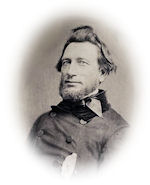
This day has not been so hot, rather cloudy and rain tonight. I was on the Ave and at the Pat office, got a Hack and brot home my Books and papers from the office. Nothing new stirring in the City. Do[c]t Vanslyck was here today and Capt Adams gave us a Call. I finished of[f] my model and did not do much else today about the House. The boys have been playing soldier in their tent opposite the House — keeping guard &c.

______

The three diary manuscript volumes, Washington during the Civil War: The Diary of Horatio Nelson Taft, 1861-1865, are available online at The Library of  Congress.

9th.—What a wonderful effect the hardships of camp life, with the troubles and cares which they entail on a surgeon, have had on my health. For many years I have been dyspeptic. Now I can eat what I please, and go without sleep almost entirely, and suffer no inconvenience. Last night, at 11 o’clock, after having ate a piece of hard salt beef for my supper, I “cared for” a pint of rich ice cream, and feel no inconvenience from it to-day. This would kill an ordinary civil man. I have to work very hard, but feel it a great comfort to work amongst the sick without suffering from fatigue, as I have been accustomed to.

Having received an order this morning from Gen. Dix to put all my sick into general hospital, and finding them bitterly opposed, I visited Fort McHenry, saw Gen. D., and prevailed on him to rescind the order.

I was highly gratified with what I saw at Fort McHenry. It, being the first equipped fort I ever saw, was an object of much interest; its numerous cannon, large enough for a small soldier to sleep in, pointing in all directions overlooking Baltimore and guarding all the approaches to it. No matter from what direction you come, you find these monster guns looking right in your face. Low down behind the walls lie almost innumerable ugly bull-dog-looking mortars, not over two and a half feet long, loaded with a 20 to 40-pound shells filling them to the very muzzle, and ready to be vomited forth at the first approach of trouble. There, too, is the great Dahlgren, stretching its long black neck away beyond the embrasures, as if looking for an object into which to pour its monster shot and shell, or its shower of grape and cannister. Its howitzers are there, and its great Columbiads, into some of which I was strongly tempted to crawl and take a nap, but a sudden recollection of the history of Jonah reminded me that its stomach, too, might sicken, and that I might awake in a trip across the mighty deep on the wings of the wind. I didn’t go in. The bright little brass 6, 8, and 10 pounders, on the greater number of which Napoleon said God always smiled in battles, were conspicuous amongst these great leviathans, and above all, the newly invented rifle cannon, ready to demolish ships or houses at two to five miles distance.

Have lost no man yet from sickness, but I have one who, I fear, will not recover. He is supposed to he poisoned by a glass of lemonade, bought of a man suspected of being a rebel.

I have succeeded, by selling a half barrel of flour, and by the approval of a small requisition made on the commissary, in getting provisions of all kinds to make my little detachment comfortable.

AUGUST 9TH.—Gen. Magruder commands on the Peninsula. President Tyler had a villa near Hampton, which the Yankees despoiled in a barbarous manner. They cut his carpets, defaced the pictures, broke the statues, and made kindling wood of the piano, sofas, etc.

August 9, Friday.—The colonel is out of humor with Lieutenant Rice for letting men on guard go to their tents to sleep and scolds him severely in the presence of his men. A little less grumbling and more instruction would improve the regiment faster. The men are disconcerted whenever the colonel approaches; they expect to be pitched into about something. A good man, but impatient and fault-finding; in short, he is out of health, nervous system out of order. Would he had sound health, and all would go well. He gives no instruction either in drill or other military duties but fritters away his time on little details which properly belong to clerks and inferior officers.— Begun to rain at noon, refreshing rather.

Our men returning from Sutton report our right wing under Lieutenant-Colonel Matthews gone on to Summersville. Also that a party in ambush fired on two companies of Colonel Lytle’s regiment, killing one and wounding four. This sort of murder must be stopped. The colonel is busy issuing passes to citizens, the patrol or picquets having been ordered to stop all persons travelling on the roads without passes. This must be a great annoyance to the inhabitants. Is there enough benefit to be gained for all the hate we shall stir up by it?

The mother of our adjutant at Camp Chase seeing a boy walking up and down on his sentinel’s beat took pity on him, sent him out a glass of wine and a piece of cake with a stool to sit on while he ate and drank. She told him not to keep walking so, to sit down and rest! She also advised him to resign!

More rumors of the approach of Lee with fifteen thousand men to attack our forces at Buchanan [Buckhannon]. Lieutenant Reichenbach with his party of twenty men marched yesterday twenty-eight miles and today, by noon, fifteen miles.

Joe Holt¹ makes the best war speeches of any man in the land. It always braces my nerves and stirs my heart when I read them. At Camp Joe Holt, near Louisville, he said: “Since the sword flamed over the portals of Paradise until now, it has been drawn in no holier cause than that in which you are engaged.”

_______

CAMP NEAR WESTON, VIRGINIA, August 9, 1861.

Friday Afternoon.

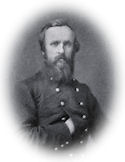
DEAREST:—I have just read your letter postmarked the 5th at Kingston. Right pleased with you. Very happy to get your good letter. It has been bright, warm (hot) weather since Sunday, but today at noon a fine rain began to fall, and this afternoon I was loafing about in the tents, hard up for occupation. Lying alone in my tent, your letter came in with one from Uncle written Sunday. Wasn’t it so lucky? I’ve nothing to tell you, I believe. Dr. Joe is well—perfectly—again; busy changing his hospital from the court-house and jail to a secession church which doesn’t run now. The colonel is busy giving passes to citizens wishing to travel roads guarded by our picquets.

Colonel Matthews under Colonel Tyler has gone to Summersville about seventy miles south of this. They are looking for Wise. In the meantime we have rumors that General Lee is marching over the mountains to push the Union forces in this region out of the State, and to seize the stores so abundantly gathered hereabouts. We have no means of knowing the truth here; if there is anything in it, we shall be called to Buchanan [Buckhannon], sixteen miles east, where the first attack is expected. There is a little more activity among the enemy in this quarter since these rumors became rife. Our party from the south, returning today, report that an attack was made up the road on two companies of Colonel Lytle’s men by a party in ambush, who fired one volley and ran off into the hills. One man killed and four wounded. Captain Gaines (our prosecutor) called to see me last night. His company is detached from his regiment, guarding a party putting up telegraph wires. Mr. Schooley returned from Cincinnati with late news last night. He says, it [was] so lonely he really wished to get back to camp. I am sorry to have Colonel Matthews and the right wing gone, but except that we are doing nicely. Colonel Scammon is in better health and things go on very smoothly.

The soldiers fare very well here, and stand in little need of sympathy, but when I have an opportunity to smooth matters for them, I try to do it, always remembering how you would wish it done. What a good heart you have, darling. I shall try to be as good as you would like me to be.

Young Jewett got safely home. He is likely to have a long and serious time getting well, but will probably be very slightly, if at all, crippled. Colonel Ammen is at Clarksburg. If we have any force sent against us, we shall be with him; otherwise, not at present.

I am glad you are visiting at Aunt Margaret’s this hot weather. Do you recollect when we were up [the] Saguenay a year ago at this time? Here Colonel Scammon came in full of pleasant gossip, feeling happy with letters from his wife and daughters. No more chance to write in time for tonight’s mail. Continue to address me at Clarksburg until I direct otherwise. Love to all at Elmwood. Kiss the boys all around.

Affectionately,

R. B. HAYES.

MRS. HAYES.

_______

¹Joseph Holt, born in Breckinridge County, Kentucky, January 6, 1807; died in Washington, August 1, 1894. Famous as a jurist and an orator. He was Postmaster-General in Buchanan’s Cabinet for a time and in 1860, when John B. Flood resigned, he became Secretary of War. He was a vigorous Union man, urging his fellow Kentuckians “to fly to the rescue of their country before it is everlastingly too late.” In September, 1862, President Lincoln appointed him Judge-Advocate General of the army, in which capacity he served long with great distinction.
Post image for A Diary of American Events.–August 9, 1861

August 9.—President Lincoln to-day made the following appointments of brigadier-generals for the volunteer force: Colonels Blenker and Slocum, of the volunteers, and Major Wadsworth, aide to Gen. McDowell; Colonel John A. Peck, Ex-Major of the regular army, who distinguished himself in the Mexican war; John H. Martindalc, a graduate at West Point; Ormsby M. Mitchell, Professor of Astronomy, of Cincinnati, a graduate of West Point and an ex-army officer.

—Ormond F. Nims’ battery of light artillery left Boston for the seat of war. The company departed from their camp at Quincy at 7J o’clock last evening, and, marching through South Boston, reached the Providence depot at 11¼ o’clock. An hour and a half was occupied in getting their guns, horses, and carriages on the cars. The battery consists of Bix rifled 6 pounders, and besides the regular caissons it has baggage wagons, forges, magazines, etc. Six hundred Schenckl’s shell and James’s projectile were sent from the State Arsenal for the use of the battery.

—The United States Marshal, at Boston, Mass., arrested a person who registered himself at the Parker House as “C. Jordan, Pittsburg, Pa.,” but who subsequently has confessed himself as John Williams, of Norfolk, Va., and was supposed to hold a commission in the rebel army. He was arrested as a spy, and by orders received from the Secretary of War, was sent to Fort Lafayette, New York harbor. —N. Y. Tribune, August 11.

—The Third Regiment of Connecticut Volunteers, who were in the battle at Bull Run, returned to Hartford, and were received amid the firing of guns, the cheers of the firemen and military, and an immense throng of citizens, who had assembled to welcome thorn home.— N. Y. Tribune, August 11.

—Lieut.-Col. Robert Nugent, of the Sixty-ninth Regiment N. Y. S. M., was appointed to a captaincy in the regular army of the United States. Captain Nugent was born in the North of Ireland, his brother John M. being at present the Mayor of Dumdalk. He came to America immediately after the abortive insurrection of ’43; and having strong military tastes, soon enrolled his name in the Fourth Company of the N. Y. National Guards, and served two years under Captain Riblet. On the organization of the Sixty-ninth in ’52, Captain Nugent became one of its earliest officers, and has served faithfully in its ranks as Lieutenant, Captain, Major, and Lieutenant-Colonel down to the present day.—N. Y. Tribune, August 11.

—General Lyon learned that the rebels, 22,000 in number, under Ben. McCulloch, were on Wilson’s Creek, nine miles from Springfield, Mo., and moved against them with his whole force, only 5,200. The force was disposed in two columns. One under Col. Siegel with his own regiment, and that of Col. Salomon’s, and six guns, moved 15 miles in a southerly direction to turn the enemy’s right flank, and the other wider Gen. Lyon moved forward to attack in front. Lyon’s column consisted of the Missouri First, Iowa First, Kansas First and Second, part of the Missouri Second, a detachment from Col. Wyman’s Illinois Regiment, all volunteers; eight hundred regulars, and two batteries of 4 and 6 guns respectively. There were also four mounted companies of Home Guards. Both columns left Springfield at about 8 P. M.—St. Louis Democrat, August 12.