
Sunday, 18th—This morning attended the Methodist church and Sunday school at Posten’s Grove. Several Methodist brethren were received into the church. In the afternoon Mr. Wharton, the minister, delivered a patriotic speech and spoke of the war. He then called for volunteers and I put my name down to go for three years or during the war. About fifty-five boys enlisted and we are to go in Company E of the Eighth Iowa.
Thursday, August 18, 2011
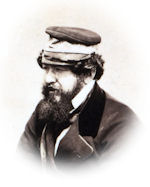
(18th) On the day after my arrival the rain fell in torrents. The weather is as uncertain as that of our own isle. The torrid heats at Washington, the other day, were succeeded by bitter cold days; now there is a dense mist, chilly and cheerless, seeming as a sort of strainer for the even down pour that falls through it continuously. The family after breakfast slipped round to the little chapel which forms the extremity of one wing of the house. The coloured people on the estate were already trooping across the lawn and up the avenue from the slave quarters, decently dressed for the most part, having due allowance for the extraordinary choice of colours in their gowns, bonnets, and ribbons, and for the unhappy imitations, on the part of the men, of the attire of their masters. They walked demurely and quietly past the house, and presently the priest, dressed like a French cure, trotted up, and service began. The negro houses were of a much better and more substantial character than those one sees in the south, though not remarkable for cleanliness and good order. Truth to say, they were palaces compared to the huts of Irish labourers, such as might be found, perhaps, on the estates of the colonel’s kinsmen at home. The negroes are far more independent than they are in the south. They are less civil, less obliging, and, although they do not come cringing to shake hands as the field hands on a Louisianian plantation, less servile. They inhabit a small village of brick and wood houses, across the road at the end of the avenue, and in sight of the house. The usual swarms of little children, poultry, pigs, enlivened by goats, embarrassed the steps of the visitor, and the old people, or those who were not finely dressed enough for mass, peered out at the strangers from the glassless windows.
When chapel was over, the boys and girls came up for catechism, and passed in review before the ladies of the house, with whom they were on very good terms. The priest joined us in the verandah when his labours were over, and talked with intelligence of the terrible war which has burst over the land. He has just returned from a tour in the Northern States, and it is his belief the native Americans there will not enlist, but that they will get foreigners to fight their battles. He admitted that slavery was in itself an evil, nay, more, that it was not profitable in Maryland. But what are the landed proprietors to do? The slaves have been bequeathed to them as property by their fathers, with certain obligations to be respected, and duties to be fulfilled. It is impossible to free them, because, at the moment of emancipation, nothing short of the confiscation of all the labour and property of the whites would be required to maintain the negroes, who would certainly refuse to work unless they had their masters’ land as their own. “Where is white labour to be found? Its introduction must be the work of years, and meantime many thousands of slaves, who have a right to protection, would canker the land.
In Maryland they do not breed slaves for the purpose of selling them as they do in Virginia, and yet Colonel Carroll and other gentlemen who regarded the slaves they inherited almost as members of their families, have been stigmatised by abolition orators as slave-breeders and slave-dealers. It was these insults which stung the gentlemen of Maryland and of the other Slave States to the quick, and made them resolve never to yield to the domination of a party which had never ceased to wage war against their institutions and their reputation and honour.
A little knot of friends and relations joined Colonel Carroll at dinner. There are few families in this part of Maryland which have not representatives in the other army across the Potomac; and if Beauregard could but make his appearance, the women alone would give him welcome such as no conqueror ever received in liberated city.
SUNDAY 18
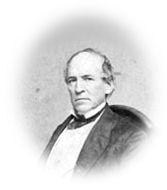
This has been a wet disagreable day. Did not go to church, have been reading & writing most of the day. E’d Dickerson and Owen Klink called today. They are just from the other side of the River. All quiet there. There seems to be an ominous stillness all round the City soon to be broken by a desperate battle near by. At least 200000 men are within a few miles of the City, rebels & all, probably more. Called at Doct Everitts this evening. Beauregard is quite a “bug bear” to many of the inhabitants just now.

______
The three diary manuscript volumes, Washington during the Civil War: The Diary of Horatio Nelson Taft, 1861-1865, are available online at The Library of Congress.
August 18. Sunday.—Last night, about ten or eleven, five companies of Colonel Moor’s (Second German Regiment) Twenty-eighth Regiment arrived from Clarksburg under Lieutenant-Colonel Becker. My partner, L. Markbreit, is sergeant-major. This morning, raining hard. Exciting rumors and news. A Tennessee regiment and force coming through the mountains east of Sutton—a battery of four guns, one thirty-two-pounder!! What an anchor to drag through the hills! Absurd! Danger of all provisions below here with vast stores being taken by the enemy. We are ordered to cook three days’ rations and be ready to move at a moment’s warning, with forty rounds of ammunition. All trains on the route to Sutton are ordered back or to take the way to Buchanan [Buckhannon] via Frenchtown. Eighty thousand rations are ordered to same place from here. All is war. I pack my portmanteau and prepare to move. Oh, for a horse which wouldn’t founder, or get lame, or stumble! At night no order to move yet.
_______
HEADQUARTERS, 23D REG’T, O. V. INF., U. S. A.,
August 17, 1861.
DEAREST:—Your letter to Dr. Joe did me much good. Bless the boys. I love to read your talk about them.
I had just started this letter when a dispatch came from Captain Zimmerman. He had a little brush with some guerrillas in the mountains twenty-five miles from here and had three men wounded. This is the first blood of our regiment shed in fight. He scattered the rascals without difficulty, making some prisoners. We have had a picquet wounded on guard and accidental wounding but no fighting blood-letting before. This is the expedition I expected to go with when I wrote you last, but the accounts of the enemy not justifying the sending of more than one company, I was not sent.
There is a general rising among the Rebels. They rob and murder the Union men, and the latter come to us for help. We meet numbers of most excellent people. We have out all the time from two to six parties of from ten to seventy-five or one hundred men on scouting duty. There are some bloody deeds done in these hills, and not all on one side. We are made happy today by the arrival of Captain McMullen with an excellent company of artillery—four mountain howitzers and complete equipments. They will be exceedingly useful. Lieutenant-Colonel Matthews is nearly one hundred miles south of us with Colonel Tyler and others. The road between here and there is so infested with “bushwhackers” that we have no communication with him except by way of Gallipolis in Ohio. He has been ordered to return here but deems it unsafe to attempt it.
Colonel Scammon has fallen in love with Joe. He says if his qualities were known he would get a high place in the Regular Army medical staff, and brags on him perpetually. We have very few of our own men sick, but numbers in the hospital of other regiments.
My new horse doesn’t turn out any tougher than the other. But Captain McMullen says he has one which I am to try tonight. I shall get a “Webby” that can stand hard work and poor fare one of these days.
How about the pants? If they are reasonably good blue, put a light blue stripe down the outside seam and send them to me when you have a chance. I don’t care about the color. The blue stripe is enough uniform for this latitude. Hard service for duds. I am well supplied—rather too much of most things.
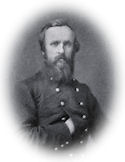
August I8. Sunday P.M.—Since writing the above we have received word that the enemy in force is coming towards us through the mountains to the southeast, and have been ordered to prepare three days’ rations and to be ready to march at a moment’s notice to attack the enemy. I am all ready. My little knapsack contains a flannel shirt, one of those you gave me, two pairs of socks, a pair of drawers, a towel, the what-you-may-call-it you made for me to hold scissors, etc., etc. This is enough. We are to go without tents or cooking utensils. A part of Colonel Moor’s Second German Regiment are to go with us. Markbreit is among them. They reached here last night.
It will be a stirring time if we go, and the result of it all by no means clear. I feel no apprehension—no presentiment of evil, but at any rate you know how I love you and the dear boys and Grandma and all will take care that I am not forgotten. You will know by telegraph long before this reaches you what comes of the anticipated movements. I suspect we are misinformed. At any rate, good-bye, darling. Kisses for all.
Affectionately,
R.
MRS. HAYES.

AUGUST 18TH.—Nothing worthy of note.
Camp Harmon, Manassas, August 18, 1861.
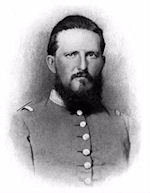
I promised in my letter of last Sunday to write to you every Sunday, and I will to-day, but I ought not, as you have not answered my last. I find abundance of employment in my new position, but I like it all the better on this account. The last week has been almost one continuous dreary rain, making soldier life more comfortless than usual. I think I shall quit the use of tobacco altogether, as I am inclined to believe that it injures me. I am very glad that my duties require of me very little writing, for what little I do satisfies me that my eyes have not improved, and that it is not safe to use them much. They pained after the writing which I did last Sunday to Wm. White and yourself. I think we have the prospect of an idle life here for some time to come. I am free to say I don’t like it. I would prefer to move into Maryland for an assault upon Washington and a speedy close of the war. But I suppose those in command know best what should be done.
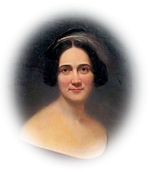
August 18th.—Found it quite exciting to have a spy drinking his tea with us—perhaps because I knew his profession. I did not like his face. He is said to have a scheme by which Washington will fall into our hands like an overripe peach.
Mr. Barnwell urges Mr. Chesnut to remain in the Senate. There are so many generals, or men anxious to be. He says Mr. Chesnut can do his country most good by wise counsels where they are most needed. I do not say to the contrary; I dare not throw my influence on the army side, for if anything happened!
Mr. Miles told us last night that he had another letter from General Beauregard. The General wants to know if Mr. Miles has delivered his message to Colonel Kershaw. Mr. Miles says he has not done so; neither does he mean to do it. They must settle these matters of veracity according to their own military etiquette. He is a civilian once more. It is a foolish wrangle. Colonel Kershaw ought to have reported to his commander-in-chief, and not made an independent report and published it. He meant no harm. He is not yet used to the fine ways of war.
The New York Tribune is so unfair. It began by howling to get rid of us: we were so wicked. Now that we are so willing to leave them to their overrighteous self-consciousness, they cry: “Crush our enemy, or they will subjugate us.” The idea that we want to invade or subjugate anybody; we would be only too grateful to be left alone. We ask no more of gods or men.
Went to the hospital with a carriage load of peaches and grapes. Made glad the hearts of some men thereby. When my supplies gave out, those who had none looked so wistfully as I passed out that I made a second raid on the market. Those eyes sunk in cavernous depths and following me from bed to bed haunt me.
Wilmot de Saussure, harrowed my soul by an account of a recent death by drowning on the beach at Sullivan’s Island. Mr. Porcher, who was trying to save his sister’s life, lost his own and his child’s. People seem to die out of the army quite as much as in it.
Mrs. Randolph presided in all her beautiful majesty at an aid association. The ladies were old, and all wanted their own way. They were cross-grained and contradictory, and the blood mounted rebelliously into Mrs. Randolph’s clear-cut cheeks, but she held her own with dignity and grace. One of the causes of disturbance was that Mrs. Randolph proposed to divide everything sent on equally with the Yankee wounded and sick prisoners. Some were enthusiastic from a Christian point of view; some shrieked in wrath at the bare idea of putting our noble soldiers on a par with Yankees, living, dying, or dead. Fierce dames were some of them, august, severe matrons, who evidently had not been accustomed to hear the other side of any question from anybody, and just old enough to find the last pleasure in life to reside in power—the power to make their claws felt.

August 18.—The privateer Jeff. Davis was wrecked this evening on the St. Augustine (Fla.) bar. The Charleston Mercury gives though following particulars of the loss: On Friday evening, the 16th inst., Captain Coxetter was off St. Augustine, but the wind having increased to half a gale, he could not venture in. He remained outside the bar the whole of Saturday without observing any of Lincoln’s fleet. On Sunday morning at half-past six, while trying to cross the bar, the Jeff. Davis struck, and though every possible exertion was made to relieve her by throwing the heavy guns overboard, yet the noble vessel, after her perilous voyage, and the running of innumerable blockades, became a total wreck. All the small-arms and clothing of the crew, with many valuable sundries, were, however, saved. On the arrival of the bravo but unfortunate crew in St. Augustine, they were received with a kindness that they never can forget. The town bells rang out a joyous peal of welcome, and the people vied with each other in their courtesies to the shipwrecked ones. Thanks to the noble hospitality of the Floridians, the men soon recovered from their fatigue. They arc expected to arrive in Charleston on Wednesday next. The name of the privateer Jeff. Davis had become a terror to the Yankees. The number of her prizes and the amount of merchandise which she captured has no parallel since the days of the Saucy Jack.
—To-day a company of Federal troops took possession of the Northwest Democrat, published at Savannah, Mo. The Democrat boldly carried at the head of its columns the name of Jeff. Davis for President, and of Claib. Jackson for Vice-President.—N. Y. Commercial Advertiser, August 26.
—Major-general John E. Wool arrived at Fortress Monroe yesterday morning. He was met at the wharf by Gen. Butler and staff and Col. Dimmick, who escorted him to the headquarters of Gen. Butler. An order was issued for all officers to report at four o’clock in the afternoon for review and to turn over the command to Gen. Wool. In consequence of a heavy rain, however, the review was postponed until this morning, when Gen. Wool assumed command of the post.—National Intelligencer, August 20.
—F. K. Zollicoffer, the rebel general at Knoxville, Tennessee, issued an order, expressing his gratification at the “increasing evidences of confidence” in East Tennessee, and declaring that “no act or word will be tolerated calculated to alarm or irritate those who, though heretofore advocating the National Union, now acqu’esce in the decision of the State and submit to the authorities of the Government of the Confederate States.”—(Doc. 194.)
—The Twenty-second Regiment of Indiana Volunteers, under the command of Col. Jefferson C. Davis, Indiana representative in Fort Sumter during its bombardment, passed through Terre Haute, on its way to St. Louis, Mo.— N. Y. Evening Post, August 21.
—This afternoon, between three and four o’clock, a body of three hundred rebel cavalry came down to the landing of the Ferry opposite Sandy Hook, Md., when two companies of Gordon’s Second Massachusetts Regiment fired and the rebels retreated. It is known that two were killed and five wounded. The Confederates are still hovering on the outskirts of Harper’s Ferry, watching the movements of the Federal troops.—National Intelligencer, August 21.
—The First Wisconsin Regiment returned to Milwaukee, from the seat of war, and was welcomed with the greatest enthusiasm. A collation was served and patriotic speeches were made by M. H. Carpenter, and Judge A. D. Smith.—Daily Wisconsin, August 19.
—A Scouting party, composed of the Lincoln Cavalry, under Lieut. Gibson, while to-day in the neighborhood of Pohick Church, some twelve miles from Alexandria, Va., encountered a company of secession cavalry. A slight skirmish ensued, during which private Irwin, belonging to Philadelphia, was killed. One of the Confederates was seen to fall from his horse, but his friends succeeded in carrying off his body.—National Intelligencer, August 19.


