Saturday, 3d.—Moving on through Chestnut Mound, we encamped in quite a rough section of country, in Putnam County, after a march of about twenty-one miles.
Wednesday, August 3, 2011
SATURDAY 3
Hot still. Went over to the Navy Yard with Julia and Miss Hartly. Went round the shops and on board the Steamer Pensacola which will be completed in a few days. Nothing but cannon, and shot and shells, fill the workshops. Everything there looks warlike. No troops are quartered in the Yard now, four hundred Marines in the Barraks. One of our neighbors boys Willie Lowry fell and was badly hurt today. The Father is at sea. Was down to the camp with wife.

______
The three diary manuscript volumes, Washington during the Civil War: The Diary of Horatio Nelson Taft, 1861-1865, are available online at The Library of Congress.
Manassas, August 3,1861.
I reached here last night after spending a day in Staunton. When I reached there I found the militia of Rockbridge, and some of the officers insisted upon my remaining a day to aid them in raising the necessary number of volunteers (270) to have the others disbanded and sent home. I was very glad, indeed, that it was accomplished and the others permitted to return home and attend to their farms. I found, upon reaching Manassas, that our encampment had been removed eight miles from there, in the direction of Alexandria; and after a walk of some three hours I reached here about nine o’clock at night, somewhat fatigued. I do not know what our future operations are to be; but think it probable that we shall remain here for some time in idleness. I am free to confess that I don’t like the prospect; without any employment or amusement, the time will pass with me very unpleasantly, and such soldiering, if long continued, I fear, will make most of us very worthless and lazy; perhaps send us home at last idle loafers instead of useful and industrious citizens. Such a result I should regard as more disastrous than a dozen battles. In passing along the road from Manassas, the whole country seemed filled with our troops, and I understand that our encampment extends as far as eight miles this side of Alexandria. I think we have troops enough to defend the country against any force which may he brought against us.
Since this much of my letter was written, Lewis has handed me your note of 25th ult. You say you are almost tempted, from my short and far between letters, to think that I do not love you as well as I ought. You are a mean sinner to think so. Just think how hard I fought at Manassas to make you the widow of a dead man or the wife of a live one, and this is all the return my darling wife makes for it. If I was near enough I would hug you to death for such meanness. In truth, Love, I may say that I never closed one of my short notes until my eyes began to smart. Sometimes I did not wish to write. When we were for some time on the eve of a battle I did not wish to write lest you might be alarmed for my safety. Until the last month, when danger seemed so threatening, I think I have written once a week. But, Love, when you doubt my affection, you must look to the past, and if the doubt is not dispelled, I can’t satisfy you, and you must continue in the delusion that the truest and steadiest feeling my heart has ever known—my love for you—has passed away.
I know, Love, you think I exposed myself too much in the battle. But for such conduct on the part of thousands, the day would have been lost, and our State would now have been in the possession of our enemies. When I think of the result, and the terrible doom from which we are saved, I feel that I could have cheerfully yielded up my life, and have left my wife and little ones draped in mourning to have achieved it. Our future course must be the same, if we expect a like result.
I’ve created a short video using photographs from the civil war and and mixed it with a couple of medleys of civil war music recorded almost 100 years ago.
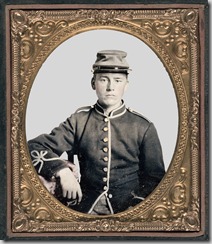
All of the photographs are from the U.S. Library of Congress Prints and Photographs Online Catalog.
_________
Description of photographs:
- Keedysville, Md., vicinity. Confederate wounded at Smith’s Barn, with Dr. Anson Hurd, 14th Indiana Volunteers, in attendance, September 1862.
- Unidentified soldier in Confederate uniform and forage cap.
- Chickahominy River, Va. Grapevine bridge built May 27-28, 1862, by the 5th New Hampshire Infantry under Col. Edward E. Cross.
- Unidentified young soldier in Union uniform with musket, bayonet, and knapsack.
- Aquia Creek Landing, Va. Embarkation of 9th Army Corps for Fort Monroe, February 1863.
- Unidentified soldier in Confederate uniform and slouch hat, missing jacket buttons.
- Cedar Mountain, Va. A Confederate field hospital, 1862.
- Unidentified young soldier in New York Zouave uniform.
- Cumberland Landing, Va. Federal encampment April – May 1862.
- Unidentified young soldier in Confederate shell jacket, Hardee hat with Mounted Rifles insignia and plume with canteen and cup.
- Military Bridge across the Chicahominy, June 1862.
- Unidentified African American soldier in Union uniform in front of painted backdrop showing military camp.
- Rebel gun in front of Fort Hell, April 1865, a Confederate cannon inside of Fort Sedgwick in Petersburg, Virginia.
- Unidentified soldier in Confederate uniform.
- Yorktown, Va. Embarkation for White House Landing, Va.
- Unidentified young sailor in Union uniform.
- Antietam Bridge, September, 1862.
- Unidentified soldier in Confederate shell jacket and slouch hat with object hanging from neck in front of painted backdrop showing waterfall.
- Confederate prisoners at Fairfax Courthouse, June 1863.
- Unidentified girl in mourning dress holding framed photograph of her father as a cavalryman with sword and Hardee hat.
- Hand colored; Tending wounded Union soldiers at Savage’s Station, Virginia, during the Peninsular Campaign, 1862.
- Two unidentified women reading letters.
- James River, Va. Sailors on deck of U.S.S. Monitor; cookstove at left, July 9, 1862.
- Unidentified soldier in Confederate uniform and civilian, likely his father or older brother.
- Harper’s Ferry, meeting of the Potomac and the Shenandoah, July 1865.
- Unidentified soldier in Confederate uniform.
- Libby Prison, Richmond, Va., August 23, 1863.
- Unidentified African American Union soldier with a rifle and revolver in front of painted backdrop showing weapons and American flag at Benton Barracks, Saint Louis, Missouri.
- Manassas, Virginia. Camp of General Irvin McDowell’s body guard, hand colored photographic print.
- Unidentified soldier in uniform with young woman, probably his wife.
- Secret Service agents, Whitehouse, Va.
- Unidentified soldier in Confederate uniform of the 11th Virginia regiment with knapsack and bedroll.
- Dinner time in camp.
- Unidentified woman wearing mourning brooch and displaying framed image of unidentified soldier.
- Confederate artillery near Charleston, S.C.
- Unidentified soldier in Union uniform with Company E, 12th Regiment New Hampshire Volunteers hat.
- Confederate prisoners at Belle Plain Landing, Va., captured with Johnson’s Division, May 12, 1864.
- 1863, Interior view of Fort Sumter showing ruins and explosion.
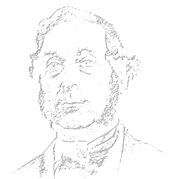
AUGUST 3D.—Conversed with some Yankees to-day who are to be released to-morrow. It appears that when young Lamar lost his horse on the plains of Manassas, the 4th Alabama Regiment had to fall back a few hundred yards, and it was impossible to bear Col. Jones, wounded, from the field, as he was large and unwieldy. When the enemy came up, some half dozen of their men volunteered to convey him to a house in the vicinity. They were permitted to do this, and to remain with him as a guard. Soon after our line advanced, and with such impetuosity as to sweep everything before it. Col. Jones was rescued, and his guard made prisoners. But, for their attention to him, he asked their release, which was granted. They say their curiosity to see a battle-field has been gratified, and they shall be contented to remain at home in safety hereafter. They regarded us as rebels, and believed us divided among ourselves. If this should be true, the rebellion would yet be crushed; but if we were unanimous and continued to fight as we did at Manassas, it would be revolution, and our independence must some day be acknowledged by the United States. But, they say, a great many Northern men remain to be gratified as they had been; and the war will be a terrible one before they can be convinced that a reduction of the rebellion is not a practicable thing.
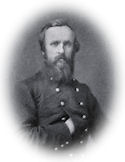
August 3, 1861.—Called on James T. Jackson, a Secessionist, for a map of Virginia—one of the Board of Public Works maps. He said he once had one but his brother had sold it to a captain in [the] Seventh Regiment. Called then on William E. Arnold, a lawyer and Union man. He offered every facility for getting information and gave such as he could; also lent us a good map. Hottest day yet. Dr. Joe ailing. Young Jewett doing well, but getting tired and sore.
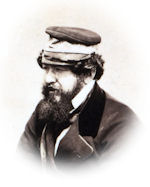
August 3rd.—McClellan orders regular parades and drills in every regiment, and insists on all orders being given by bugle note. I had a long ride through the camps, and saw some improvement in the look of the men. Coming home by Georgetown, met the Prince driving with M. Mercier, to pay a visit to the President. I am sure that the politicians are not quite well pleased with this arrival, because they do not understand it, and cannot imagine a man would come so far without a purpose. The drunken soldiers now resort to quiet lanes and courts in the suburbs. Georgetown was full of them. It is a much more respectable and old-world looking place than its vulgar, empty, overgrown, mushroom neighbour, Washington. An officer who had fallen in his men to go on duty was walking down the line this evening when his eye rested on the neck of a bottle sticking out of a man’s coat. “Thunder,” quoth he,” James, what have you got there?” “Well, I guess, captain, it’s a drop of real good Bourbon.” “Then let us have a drink,” said the captain; and thereupon proceeded to take a long pull and a strong pull, till the man cried out, “That is not fair, Captain. You won’t leave me a drop.”—a remonstrance which had a proper effect, and the captain marched down his company to the bridge.
It was extremely hot when I returned, late in the evening. I asked the boy for a glass of iced water. “Dere is no ice, massa,” he said. “No ice? What’s the reason of that?” “De Sechessers, massa, block up de river, and touch off deir guns at de ice-boats.” The Confederates on the right bank of the Potomac have now established a close blockade of the river. Lieutenant Wise, of the Navy Department, admitted the fact, but said that the United States gunboats would soon sweep the rebels from the shore.
August 3.—At Baltimore, Md., this morning, Sergeants Wallis and Cook, with Officer James Pryor, of the Middle District Police, went on board the steamer George Weems, at her wharf foot of Frederick street, and on her leaving for the usual trip to various landing places on the Patuxent River, proceeded in her as far as Fort McHenry wharf, where they directed Captain Weems to stop. A search of the steamer was here made, resulting in the discovery of concealed arms and ammunition in various out-of-the-way places in the hold. Immediately under the upper deck, between the lower deck and the skylight, were found 200 new Colt’s patent revolvers, done up singly in paper. In the aft part of the hold the officers found a barrel in which rubbish had been placed for several months. Concealed in the rubbish was a valise filled with boxes, each containing 250 rifle percussion caps. There was also found in the hold, separate from the other freight, a halfbarrel of sulphurated quinine, contained in bottles and packages. On the discovery of these articles General Dix directed that the steamer should be detained for a more minute examination of the freight. He also directed that the steamer Planter should be got ready to convey the passengers to their place of destination.—Captain Weems disavowed any knowledge of the contraband articles.—Baltimore American, August 3.
—Governor Gamble, of Missouri, issued a proclamation to the citizens of that State, in which he calls upon all those who are enrolled in the State militia now in arms against the Federal Government, who were called out by his predecessor, Jackson, to return to their homes, promising them protection if they do so. He appeals to the sheriffs of counties and other magistrates, to exercise all the authority vested in them by law, in arresting and punishing every one who may break the peace, molest his fellow-citizens, or retain arms, the property of the Federal Government. He also notifies all those citizens of other States, who may be in arms within the boundaries of Missouri, (in the rebel ranks,) to withdraw to their own States, as Missouri does not need nor desire their presence. After the issue of this proclamation, Governor Gamble received a despatch from the War Department, stating his promise of protection to all those who may lay down their arms would be sustained by the Government. In several counties of Northern Missouri committees of safety have been appointed to suppress rebellion, with the assurance that if they cannot effect that purpose, the military power will be used to its utmost extent.—(Doc. 156.)
—The Charleston Mercury of to-day, says: “We have been provoked beyond endurance by reading the most complacent and gratulatory comments of certain Virginia papers on the charming charity and benevolence of certain citizens and officials of that State toward the invaders of their soil, plunderers of their estates, destroyers of their homes and firesides, and polluters of their women. We demand that every prisoner in Richmond be incarcerated and put in irons. Justice, humanity, and civilization alike cry aloud for ‘stern retribution.’ ”
—Senator Kennedy, of Maryland, in the Senate, at Washington, presented a memorial from the Legislature of that State, denouncing the National Government in unmeasured terms, and protesting against its action in imprisoning Ross Winans and others suspected of conspiracy. Its reception was objected to by several members on account of its disrespectful tone, but it was finally admitted and ordered to be printed, on the ground that it would not do to deny the right of petition.—N. Y.Times, August 5.
—Beriah Magoffin, Governor of Kentucky, issued a proclamation commanding all persons having arms belonging to the State, that have been unlawfully seized, to immediately deliver them up, that they may be returned to the State Arsenal, at Frankfort.—(Doc. 157.)
—The Senate of the United States confirmed numerous army appointments. Among them are Major-Generals McClellan, Fremont, Dix, and Banks; and Brigadier-Generals Hooker, Curtis, McCall, Sherman, Lander, Kelly, Kearney, Pope, Heintzelman, Porter, Stone, Reynolds, Hunter, Franklin, Rosecrans, Buell, Mansfield, McDowell, and Meigs.—Philadelphia Inquirer, August 5.
—The Twenty-ninth Regiment of Pennsylvania Volunteers, under the command of Colonel John K. Murphy, left Hestonville, West Philadelphia, for the seat of war.—Philadelphia Press, August 8.
—Mrs. Lincoln having kindly consented to receive and distribute the havelocks made by the ladies of Katonah and Bedford, Westchester, N. Y., a case was despatched to-day from the Jay homestead to the executive mansion by Pillion’s and Adams’s express, containing 1,300 havelocks, of which 1,165 were made by the ladies of Katonah and its vicinity, and 135 by those of Bedford.—N. Y. World, August 6.
—A letter from Isham G. Harris, Governor of Tennessee, to the editors of the Memphis Avalanche, on the military power of that State, was published.—(Doc. 158.)
—The First Regiment of New Hampshire State Militia, under the command of Colonel Mason W. Tappan, passed through Philadelphia on their return from the seat of war. This regiment composed part of the command of Col. Stone, and marched to Harper’s Ferry, Va. They have been principally on guard duty, and had a skirmish with the rebels at Harper’s Ferry. The men have performed marches on foot to the extent of one hundred and sixty miles since they left Washington. The regiment has twenty ladies with them. They return numerically as strong as when they left, except six of the men, who were taken prisoners.—Philadelphia Bulletin, August 5.
—The House of Representatives, at Washington, passed, with a slight amendment, the Confiscation Bill. The amendment is, that slaves in the military or naval service, or working in the intrenchments of the rebels, will be confiscated.—(Doc. 159.)
—The Sixth Regiment of Wisconsin Volunteers, commanded by Colonel L. Cutler, and the Twenty-first Regiment of Indiana Volunteers, under the command of Colonel J. W. McMillan, arrived at Baltimore, Md.—Baltimore American, August 5.
—The N. Y. Journal of Commerce suggests as “a way by which our troubles can be settled without more bloodshed”—1, an armistice ; 2, delegates from every State, North and South, to meet at Louisville; 3, the delegates to agree upon a modified Constitution; or 4, a peaceable separation.
One of its plans for reconstruction is to have a Northern and Southern section in each House of Congress, and no bill to become a law until agreed to by a majority on both sides!—(Doc. 160.)
—As engagement took place at Messila, N. M., between a body of Federal troops and seven hundred Confederates, under command of Capt. Baylor. Capt. McNeely and Lieutenant Brooks, of thr Federal army, were wounded in the engagement, and twelve of the Confederates killed. Night coming on put an end to the engagement.—Baltimore American, August 21.
—The secret expedition from Fortress Monroe to the eastern shore of the Chesapeake Bar, under the command of Captain Crosby, U. S. A, returned to Old Point Comfort. The object of the expedition was to search for vessels engaged in illegal trade, and to reconnoitre the coast for defences erected by the rebels.— (Doc. 161.)
——-
Late addition to Volume 3:
August 3.—Lient.-Col. Baylor, commanding the rebel forces in Arizona, has issued a proclamation taking possession of the Territory in the name and on behalf of the Confederate States, declaring all offices, civil and military, vacant and no longer existing, and making provision for the government of the Territory until such time as the Confederate Congress may otherwise provide. Col. Baylor, as Governor of the Territory, has also appointed a Secretary of the Territory, Attorney-General, and other officers. —Lieut. R. H. Brewer, late of the first regiment of the United States Dragoons, has arrived in New Orleans, and informs the Picayune that on the 5th ultimo, Gen. A. S. Johnston, who arrived from California, was at Picach, about five miles north of Mesilla, in command of the Confederate forces, which command, tendered by Lieut.-Col. Baylor, the General had accepted. The Confederate forces numbered about five hundred men, and had four pieces of artillery. They were awaiting the approach of four companies of Federal troops (two companies of dragoons and two companies of infantry) under command of Lieut. Moore. Forts Breckinridge and Buchanan had been destroyed.—Mesilla Times, August 3.


