Wednesday, 21st—We drew our army cooking utensils this morning and one day’s rations, and then cleaned up our camp. Besides a part of the Eighth Iowa Infantry, there is a part of the Second Iowa Cavalry in camp. The first day of camp life is past, and we had our first experience of a night in camp, sleeping on straw for a bed.
Sunday, August 21, 2011
WEDNESDAY 21
This has been a fine cool day but bright with a feeling of Autumn in the air. I saw the Comr this morning but could get nothing satisfactory from him in reference to my restoration to the Pat office. Came home about noon. The Brazilian Minister wants to rent my House & furniture for one of his friends. I hardly know what to do. I called upon Mr Connoly on M St this eve’g. He has a daughter at the Mount Holyok[e] School where I may send Julia.

______
The three diary manuscript volumes, Washington during the Civil War: The Diary of Horatio Nelson Taft, 1861-1865, are available online at The Library of Congress.
21st.—I sit down to-night, journal on my knee, to write by the light of a tallow candle, stuck into the mouth of a whisky bottle, (whisky all out), that “I have nothing of importance to note to-day.”

AUGUST 21ST. —Called in again by the Secretary to-day, I find the ominous communication to the President still there, although marked “immediate.” And there are no indications of Mr. Walker’s quitting office that I can see.
August 21st.—The echoes of Bull Run are coming back with a vengeance. This day month the miserable fragments of a beaten, washed out, demoralised army, were flooding in disorder and dismay the streets of the capital from which they had issued forth to repel the tide of invasion. This day month and all the editors and journalists in the States, weeping, wailing, and gnashing their teeth, infused extra gall into their ink, and poured out invective, abuse, and obloquy on their defeated general and their broken hosts. The President and his ministers, stunned by the tremendous calamity, sat listening in fear and trembling for the sound of the enemy’s cannon. The veteran soldier, on whom the boasted hopes of the nation rested, heartsick and beaten down, had neither counsel to give nor action to offer. At any moment the Confederate columns might be expected in Pennsylvania Avenue to receive the welcome of their friends and the submission of their helpless and disheartened enemies.
All this is forgotten—and much more, which need not now be repeated. Saved from a great peril, even the bitterness of death, they forget the danger that has passed, deny that they uttered cries of distress and appeals for help, and swagger in all the insolence of recovered strength. Not only that, but they turn and rend those whose writing has been dug up after thirty days, and comes back as a rebuke to their pride.
Conscious that they have insulted and irritated their own army, that they have earned the bitter hostility of men in power, and have for once inflicted a wound on the vanity to which they have given such offensive dimensions, if not life itself, they now seek to run a drag scent between the public nose and their own unpopularity, and to create such an amount of indignation and to cast so much odium upon one who has had greater facilities to know, and is more willing to tell the truth, than any of their organs, that he will be unable henceforth to perform his duties in a country where unpopularity means simply a political and moral atrophy or death. In the telegraphic summary some days ago a few phrases were picked out of my letters, which were but very faint paraphrases of some of the sentences which might be culled from Northern newspapers, but the storm has been gathering ever since, and I am no doubt to experience the truth of De Tocqueville’s remark, “that a stranger who injures American vanity, no matter how justly, may make up his mind to be a martyr.”
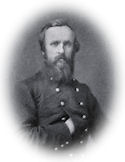
August 21.—Changed camping place at Buckhannon to a fine spot one and one-half miles on road to Cheat Mountain. Got settled with McMullen’s Battery just as rain set in at night. Had letters from Jim and Will Scott and Uncle George.
_______
BUCKHANNON, VIRGINIA, August 21, 1861.
DEAR MOTHER:—You may send this letter, showing my whereabouts, to Lucy. I have no time to write much. On Sunday night, about 12 o’clock, we were ordered to quietly pack and march rapidly to this place. Some of our men had just returned from long scouting expeditions. They were weary with marching over the hills in rain and mud, and here was another march without sleeping. It was borne cheerfully—the men supposing it was to meet an enemy.
We find this a lovely spot, superior in some respects to the scenery about Weston. We have a beautiful camp about one and one-half miles from the village. There are here parts of five regiments—all but this from Cincinnati. Men are constantly arriving, showing the rapid concentration at this point of a large body of troops. We are ignorant of its purpose, but suppose it to be for service. We are all so healthy. I meet many Cincinnati friends and enjoy the greetings.
I received a letter from Uncle, directed to Clarksburg. I suppose that is still the best place to direct my letters. Write often. Let Uncle know where I am and how lately you have heard from me. Love to all.
Affectionately,
R. B. HAYES.
MRS. SOPHIA HAYES.
August 21.—By special order of the War Department the body of men at Fortress Monroe known as the Naval Brigade or Union Coast Guard, were formed into a volunteer regiment.—Eight thousand troops were reviewed at Washington by the President and General McClellan.—N. Y. Herald, August 22.
—The Executive Committee of the New York Union Defence Committee reported : that, to this date, it had spent in the equipment of various regiments, five hundred and eighty-one thousand six hundred and eighty-nine dollars; for arms and ammunition, two hundred and twenty-six thousand five hundred and eighty-nine dollars; and for relief to soldiers’ families, two hundred and thirty thousand dollars.—See Journal of the Board of Aldermen, N. Y.
—At Alexandria, Va., through the exertions of Major Lemon, commanding the guard there, Miss Windle, formerly of Delaware, but more recently of Philadelphia, and of late a correspondent of the Southern press, was arrested in the act of leaving for Washington by the steamboat. She is a highly-educated lady, and the authoress of several works published while she resided in Philadelphia, among which was a “Legend of the Waldenses,” also “A Visit to Melrose.” Miss Windle has resided in Alexandria for the past month, where her movements have been closely watched. She boldly avowed her secession proclivities, and made no secret of her correspondence with the leaders of the rebel army. After a hearing she was sent to Washington.
Augustus Schaeffer, of Gloucester, New Jersey, belonging to Captain Sinn’s Philadelphia Company of Cavalry, was severely wounded in the head yesterday, by a pistol ball, while out with a scouting party toward Fairfax Court House, Va.—Baltimore American, August 23.
—Jefferson Davis approved an act empowering the President of the “Confederate” States to appoint two more Commissioners to Europe. The act empowers the President to determine to what nations the Commissioners now in Europe shall be accredited, and to prescribe their duties. The two additional Commissioners will receive the same as those now in Europe. Jeff. Davis also approved an act for the aid of the State of Missouri in repelling the invasion and to authorize her admission into the Confederacy. The preamble sets forth that the people of Missouri have been prevented by the unconstitutional interference of the Federal Government from expressing their will in regard to union with the Confederates, and that Missouri is now engaged in repelling the lawless invasion of her territory by armed forces. The Confederate Government consider it their right and duty to aid the Government and people of Missouri in resisting this invasion, and securing the means and opportunity of expressing their will upon all questions affecting their rights and liberties.
The President of the “Confederate” States is authorized to cooperate, through the military power of his Government, with authorities of Missouri in defending that State against the invasion of their soil by the United States, in maintaining the liberty and independence of Missouri, with power to accept the services of troops sufficient to suit the purpose. The act provides for the admission of Missouri to the Confederacy, on an equal footing with the other States, when the Provisional Constitution shall be ratified by the legally constituted authorities of Missouri, and an authenticated copy shall be communicated to the President of the Southern Confederacy.
The President will then, in accordance with the provisions of the act, issue his proclamation announcing the admission of Missouri into the Confederacy. She recognizes the Government in Missouri, of which Claiborne F. Jackson is Chief Magistrate.—Louisville Courier, August 31
—The First Regiment of Long Island Volunteers, (Brooklyn, N. Y., Phalanx,) commanded by Colonel Julius W. Adams, took their departure for the seat of war. The men were uniformed in a substantial blue dress, and their general appearance indicated that they were ready to do good service. They were armed with the common smooth-bore musket.—The Anderson Zouaves, N. Y. S. V., under the command of Colonel John Lafayette Riker, left camp Astor, Riker’s Island, for Washington. The uniform of the Zouaves is dark blue loose jackets, and light blue baggy trowsers. For head covering, a part of the men have the red fez, with blue tassel, and the others dark blue caps. Their arms are the old, smooth-bore muskets, with shank bayonets, and percussion locks altered from flint locks.—N. Y. Tribune, August 22.
—The Memphis Avalanche of this day says that the “conviction is becoming general throughout the South that the war can only be ended by carrying it into the North. The Northern abolitionists will have to be scourged into good behavior. The sooner this shall be done the better. All the mighty energies and resources of the South should be put forth to crush out the Northern conspiracy against her. The bombardment of a few Northern cities would bring our enemies to their senses. Philadelphia and Cincinnati present convenient points of attack. Maryland and Kentucky, we have good reason to believe, will soon be with us, when these abolition cities shall receive the especial attention of the gallant avengers of Southern wrongs.”
—In “Confederate” Congress in session at Richmond, Vo., a resolution of thanks to Ben McCulloch and his forces, was introduced by Mr. Ochiltree of Texas, and passed unanimously. -(Doc. 205.)
—This day a very large and beautiful flag was presented to the battalion of Pennsylvania troops stationed at Annapolis Junction, Md., by the Union ladies of Prince George’s and Montgomery counties. The ceremonies were very interesting. James Creigh, Esq., made the presentation speech, and Capt. McPherson the reception speech. A large number of persons were present. — Washington Star, August 23.
— William F. Barry, chief of artillery in Gen. McClellan’s staff, yesterday was appointed brigadier-general of volunteers. — Philadelphia Press, August 22.
— The Twenty-third Regiment of Pennsylvania Volunteers, under the command of Col. David B. Birney, numbering about five hundred and fifty men, passed through Baltimore, Md., en route for Washington city. A large proportion of the men were under Colonel Dare, in the same regiment, which had already served three months under General Patterson. They are all uniformed similar to regulars. Lieutenant-Colonel Wilhelm held the same rank in the Eighteenth Regiment of three months’ volunteers, under Colonel Lewis, and is an experienced officer, having seen service in the Prussian army. Several of the companies attached to the command are well drilled in the Zouave exercise, and also uniformed. — Baltimore American, August 22.
Postmaster-General Blair, in response to an inquiry on the subject, says he has neither the power to interdict nor to suspend intercourse between the loyal and rebellious States, by private expresses or otherwise. The power rests with the War and Treasury Departments alone, and so long as these departments forbear to exercise it, correspondence between the insurgents of the South and their friends and abettors in the North, may be lawfully continued. His power over the matter extends only to the protection of the revenues of the Department from fraud by the conveyance of this circuitous correspondence over the Post routes of the United States, partly in the mails, and partly by private expresses, unlawfully. This the Postmaster-General believes has been effectually done in the manner set forth in his letter on the subject to General McClellan, published a few weeks ago. He concludes by saying:
“You have doubtless observed that the President, in pursuance of an act of Congress, passed at its recent session, has by his proclamation of the 10th instant, declared that all commercial intercourse between the insurgent States or the people thereof and the loyal States is unlawful. It is presumed that instructions will be issued by the Treasury Department for the enforcement of this declaration, and that the abuse of which you complain will be effectually suppressed.”
—The First Regiment of Western Virginia Volunteers returned to Wheeling from the scat of war. Their reception was enthusiastic, the people turning out in a body to welcome them. — Wheeling Intelligencer, August 22.
—The scouting party put off the railroad train which was fired into yesterday morning at Syracuse, Mo., arrived at Jefferson City. They report having killed two and wounded several of the secessionists, and bring in five prisoners.
Governor Gamble has appointed division inspectors in five of the seven military districts in Missouri, for the purpose of mustering men into service under the militia law of 1859, revived by the State Convention. The Governor calls upon the citizens to come forward promptly to sustain the peace by the suppression and dispersion of the armed bauds of men who are now committing violence in the different parts of the State. As soon as troops are enrolled they will hold themselves in readiness to march at the call of the Executive to enforce order. Any regular organization will be permitted to volunteer in the service of the United States, if the members so desire.—The following is the form of oath to be administered to the militia:
“You each and every one of you do solemnly swear that you will honestly and faithfully serve the State of Missouri against all her enemies, and that you will do your utmost to sustain the Constitution and laws of the United States and of this State; and you do further swear that you will truly execute and obey the legal orders of all officers properly placed over you whilst on duty, so help you God.”


