Following the American Civil War Sesquicentennial with day by day writings of the time, currently 1863.

Friday, August 5, 2011

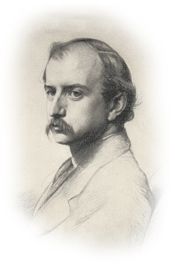
London, August 5, 1861 We received yesterday the news of our defeat at Bull’s Run, and today your letter and John’s with some papers have arrived. Though I do not see that this check necessarily involves all the serious consequences that you draw from it, I am still sufficiently impressed by it to decide me to take a step that I have for some time thought of. If you and John are detained from taking part in the war, the same rule does not apply to me. I am free to act as I please, and from the taste I have had of London life, I see no reason for my sacrificing four years to it. . . .

I wish you, then, on the receipt of this to go to some one in authority and get a commission for me, if you can; no matter what, second, third Lieutenant or Ensign, if you can do no better. They ought to be willing to let me have as much as that. If you can induce the Governor to promise this, see if you can find some fellow I know for a Captain. They say Horace Sargent is going home immediately to raise a regiment. I would serve under him and perhaps other Boston fellows would be mustered under him so as to make it pleasant. If you decide ultimately to go in as Captain, I could serve under you. At any rate I wish to have a commission, and if you succeed in arranging it, let me know at once, by telegraph, if you can. I can be on the way home in three weeks from this time, almost. A day’s notice is ample for me here, and as I know nothing of war or drill and don’t care to learn a drill here that I might have to unlearn, it will be necessary for me to begin at once. I don’t know that I should n’t start tomorrow and march in on you with this letter, if it were n’t that I don’t like to be precipitate, and that I want to watch things here for a while. I presume there will be restlessness here, though I still believe that England will prove herself more our friend than we suppose. . . .

I wish you to understand that I am in earnest and that if you can get me the place and don’t, I shall try to get it by other means. As for reasons for it, your own arguments apply with double force to me. Until now I have thought it my duty to do what I have done. But as the reasons why I should stay decrease, the reasons for going into the army increase, and this last battle turns the scale. It makes no difference whether you go or not. I am the youngest and the most independent of all others, and I claim the right to go as younger son, if on no other grounds.

You need not apprehend difficulty on this side. . . . If [your reply] is favorable I shall leave here in the first steamer, and the first positive knowledge they will have of it here, will be simultaneous with my departure. Papa will not interfere. He never does, in cases where his sons choose to act on their own responsibility, whatever he may think. Mamma has been preaching the doctrine too long to complain if it hits her at last.

We are going on as usual here except that we have got into our new house which is a great improvement. I have two large rooms on the third story which I have been making comfortable. Braggiotti is here; dines with us tomorrow.

Post image for “The men feel that they were wronged, and are discontented; officers feel that they were insulted, and have resigned.”—War Letters of William Thompson Lusk.

Aug. 5th, 1861.

My dear Mother:

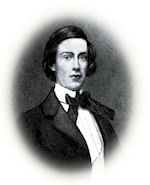
Living now quietly without excitement, the events of two weeks ago have become like a dream. Our camp is beautifully situated on Meridian Hill in the suburbs of Washington, and overlooks an enchanting prospect of the city, and the green banks of the Potomac. The air is fresh and healthy, and sickness which has been very prevalent among the men, is now breaking up, and a better appearance is beginning to be seen in the camp. Still the shock we received in the last battle was very great. I have written how great our loss was, and that the same was most heavy among our officers. Fifteen of them, six Captains and nine Lieutenants, nearly half of the entire number, were lost to us that day. On our return to Fort Corcoran after the battle, having walked over thirty miles from the battlefield, having been thirty-six hours without food or sleep, consequently exhausted from fatigue, hunger, and want of rest, we hoped to be allowed to throw ourselves anywhere, and to get a mouthful of anything to eat. The rain poured in torrents and we were soaked to our skins. There was not a cracker to be had at the quarters; there was not a tent to shelter us. We crawled into an old barn. Sherman, the commander of our brigade, ordered us to come out and stand in the rain. Many of the men were desperate. They became clamorous for food. Sherman sneered at them for such unsoldierly conduct. They begged for some place to rest. He bade them sleep on the ground. They had no blankets, many not even a jacket, and all were shivering in the wet. The soil was oozy with water, and deep puddles lay everywhere. The men became querulous. Sherman grew angry, called them a pack of New York loafers and thieves.

Oh ye Patriots, was not this a spectacle! Afterward Sherman visited the camp with President Lincoln. The men had grown sullen. As he drove by, they besieged his carriage, hooted him, and reminded him who it was that first basely deserted us on the battlefield, turning his horse’s head from us, and leaving us to our fate.

President Lincoln ordered his coachman to drive away.

Affairs were now interesting. Lieut.-Col. Elliott visited the Secretary of War — denounced the conduct of Sherman in the plainest language. Everything served to corroborate his testimony. The Secretary of War then removed us to our present encampment, and placed us in the Brigade of Gen’l Mansfield. We are now doing well, but the past is not forgotten. The men feel that they were wronged, and are discontented; officers feel that they were insulted, and have resigned. Those of us who remain by the Regiment are a mere handful. Under these circumstances, and because the men fought well at Manassas, the Government has concluded to send us to some one of the forts near New-York for a short time, there to recruit, and restore the organization of the Regiment. As it is now, whole companies are without officers. It is thought in a short time we may again be upon a war footing, and ready to win fresh laurels, only laurels that are worn after victory, not the mournful ones that even the defeated may wear after a manful struggle.

I am very much entertained and amused to hear of your accounts of my heroic deeds. You don’t know the half of them. I won’t pretend to say how many I killed in the fight. About five hundred, I suppose — most of them Colonels, only a few ranking less than a Major. You say you read in the Tribune the statement of the bearing away the body of our good Colonel, made by Lieut. S. R. Elliott, a reliable witness. Yes, my dear Mother, I was one of the little band mentioned in the paragraph, but regarding that dreadful bomb-shell which, exploding, killed five of us, I can only say that I didn’t see it. The story originated with the correspondent of the Tribune, who called one night in a beastly state of intoxication, upon Colonel Elliott to inquire the particulars of the fight. We were all somewhat astonished at the particulars as they appeared the next day in the papers. You may have read, too, how a certain Captain _____ repeatedly rallied us, and led us back to the fight. Captain _____ was not near the field of battle the whole day, but, being a small politician, he stayed at home and composed an account of his gallantry, in which perhaps there was much wisdom. You see, Mother, what reports are worth, and I positively deny all stories regarding myself, with the exception, of course, of such authentic anecdotes as my having killed several hundred Colonels, Lieut.-Colonels and Majors with a ram-rod, which served me as the jaw-bone did Sampson when he went out against the Philistines.

Your letters reach me now with the utmost regularity. Thank Lilly for her kind letter too. I have been looking for Hunt all day to-day. I suppose I shall see you when we are transferred, perhaps to Fort Schuyler.

I was sorry not to see Mrs. Tyler when here.

Very Affec’y.,

William T. Lusk,

Lieutenant Co. K. 79th Regiment.

MONDAY, AUGUST 5, 1861.

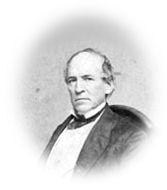
Weather continues extremely hot. M. at 92 in the middle of the day. Surgeon Barnes took breakfast with us. He is attending the Lowry boy who fell (our neighbor). The boy is doing extremely well. I was at the Pat office awhile today, saw and talked with the Comr. He thinks he made a mistake in removing me but cannot retract just yet on account of others. Spent the evening at the quarters of Capt Adams, “Camp Anderson.”

______

The three diary manuscript volumes, Washington during the Civil War: The Diary of Horatio Nelson Taft, 1861-1865, are available online at The Library of  Congress.

Washington, August —.

Hurrah for you, to be offered the Colonelcy of the regiment! I am glad, however, that you have no wish to take it. I shrink from any such responsibility for you.

Dr. Bacon came in last evening and we had a nice pleasant chat. His regiment, the 2nd Connecticut, goes home to-day to be mustered out. We saw them march down yesterday to give up their arms and were struck with their fine manly appearance and precision in marching. Dr. Bacon is anxious to come back to the army and hopes that one regiment at least may be formed of the three just returning, in which he may serve. He has left one of his patients at the new Columbian College Hospital and commended him to our care. We shall see him this afternoon and take him jelly, slippers, etc. The slippers are from a large boxful which Lenox Hodge has sent us, our commission. They are scarce at the hospitals and in great demand. Cousin M. Hodge writes of her happiness at hearing of your safety and welfare. Columbian College Hospital is just opened and only half organized, but already crowded. It will be nice, but now they have few comforts or conveniences, scarcely any sheets, no water, etc. One of G’s nurse friends is there working like a slave, as are the other five women nurses. We spent the morning there helping them, reading to the men, writing letters for them, etc.

AUGUST 5TH.—Col. Bledsoe has a job directly from the President: which is to adapt the volume of U. S. Army Regulations to the service of the Confederate States. It is only to strike out U. S. and insert C. S., and yet the colonel groans over it.

August 5.—Cloudy and showery and sunny at intervals this Monday morning. Went out shooting pistol with Adjutant C. W. Fisher. No good shooting by either. I did the worst, pistol dirty —cleaned it.—More couriers, more rumors of Wise down towards Greenbrier County.

August 5th.—A heavy, heavy heart. Another missive from Jordan, querulous and fault-finding; things are all wrong—Beauregard’s Jordan had been crossed, not the stream “in Canaan’s fair and happy land, where our possessions lie.” They seem to feel that the war is over here, except the President and Mr. Barnwell; above all that foreboding friend of mine, Captain Ingraham. He thinks it hardly begun.

Another outburst from Jordan. Beauregard is not seconded properly. Hélas! To think that any mortal general (even though he had sprung up in a month or so from captain of artillery to general) could be so puffed up with vanity, so blinded by any false idea of his own consequence as to write, to intimate that man, or men, would sacrifice their country, injure themselves, ruin their families, to spite the aforesaid general! Conceit and self-assertion can never reach a higher point than that. And yet they give you to understand Mr. Davis does not like Beauregard. In point of fact they fancy he is jealous of him, and rather than Beauregard shall have a showing the President (who would be hanged at least if things go wrong) will cripple the army to spite Beauregard. Mr. Mallory says, “How we could laugh, but you see it is no laughing matter to have our fate in the hands of such self-sufficient, vain, army idiots.” So the amenities of life are spreading.

In the meantime we seem to be resting on our oars, debating in Congress, while the enterprising Yankees are quadrupling their army at their leisure. Every day some of our regiments march away from here. The town is crowded with soldiers. These new ones are fairly running in; fearing the war will be over before they get a sight of the fun. Every man from every little precinct wants a place in the picture.

August 5th. — The roads from the station are crowded with troops, coming from the North as fast as the railway can carry them. It is evident, as the war fever spreads, that such politicians as Mr. Crittenden, who resist the extreme violence of the Republican party, will be stricken down. The Confiscation Bill, for the emancipation of slaves and the absorption of property belonging to rebels, has, indeed, been boldly resisted in the House of Representatives; but it passed with some trifling amendments. The journals are still busy with the affair of Bull Run, and each seems anxious to eclipse the other in the absurdity of its statements. A Philadelphia journal, for instance, states to-day that the real cause of the disaster was not a desire to retreat, but a mania to advance. In its own words, “the only drawback was the impetuous feeling to go a-head and fight.” Because one officer is accused of drunkenness a great movement is on foot to prevent the army getting any drink at all.

General McClellan invited the newspaper correspondents in Washington to meet him to-day, and with their assent drew up a treaty of peace and amity, which is a curiosity in its way. In the first place, the editors are to abstain from printing anything which can give aid or comfort to the enemy, and their correspondents are to observe equal caution; in return for which complaisance, Government is to be asked to give the press opportunities for obtaining and transmitting intelligence suitable for publication, particularly touching engagements with the enemy. The Confederate privateer Sumter has forced the blockade at New Orleans, and has already been heard of destroying a number of Union vessels.

Post image for A Diary of American Events.–August 5, 1861

August 5.—At Washington, the representatives of the newspaper press held a consultation with Gen McClellan by his special invitation, when it was unanimously decided that the following suggestions from him be transmitted to the editors of all the newspapers in all the loyal States and in the District of Columbia:

1st. That all such editors be required to refrain from publishing, either as editorial or correspondence, any description, from any point of view, of any matter that might furnish aid and comfort to the enemy.

2d. That they be also requested and earnestly solicited to signify to their correspondents here and elsewhere their approval of the foregoing suggestion, and to comply with it in spirit and letter.

It was resolved that the Government be respectfully requested to afford the representatives of the press facilities for obtaining and immediately transmitting all information suitable for publication, particularly touching engagements with the enemy.

—The following queries were put to the Confederate District-Attorney at Charleston:

First—Is it lawful for a citizen of the Confederate States to purchase of our enemy State stock or bonds of any of the Confederate States, and demand the interest when due?

Second—Is it lawful for the same parties to purchase notes given by merchants of the Southern Confederacy to Northern houses, and demand payment for the same?

Third—If lawful and proper to pursue the above course, would it not be equally legal for the small trader to buy merchandise of the enemy; or, in other words, does the law intend to operate in favor of the fortunate holders of capital against the humble dealers in wares and merchandise?

The response is as follows:—The acts specified by you certainly constitute “trading with the enemy” peculiarly objectionable, because they afford a direct assistance to the enemy, by the transmission of money to foster his resources. And, in addition, such conduct is highly unpatriotic, because directly injurious to the interests of the States and citizens of our Confederacy, whose obligations are thus withdrawn from the enemy’s country, where it is for the interests of the States that they should remain, since they could not there be called upon for payment during the war. Such operations are certainly worse than the simple purchase of merchandise in the enemy’s country, because they, at the same time, aid our enemies and injure our friends.N. Y. Times, August 5.

—Claiborne F. Jackson, the deposed Governor of Missouri, publishes in the Memphis Appeal a document entitled “Declaration of Independence of the State of Missouri,” and addressed to the people of that State. The ex-Governor says he takes this step by virtue of authority conferred upon him by the State Legislature to do such things as to him might seem proper to “suppress the rebellion and repel invasion.” He thereupon assumes that the waging of war by the Federal Government upon the sovereign State of Missouri, ipso facto, sunders the connection of the latter from the former, and accordingly so declares—subject, however, to the ratification of the people at such future time as their Impartial and unbiased verdict can be obtained through the ballot-box, —(Doc. 163.)

—Gen. Lyon with his forces fell back on Springfield, Mo. The rebels were advancing on the latter place by four different roads, and their advance was from ten to fifteen miles distant. Three of the routes on which the enemy were moving, were the Neosho, Carthage, and the Overland roads. Gen. Lyon called in two thousand five hundred Home Guards from the neighborhood. Farther than this addition to his force, no other reinforcements seemed to be near. It was expected that the enemy were resolved on an immediate attack, from the fact that their commissariat was in a miserable condition, the rebels depending on forced contributions for temporary supplies.

It was generally remarked in Springfield that Gen. Lyon was perfectly confident of success, in the event of an attack. The latest estimate places the rebel force at twenty thousand. Their arms are thought to be very inferior, judged by the specimens taken during the skirmish at Dug Spring, where Gen. Lyon had no intrenchments, depending upon his splendid artillery in the open field.—St. Louis Democrat, August 9.

—In the Maryland Legislature to-day, S. Teaklo Wallis, from the committee to whom was referred the memorial of the police commissioners, submitted a long report, followed by preamble and resolutions, setting forth as arbitrary and unconstitutional the course of the Government in superseding the police board, and imprisoning Marshal Kane and the commissioners. The committee appealed in the most earnest manner to the whole people of the country, of all parties, sections, and opinions, to take warning by the usurpations mentioned, and come to the rescue of the free institutions of the country, so that whatever may be the issue of the melancholy conflict which is now covering the land with sacrifice and threatens to overwhelm it with debt and ruin, there may at least survive to us when it is over the republican form of government which our fathers bequeathed to us, and the inestimable rights which they framed it to perpetuate.—N. Y. World, August 6.

—The bark Alvarado, having a prize crew from the privateer Jeff. Davis on board, was chased ashore near Fernandina, Florida, and subsequently burned by the sailors of the United States ship Vincennes.—(Doe. 170.)

—A Sharp skirmish took place this morning in Virginia, opposite the Point of Rocks, between a detachment of sixty men of the Twenty-eighth Regiment of New York Volunteers, under the command of Lieut.-Col. Brown, and a party of cavalry of Capt. Mead’s company of the Confederate army. The Colonel ordered the Confederates to halt, which was not obeyed. The Unionists then fired on them and killed three, wounded two, and took twenty horses, with their equipments, and seven prisoners, who were taken before Gen. Banks. None of the Federal troops were hurt. The engagement occurred at daybreak. The advancing party forded the river, and caught the cavalry pickets of the enemy at breakfast.

The prisoners were brought into camp at Sandy Hook. Nearly every man captured had sword-arms and revolvers. On the sword-belt of one was marked in ink, “John H. Rollins, Leesburg, Va.” One captain of the rebels was killed. Previous reports from Colonel John C. Starkweather, of the First Wisconsin Regiment, stationed at Edward’s Ferry, stimulated the action which resulted so successfully. Colonel Starkweather had already made reconnoissances on the Virginia side, destroyed the rendezvous of the rebel pickets, and had but one man wounded, Mr. W. H. Langworthy, of Company E. All the captured are from Loudon County, Va.—(Doe. 164.)

—In the House of Representatives at Washington, Mr. Calvert, of Maryland, introduced a resolution providing for the appointment of a Committee to consider and report such amendments to the Constitution as may restore confidence and insure the preservation of the Union. Laid on the table.—Mr. May, of Maryland, was refused permission to introduce resolutions providing for the appointment of Commissioners to procure an armistice, and so compromise as to preserve the Union if possible; if not, to provide for the peaceful separation of those States that have seceded or may hereafter secede.— Mr. Diven offered a resolution declaring that, as rebels are now in arms against tho Government, all resolutions looking to a compromise are either cowardly or treasonable. The House refused to suspend the rules to receive Mr. May’s resolution. The Senate bill, increasing the pay of the volunteers and legalizing the acts of the President, was passed.

—A letter written on board the steam-sloop Brooklyn, off the mouth of the Mississippi River, giving an account of the manner by which the rebel privateer Sumter was suffered to run the blockade, was published in the Baltimore American.(Doc. 165.)

—A band of rebels, numbering from one thousand to twelve hundred, made an attack upon a camp of Union men at Athens[1], Missouri, this morning at five o’clock. There was a considerable amount of arms and ammunition for United States troops stored at that place, under a guard of the troops composing the camp. The United States Volunteers numbered about three hundred and fifty men, under the command of Captain Moore. The fighting lasted about one hour, when the rebels retreated. In the mean time Captain Moore, having been reinforced by about one hundred and fifty men from Centralia, Iowa, on the opposite side of the river, gave chase to the rebels for about a mile and a half, killing one, taking eighteen prisoners, and capturing thirty-one horses and two secession flags. Several of the rebels were also wounded in the chase. After the battle, six or eight rebels were found dead on the field. In the afternoon the bearer of a rebel flag of truce to the Union camp was admitted. They carried off fourteen killed, and as many more wounded and missing. The rebels were led by Martin Green, a brother of ex-Senator Green. Of the Union men there were three killed and eight wounded.—(Doc. 166.)

—Several shots were exchanged between the U. S. blockading steamer off Galveston, Texas, and some sand batteries on shore.—(Doc. 167.)


[1] Athens is a small town in the extreme northeast of Missouri, on the Desmoines River, twenty-five or thirty miles from Keokuk.